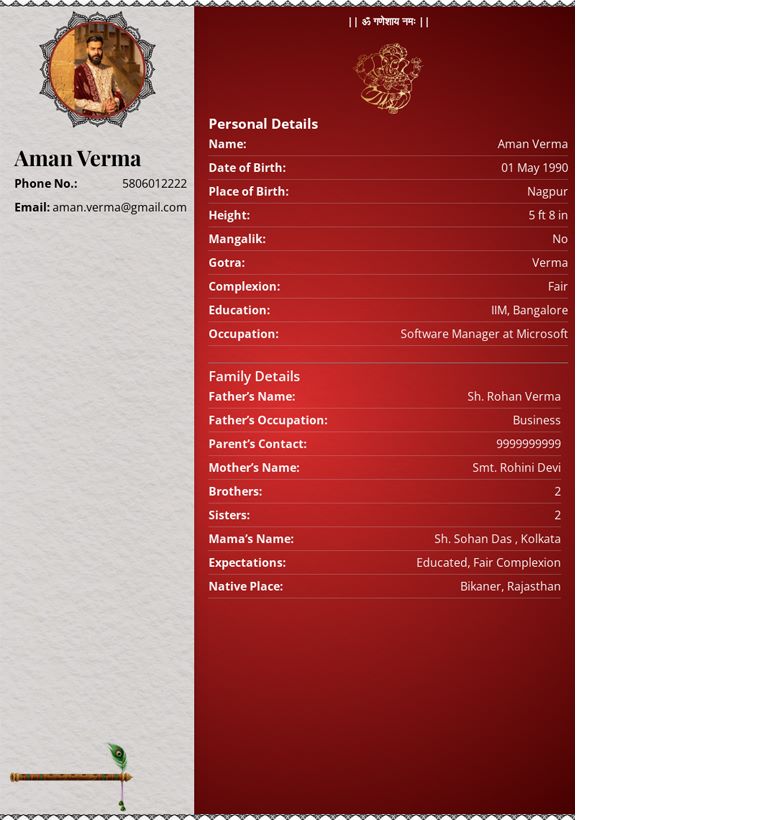
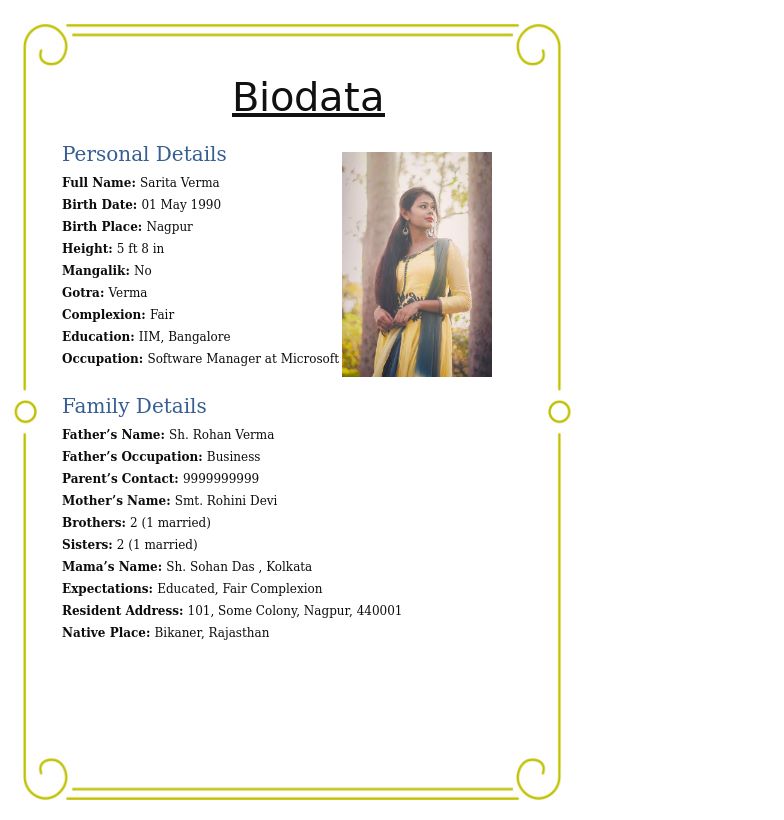
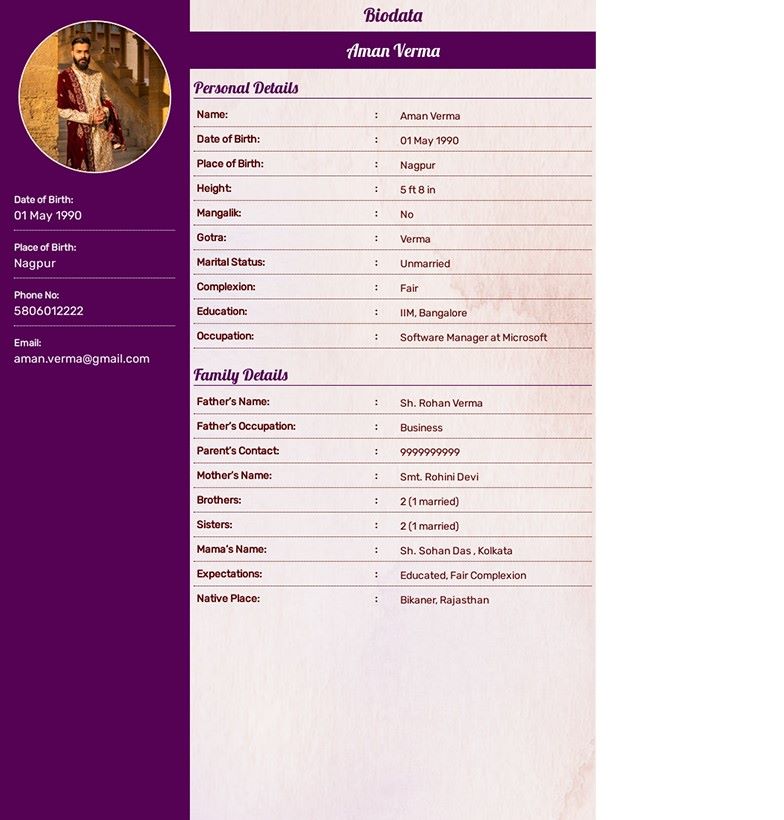
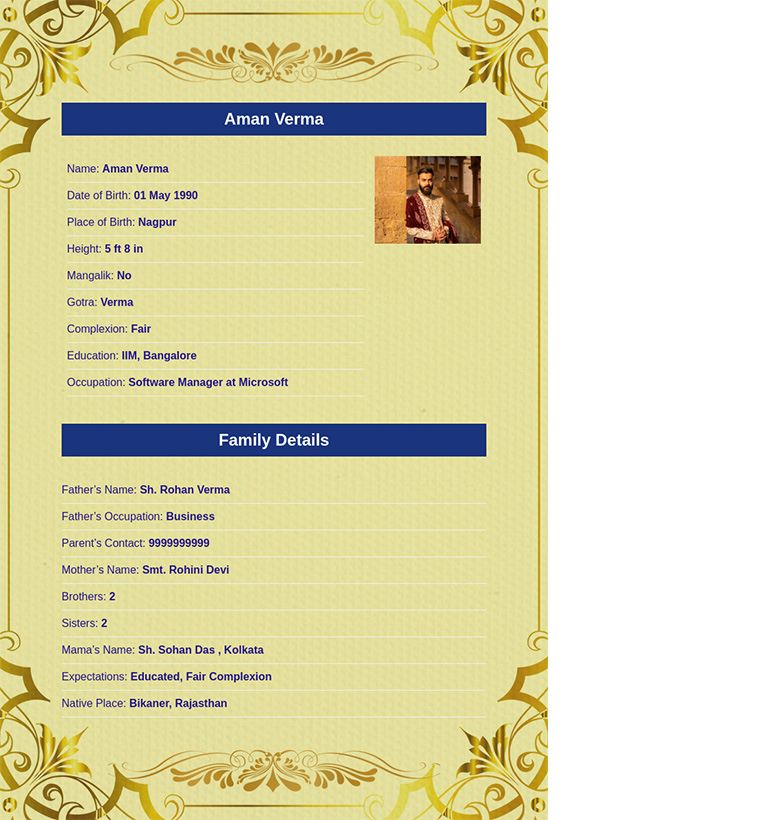
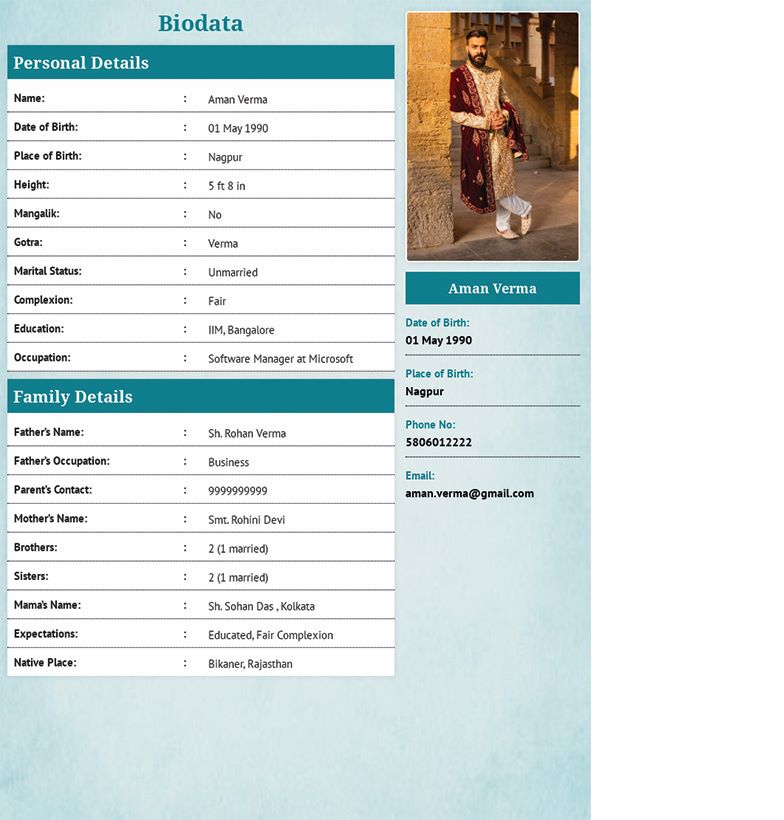
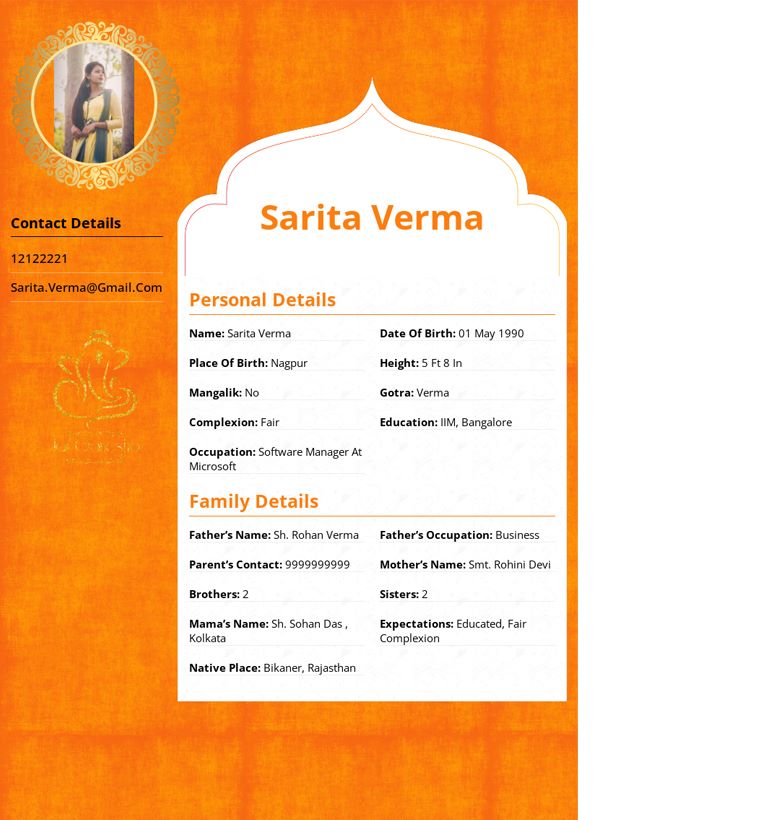
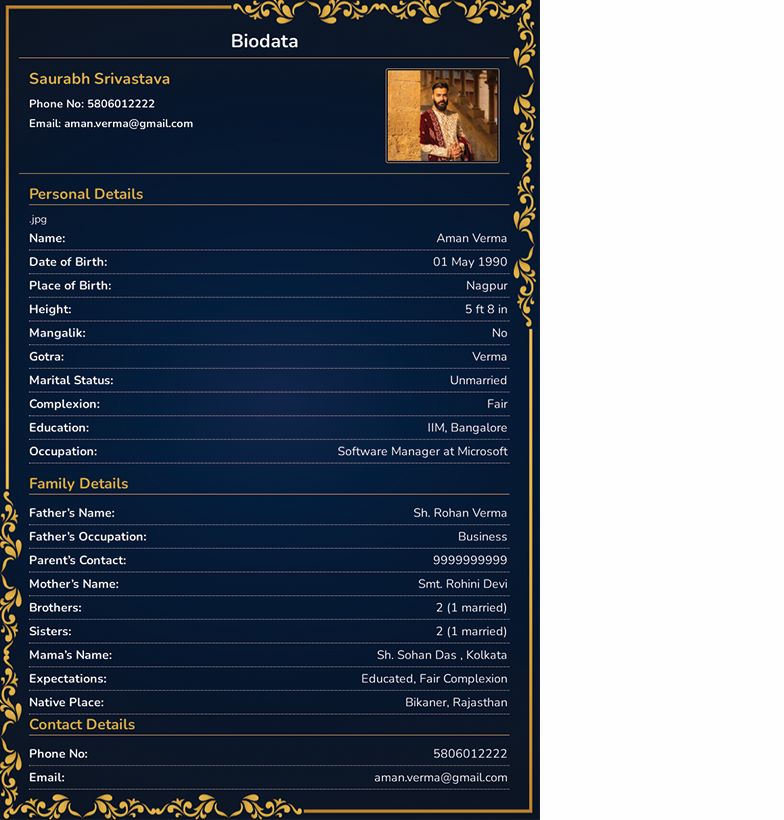
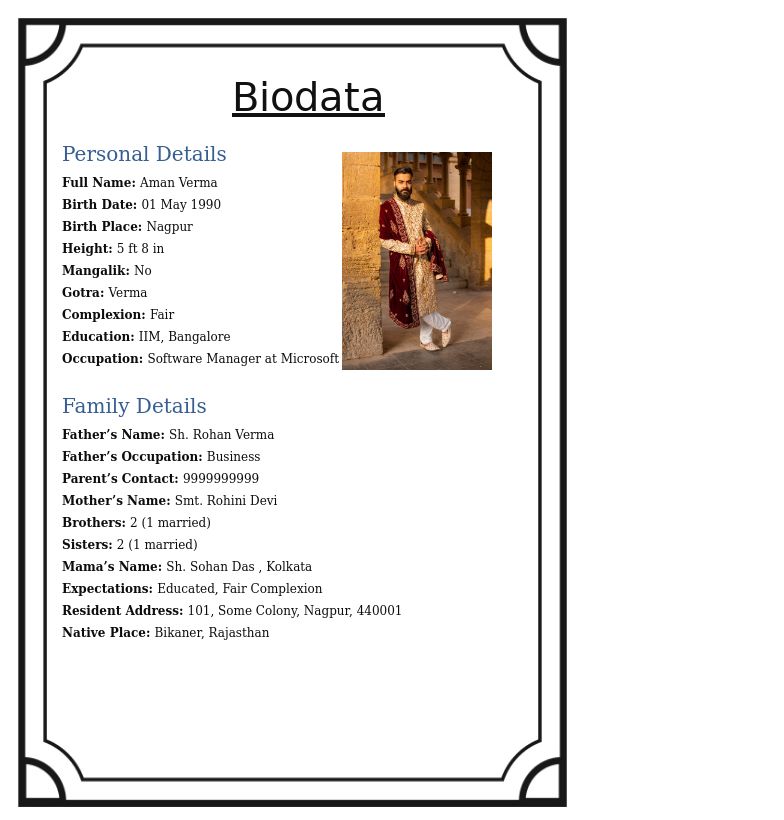
Sumi Marriage Biodata Templates
The Sumi Naga (also known as Sema) are one of the largest and most widely dispersed Naga tribes — inhabiting Zunheboto district of Nagaland as their homeland, but with large communities across Dimapur, Kohima, and major Indian cities. The Sumi are known within Nagaland for their enterprising spirit, strong community solidarity, and large family networks — traits that have translated into a disproportionate representation in Nagaland's business sector, church organisations, and elected politics. American Baptist missionaries arrived among the Sumi in the early 20th century, and the Sumi Baptist Church Convention (SBCC) remains the central institutional identity of the community. Sumi society is patrilineal and clan-based — major Sumi clans include Kire, Zhimo, Hiihii, Sumi-Yeyi, Aopon, Kekhrielhoulie, Ghose, Humtsoe, and Hiisii — and clan exogamy is strictly observed. The Tuluni festival (a Sumi summer festival of feasting and celebration, now a state-recognised holiday) is a proud marker of Sumi cultural identity. A Sumi marriage biodata must reflect clan identity, SBCC church affiliation, and the particular blend of business acumen, community loyalty, and modern professional achievement that defines the Sumi Naga.
Zunheboto, the Sumi Diaspora, and Matrimonial Culture
The Sumi are notable for maintaining very strong community-level organisation even in diaspora settings. The Sumi Hoho (apex Sumi community organisation) and various Sumi student unions in Delhi, Bangalore, Chennai, and Hyderabad are active matrimonial networking platforms alongside the church. Business families from Zunheboto and Dimapur have created significant commercial networks in NE India, particularly in transport, trade, and construction. Career prestige in the Sumi community ranges across: Nagaland Civil Service/IAS, the military (Assam Rifles, Army, Nagaland Armed Police), medical professionals, engineers, teachers, and successful entrepreneurs. The Sumi have been particularly prominent in Nagaland state politics, with multiple Chief Ministers and state ministers from the community.
Key Sections of a Sumi Marriage Biodata
Personal Details
- Full Name — Sumi names with clan identifiers (Kire/Zhimo/Hiihii/Ghose/Humtsoe)
- Date of Birth & Age
- Height & Complexion
- Marital Status
- Mother Tongue: Sumi (Sema)
Clan & Religious Details
- Clan — Kire / Zhimo / Hiihii / Aopon / Ghose / Humtsoe / Hiisii etc.; same-clan marriage strictly prohibited
- Church Denomination — Sumi Baptist Church Convention (SBCC) / Catholic / other Baptist
- Home Church in Zunheboto / Dimapur / Delhi / Bangalore
- Tuluni Festival Connection (cultural identity marker)
Education & Career
- Qualification — NEHU, Nagaland University, Delhi University, national institutions; many Sumi youth attend metros for higher education
- Occupation — IAS/NCS/Nagaland government officer, Army/Assam Rifles, business entrepreneur, doctor, engineer, teacher, bank officer
- Business Ventures — transport, trade, construction are common Sumi entrepreneurial profiles worth mentioning
- Annual Income
Family Background
- Father & Mother's Name and Occupation
- Home Village in Zunheboto District
- Clan of Both Parents
- SBCC Church Membership and Standing
- Family Type: Nuclear / Joint (large Sumi family networks often include multiple households)
Tips for Writing a Strong Sumi Marriage Biodata
- Clan is the First Compatibility Check: Sumi matrimonial discussions always start with clan verification — state it clearly at the top.
- SBCC Church Identity: Baptist church conventions are the primary community social network; mention home congregation and city church for diaspora candidates.
- Business Background Valued: Sumi entrepreneurial families in Dimapur and Zunheboto carry social prestige; mention business type and scale if applicable.
- Sumi Hoho and Community Connections: Membership in Sumi student unions and the Sumi Hoho signals community loyalty, especially for diaspora-based candidates.
- Write in English: Nagaland standard; Sumi biodatas are in English with formal, warm phrasing. The Tuluni greeting may appear as a cultural closing.
Sumi Marriage Biodata Formats Available
- Sumi Baptist Biodata (SBCC) — Clan, Zunheboto origin, church standing, government/business career
- Sumi Biodata in English — standard format for educated Sumi families across India
- Sumi Business Family Biodata — entrepreneur profile, transport/trade/construction background
- Sumi Biodata for Groom / Bride — Clan, Zunheboto/Dimapur origin, NCS/army/business career
- NRI Sumi Biodata — for Sumi professionals in Delhi, Bangalore, and global diaspora
Create your Sumi marriage biodata today with our free, customisable templates. Download in PDF or Word and share across Zunheboto, Dimapur, and the global Sumi community. Tuluni greetings!