Sikkimese Marriage Biodata Templates
Sikkim — India's smallest state by area and second-smallest by population, nestled in the Eastern Himalayas between Nepal, Tibet (China), and Bhutan — has one of India's most layered multi-ethnic communities. The three principal communities of Sikkim are the Lepcha (Rongkup, the original indigenous inhabitants), the Bhutia (Tibetan-origin settlers who arrived from the 14th century onwards and established the kingdom), and the Nepali/Gorkha (the numerically dominant community who migrated from Nepal since the 18th century). The Chogyal (Divine Ruler) of Sikkim — belonging to the Namgyal dynasty, a Bhutia royal family — governed until Sikkim's merger with India in 1975 after a referendum. In the matrimonial context, "Sikkimese" most specifically refers to the Bhutia community — the Tibetan-Buddhist settlers of Sikkim known as the Tsong or Denzongpa ("people of the valley") — and the broader Sikkimese multi-ethnic identity encompassing all communities. The Sikkim Bhutia speak Sikkimese (a Tibetan dialect also called Denzongkha or Sikkimese Tibetan), written in the Tibetan script, and follow the Nyingma and Kagyu lineages of Tibetan Buddhism. Rumtek Monastery (seat of the exiled Karmapa of the Kagyu order) and Pemayangtse Monastery (the oldest and most venerated Nyingma monastery of Sikkim) are the twin spiritual anchors of Sikkimese Buddhist identity. The Losar (Tibetan New Year), Saga Dawa (Buddha's birth anniversary), and Dashain (for Nepali Sikkimese) are major festivals. Sikkimese Bhutia marriage follows the Ru (patrilineal clan) system with strict clan exogamy.
Sikkimese Bhutia Society: Ru Clans, Buddhist Monasteries, and Matrimonial Culture
Bhutia matrimony in Sikkim follows the Ru (clan) system — same-Ru marriage is strictly prohibited. Major Bhutia Ru (clan) surnames include Barfungpa, Densapa, Lepcha (shared), Lhadenpa, Namgyal (royal family surname), Phuntsog, Tashi, Thendup, Tobgay, and Wangchuk among others. The Namgyal clan — the royal family of the former Kingdom of Sikkim — carries unique historical prestige. Buddhist Sikkimese marriage traditionally involves monastery Lama blessings, Losar-season weddings (the Tibetan New Year period is a favoured wedding season), and elaborate ritual offerings. Institutional anchors: Namchi (South Sikkim administrative headquarters), Pelling (Pemayangtse area, West Sikkim) and Gangtok (capital, East Sikkim). Career prestige for Sikkimese Bhutia: Sikkim Public Service Commission (SPSC) officers, state government service, Sikkim Manipal University faculty, tourism and hospitality management, Rumtek/Pemayangtse monastery administration, army (Mountain infantry/special forces), and organic farming (Sikkim is India's first fully organic state, and Bhutia families in West Sikkim are renowned cardamom cultivators). The Sikkim Bhutia-Lepcha Apex Committee (BELA) represents community political interests.
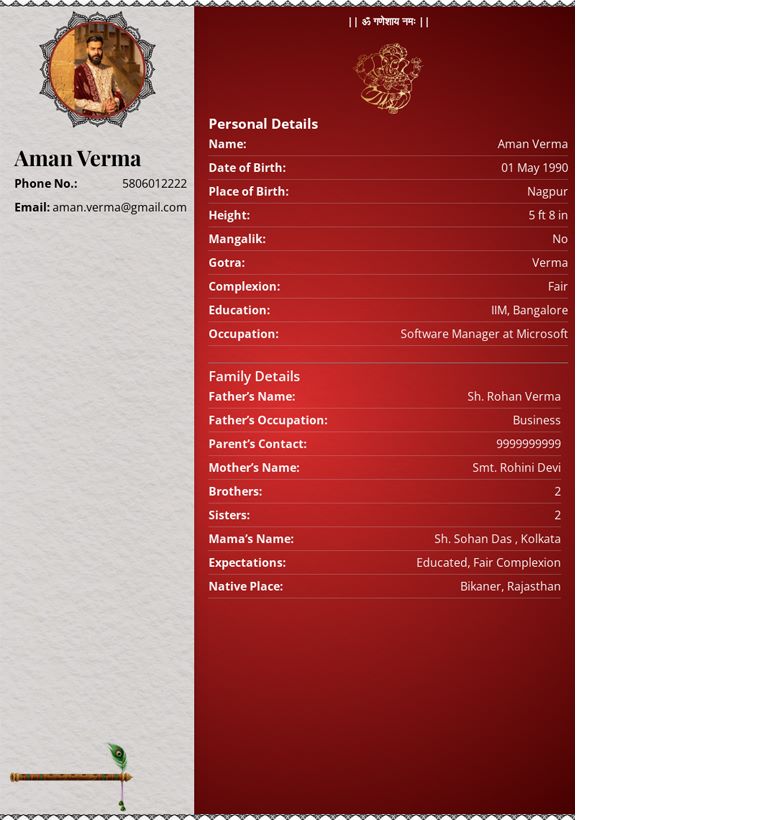
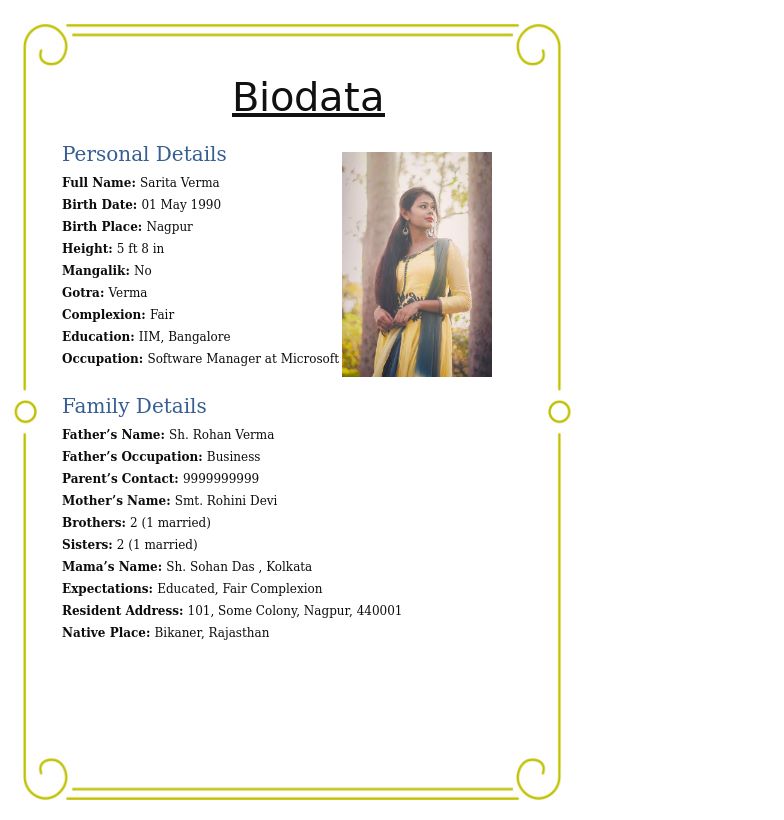
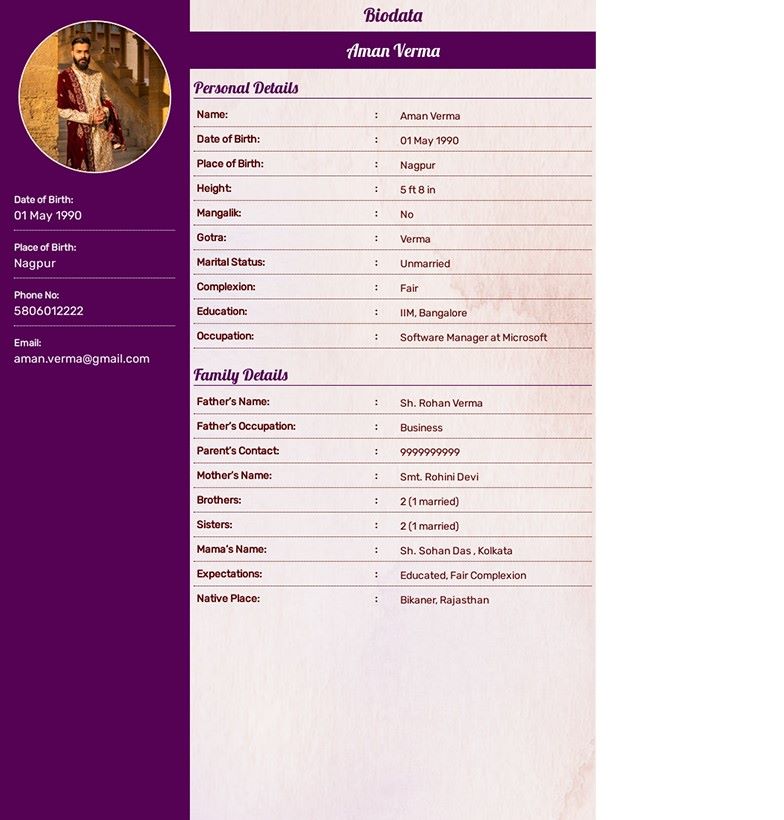
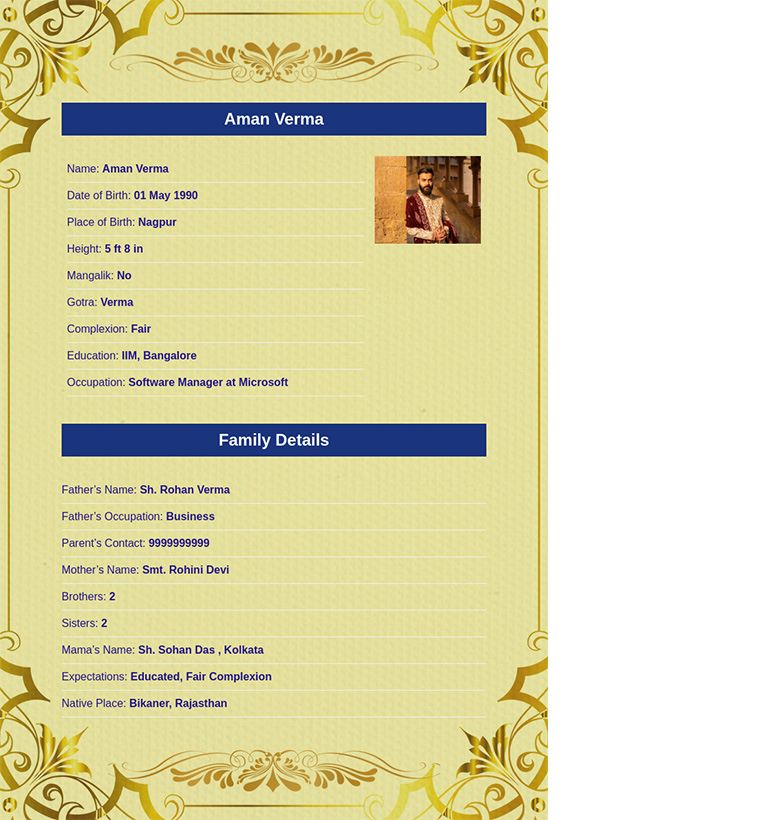
Key Sections of a Sikkimese Marriage Biodata
Personal Details
- Full Name — Tibetan Buddhist names are day-of-birth based (Nima=Sunday, Dawa=Monday, Mingma=Tuesday, Lhakpa=Wednesday, Phurba=Thursday, Pasang=Friday, Pemba=Saturday) with Bhutia Ru surname: e.g., Tenzing Densapa, Pema Tashi, Diki Namgyal
- Date of Birth & Age
- Height & Complexion
- Marital Status
- Community: Sikkimese Bhutia (Denzongpa) / Sikkimese Nepali / Sikkimese Lepcha
- Mother Tongue: Sikkimese/Denzongkha (Tibetan dialect) / Nepali / Lepcha
Ru (Clan) & Religious Details
- Ru (Clan) — Barfungpa / Densapa / Lhadenpa / Namgyal / Phuntsog / Tashi / Tobgay / Wangchuk etc.; same-Ru marriage strictly prohibited (for Bhutia community)
- Namgyal Royal Lineage — if related to the Chogyal's Namgyal dynasty
- Religion — Nyingma Tibetan Buddhist / Kagyu (Rumtek) / Hindu (for Nepali Sikkimese) / Christian (minority)
- Monastery Patronage — Rumtek / Pemayangtse / Enchey / Tashiding / Ralang
- District — East Sikkim (Gangtok) / West Sikkim (Pelling) / South Sikkim (Namchi) / North Sikkim
Education & Career
- Qualification — Sikkim University, Sikkim Manipal University, Tashi Namgyal Academy (TNA Gangtok), national institutions
- Occupation — SPSC officer, state government, Sikkim Manipal University faculty, tourism/hospitality, Rumtek/Pemayangtse monastery administrator, cardamom/organic farm landowner, Army (Mountain Warfare), doctor
- Annual Income / Cardamom Farm / Organic Agriculture Holdings
Family Background
- Father & Mother's Name and Occupation
- Ru (Clan) of Both Parents
- District and Village (East / West / South / North Sikkim)
- Monastery Affiliation (Rumtek / Pemayangtse / Tashiding)
- Namgyal Dynasty Connection (if applicable)
- Cardamom/Organic Farm Holdings (West Sikkim and North Sikkim families)
Tips for Writing a Strong Sikkimese Marriage Biodata
- Specify Community Clearly: Sikkimese Bhutia (Buddhist), Sikkimese Nepali (Hindu/Mixed), and Sikkimese Lepcha (Buddhist/Christian) have entirely different matrimonial conventions — state your community first.
- Ru Clan for Bhutia Families: Same-Ru marriage is prohibited in Bhutia matrimony — state the Ru clan and Monastery affiliation prominently for Buddhist Sikkimese families.
- Namgyal Royal Connection: Families with verified connections to the Chogyal's Namgyal dynasty carry exceptional historical prestige in Sikkimese society.
- Cardamom and Organic Heritage: West Sikkim Bhutia families with cardamom cultivation land represent a distinct wealth class — mention agricultural holdings.
- Losar and Saga Dawa: Active participation in these Tibetan Buddhist festivals signals deep faith identity for diagonal Sikkimese Bhutia families, especially those in Gangtok city.
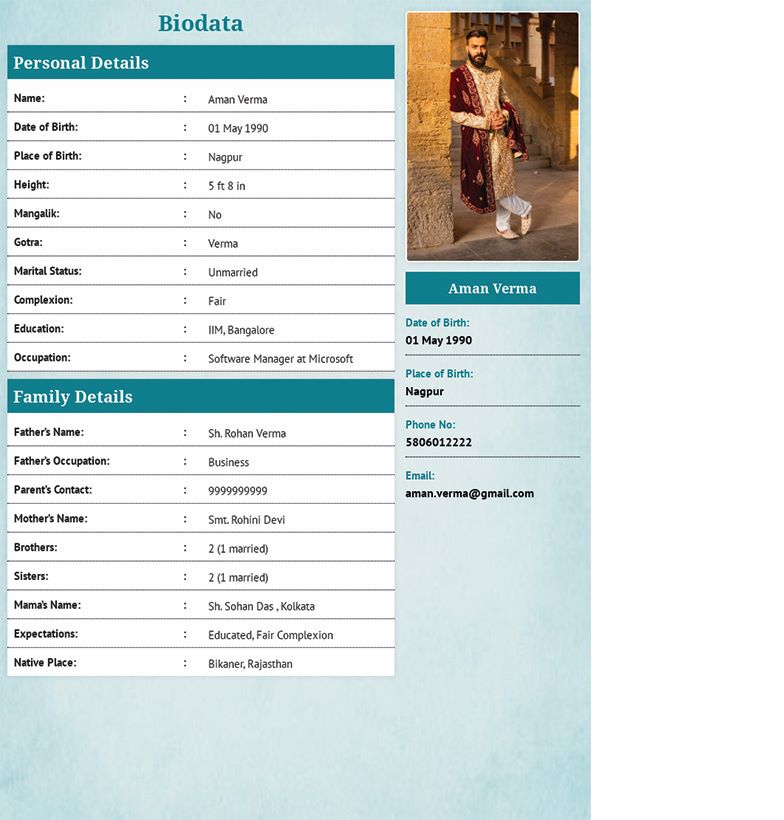
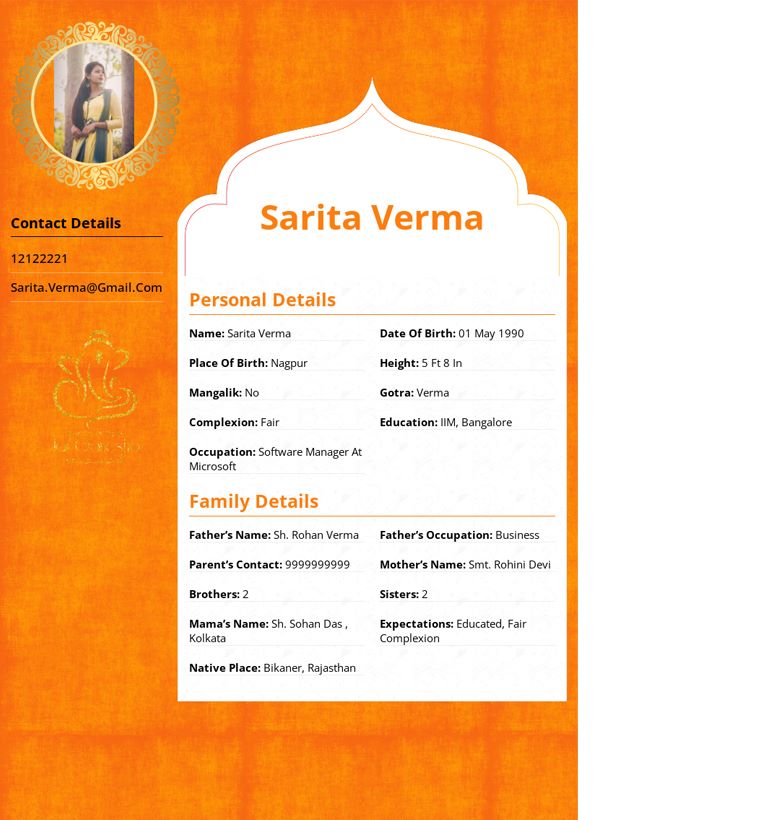
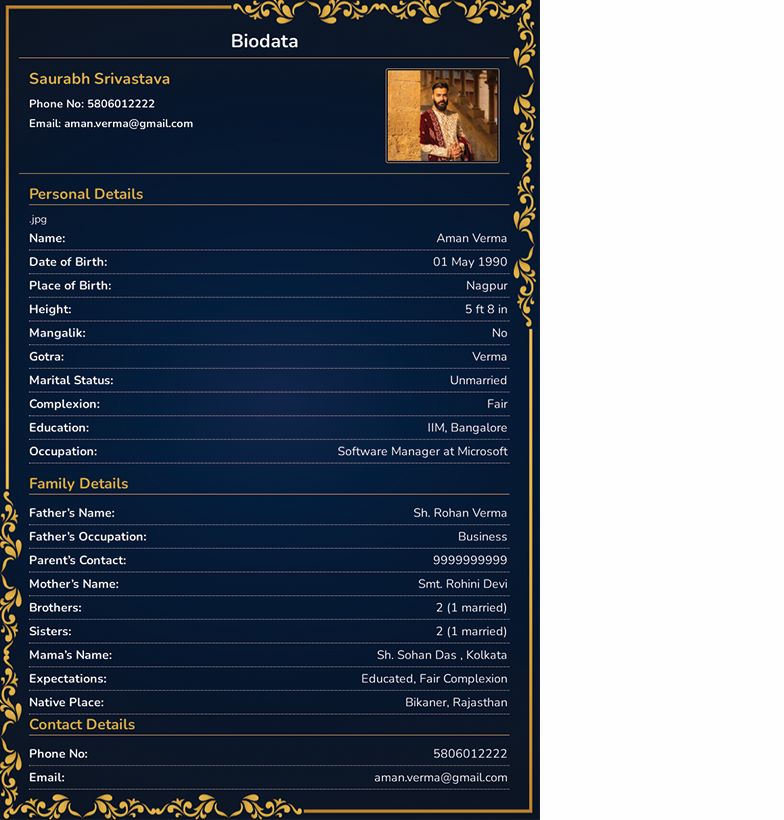
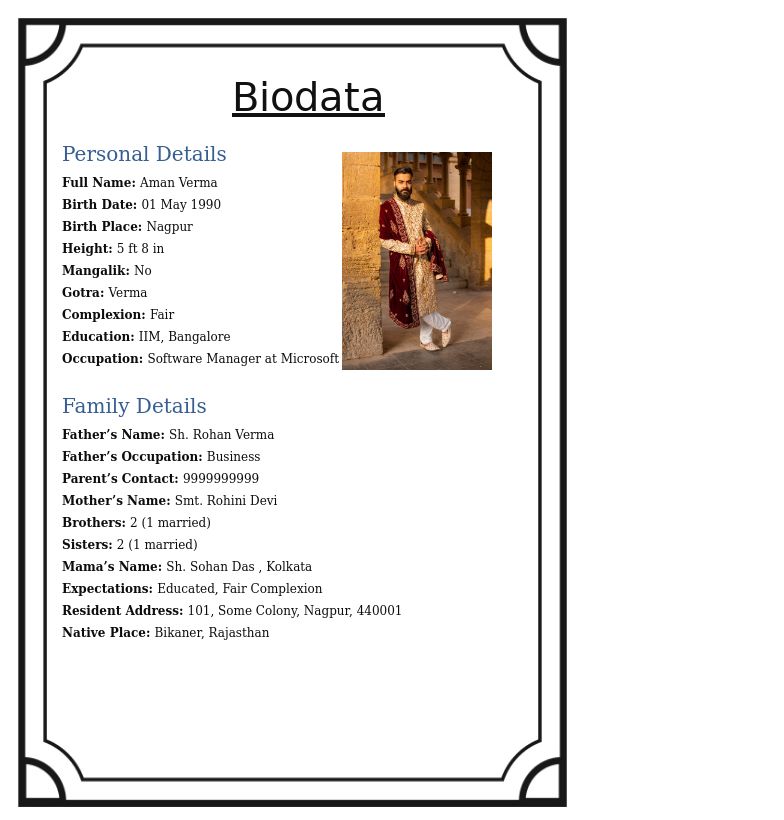
Sikkimese Marriage Biodata Formats Available
- Sikkimese Bhutia Buddhist Biodata — Ru clan, Nyingma/Kagyu monastery, Chogyal dynasty heritage, Gangtok/West Sikkim origin
- Sikkimese Nepali Biodata — caste/gotra, Hindu tradition, Namchi/East Sikkim, SPSC career
- Sikkimese Biodata in Tibetan Script — traditional Denzongkha format for Buddhist orthodox families
- Sikkimese Biodata in English — standard educated format for SMU/national-institution Sikkim graduates
- Sikkimese Biodata for Groom / Bride — community, Ru/clan, monastery, district, career credentials
Create your Sikkimese marriage biodata today with our free, customisable templates. Download in PDF or Word and share across Gangtok, Pelling, Namchi, and the global Sikkimese community. Tashi Delek!