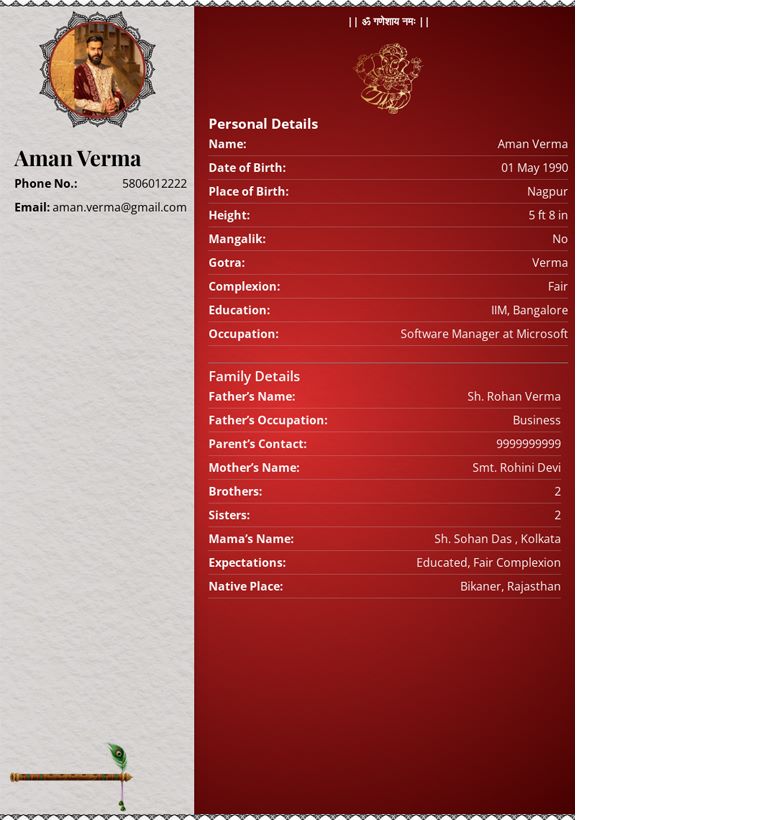
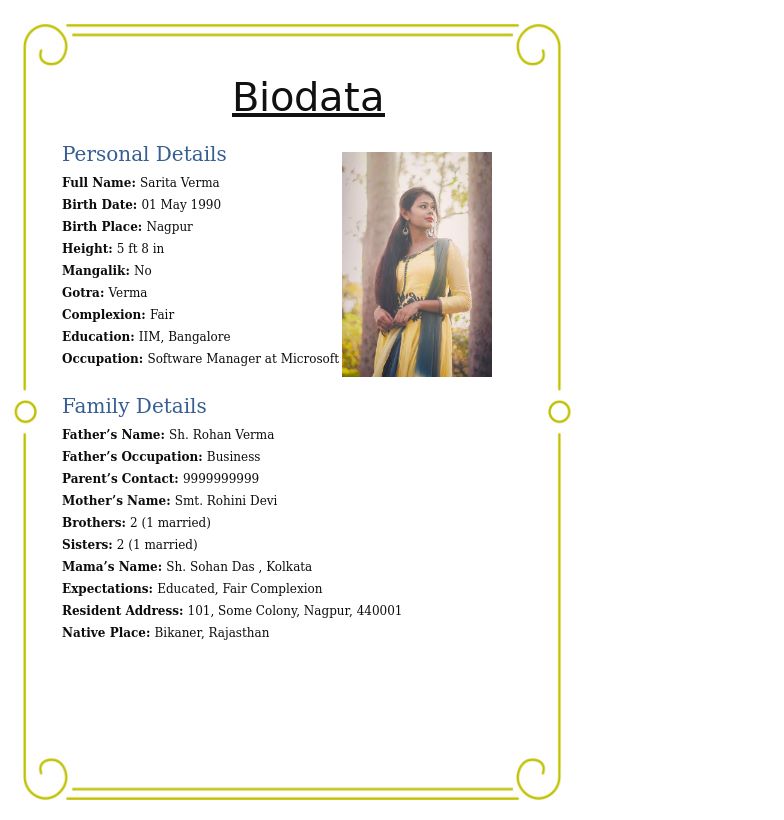
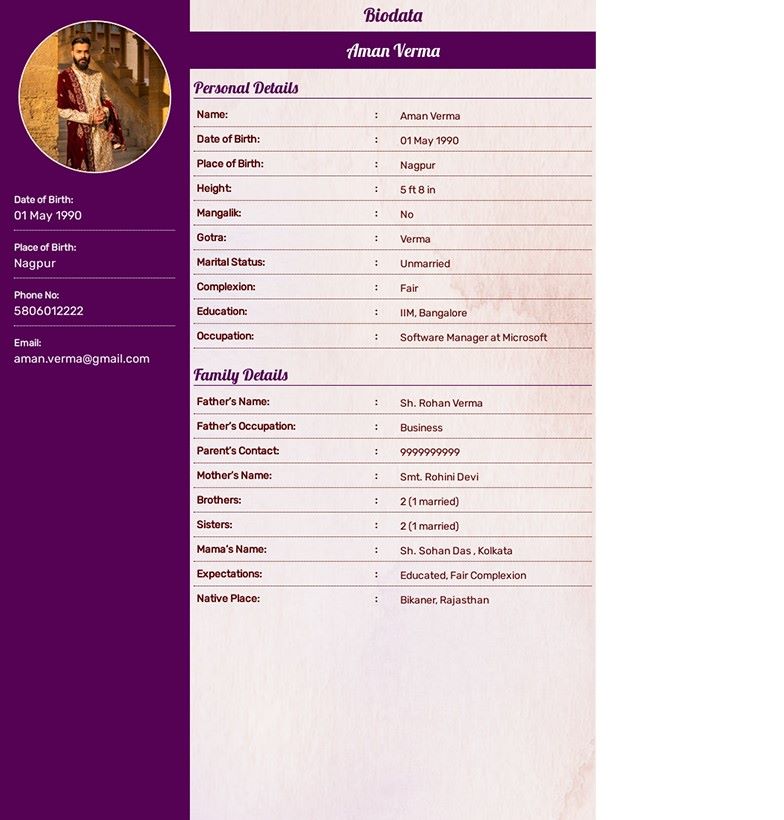
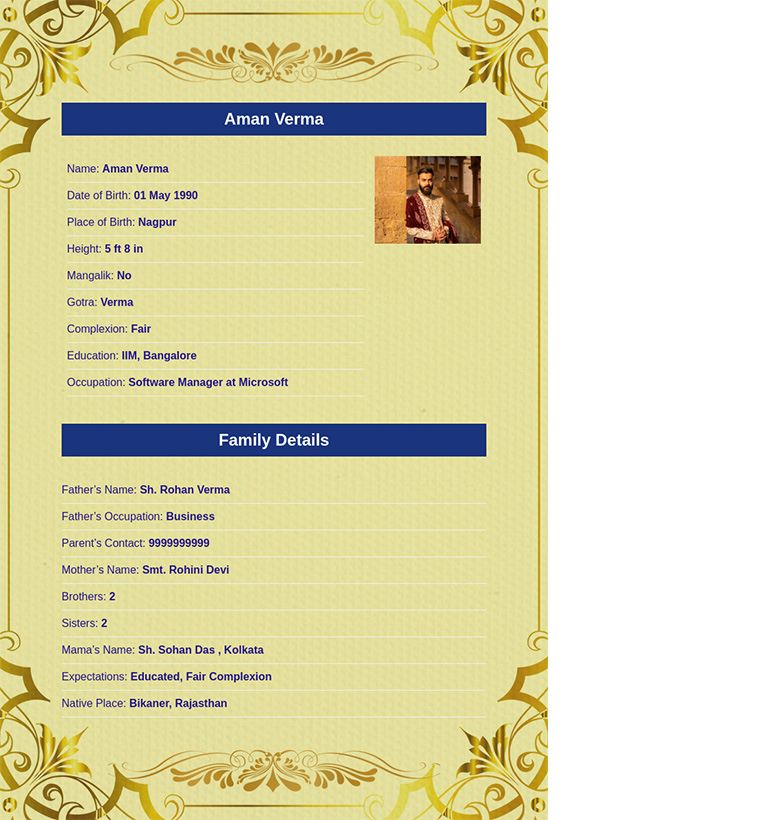
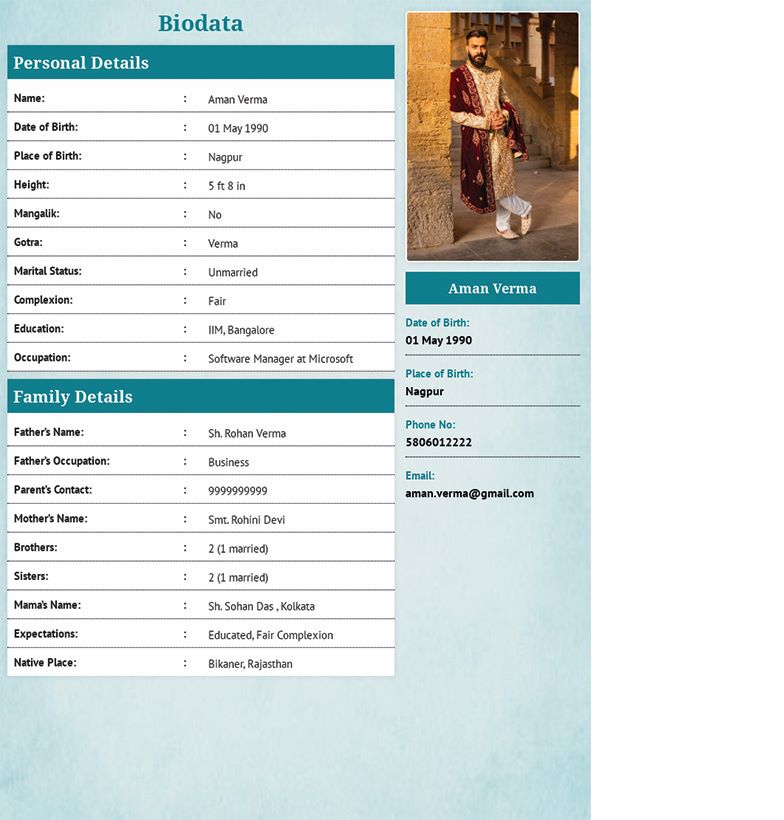
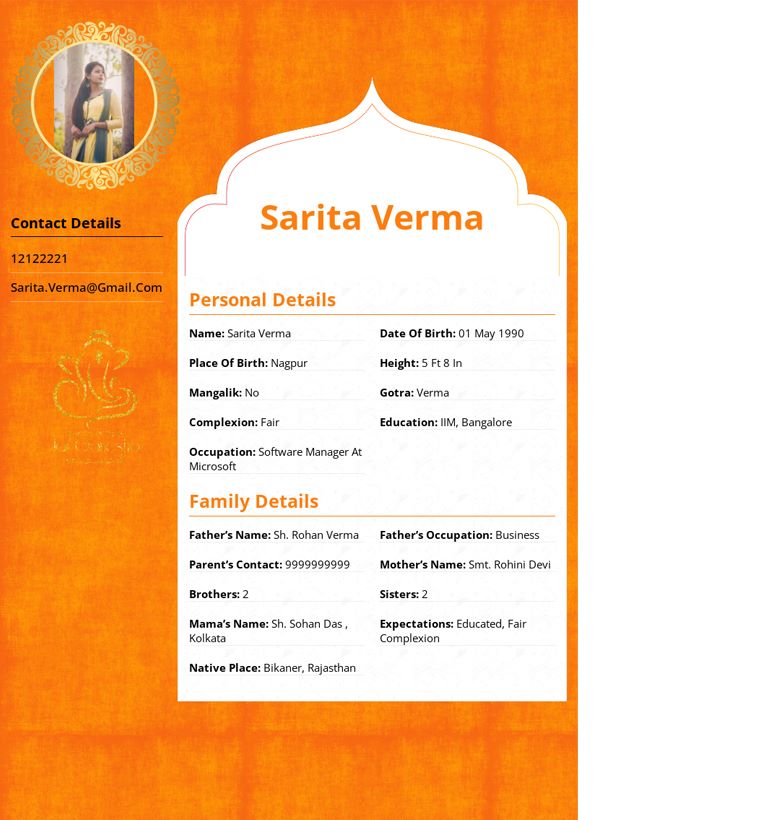
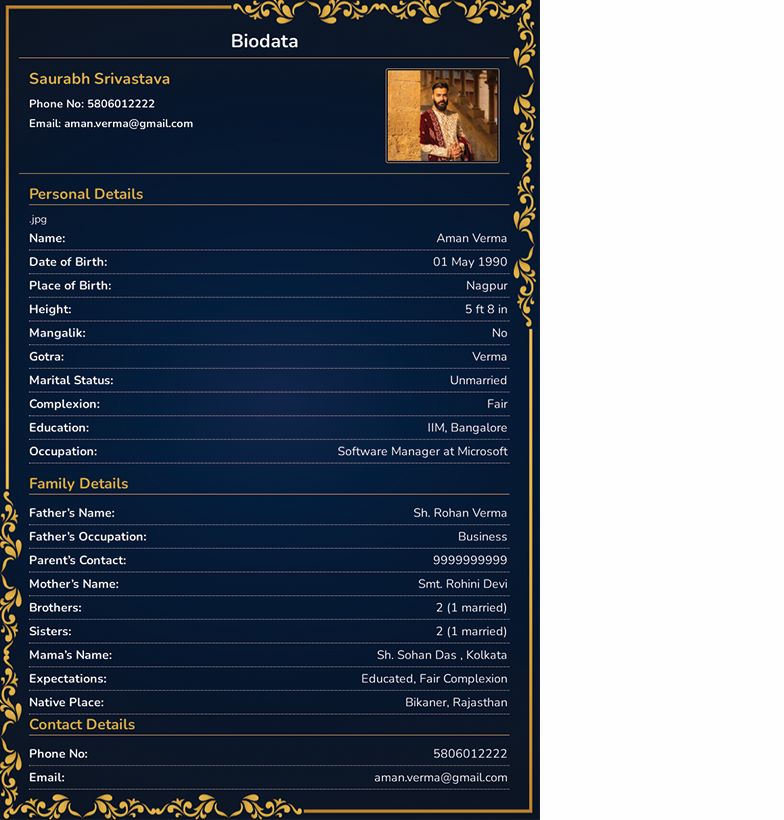
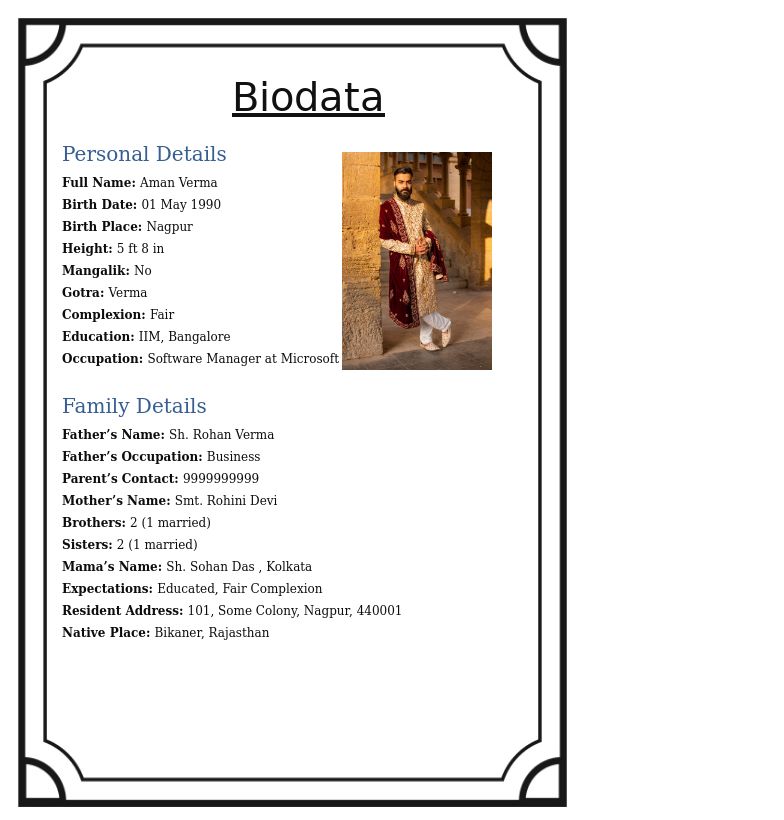
Sherpa Marriage Biodata Templates
The Sherpa people are synonymous worldwide with Himalayan mountaineering excellence — the name "Sherpa" has become a universal byword for skilled mountain guides — but behind this global identity lies a rich ethnic community with Tibetan Buddhist heritage, a sophisticated clan (Ru) system, and a diaspora now settled across Darjeeling, Sikkim, Delhi, Kathmandu, and global mountaineering capitals. Originally from the Solu-Khumbu region of Nepal (near Mount Everest), the Sherpa community migrated to India's Himalayan foothills over several centuries, establishing large communities in Darjeeling (Ghoom, Lebong, Jorebunglow) and Sikkim (Gangtok, Namchi). The word "Sherpa" means "People of the East" in Tibetan (Shar = east, Pa = people). Sherpa society follows the Tibetan Buddhist Nyingma tradition with elements of Bon (the pre-Buddhist Tibetan religion), and the Mani Rimdu festival at Tengboche Monastery (Nepal) and the Losar (Tibetan New Year) celebration are the most important community events. The Sherpa Ru (patrilineal clan) system — with over 20 named Ru — governs strict clan exogamy, making same-Ru marriage prohibited. A Sherpa marriage biodata must reflect Ru (clan), Nyingma Buddhist identity, Darjeeling/Sikkim regional affiliation, and the mountaineering heritage that has given this community global recognition.
Sherpa Clans, Buddhist Identity, and Matrimonial Culture
Major Sherpa Ru (clans) include Minyul, Thakto, Chawa, Pinasa, Salaka, Nawa, Khambachen, Lama, Zangbo, Tharke, Phurba, and many others. Some Ru are further divided into sub-Ru. The community maintains very strong endogamy within the Sherpa ethnic group (cross-Ru marriage is required, but the partner must still be Sherpa). The role of the Lama (Buddhist priest) in blessing the wedding is central — marriages without monastic blessing are considered incomplete. Career prestige in the Sherpa community spans mountaineering expedition leadership (high-altitude Sherpa guides earn significant income), Darjeeling tourism industry, the Indian Army's Gorkha/Sikh Light Infantry regiment service, Sikkim government and SPSC-qualified positions, teaching, and hospitality management. The Young Sherpa Association and Sherpa Students' Association maintain community networks in Darjeeling and Delhi. Many second-generation Sherpa are now MBBS doctors, engineers, and corporate professionals.
Key Sections of a Sherpa Marriage Biodata
Personal Details
- Full Name — Sherpa naming follows Tibetan Buddhist tradition: day-of-birth names (Dawa=Monday, Mingma=Tuesday, Lhakpa=Wednesday, Phurba=Thursday, Pasang=Friday, Pemba=Saturday, Nima=Sunday) with Sherpa surname; women often have names like Pem, Diki, Chungda, Yangjom
- Date of Birth & Age
- Height & Complexion
- Marital Status
- Mother Tongue: Sherpa (Tibeto-Burman; written in Tibetan script)
Ru (Clan) & Religious Details
- Ru (Clan) — Minyul / Thakto / Chawa / Pinasa / Salaka / Nawa / Lama / Zangbo / Tharke etc.; same-Ru marriage strictly prohibited
- Religion — Nyingma Tibetan Buddhist; Mani Rimdu / Losar observance
- Monastery Patronage — which monastery does the family patronise for pujas and Lama blessings
- Location — Darjeeling / Ghoom / Sikkim / Kathmandu-origin / Delhi
Education & Career
- Qualification — St. Paul's School Darjeeling, Himalayan Mountaineering Institute certified, Sikkim University, national colleges
- Occupation — Mountaineering expedition Sirdar/guide, Himalayan Mountaineering Institute (HMI) faculty, SPSC officer, army, tourism/hospitality, doctor, engineer, teacher
- Mountaineering Records — if applicable (Everest summits, expedition leadership) — a unique high-prestige credential in this community
- Annual Income
Family Background
- Father & Mother's Name and Occupation
- Ru (Clan) of Both Parents
- Village / Ward in Darjeeling hills or Sikkim
- Family's Mountaineering Heritage (if applicable)
- Monastery Lama affiliation
- Family Type: Nuclear (most urban Sherpa in Darjeeling/Gangtok/Delhi)
Tips for Writing a Strong Sherpa Marriage Biodata
- Ru Clan is the First Check: Sherpa matrimonial compatibility always starts with Ru verification — same-Ru marriage is strictly prohibited.
- Mountaineering Credentials are Unique: For a Sherpa biodata, expedition records (Everest summits, IFMGA guide certification) are recognised high-prestige credentials — list them.
- Lama Blessing Confirmation: Mention which monastery and lineage Lama blesses your family — it signals Buddhist identity and community standing.
- Day-of-Birth Name Convention: Sherpa day names (Dawa, Mingma, Nima etc.) are cultural markers — note this clarity when writing the full name.
- Losar Community Participation: Mentioning active participation in Losar celebrations and Mani Rimdu shows community rootedness for diaspora Sherpa.
Sherpa Marriage Biodata Formats Available
- Sherpa Buddhist Biodata — Ru clan, Nyingma monastery, Losar/Mani Rimdu identity, HMI credentials
- Sherpa Mountaineer Biodata — expedition history, summits, sirdar experience highlighted
- Sherpa Biodata in English — standard format for educated Darjeeling/Sikkim families
- Sherpa Biodata in Tibetan Script — traditional format for monastery community presentations
- Sherpa Biodata for Groom / Bride — Ru, Darjeeling/Sikkim origin, mountaineering/professional career
Create your Sherpa marriage biodata today with our free, customisable templates. Download in PDF or Word and share across Darjeeling, Sikkim, Kathmandu, and the global Sherpa community. Tashi Delek!