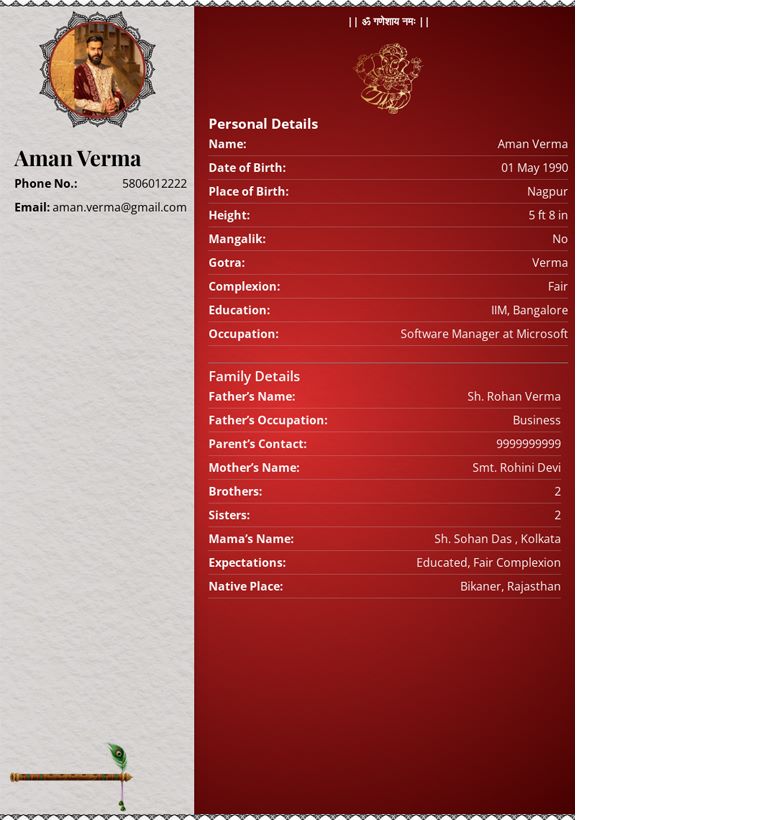
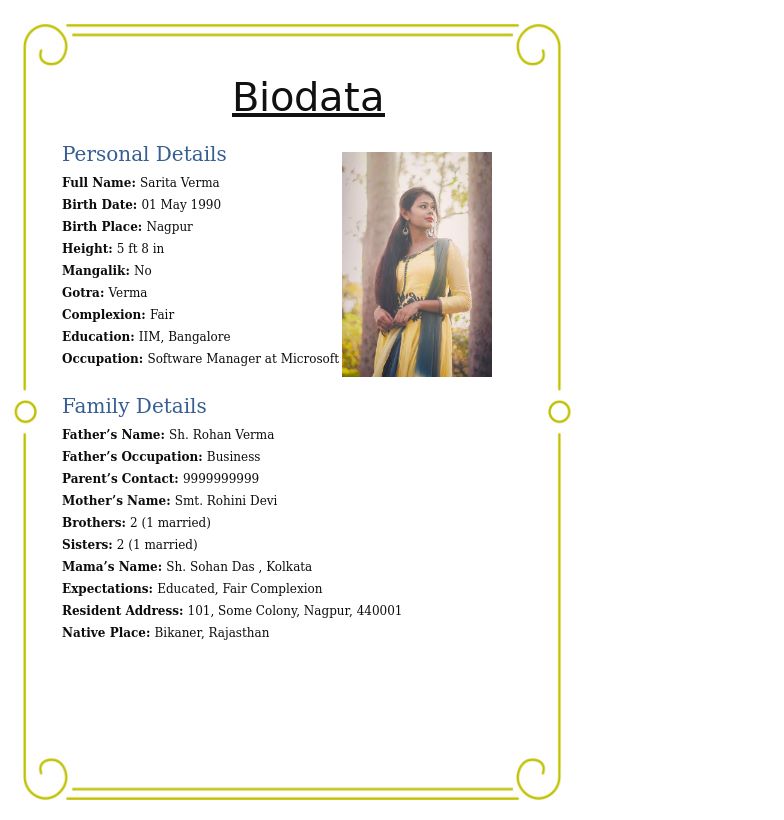
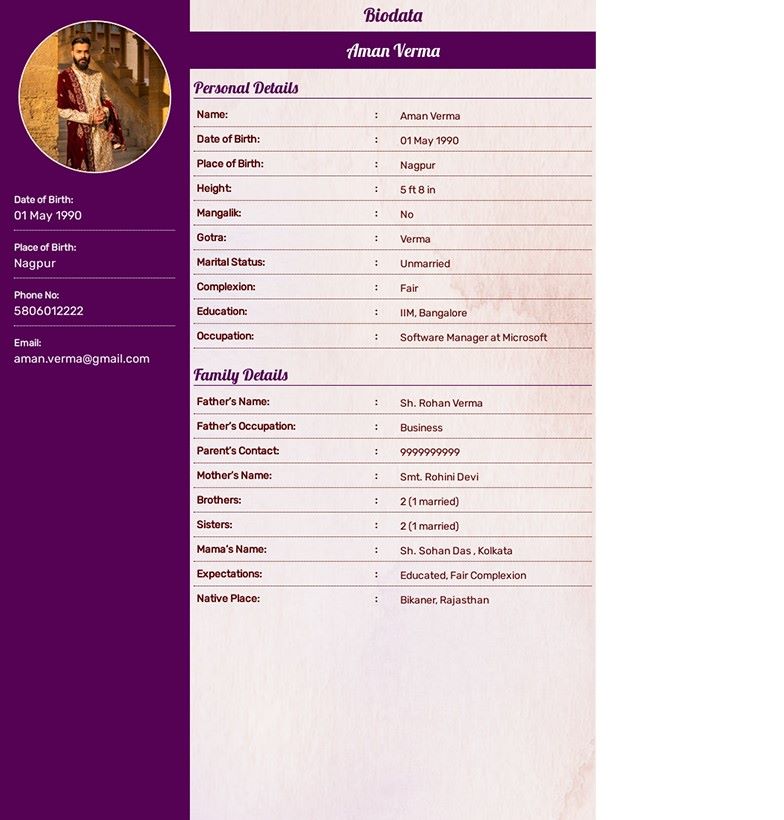
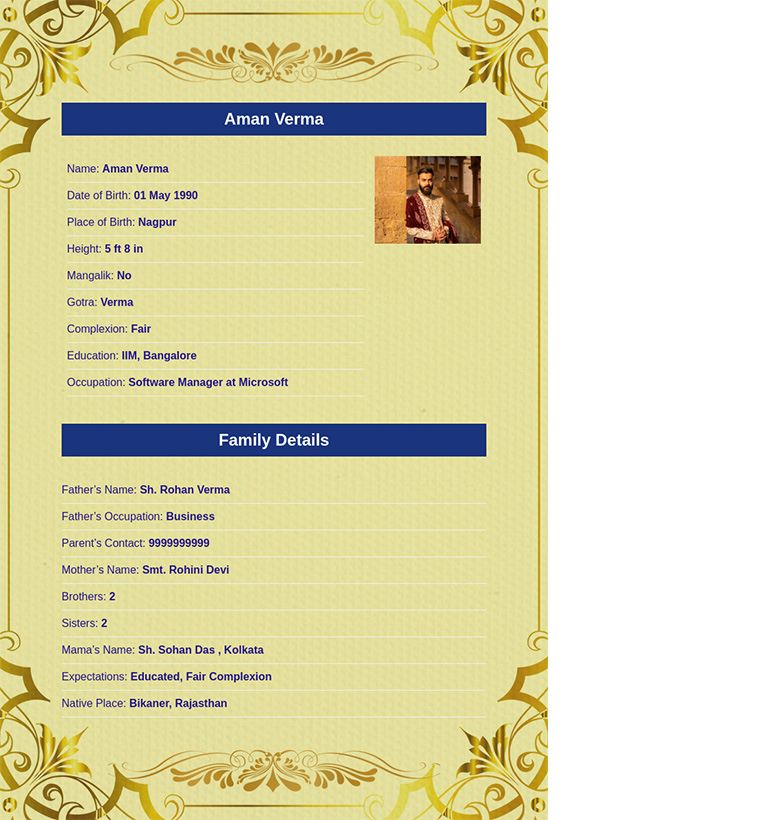
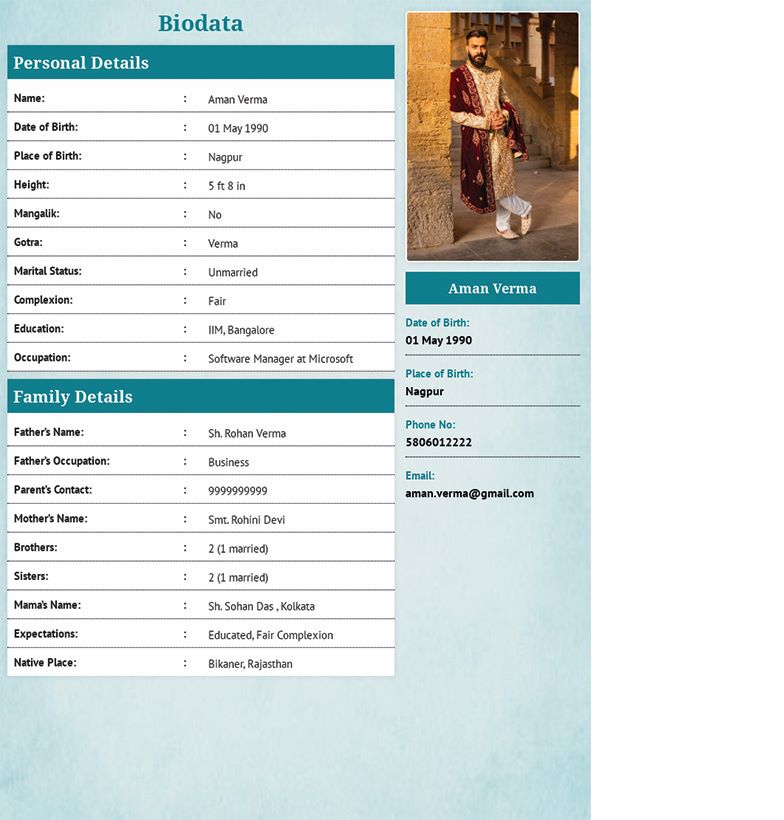
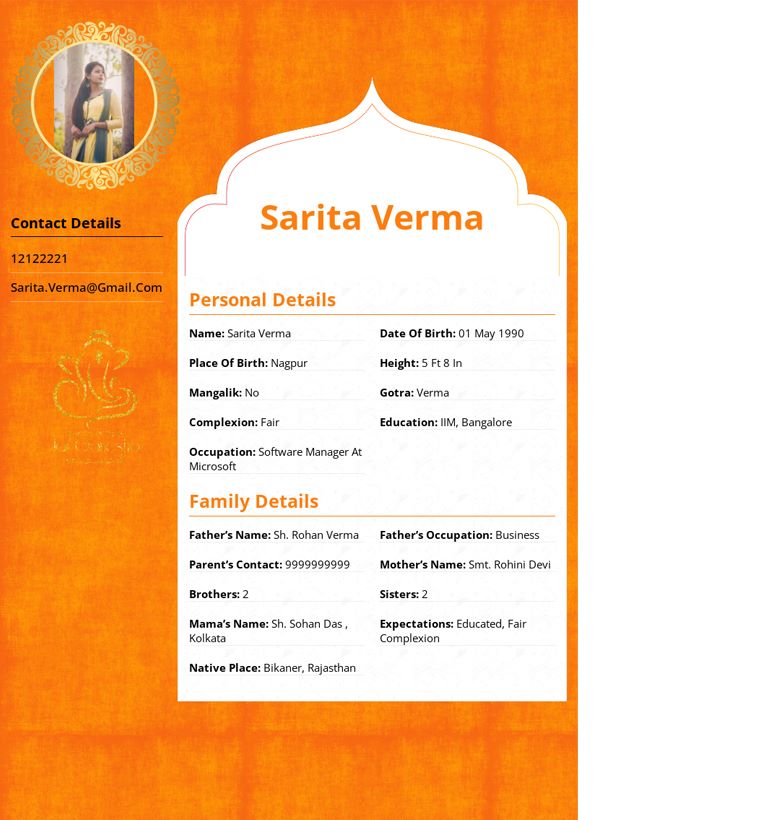
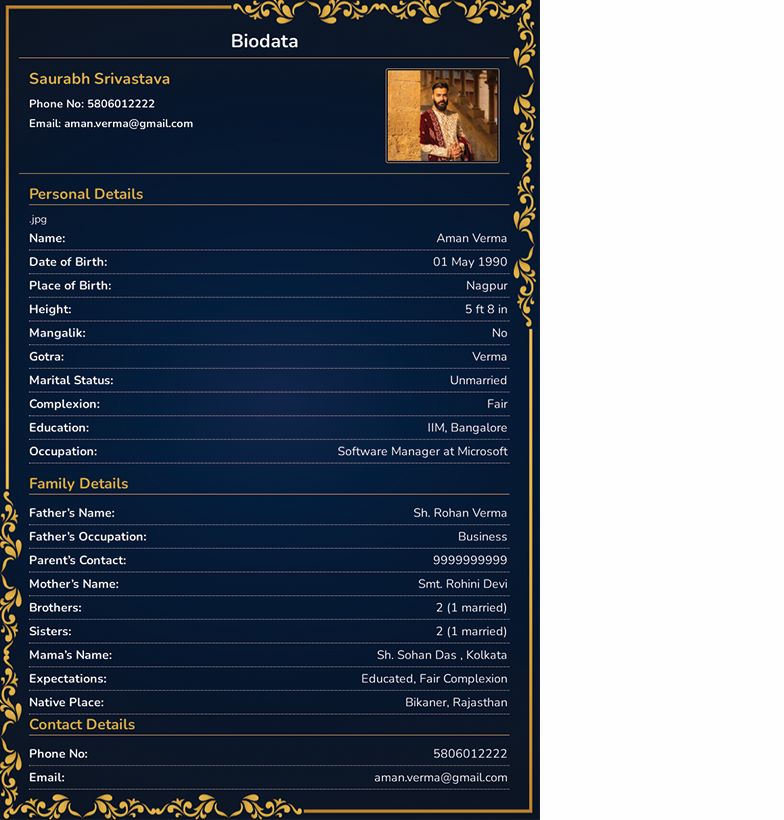
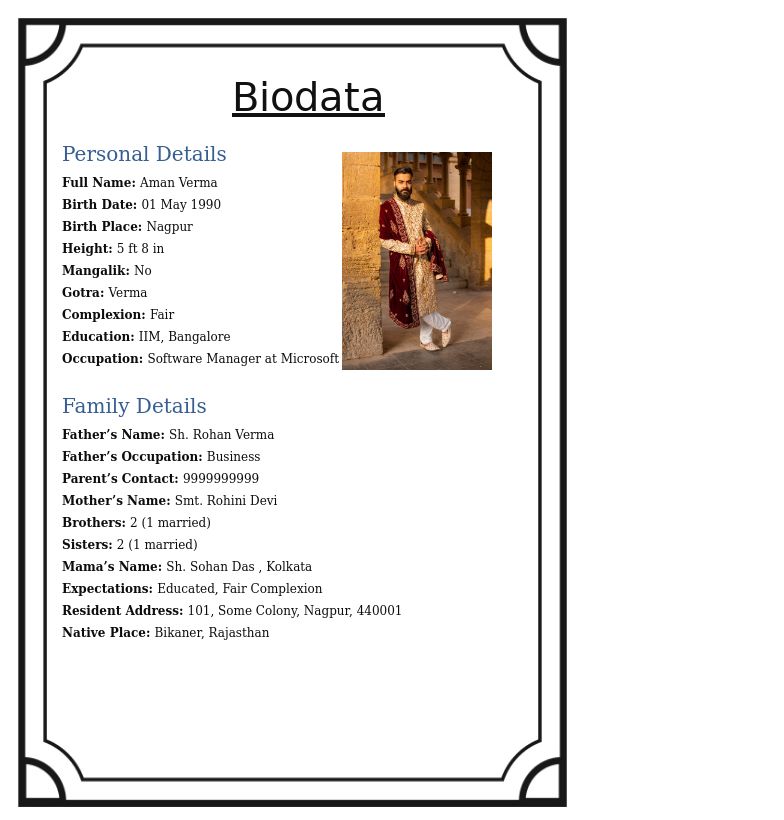
Punjabi Marriage Biodata Templates
In Punjabi culture, a wedding is not just a union of two people — it is a week-long celebration of families, music, and food that the whole neighbourhood remembers. Before the dhol beats and the baraat arrives, the journey begins with a carefully crafted Punjabi marriage biodata. Whether you are a Jat Sikh from Ludhiana, a Khatri Hindu from Amritsar, or a Punjabi Muslim family in Lahore with roots in India, a well-written matrimonial biodata is the first handshake between two families.
The Role of a Biodata in Punjabi Matrimony
Punjabi families are known for their warmth, directness, and high expectations — and the biodata reflects all three. Elders scrutinise it for caste compatibility (Jat, Arora, Khatri, Ramgarhia, Saini, Bhatia), economic standing, and family reputation. NRI Punjabi families in the UK, Canada, and the USA often begin their search with a detailed biodata shared across WhatsApp groups and community networks before any formal introduction.
For Sikh families, it is common to include the Gurdwara affiliation and whether the candidate is Amritdhari, Keshdhari, or Sahajdhari — details that carry real weight in the matching process.
Key Sections of a Punjabi Marriage Biodata
Personal Details
- Full Name — including Singh / Kaur for Sikh families
- Date of Birth, Place of Birth
- Height, Complexion, Body Type
- Marital Status — Never Married / Divorced / Widowed
- Current Location — Punjab, Delhi, UK, Canada, USA, Australia, etc.
Religion & Community
- Religion: Sikh / Hindu / Muslim / Christian
- Caste: Jat, Khatri, Arora, Ramgarhia, Saini, Bhatia, Mahajan, Rajput, etc.
- Amrit Status (for Sikh profiles): Amritdhari / Keshdhari / Sahajdhari / Mona
- Gurdwara / Mandir Affiliation
- Gotra
Education & Career
- Highest Qualification — degree, institution, year
- Profession — doctor, engineer, business, farmer, government service, etc.
- Annual Income or Business Turnover
- PR / Visa Status (important for NRI matches)
Family Details
- Father's Name, Occupation — farmer, businessman, government servant, etc.
- Mother's Name, Occupation
- Brothers & Sisters — married / unmarried, settled abroad or in India
- Native Village / District — Doaba, Malwa, or Majha belt
- Family Property & Economic Standing
Partner Expectations
- Preferred caste, religion, location
- Preference for India-based or abroad-settled match
- Education and career expectations
Tips for a Strong Punjabi Marriage Biodata
- Be upfront about NRI status: Families value honesty about visa status, residency type, and country — confusion here causes wasted time on both sides.
- Mention the village or district of origin: In Punjab, knowing someone is from the Doaba belt or a specific village often carries social recognition.
- Include a photo in traditional attire: A photo with a dastar (turban) or in Punjabi suit makes the profile culturally resonant.
- Punjabi biodata in Gurmukhi: For traditional Sikh families and Gurdwara introductions, a biodata written in Gurmukhi script is often preferred and highly respected.
Punjabi Marriage Biodata Formats Available
- Punjabi Biodata in English — most common for NRI and urban matches
- Punjabi Biodata in Gurmukhi (Punjabi Script) — traditional format for Sikh families
- Punjabi Biodata in Hindi — used by Hindu Punjabi families in Delhi, Haryana and UP
- Jat Sikh Marriage Biodata — community-specific with agricultural and ancestral details
- Ramgarhia Sikh Biodata — highlighting artisan heritage and professional background
- Punjabi NRI Marriage Biodata — designed for UK, Canada, USA and Australia-based profiles
- Punjabi Biodata for Girl (Bride) — graceful, detailed format suited for Chunni ceremony introductions
- Punjabi Biodata for Boy (Groom) — career-forward with family standing and Anand Karaj details
Download your Punjabi marriage biodata template in PDF or Word format today. Share it with your Granthi Ji, community matchmaker, or family elders across India and the diaspora. Sat Sri Akal — may your biodata pave the way to your perfect match.