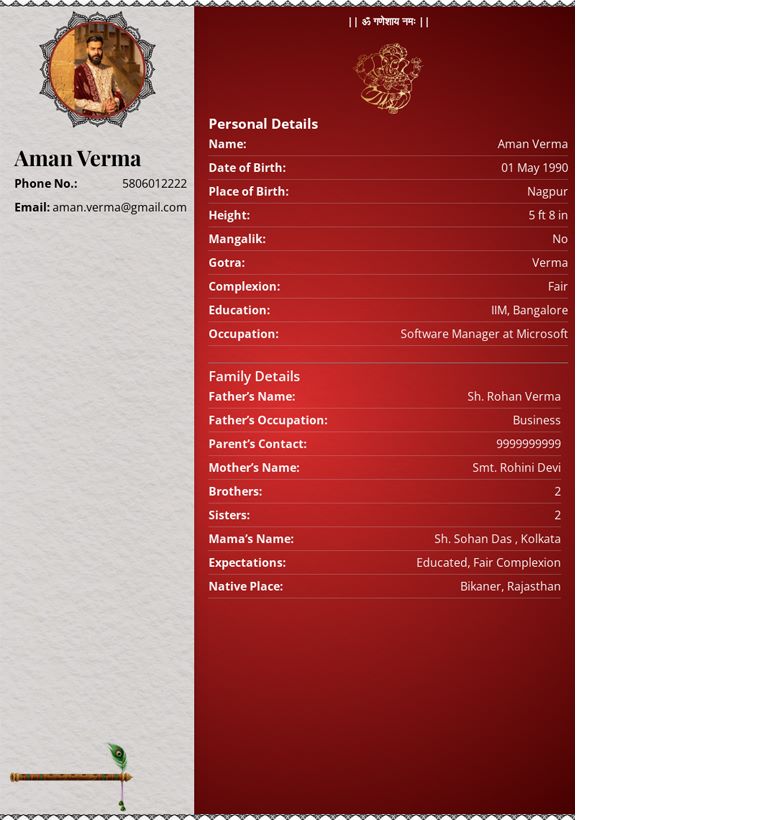
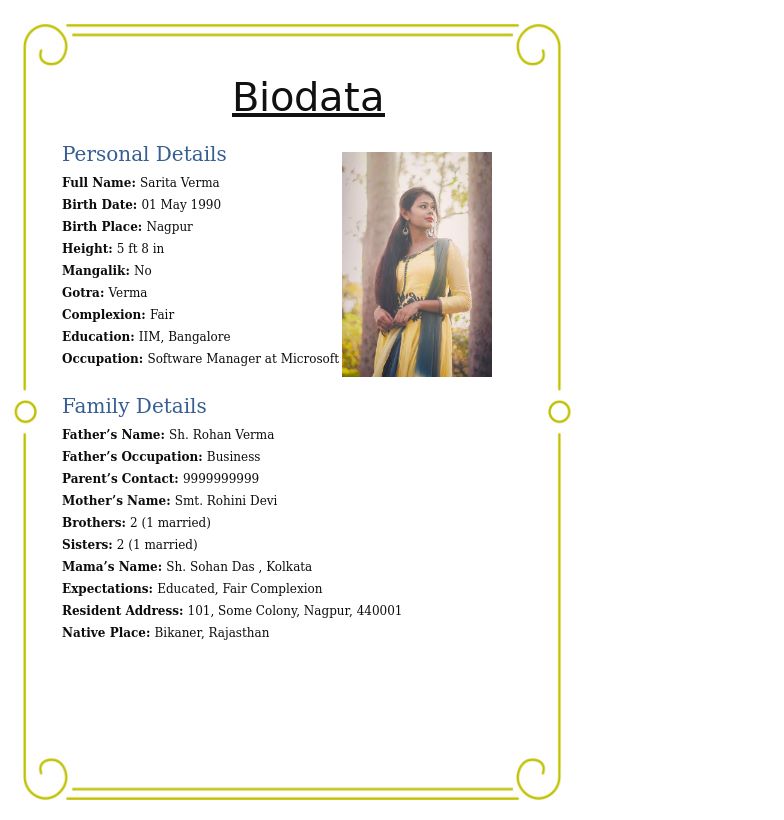
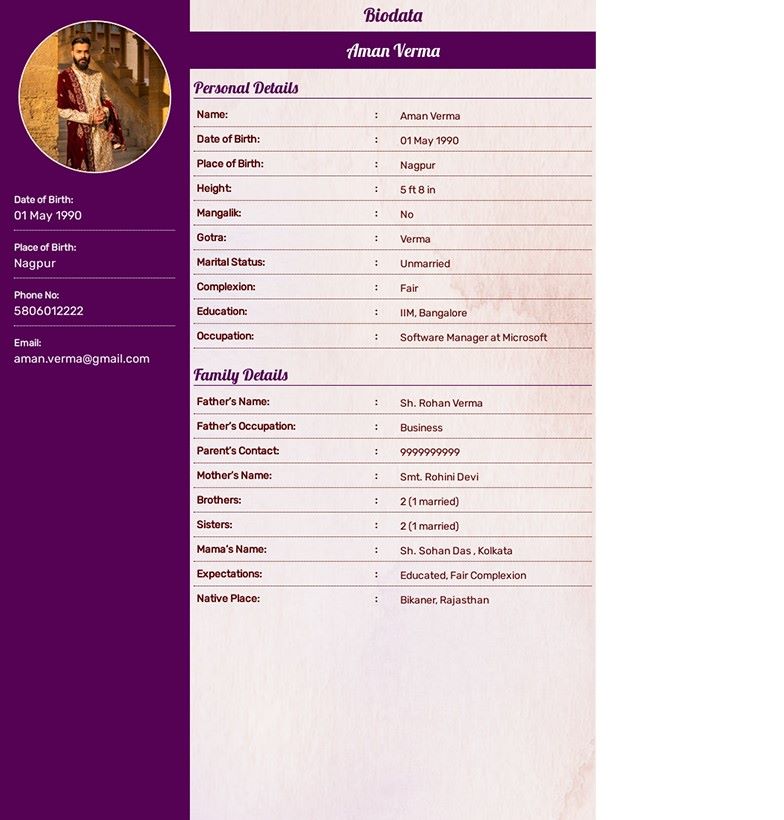
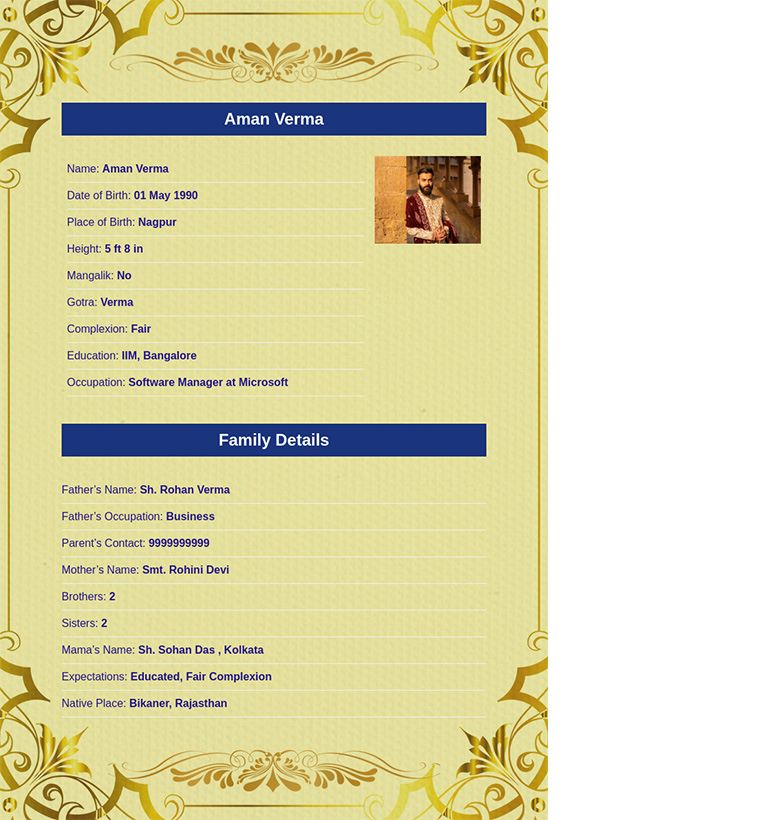
Pnar Marriage Biodata Templates
The Pnar (also called Jaintia, Synteng, or War-Jaintia in different contexts) are one of the three principal sub-groups of the Khasi people of Meghalaya, inhabiting the East Jaintia Hills and West Jaintia Hills districts — the territories of the ancient Jaintia Kingdom, whose rulers were known for their military power, amber (coal) wealth, and distinctive matrilineal social structure. The Jaintia Hills district was part of the Jaintia Kingdom (later Jaintia-pur) — an independent kingdom that was annexed by the British East India Company in 1835 following the Jaintia king's resistance to colonial rule. The Pnar language belongs to the Austroasiatic family (Mon-Khmer branch, same as Khasi) and is closely related to but distinct from Khasi and War (another Khasi sub-group). Pnar is written in the Roman/Latin script like Khasi. The Pnar, like all Khasi sub-groups, follow a matrilineal (Kur/Iing) clan system — one of the few matrilineal societies in Asia — where descent, property inheritance, and matrimonial identity pass through the mother. The youngest daughter (Khadduh) is the custodian of the family home and ancestral property in Pnar tradition. Religiously, the Pnar community is divided between followers of the traditional Niamtre (indigenous Pnar/Jaintia faith, similar to the Khasi Niam Khynmaw) and Christianity (predominantly Presbyterian and Catholic, through Welsh Mission influence). The Behdeinkhlam festival — a major Pnar cultural and spiritual festival celebrating the driving away of disease and evil — is the most important traditional event of the Pnar calendar.
Pnar Social Structure: Kur Clans, Matriliny, and Matrimonial Culture
Pnar matrimonial culture is governed by the Kur (matrilineal clan) system — same-Kur marriage is prohibited, and unlike most Indian matrimonial systems, it is the mother's clan (not the father's) that defines the next generation's identity and property rights. This makes the Pnar biodata unique: the mother's Kur (clan) is the primary identity, and the youngest daughter (Khadduh) inherits the ancestral home and manages family property administration. Pnar matrimony traditionally involved the Dorbar (village council) system, while Christian Pnar families integrate church community approval. Jowai town — the headquarters of both the East Jaintia Hills and West Jaintia Hills districts — is the commercial and administrative heart of Pnar country. Career prestige: MPSC/MCS (Meghalaya Civil Service) officers, Meghalaya state government employees, teaching, nursing, coal/lime-mining enterprise (Jaintia Hills has significant mineral resources), church administration. The Jaintia Hills Autonomous District Council (JHADC) provides local self-governance under the Sixth Schedule of the Constitution. The Pnar Civil Society Organisation (PCSO) and Synteng Students' Union maintain community networks.
Key Sections of a Pnar Marriage Biodata
Personal Details
- Full Name — Pnar/Jaintia names are distinctive: traditional names like Bah Kynsai, Kong Balar, Bah Sumon, Kong Iakor; Christian Pnar add Christian first names (Mary Pariat, John Lyngdoh)
- Date of Birth & Age
- Height & Complexion
- Marital Status
- Mother Tongue: Pnar (Jaintia; Austroasiatic, Mon-Khmer)
Kur (Matrilineal Clan) & Religious Details
- Kur (Clan) — MATRILINEAL: Pnar identity passes through the mother; the Kur of the biodata holder is the mother's clan — same-Kur marriage strictly prohibited
- Khadduh Status — whether the bride is the youngest daughter (custodian of family home and ancestral property) — highly important in Pnar matrimony
- Religion — Niamtre (traditional Pnar/Jaintia faith) / Presbyterian / Catholic
- District — East Jaintia Hills / West Jaintia Hills (Meghalaya)
- Home Village / Block
- Church Congregation (for Christian Pnar)
Education & Career
- Qualification — NEHU (North Eastern Hill University), Synod College, Martin Luther Christian University, St. Edmund's College Shillong
- Occupation — MCS/MPSC officer, JHADC administrator, Meghalaya government employee, teacher, nurse, coal/lime business, church minister
- Annual Income
Family Background
- Mother's Name and Kur (Clan) — the matrilineal anchor; mother's name and clan are primary identity markers
- Father's Name and Kur
- Khadduh (Youngest Daughter) Status — whether the family home is in the bride's custody
- Home Village and District (East/West Jaintia Hills)
- JHADC Connection (Jaintia Hills Autonomous District Council)
- Family Type: Matrilineal extended (mother-centred home) is the traditional norm
Tips for Writing a Strong Pnar Marriage Biodata
- List Mother's Kur (Clan) Prominently: In Pnar matrilineal society, the mother's Kur is the family identity — state it clearly as the primary clan detail, not the father's.
- Khadduh Status Matters Deeply: Whether the bride is the Khadduh (youngest daughter, custodian of ancestral home) is one of the most important matrimonial considerations in Pnar society — state this explicitly.
- Behdeinkhlam Participation: The Behdeinkhlam festival is Pnar's grandest cultural event — active participation signals deep community rootedness, especially for diaspora Pnar.
- Niamtre vs Christian: Traditional Niamtre-following Pnar families and Christian Pnar families have different social networks and wedding ceremony styles — specify religion clearly.
- JHADC Connection: Employment or connection with the Jaintia Hills Autonomous District Council is a prestigious credential within the local Pnar administrative network.
Pnar Marriage Biodata Formats Available
- Pnar Niamtre Biodata — Kur (matrilineal clan), traditional Jaintia faith, Khadduh status, Behdeinkhlam identity
- Pnar Presbyterian Biodata — Kur, Welsh Mission Presbyterian tradition, Jowai church affiliation
- Pnar Biodata in English — standard educated format for Shillong/Guwahati/national-city Pnar professionals
- Pnar Biodata for Bride — Kur, Khadduh status, district, career credentials (matrilineal format)
- Pnar Biodata for Groom — Kur, district, church/faith, career, understanding of Khadduh responsibilities
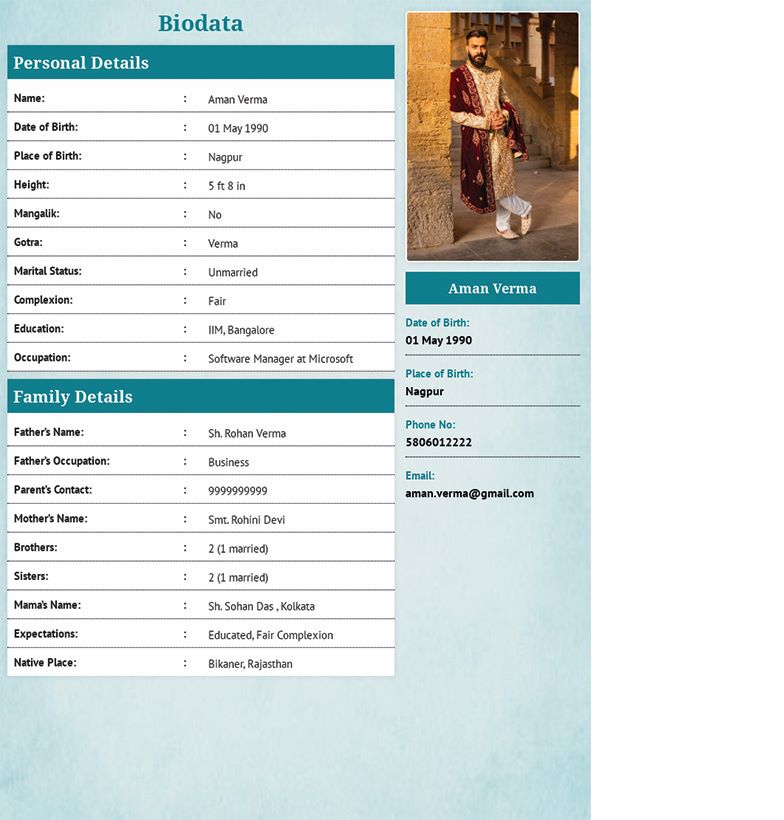
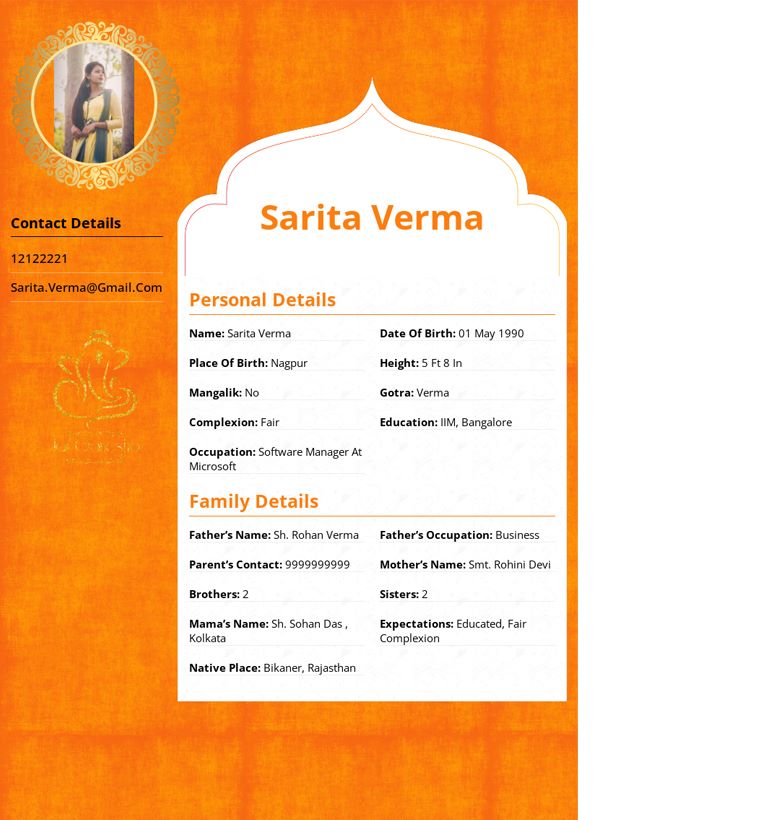
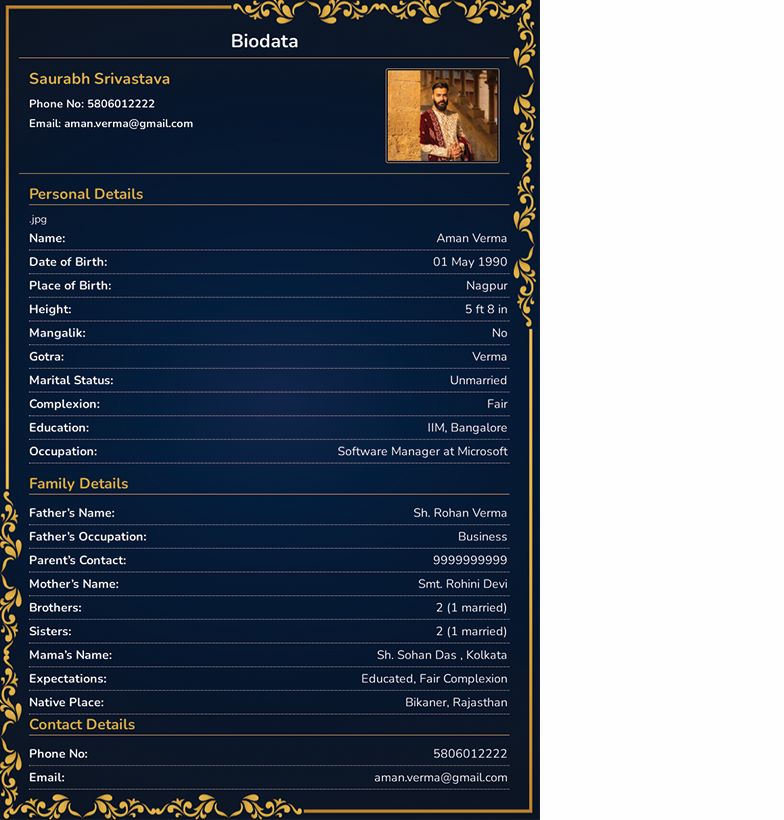
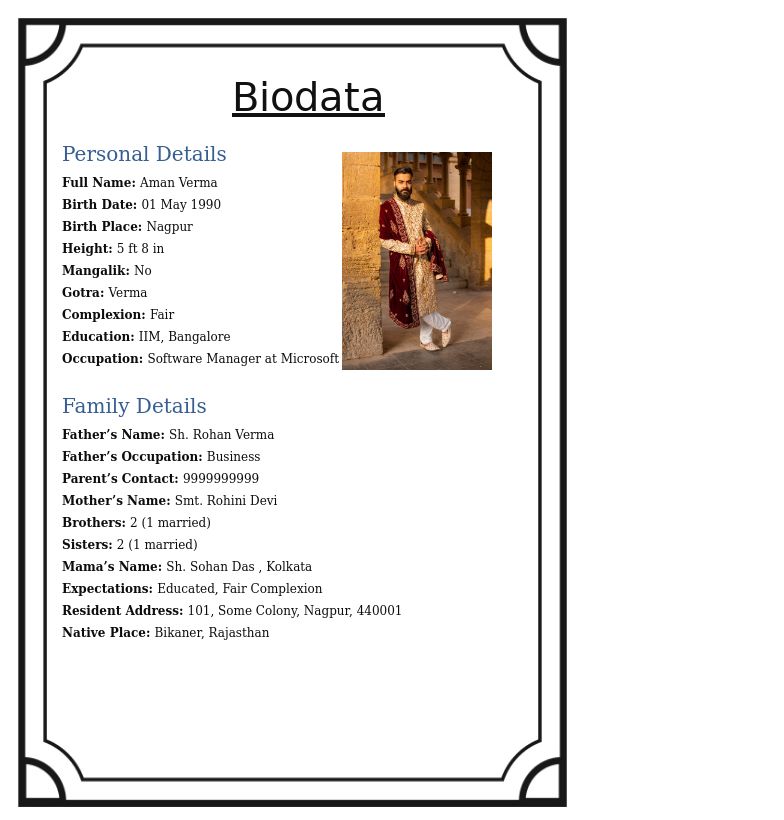
Create your Pnar marriage biodata today with our free, customisable templates. Download in PDF or Word and share across Jowai, East & West Jaintia Hills, Shillong, and beyond. Behdeinkhlam greetings!