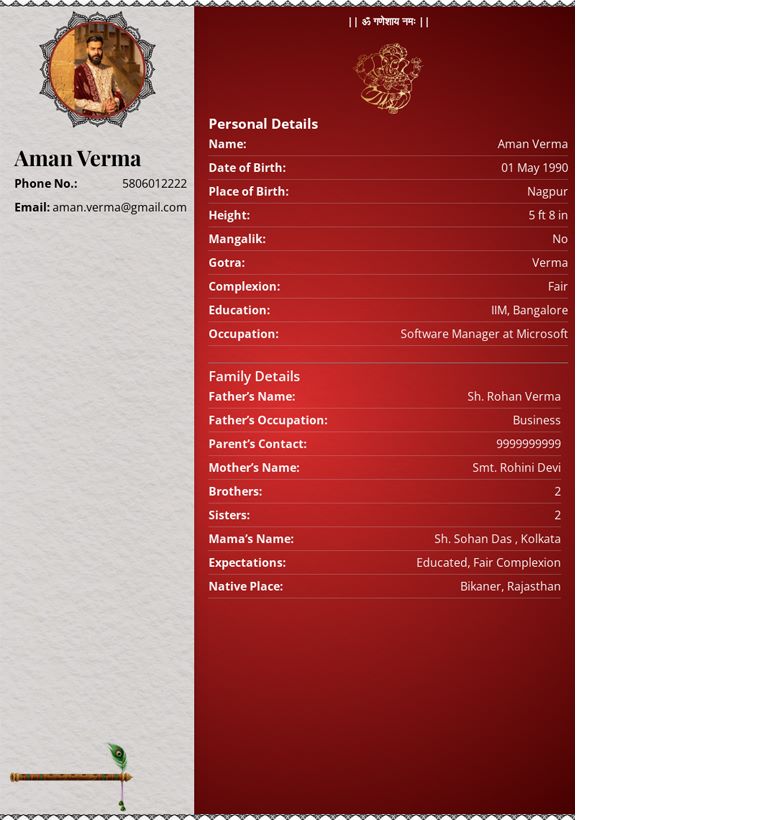
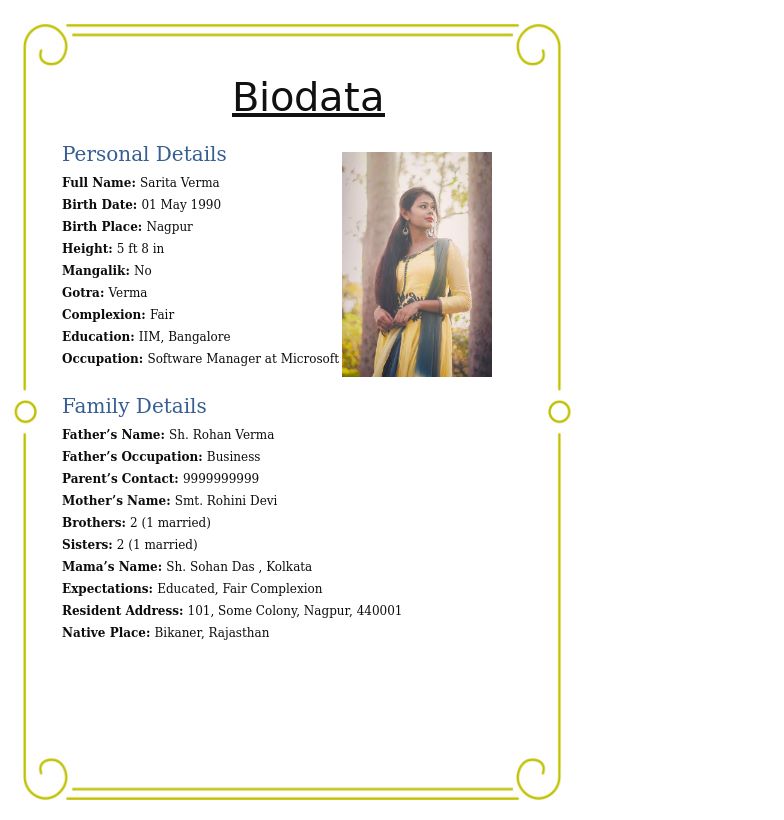
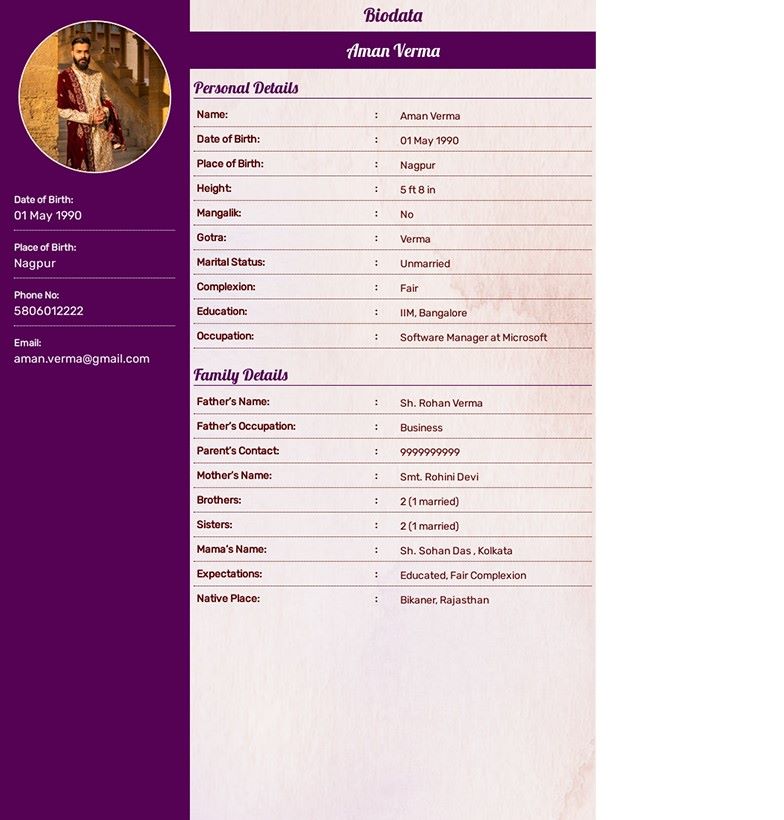
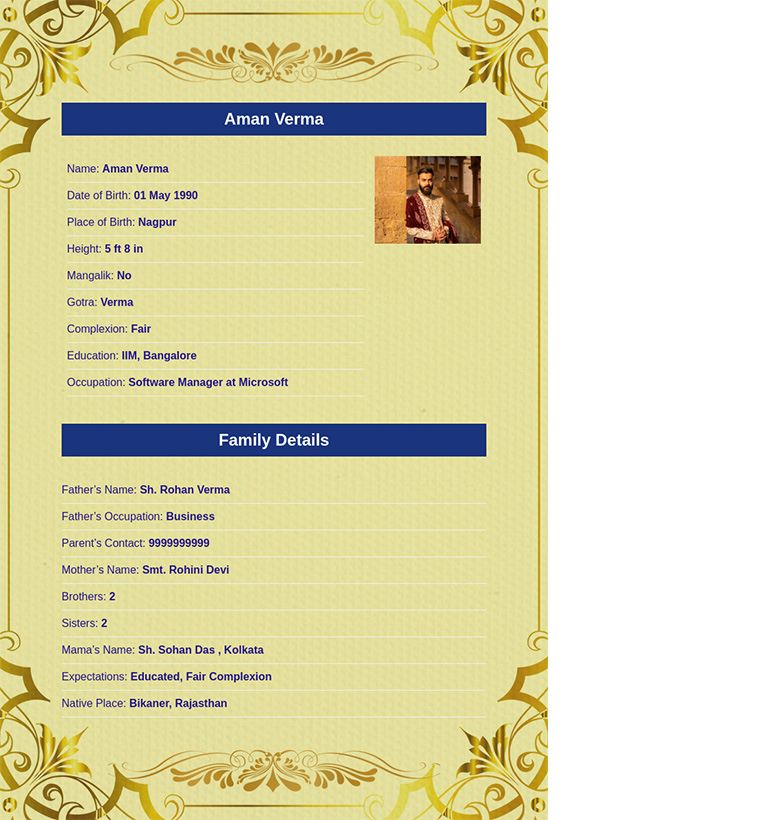
Nepali Marriage Biodata Templates
The Nepali-speaking community in India — concentrated in Sikkim, the Darjeeling hills, Kalimpong, and the foothills of Assam, Arunachal Pradesh, and Uttarakhand — carries a cultural identity that blends Himalayan Buddhist and Hindu traditions with a fierce pride in the Gorkha martial heritage. Nepali (also called Gorkhali or Parbatiya) is a scheduled language of India and the mother tongue of India’s Gorkha community. A Nepali marriage biodata is not only circulated within India — it crosses the open India-Nepal border freely, connecting compatriots in Kathmandu, Pokhara, Biratnagar, and Janakpur with families in Gangtok, Siliguri, and Itanagar.
The Rich Diversity Within Nepali-Speaking Matrimony
The Nepali-speaking community is not a single caste group — it is a mosaic of Brahmin (Bahun), Chhetri (Kshatriya), Rai (Kirant), Limbu (Subba), Gurung, Magar, Tamang, Newar, Sherpa, Sunuwar, and other communities, each with their own marriage customs. For Hindu Bahun and Chhetri families, the Gotra system and Rashi matching follow Vedic tradition. For Rai, Limbu, and Tamang communities, the clan (Thar) system determines marriage eligibility — and Buddhist marriage customs coexist with Hindu ritual in many Himalayan households. The Gorkha military tradition — Regiments in the Indian Army, British Army, Singapore Police, and Brunei — means that a defence career is simultaneously the most common and the most prestigious profession in many Nepali-speaking families.
Key Sections of a Nepali Marriage Biodata
Personal Details
- Full Name — including community surname (Sharma, Thapa, Rai, Limbu/Subba, Gurung, Tamang, Sherpa, Pradhan/Newar, etc.)
- Date of Birth & Age
- Height, Complexion
- Marital Status
- Current Location — Darjeeling, Gangtok, Siliguri, Kalimpong, Kathmandu, or defence posting
Community & Religion
- Religion: Hindu / Buddhist / Christian / Kiranti (indigenous)
- Community: Brahmin (Bahun), Chhetri, Rai (Kirant), Limbu (Subba), Gurung, Magar, Tamang, Newar, Sherpa, Sunuwar, etc.
- Thar (Clan for Rai/Limbu/Tamang): Each community has dozens of Thars — same-Thar marriages are traditionally prohibited
- Gotra (for Hindu Bahun and Chhetri families)
- Kul Devata (Clan Deity)
- Rashi & Nakshatra (for Hindu families)
Education & Career
- Qualifications — University of North Bengal, Sikkim University, NIT Sikkim, St. Joseph’s Darjeeling
- Profession — Indian / British / Singapore / Brunei Gurkha regiment, ITBP, SSB, state government (Sikkim/WB), tea industry, tourism, hospitality
- Regimental details — Gorkha Rifles battalion, British Gurkhas, Singapore Gurkha Contingent
- Annual Income / Pension details (pension from Gurkha regiment is highly valued)
Family Background
- Father’s Name, Thar/Gotra, Occupation
- Mother’s Name & Natal Thar/Family
- Siblings
- Native village / hill station — Darjeeling, Kurseong, Mirik, Kalimpong, Gangtok, Namchi, or Nepal district
- Tea garden community connection (if applicable)
Tips for a Strong Nepali Marriage Biodata
- State Thar for hill community families: Among Rai, Limbu, Tamang, and Gurung families, the Thar (clan) system has the same marriage-determining importance as Gotra in Brahmin families. Same-Thar marriages are prohibited across most Nepali hill communities.
- Regiment and battalion details matter: For Gorkha military families, the specific regiment (3rd Gorkha Rifles, 11th Gorkha Rifles, British Gurkhas) and the father’s rank carry the same social recognition as a civilian title would elsewhere.
- Bridge Indian and Nepal connections: Many Nepali families have members on both sides of the open border. Specifying which Nepali district the family traces its roots to — Taplejung (Limbu homeland), Solukhumbu (Sherpa homeland), Okhaldhunga (Rai homeland) — helps identify cultural compatibility.
- Buddhist-Hindu coexistence: Many Nepali families simultaneously observe Buddhist and Hindu rituals. Being clear about which tradition dominates in your family’s wedding customs helps prevent ritual mismatches.
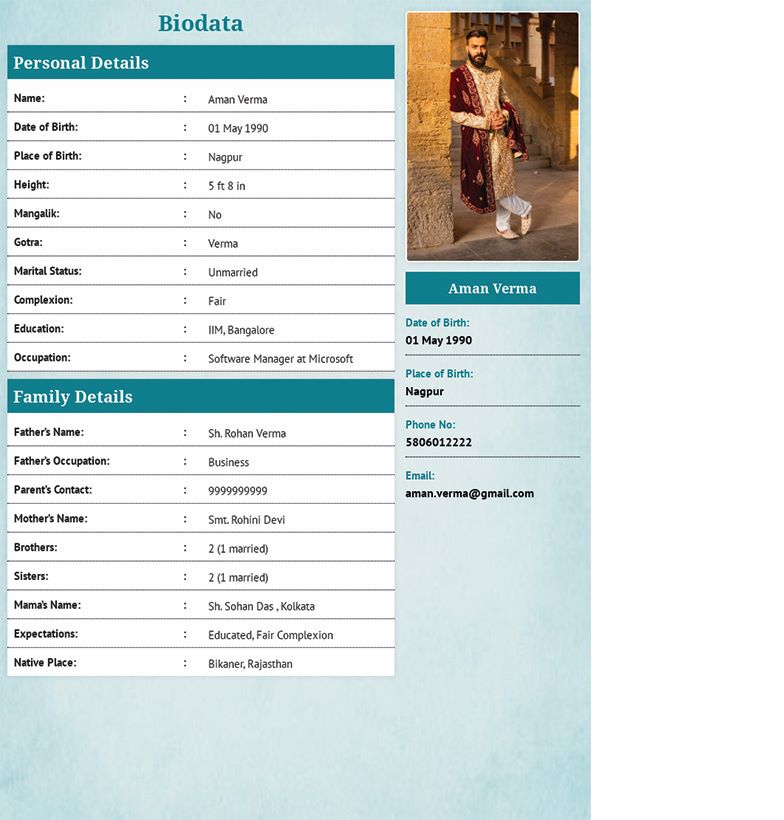
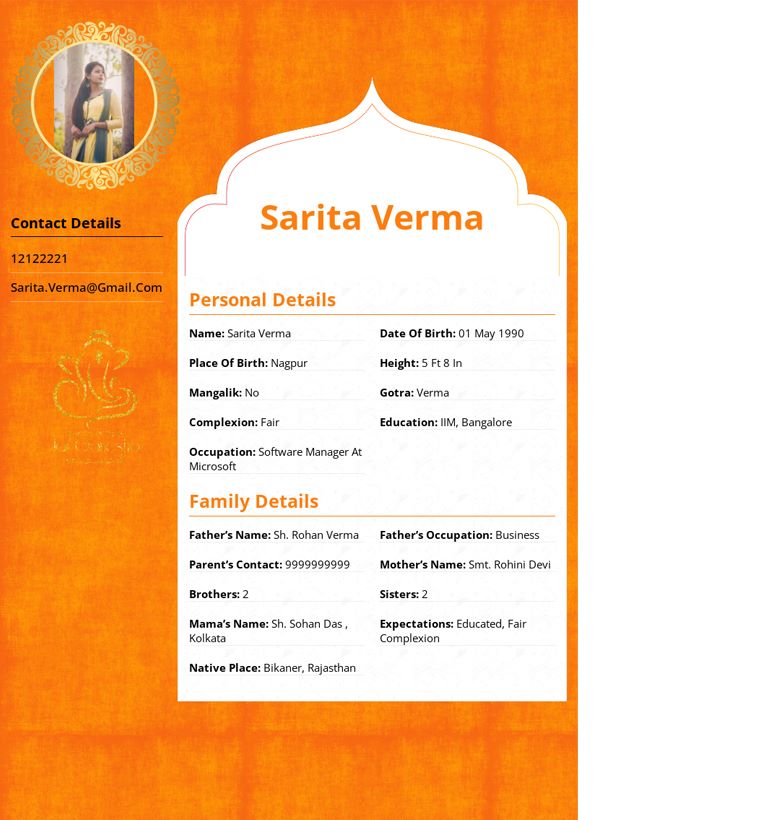
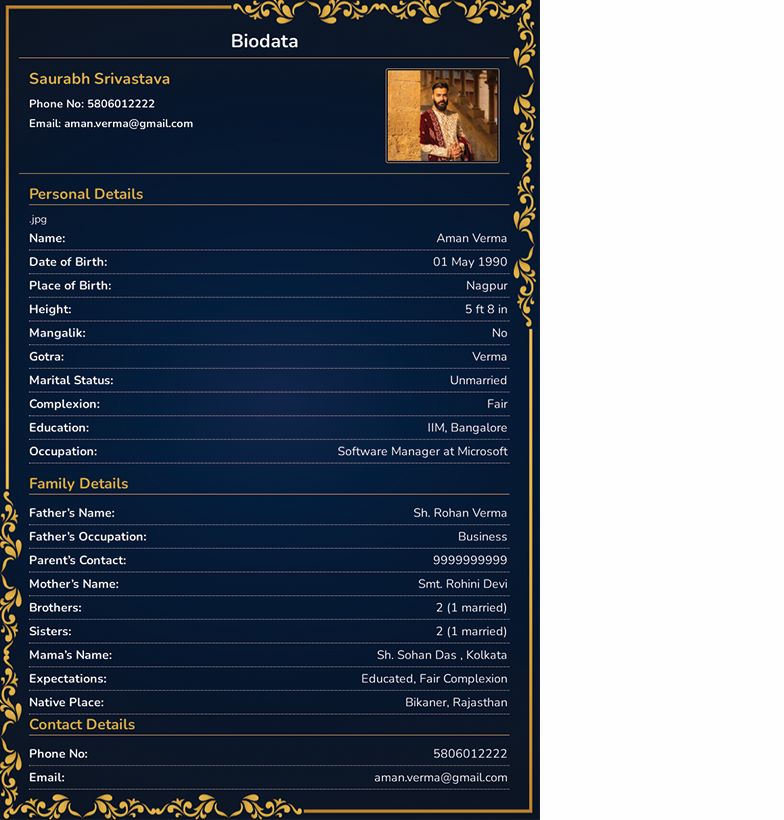
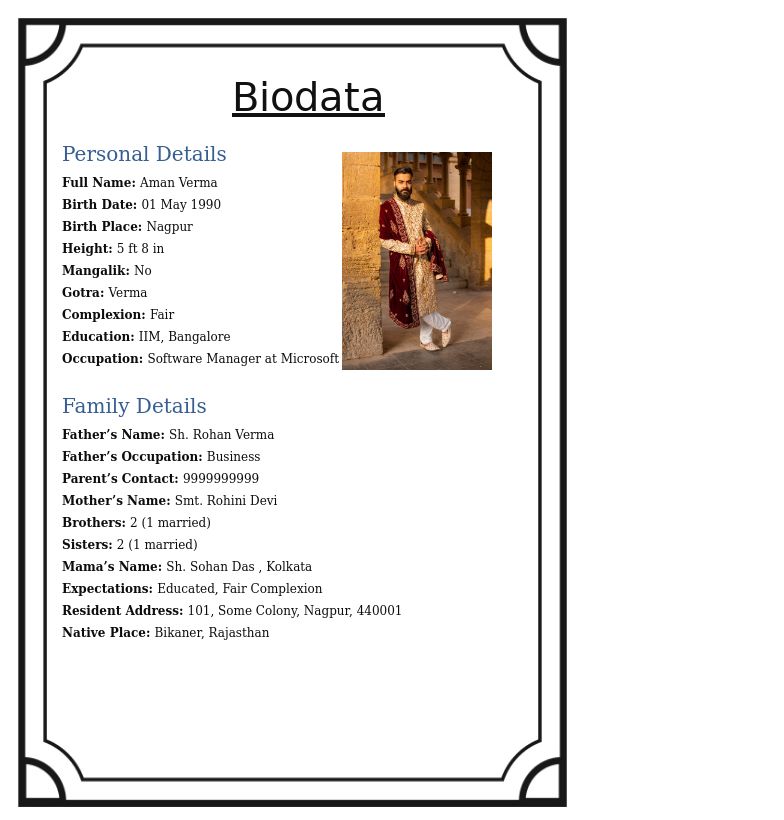
Nepali Marriage Biodata Formats Available
- Nepali Biodata in Nepali (Devanagari Script) — widely used across Darjeeling hills, Sikkim, and Nepal
- Nepali Biodata in English — for defence postings, urban matches, and diaspora communities
- Bahun / Chhetri Marriage Biodata — with Gotra, Kul Devata, and Vedic tradition
- Rai / Limbu / Tamang Biodata — with Thar system and Kiranti indigenous faith details
- Gurung / Magar Buddhist Biodata — with Buddhist monastery affiliation and Lama tradition
- Sherpa Biodata — with mountaineering heritage and Buddhist tradition
- Gorkha Defence Family Biodata — regiment, rank, pension, and posting details
- Nepali Bride Biodata
- Nepali Groom Biodata
Create your Nepali marriage biodata today in PDF or Word format. Share it with your community samaj, regimental association, or on Nepali matrimonial platforms. Jai Gorkha — may your biodata find its way to a family whose hills, traditions, and heart match your own.