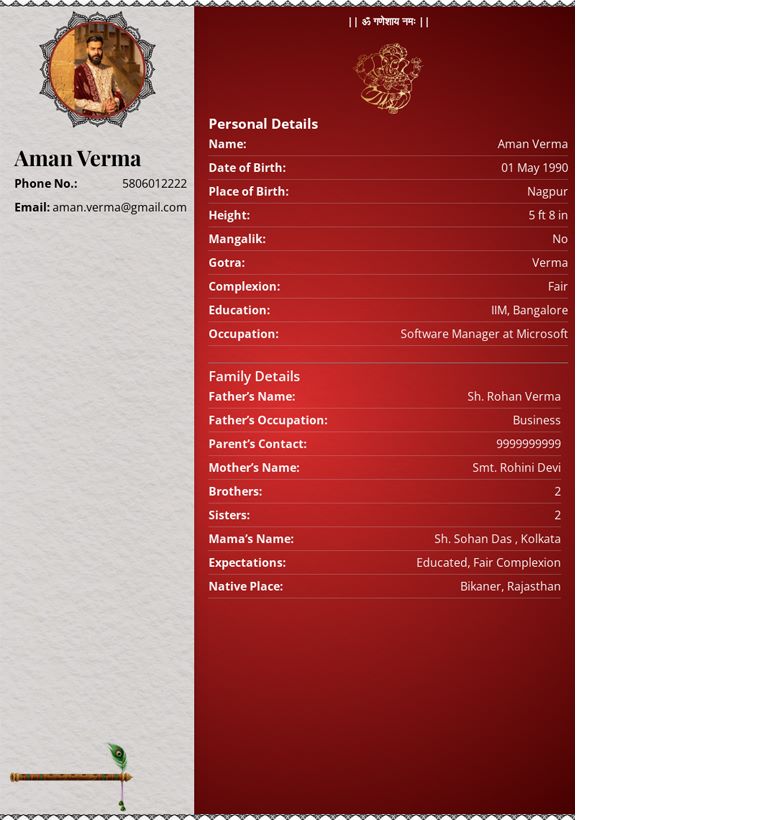
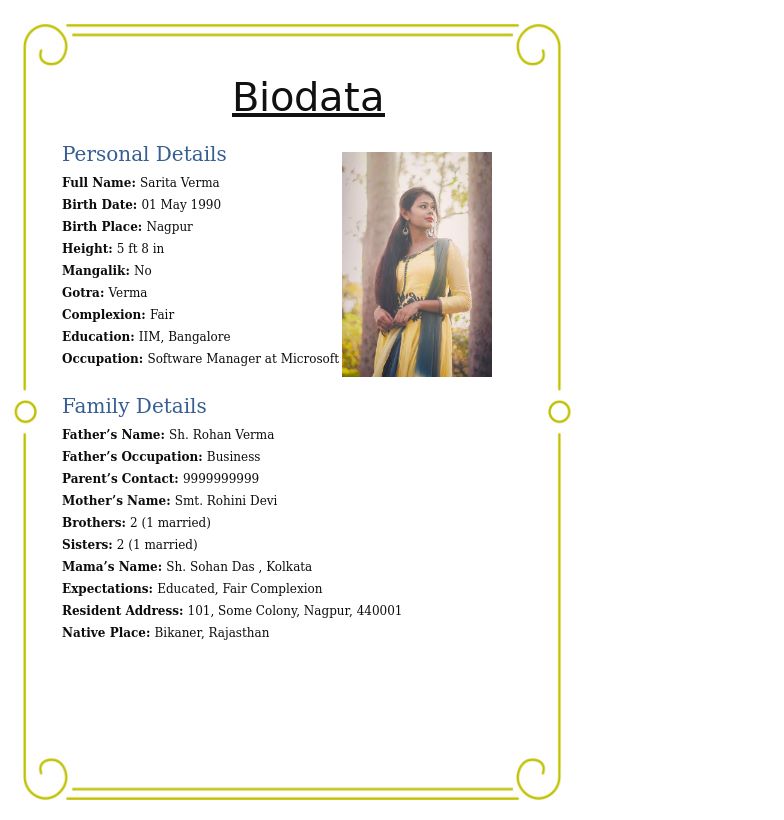
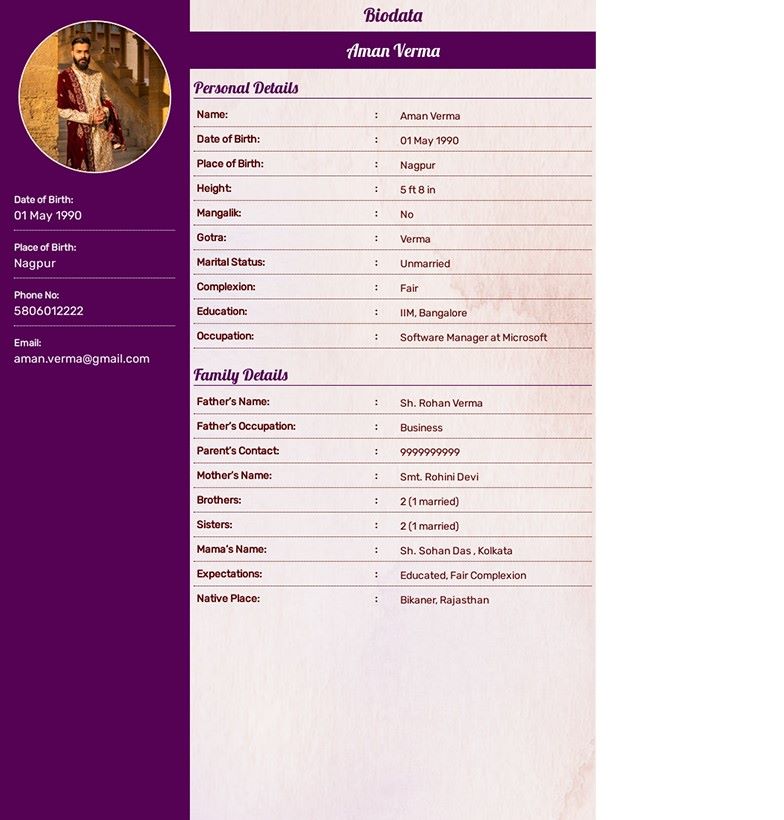
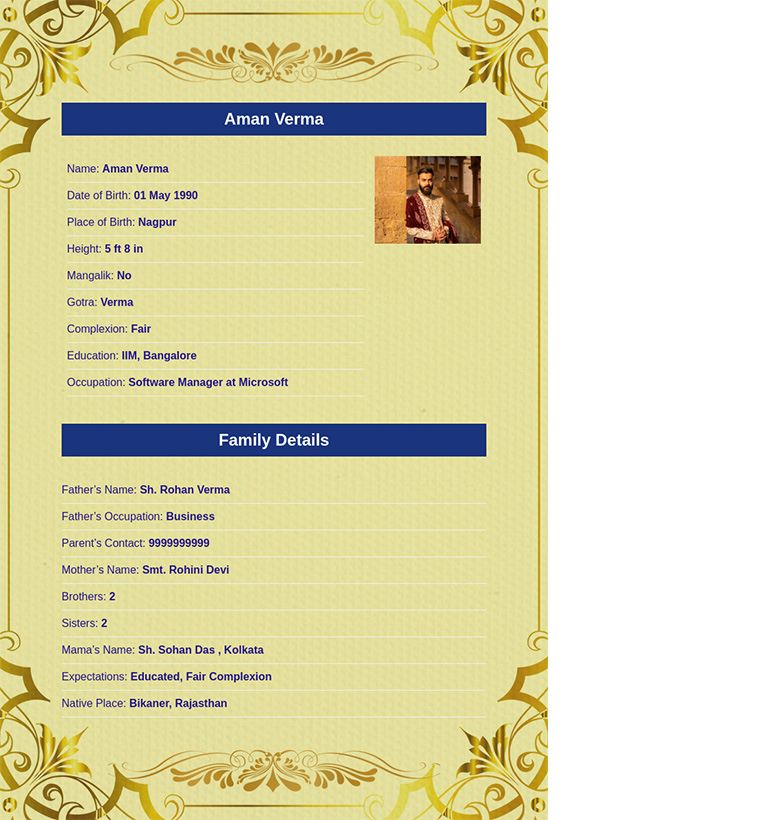
Lepcha Marriage Biodata Templates
The Lepcha people — who call themselves Rongkup (children of the Rong, or children of the snowy peaks) — are Sikkim's and Darjeeling's original indigenous inhabitants, with their sacred homeland called Mayel Lyang (Hidden Paradise), believed to lie in the high valleys of North Sikkim near Kanchenjunga. The Lepcha are one of India's most unique communities: they have their own indigenous script (the Lepcha or Rong script, developed in the 18th century by Thikung Men Salyek, often known as Chakdor Namgyal), a rich oral and written literary tradition, and a deep reverence for Kanchenjunga mountain as the divine protector and guardian of the Lepcha people. Historically Nyingma-lineage Tibetan Buddhist, a significant portion of the Lepcha community in Kalimpong and Darjeeling converted to Christianity through 19th-century Scottish Presbyterian and Catholic missions — so today Lepcha matrimonial culture spans both Buddhist and Christian streams. Lepcha marriage traditionally follows clan (Rum/Kup system) exogamy, with the Rum serving as the patrilineal clan unit and the Kup as the sub-grouping. A Lepcha marriage biodata must reflect this rare combination of Himalayan Buddhist identity, indigenous script pride, Christian faith (where applicable), and the profound ecology-consciousness that defines Rongkup identity.
Lepcha Society: Rum Clans, Sacred Ecology, and Matrimonial Culture
Lepcha society is organised around the Rum (patrilineal clan) system — Lepcha Rum names include A-thing, Bo, Chumboo, Denchung, Foning, Gylmit, Ladenla, Sahay, Tamsang, and Wangchuk among many others. Same-Rum marriage is prohibited. The Lepcha community in Sikkim is governed by the Sikkim Lepcha Tribal Welfare Association and represented in the Sikkim Legislative Assembly through ST reserved seats. Lepcha communities in Darjeeling (Kalimpong, where the Lepcha Research Institute is based), Kurseong, and Mirik maintain distinct identities from the Sikkim Lepcha. Career prestige includes Sikkim government service, SPSC (Sikkim Public Service Commission) positions, teaching, Sikkim Manipal University faculty, tourism and hospitality in Gangtok/Kalimpong, and Forest Department service (reflecting the Lepcha's deep environmental connection). Lepcha activists have been at the forefront of environmental campaigns against large hydropower dams on Sikkim's Teesta River.
Key Sections of a Lepcha Marriage Biodata
Personal Details
- Full Name — Lepcha names are distinctly Rong (e.g., Gyuk Mu, Nyor Mu for women; Kanyot, Tenduk, Ashok Lepcha for men); "Lepcha" as surname is common
- Date of Birth & Age
- Height & Complexion
- Marital Status
- Mother Tongue: Lepcha (Rongring) — written in Lepcha/Rong script
Rum (Clan) & Religious Details
- Rum (Clan) — A-thing / Bo / Chumboo / Foning / Ladenla / Tamsang / Wangchuk etc.; same-Rum marriage strictly prohibited
- Religion — Nyingma Tibetan Buddhist / Scottish Presbyterian / Catholic; often syncretic (Buddhist + Christian)
- Location — Sikkim (East/North/South Sikkim) / Kalimpong / Darjeeling / Kurseong
- Monastery Patronage (for Buddhist families) — Pemayangtse, Rumtek, Tashiding monasteries
Education & Career
- Qualification — Sikkim University, Sikkim Manipal University, Darjeeling Government College, St. Joseph's College Darjeeling
- Occupation — Sikkim government/SPSC officer, teacher, Forest Department, tourism/hospitality, NGO, researcher (Lepcha language/culture preservation)
- Annual Income
Family Background
- Father & Mother's Name and Occupation
- Rum (Clan) of Both Parents
- Village / Block and District (Sikkim or Darjeeling hills)
- Family Religious Tradition — Buddhist / Christian / syncretic
- Family Type: Nuclear (most educated Lepcha families in Gangtok, Kalimpong, Darjeeling)
Tips for Writing a Strong Lepcha Marriage Biodata
- Rum Clan is Non-Negotiable: Lepcha matrimonial compatibility always starts with Rum exogamy check — state it prominently.
- Lepcha Script Pride: If writing a biodata in the Lepcha/Rong script, it signals exceptional cultural pride and community rootedness — highly respected in traditional families.
- Buddhist-Christian Spectrum: Many Lepcha families are syncretic (observe both Buddhist festivals and church events); specify your primary faith for matrimonial clarity.
- Kanchenjunga Connection: Reverence for Kanchenjunga as the guardian deity of Rongkup is a deeply held Lepcha value — mentioning a connection to North Sikkim's sacred valleys resonates.
- Ecology and Conservation Identity: Lepcha environmental activism (protecting the Teesta, opposing dams) is a community pride point — mentioning involvement in conservation signals values alignment.
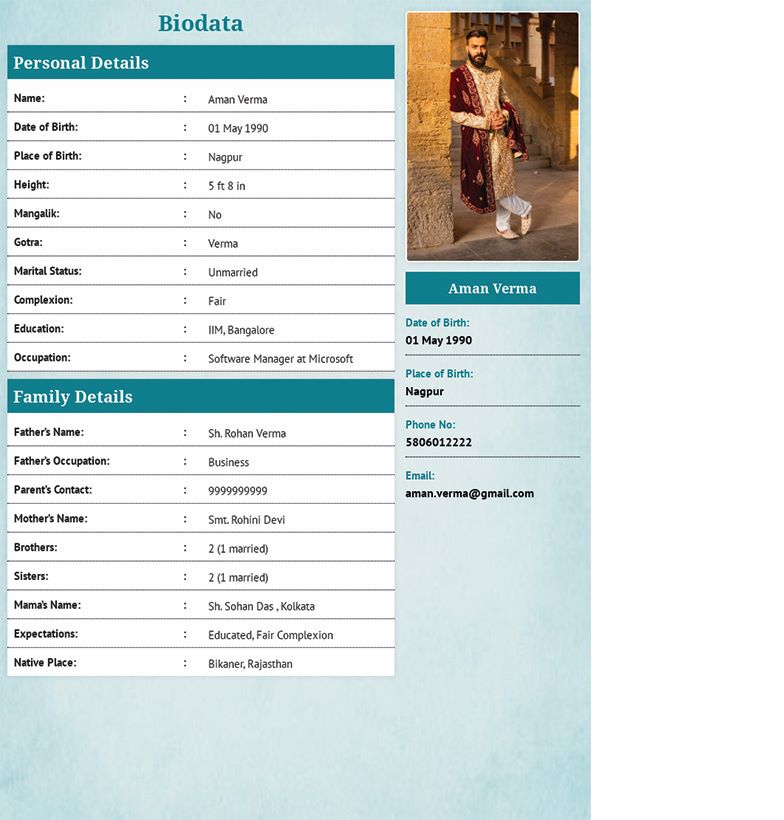
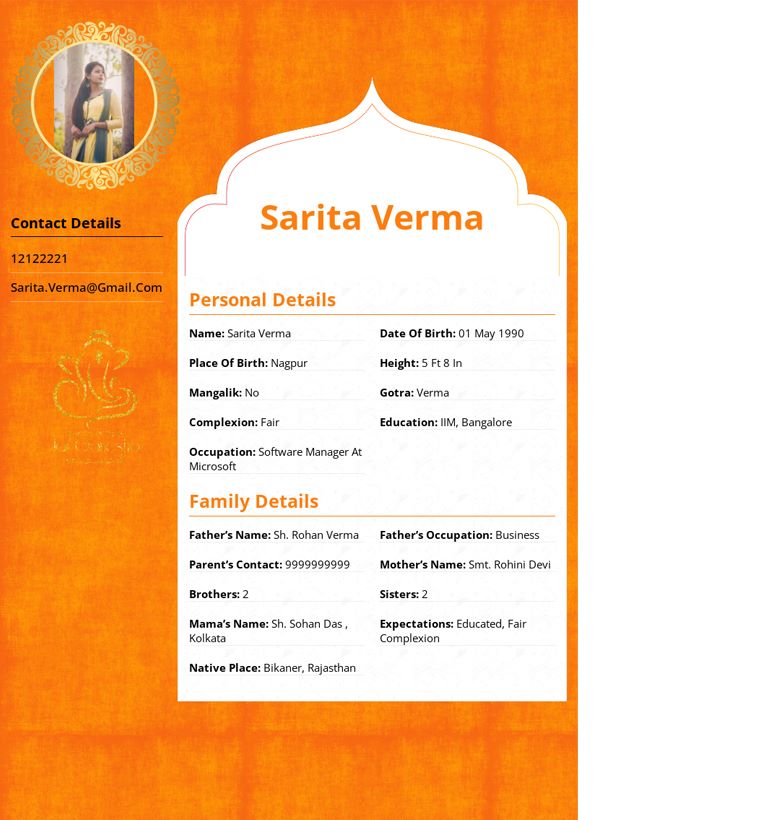
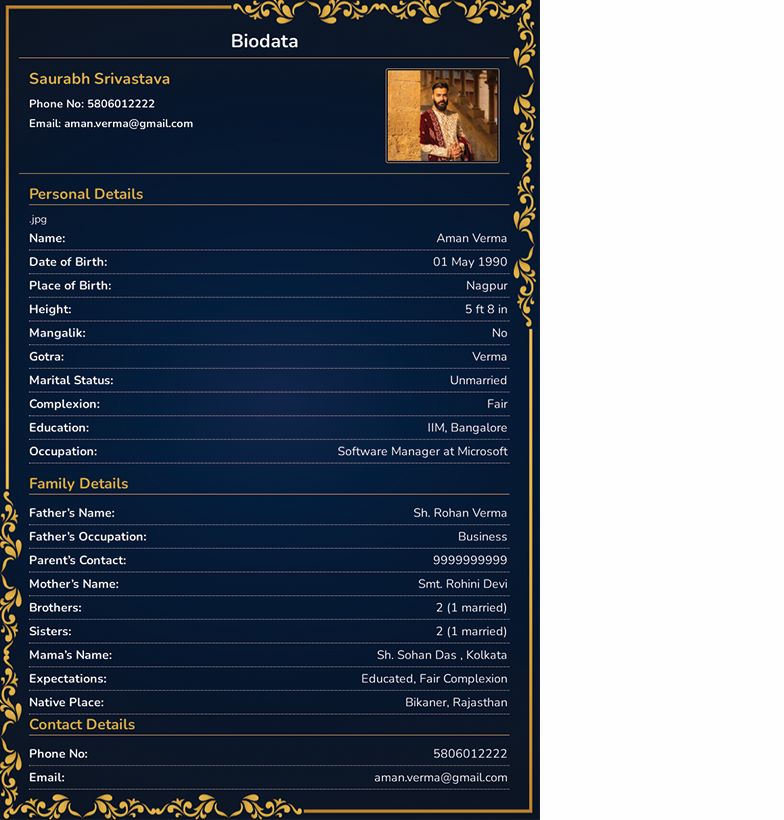
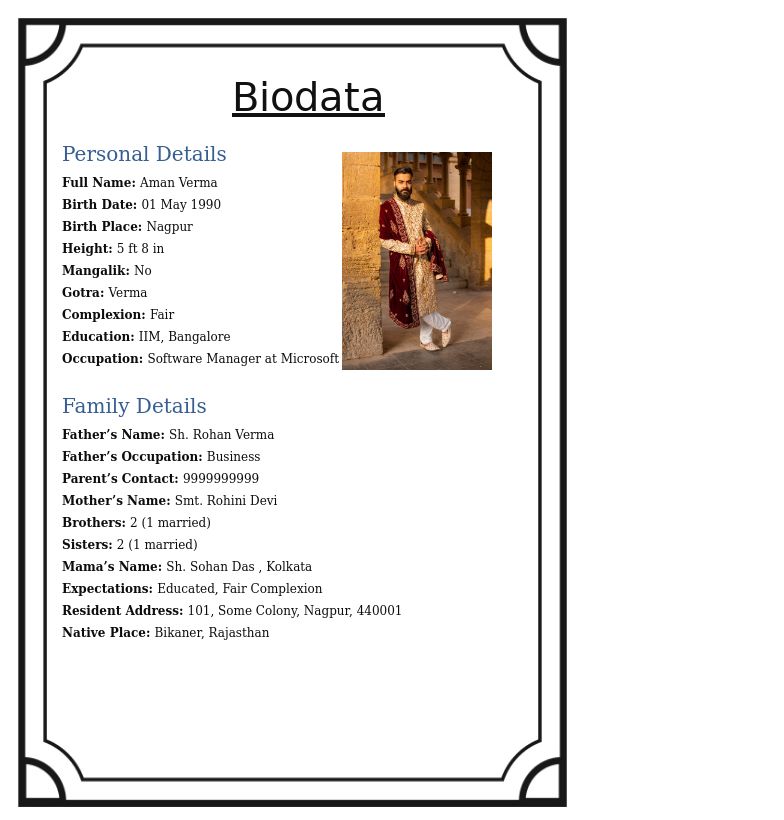
Lepcha Marriage Biodata Formats Available
- Buddhist Lepcha Biodata — Rum clan, Nyingma monastery, Rong script, Sikkim Kanchenjunga connection
- Christian Lepcha Biodata — Presbyterian/Catholic, church, Kalimpong/Darjeeling community
- Lepcha Biodata in Rong Script — indigenous Lepcha script format for cultural presentations
- Lepcha Biodata in English — standard format for educated Sikkim/Darjeeling Lepcha families
- Lepcha Biodata for Groom / Bride — Rum, Sikkim/Kalimpong origin, SPSC/teaching career
Create your Lepcha marriage biodata today with our free, customisable templates. Download in PDF or Word and share across Sikkim, Kalimpong, and the global Rongkup community. Kazong!