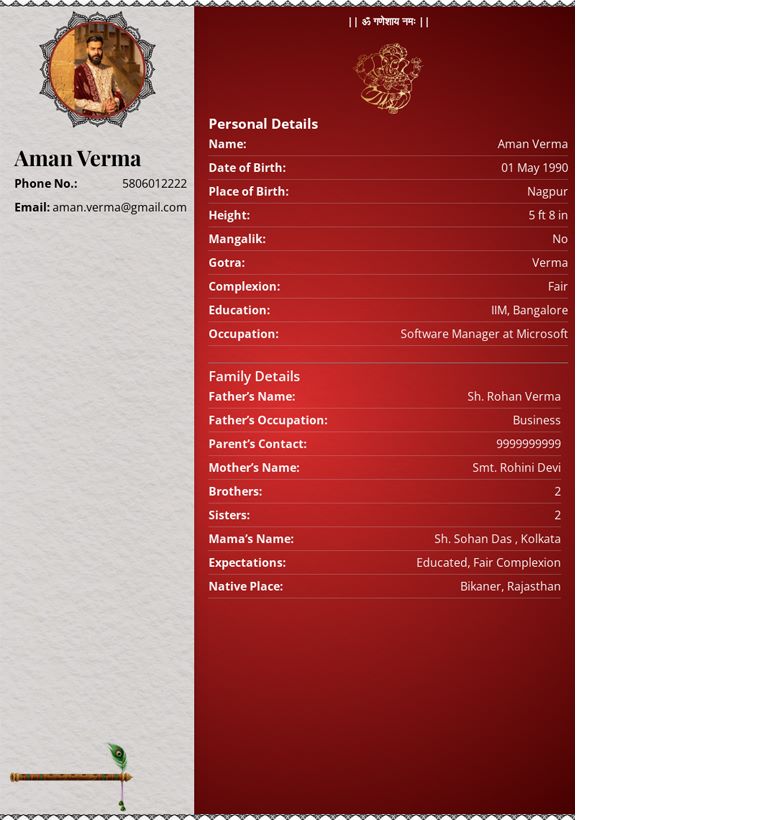
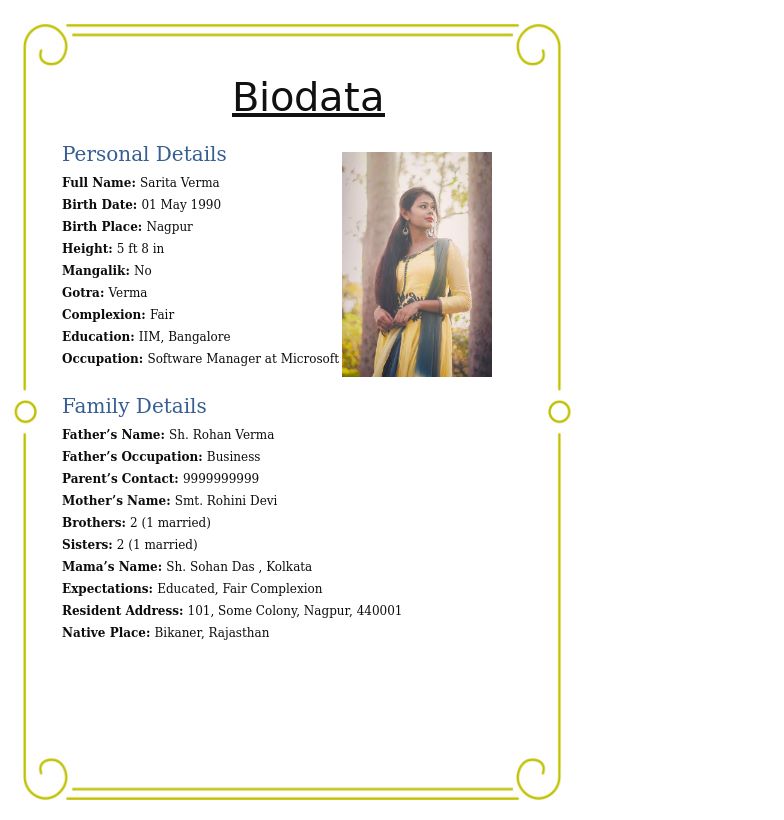
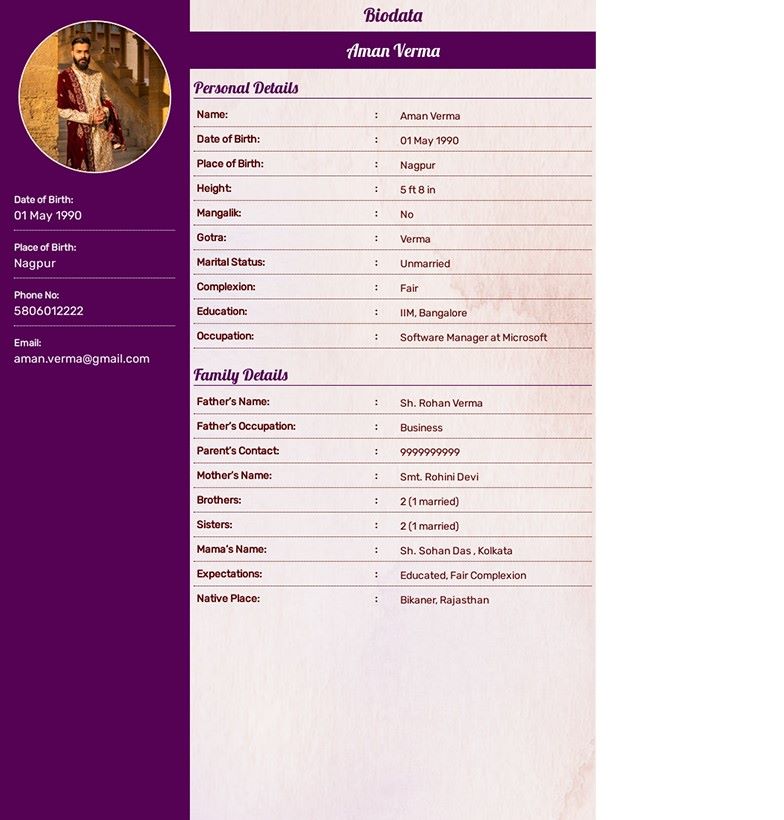
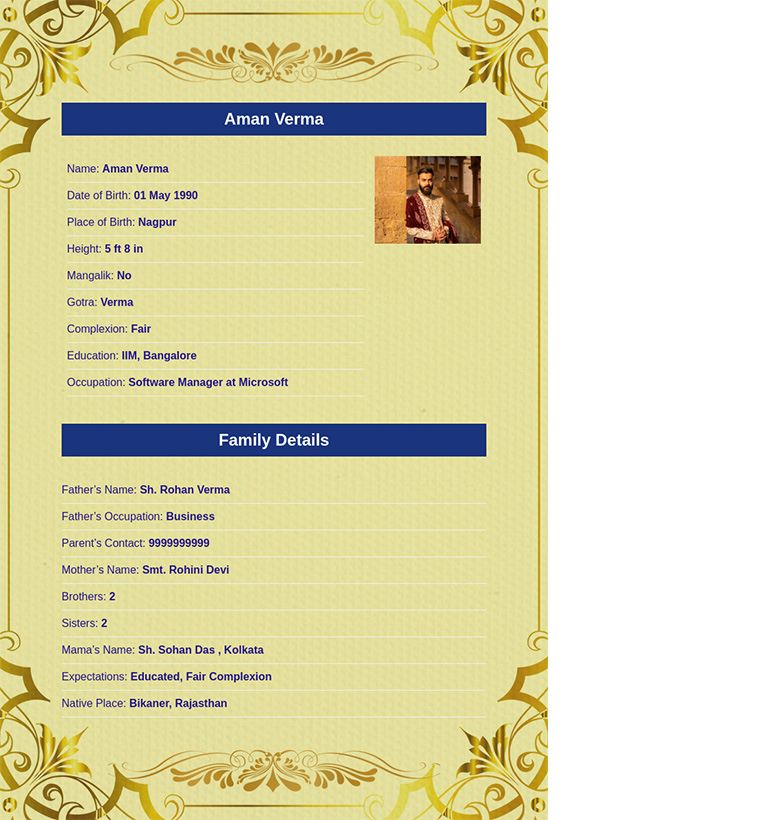
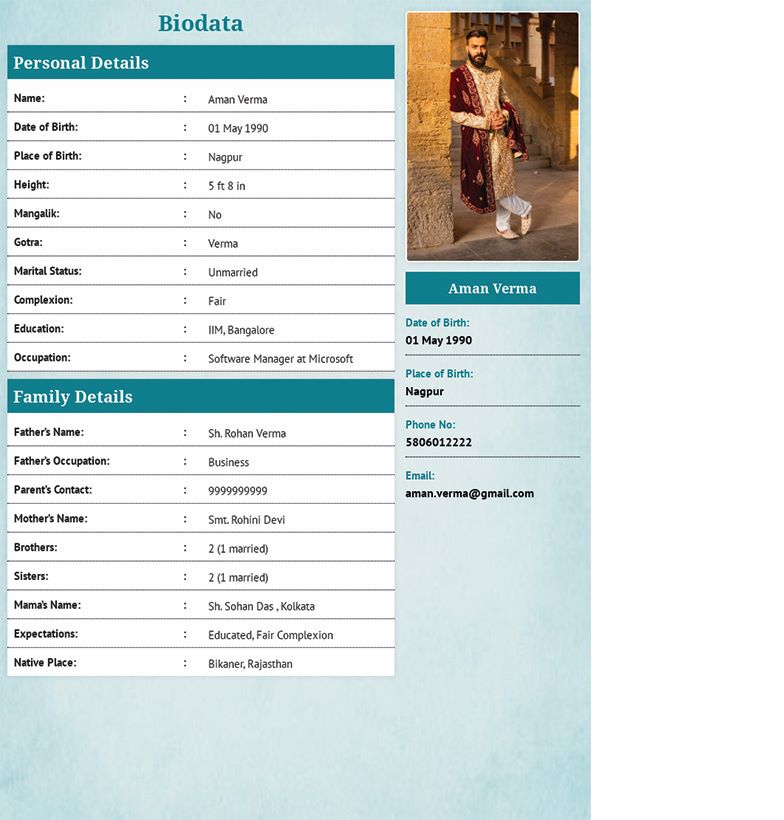
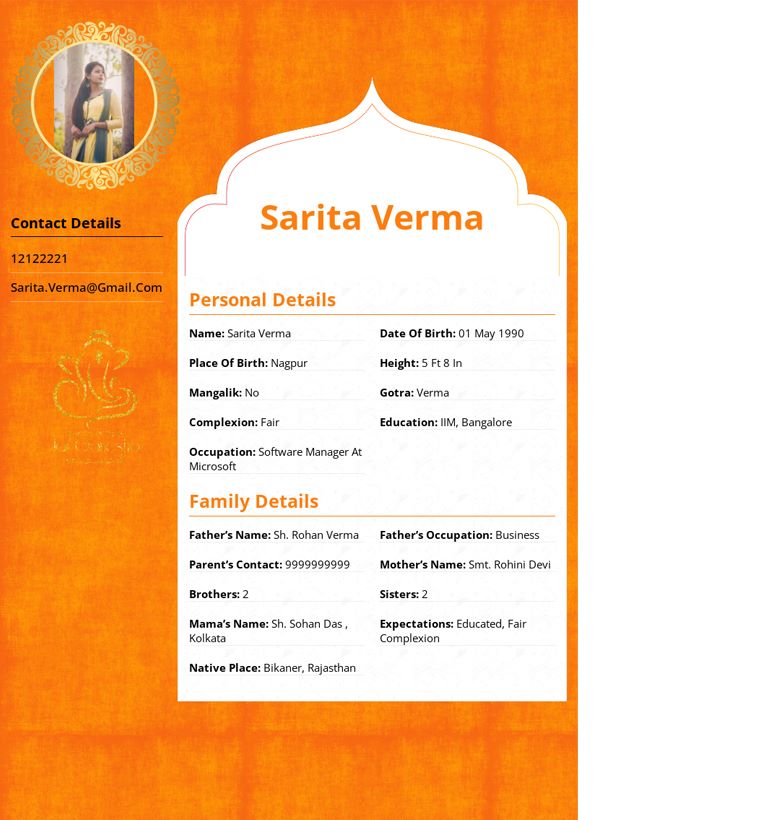
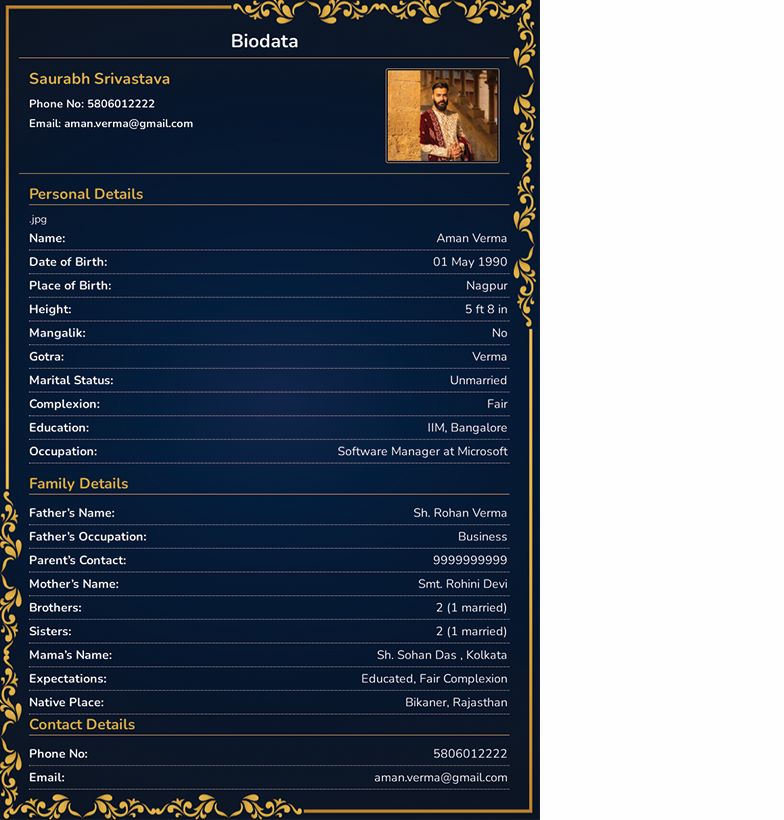
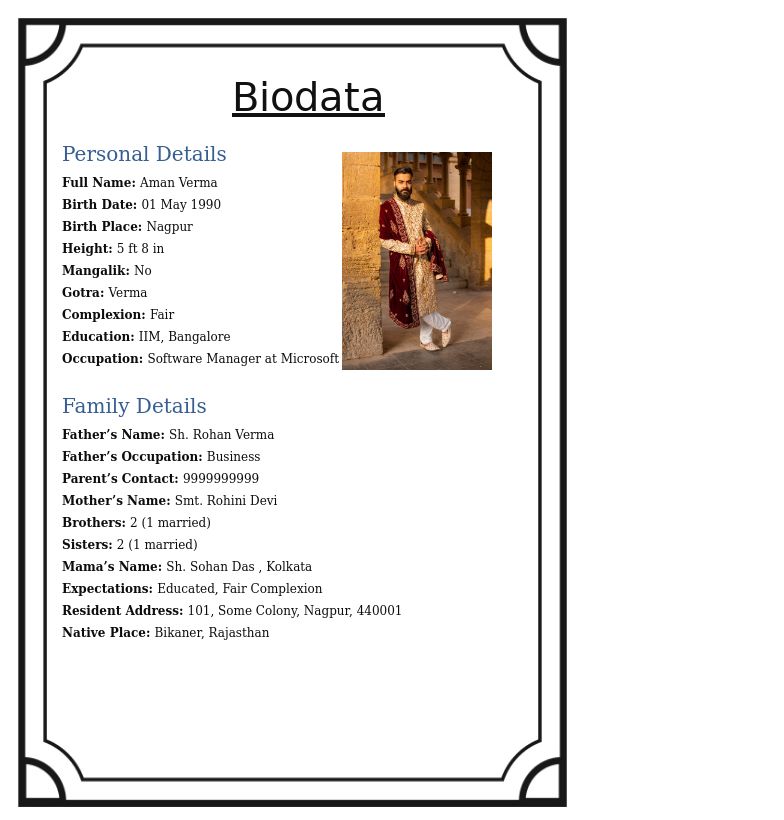
Konyak Marriage Biodata Templates
The Konyak Naga are the largest Naga tribe by population, inhabiting the Mon district of Nagaland — a remote hill region along the Myanmar border that was, until very recently, governed by the legendary Angh (hereditary chiefs) who commanded absolute authority over their villages. The Konyak are historically known for their head-hunting tradition — a practice abandoned after Christianisation in the 20th century but still remembered through the elaborate facial tattoos worn by the last living head-hunters (now elderly), and through the distinctive brass skull-motif jewellery and warrior-culture art forms that continue as cultural treasures. The Konyak social structure is unique among Naga tribes in having a hereditary chieftainship (Angh) system rather than a purely democratic village council — the Angh and his family carry noble status and the "Great Angh" of Longwa village, whose palace straddles the India-Myanmar border, is among India's most iconic indigenous figures. Konyak marriage biodata must reflect the Angh/commoner social status, clan identity, Christian church affiliation, and the extraordinary transformation this tribe is undergoing as Mon district opens to the modern world.
Angh System, Clan Identity, and Christian Transformation
Konyak society is divided between the Angh (ruling chief class) and the commoners (Ang-ban), and this distinction is still socially relevant in matrimonial contexts — many Konyak families prefer matches within their social class. The clan (Shangnyu/Tayang etc.) system also governs exogamy. American Baptist missionaries arrived in Mon district in the mid-20th century, and today the vast majority of Konyak are Baptist Christians, with the Mon Baptist Church Association (MBCA) being the primary denominational identity. Mon district's relative isolation has meant that the Konyak community is now experiencing rapid development — the Hornbill Festival's Konyak warriors in traditional regalia are globally recognised images — and the first generation of Konyak college graduates and government officers is emerging. Career opportunities centre on Nagaland government service, teaching, army/CRPF, and the growing tourism economy of Mon district. An Ao or Angami colleague can verify: the Konyak community is fiercely proud and deeply traditional even as it modernises.
Key Sections of a Konyak Marriage Biodata
Personal Details
- Full Name — Konyak names are typically monosyllabic or disyllabic Tibeto-Burman constructions; the Angh prefix/title may appear in noble family names
- Date of Birth & Age
- Height & Complexion
- Marital Status
- Mother Tongue: Konyak
Social Class, Clan & Religious Details
- Social Class — Angh (chief lineage) / Ang-ban (commoner) — still noted in traditional family contexts
- Clan/Village Identity — Mon, Tizit, Tobu, Aboi, Longwa, Shangnyu village origins
- Church Denomination — Mon Baptist Church Association (MBCA) / Catholic
- Home Church and Congregation
Education & Career
- Qualification — Nagaland University, NEHU Shillong, regional colleges; first-generation graduates are emerging
- Occupation — Nagaland government teacher, NPSC officer, army/CRPF, village council member, tourism/hospitality, Mon district administration
- Annual Income
Family Background
- Father & Mother's Name and Occupation
- Home Village in Mon District
- Angh lineage (if applicable)
- Church Membership
- Family Type: Joint (traditional village households) / Nuclear (urban educated)
Tips for Writing a Strong Konyak Marriage Biodata
- Village and Social Class Identity: Among Konyak families, the Angh/Ang-ban distinction still influences matrimonial preferences — state your village and lineage clearly.
- Mon District Heritage is Unique: The Mon district's Myanmar-border identity, the Longwa village palace, and Konyak warrior cultural legacy are points of pride worth referencing.
- Baptist Church Affiliation is Central: MBCA church membership signals community values and is the primary social trust marker in Konyak matrimony.
- Education is an Asset: First-generation college graduates and government officers carry exceptional prestige in the Konyak community — highlight qualifications prominently.
- Write in English: Nagaland's official language; Konyak biodatas are written in English, sometimes with transliterated Konyak phrases.
Konyak Marriage Biodata Formats Available
- Konyak Baptist Biodata — MBCA church, Mon district village, Angh/Ang-ban identity
- Konyak Biodata in English — standard format for educated Mon district and Dimapur-based families
- Konyak Biodata for Groom / Bride — village, lineage, career credentials, church standing
- Konyak Angh Family Biodata — for families of the hereditary chieftainship lineage
- Simple Konyak Biodata — one-page format for community gatherings in Mon
Create your Konyak marriage biodata today with our free, customisable templates. Download in PDF or Word and share across Mon district and the global Konyak community.