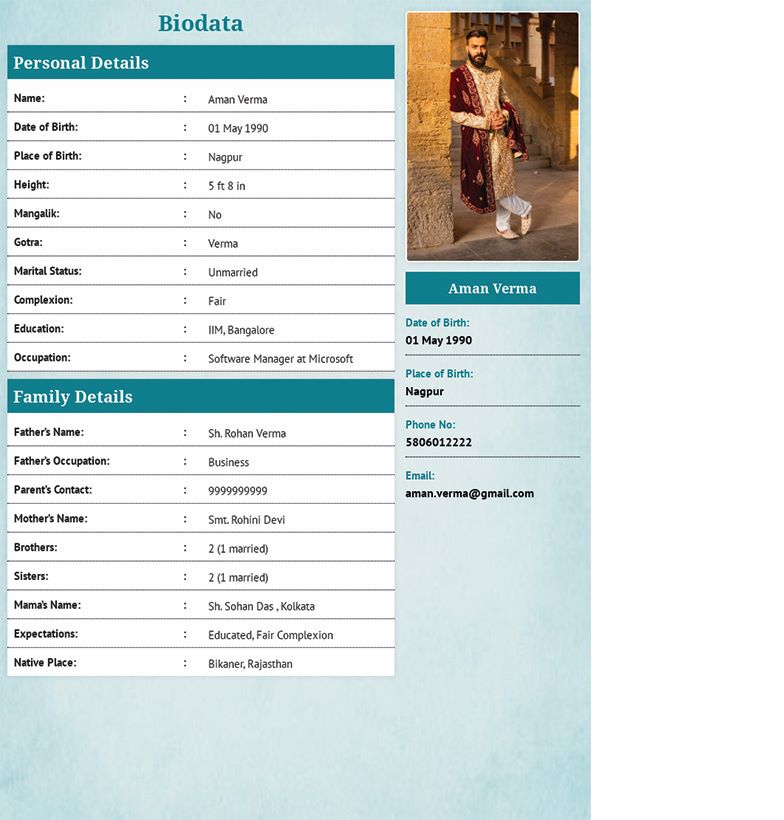
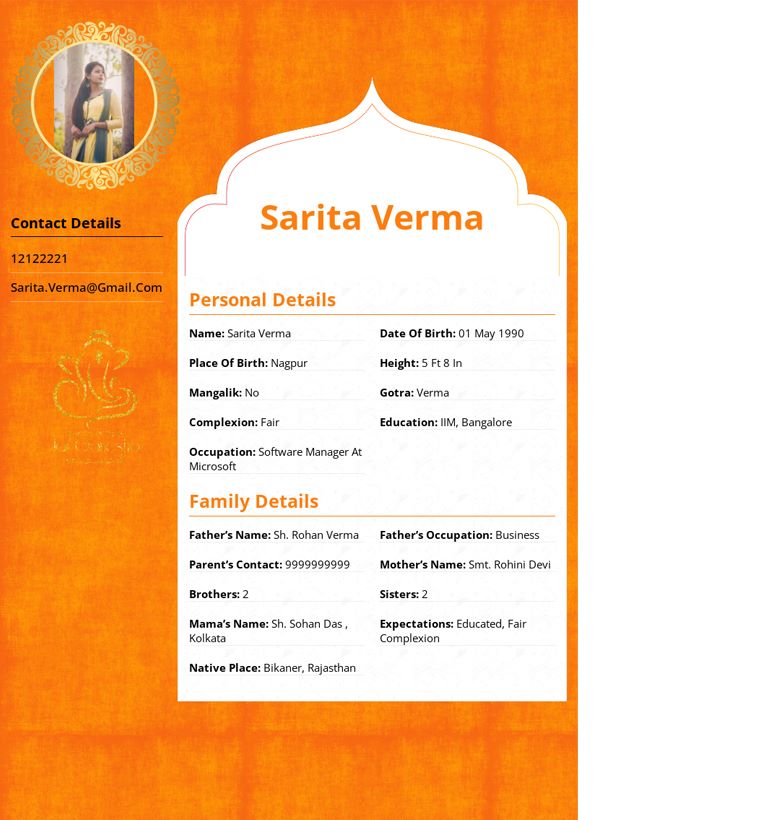
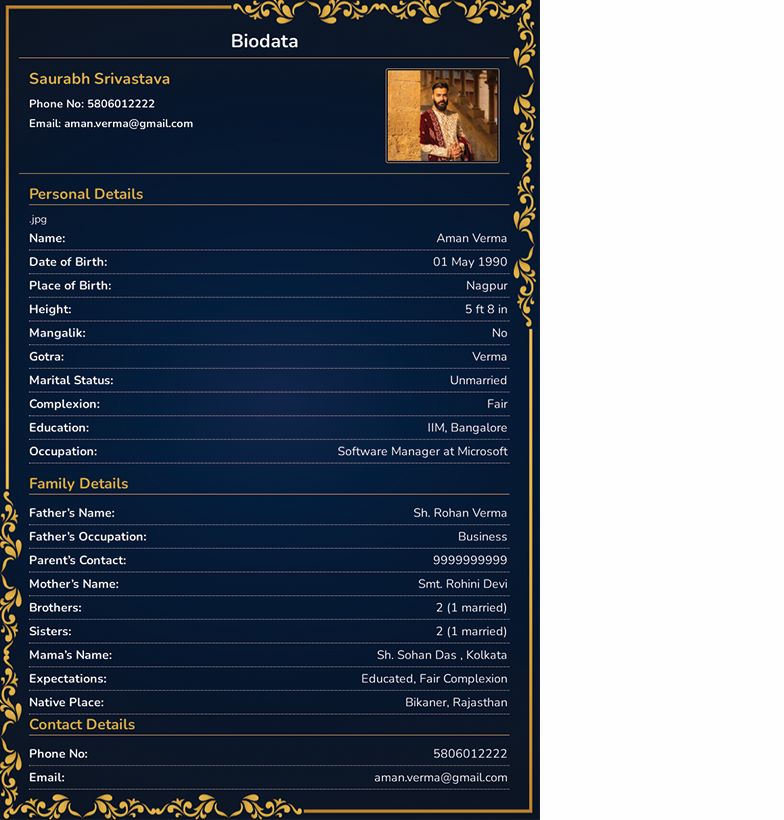
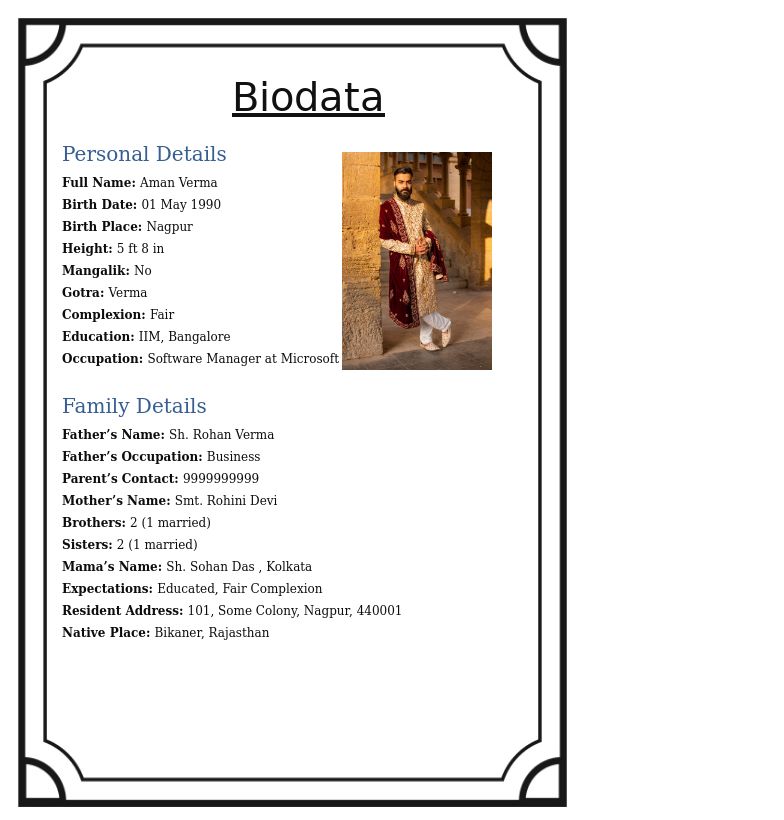
Gondi Marriage Biodata Templates
The Gond people are one of the largest Adivasi communities in Asia, with a population spread across Madhya Pradesh (Balaghat, Chhindwara, Mandla, Seoni, Dindori), Chhattisgarh (Bastar, Rajnandgaon, Kanker), Telangana (Adilabad, Bhadradri), Maharashtra (Gadchiroli, Yavatmal), and Odisha. Gondi is a Dravidian language — making the Gond linguistically kin to Telugu, Kannada, and Tamil — and the community's historical kingdoms (the Garha-Mandla kingdom of the 16th century, the Deogarh Gond kingdom, and the Chanda kingdom of Chandrapur) represent a powerful pre-colonial Adivasi royal heritage. The Gond community follows a Phratry (Sagor/Phari) and Totem (Sai) kinship system — marriage is exogamous across both Phratry and sub-clan. Major Gond clans include Tekam, Netam, Uike, Dhurwa, Kumre, Soyam, Gavde, and Usendi. Religion is primarily Gondi (Persa Pen — ancestral spirit veneration), with many families also worshipping at Hindu shrines, while a smaller number have converted to Christianity. A Gondi marriage biodata must reflect phratry/clan identity, regional Gond sub-group, and the community's deep pride in its sovereign history.
Gond Community Structure and Matrimonial Culture
Gond society is organised around the Majhi (village headman), the Gauhar (community council), and the Patel (caste representative). Gond matrimonial culture is strongly clan-exogamous — even today, first-cousin marriages (common among many South Indian Dravidian communities) are prohibited among Gond, unlike in other Dravidian groups. The role of the Deshmukh and Dewan families (historically connected to Gond royalty) adds a layer of prestige in Gondi biodatas from the Chhindwara and Mandla belt. Career prestige in the community includes: MPPSC/CGPSC government service (MP and CG state PSC), Forest Department, NMDC Bailadila iron ore mine employment (Chhattisgarh), NCCF, teaching, and medical service. The Gondwana movement for a separate Gondwana state has created strong political identity among Gond youth.
Key Sections of a Gondi Marriage Biodata
Personal Details
- Full Name — Gond clan surnames (Tekam/Netam/Uike/Dhurwa/Soyam) signal phratry identity
- Date of Birth & Age
- Height & Complexion
- Marital Status
- Mother Tongue: Gondi (Dravidian)
Clan & Religious Details
- Gond Phratry/Phari and Clan — Tekam / Netam / Uike / Dhurwa / Kumre / Soyam / Gavde etc.; phratry exogamy strictly followed
- Religion — Gondi (Persa Pen / ancestral spirit worship) / Hindu Syncretic / Christian
- Home State and District — MP (Balaghat/Mandla/Chhindwara) / CG (Bastar/Kanker) / Telangana (Adilabad) / Maharashtra (Gadchiroli)
- Gondwana Region Sub-identity — Hill Maria / Muria / Dorla / Ojha Gond sub-groups
Education & Career
- Qualification — Barkatullah University Bhopal, Pt. Ravishankar Shukla University, Rani Durgavati University Jabalpur
- Occupation — MPPSC/CGPSC officer, Forest Department, NMDC/SAIL employee, teacher, nurse, Army
- Annual Income
- ST Category Government Service — valued credential in community
Family Background
- Father & Mother's Name and Occupation
- Mother's Clan (for exogamy verification)
- Native Village, Block and District
- Gond Royal Lineage (Deshmukh/Dewan) — if applicable, for MP/CG families with royal Gond heritage
- Family Type: Joint / Nuclear
Tips for Writing a Strong Gondi Marriage Biodata
- State Phratry and Clan Clearly: Gond exogamy is based on both Phari/Phratry AND sub-clan — both must be stated to enable compatibility verification.
- Gond Sub-group Identity Matters: Hill Maria, Muria, Dorla, and Ojha Gond communities have distinct dialects, traditions and sometimes different matrimonial networks — mention your sub-group.
- Royal Gond Lineage is a Prestige Marker: Families with heritage from Garha-Mandla kingdom, Deogarh, or Chanda kingdom often mention this — it is a significant social credential.
- NMDC/Forest Department Employment: In Chhattisgarh and Telangana, NMDC (Bailadila) and Forest Department employment are the most prestigious careers for the community — highlight these.
- Write in Hindi or Telugu: Gondi is primarily spoken; biodatas are written in Hindi (MP/CG) or Telugu (Adilabad/Telangana) depending on the state.
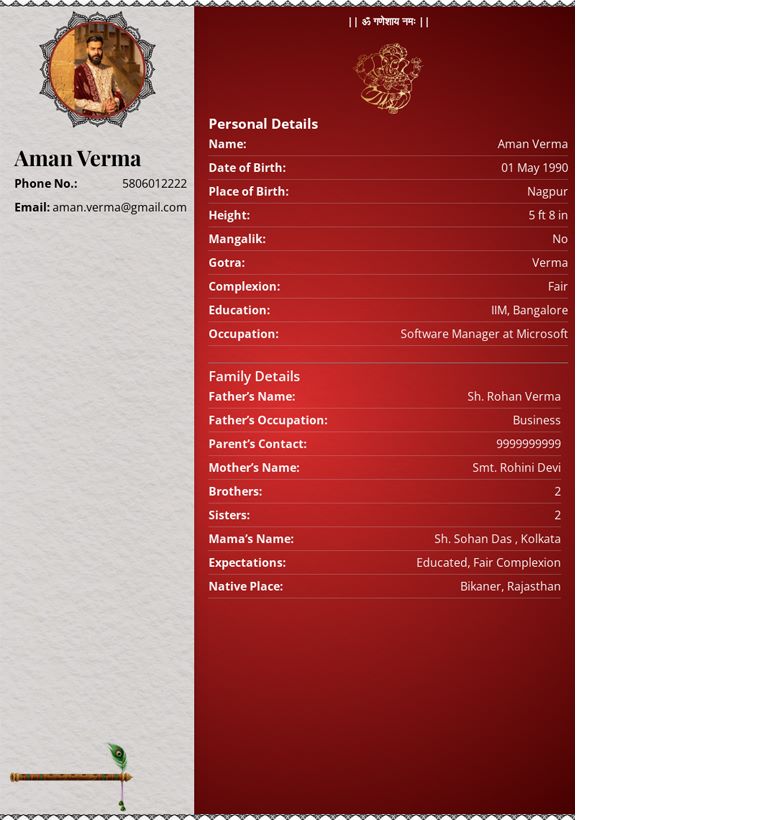
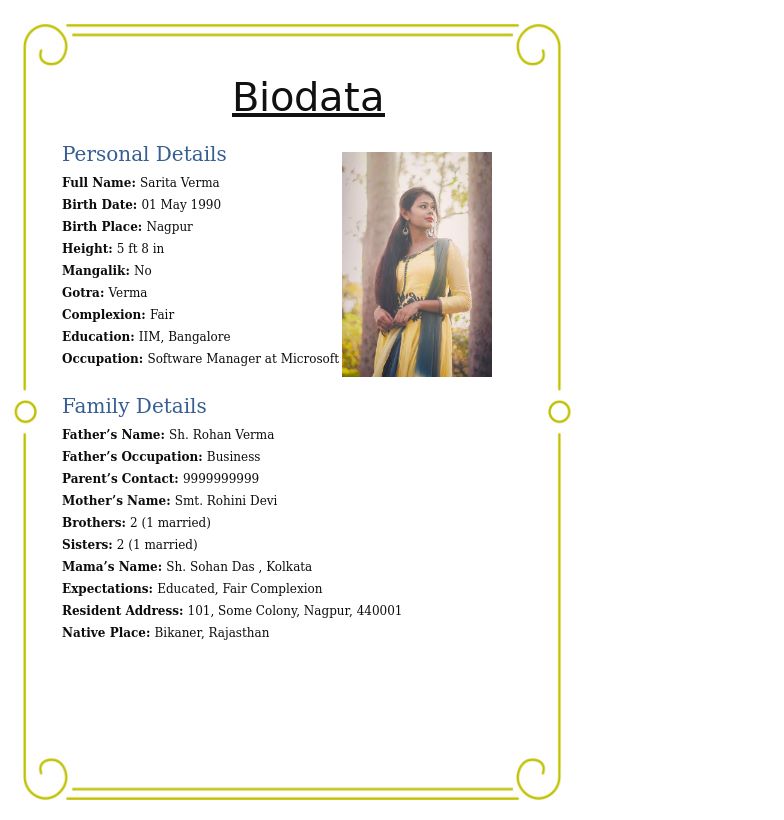
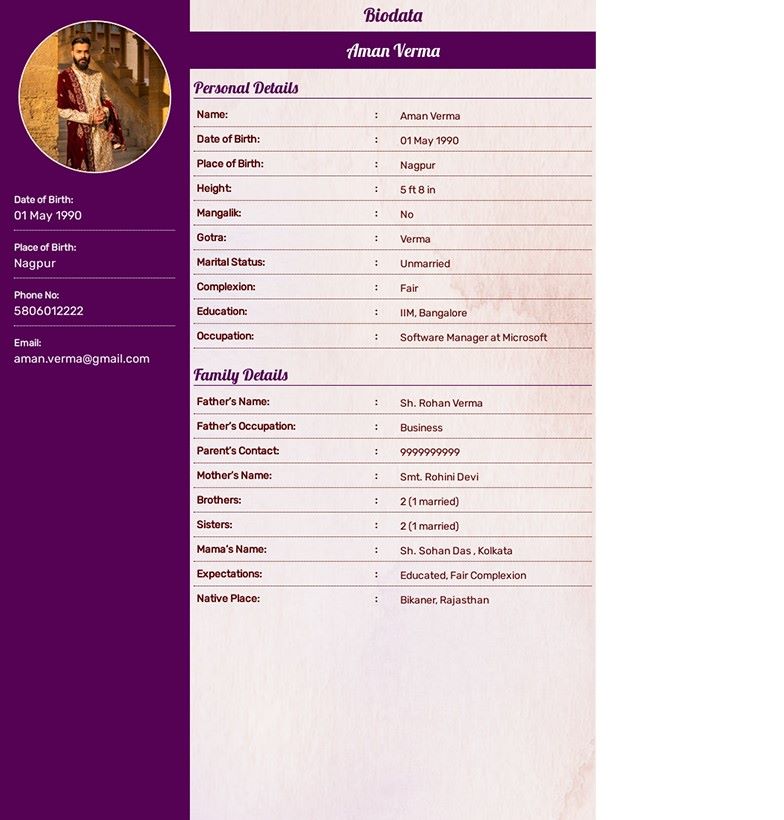
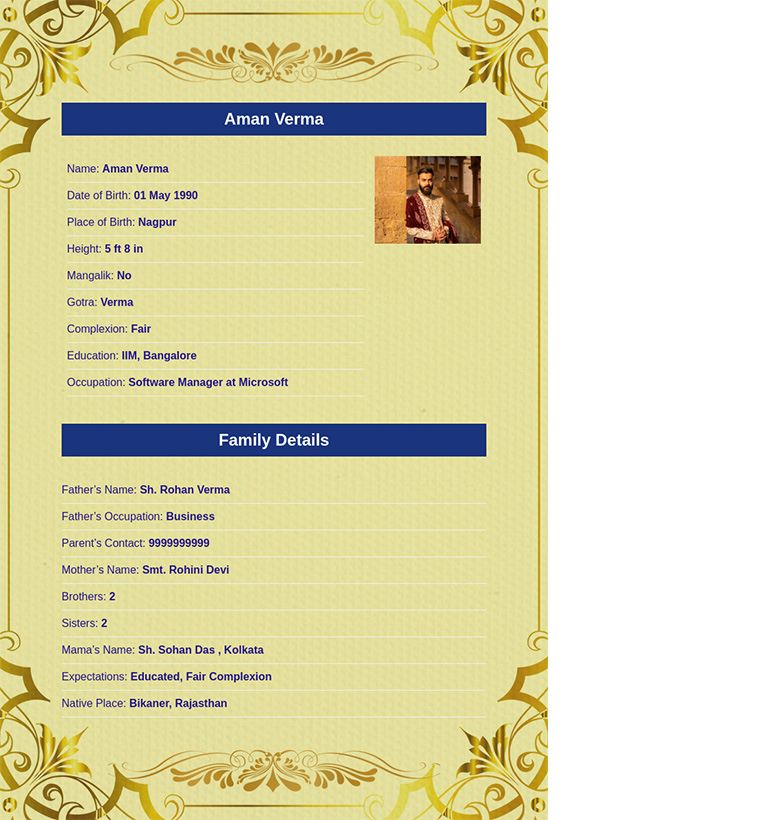
Gondi Marriage Biodata Formats Available
- Traditional Gondi Biodata (Persa Pen) — Phratry, clan totem, ancestral spirit identity, Gondwana pride
- Gondi Biodata in Hindi — standard format for MP and Chhattisgarh families
- Gondi Biodata in Telugu — for Telangana and Adilabad Gond families
- Gond Biodata for Groom / Bride — MPPSC/NMDC career, phratry, district origin
- Gondwana Gond Biodata — emphasising Gondwana political identity and community pride
Create your Gondi marriage biodata today with our free, customisable templates. Download in PDF or Word and share across Gondwana — from Balaghat to Bastar, from Mandla to Adilabad. Jai Gondwana!