Dimasa Marriage Biodata Templates
The Dimasa Kachari people are one of Assam's and Nagaland's ancient and historically significant communities — the Dimasa were once the rulers of the Dimapur kingdom, and the word "Dimapur" itself is derived from the Dimasa language meaning "city on the Di (river) of the Di plains people" (Di = big river, ma = people, pur = city). The Dimasa ruled an extensive territory in the Brahmaputra-Barak watershed region before being displaced by the Ahom and Cachar kingdoms. Today the Dimasa Kachari are concentrated in the Dima Hasao (formerly North Cachar Hills) district of Assam, with a significant community in Hojai district, and pockets in Karbi Anglong, Cachar, and Nagaland's Dimapur district. The Dimasa language belongs to the Tibeto-Burman family (Bodo branch — closely related to Bodo, Karbi, and other Brahmaputra valley TB languages), and is written in the Bengali or Roman script. The Dimasa are followers of their indigenous animist faith (Bathowism/Di-Meghan tradition) — worshipping ancestral spirits and natural forces, with the Jidap, Bu Rajini, and Hangsap Du as important deities — though a significant minority have adopted Christianity (Roman Catholic and Baptist) and a smaller number Hinduism. The Busu Dima festival is the Dimasa New Year and most important cultural celebration — a multi-day community gathering with traditional songs (Dimasa Bishu songs), dances (Habo Sabi), rice beer (judima), and community rituals. Dimasa marriage follows the patrilineal Julu (clan) system — same-Julu marriage is strictly prohibited.
Dimasa Society: Julu Clans, Dima Hasao, and Matrimonial Culture
Dimasa clan (Julu) exogamy is absolute — same-Julu marriage has always been and remains prohibited. Major Dimasa Julu (clans) include Bodosa, Dimasarang, Haflongbar, Hanse, Hojai, Kemprai, Langthasa, Naiding, Nunisa, Pathasharisha, Thaosen, and others. The Julu functions as the definitive identity unit for matrimonial, social, and ritual purposes. A Dimasa Autonomous Council (DAC) was established in Dima Hasao — but political disputes around territorial recognition led to periodic agitation. The North Cachar Hills Autonomous Council (NCHAC), now DCHAC (Dima Hasao autonomous structure), provides local self-governance context. Career prestige: APSC (Assam Public Service Commission) qualified officers, GAD/DCHAC administrative positions, teachers and principals of government schools, healthcare workers in Civil Hospital Haflong, Assam Police/BSF service. The Dimasa Students Union (DiSU) and Dimasa People's Convention (DPC) are important community organisations. The Haflong district headquarters is a multi-ethnic town in the hills of Dima Hasao.
Key Sections of a Dimasa Marriage Biodata
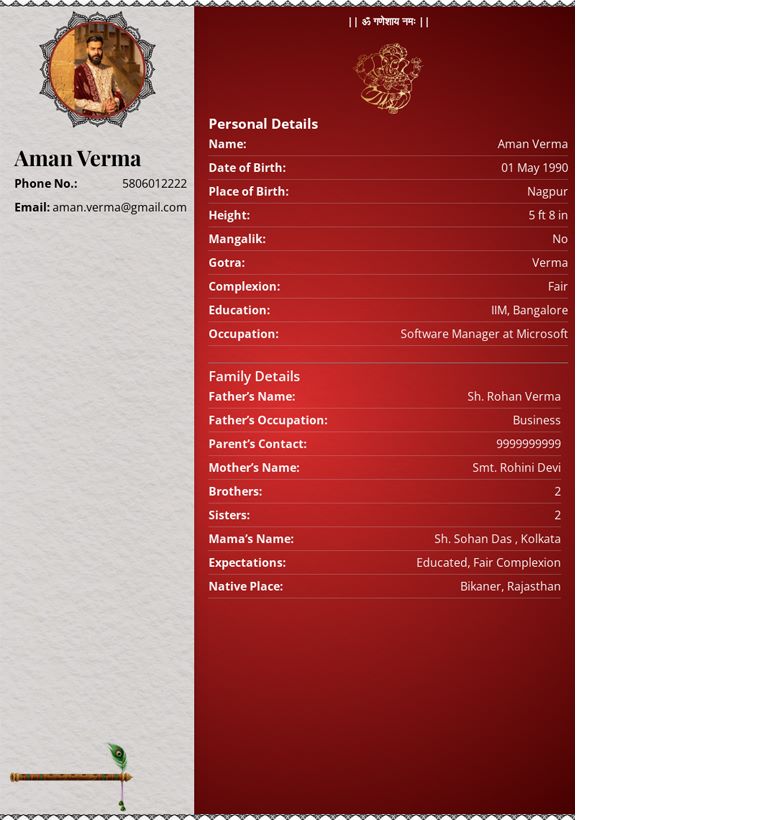
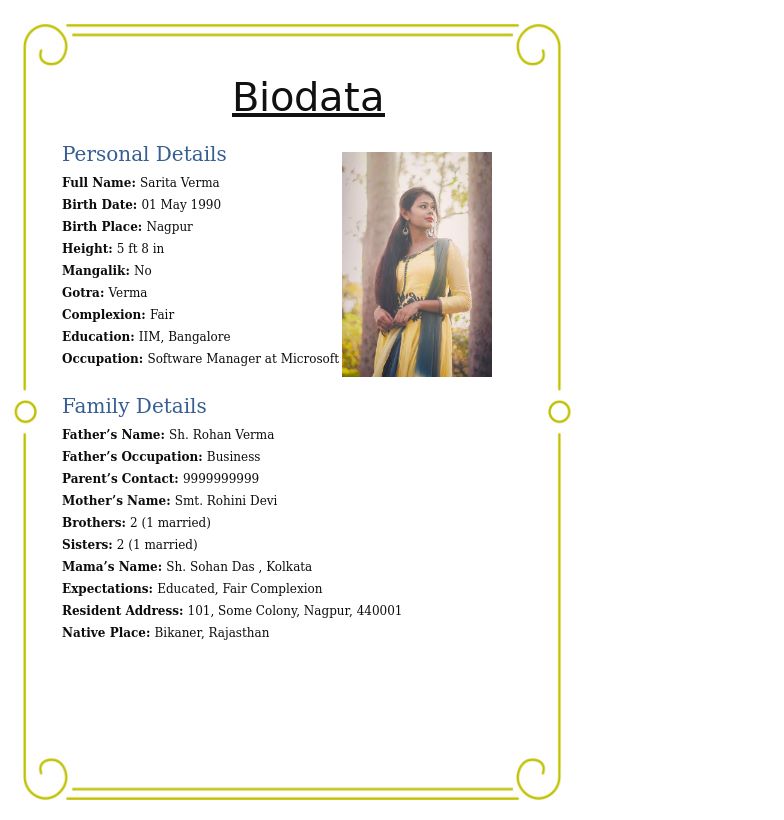
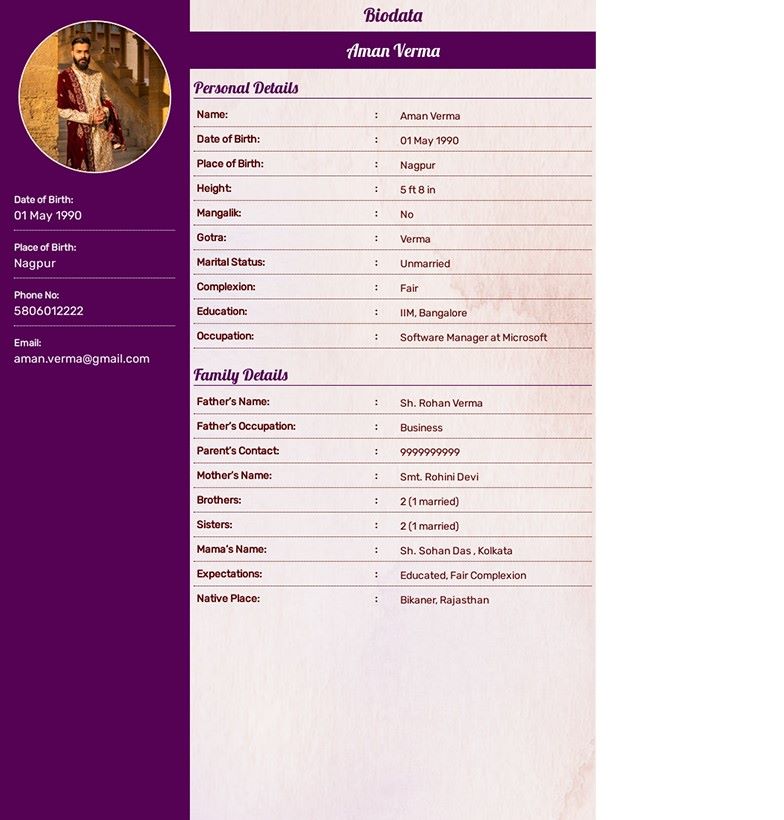
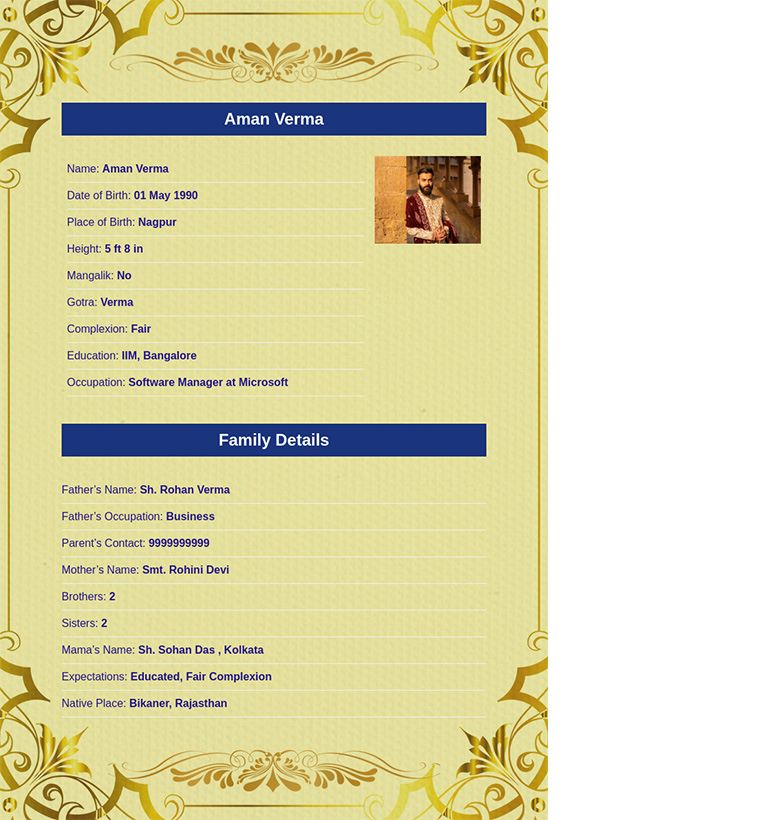
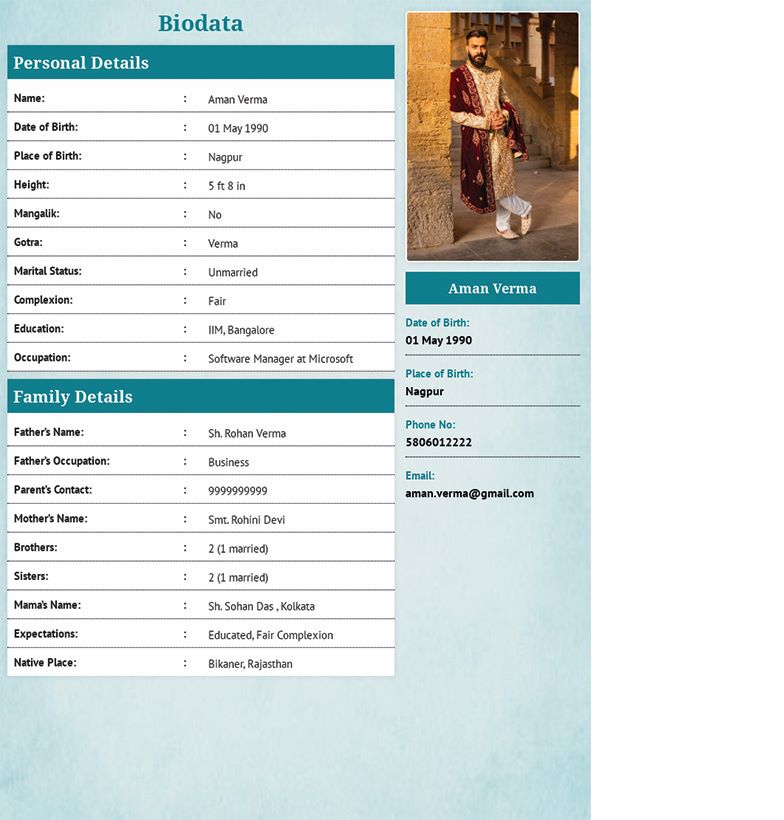
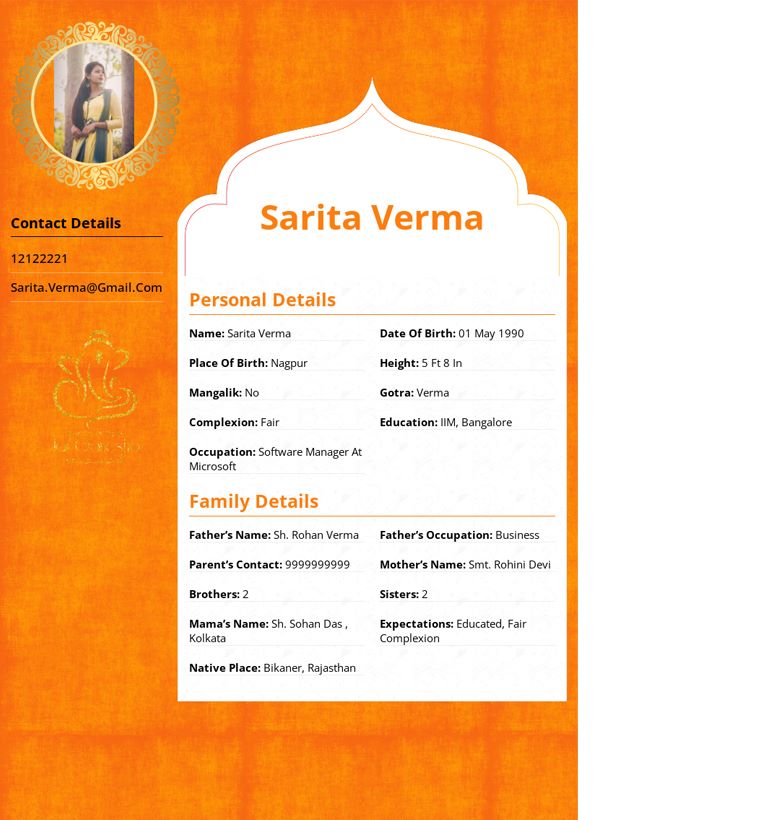
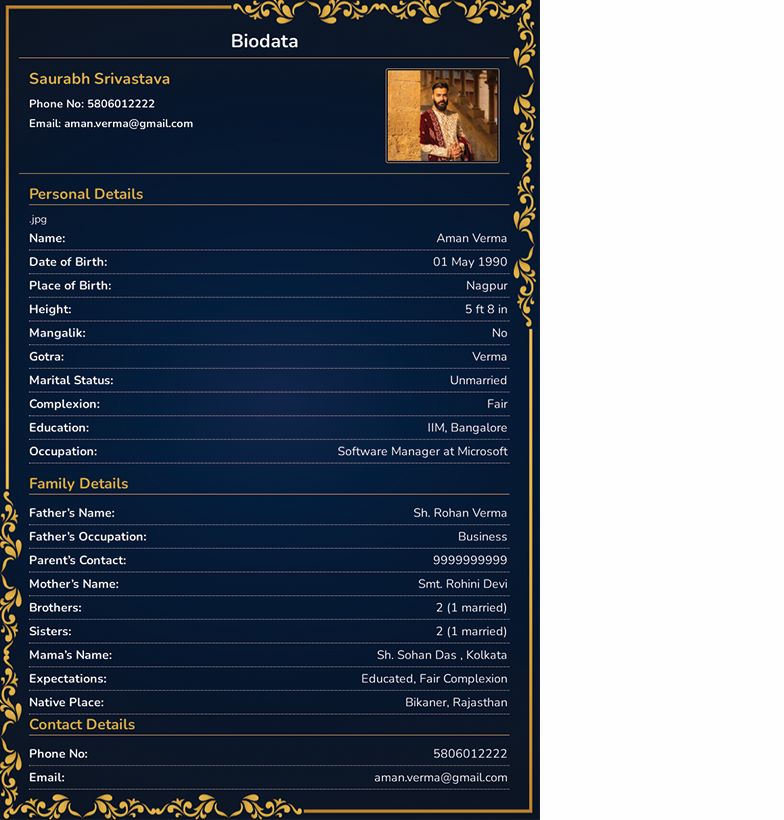
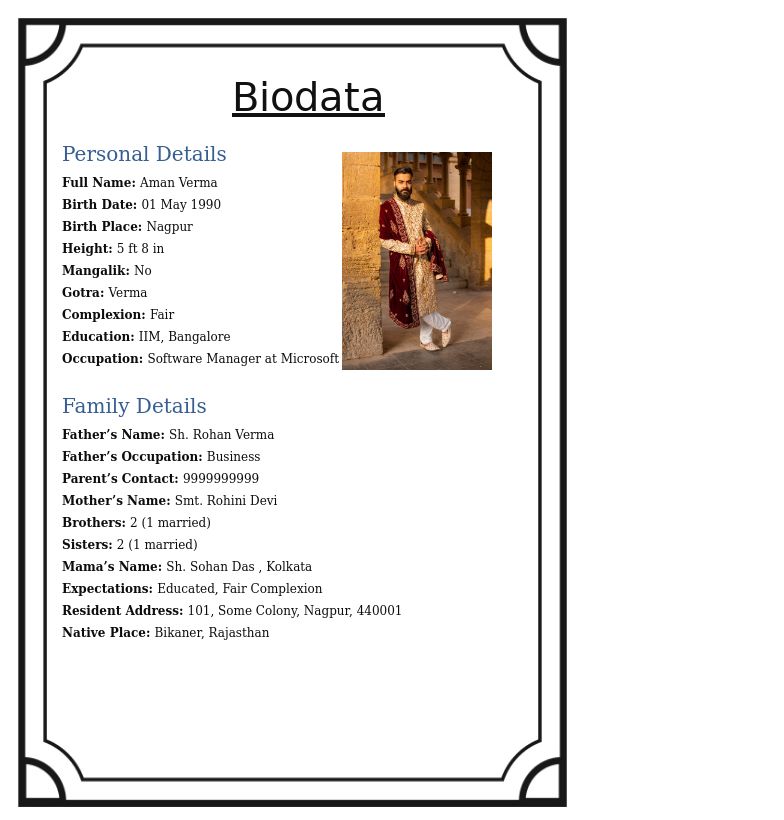
Personal Details
- Full Name — Dimasa names are distinctive: traditional names like Jwngsar, Raisom, Swmpha, Hanjabari, Tharoni for men; Jorpuja, Nilima, Mamoni, Sringkhla for women; Christian Dimasa add a Christian first name
- Date of Birth & Age
- Height & Complexion
- Marital Status
- Mother Tongue: Dimasa (Tibeto-Burman, Bodo branch)
Julu (Clan) & Religious Details
- Julu (Clan) — Bodosa / Dimasarang / Haflongbar / Hanse / Hojai / Kemprai / Langthasa / Naiding / Nunisa / Thaosen etc.; same-Julu marriage strictly prohibited
- Religion — Dimasa indigenous faith (Bathowism/Di-Meghan) / Roman Catholic / Baptist / Hindu
- District — Dima Hasao / Hojai / Karbi Anglong / Cachar / Dimapur (Nagaland)
- Home Village and Block
- DCHAC/NCHAC Connection (if from Dima Hasao)
Education & Career
- Qualification — Cotton University (Guwahati), Gauhati University, Assam University (Silchar), regional colleges in Haflong/Dimapur
- Occupation — APSC/DCHAC officer, Assam government employee, BSF/Assam Police, teacher, nurse, NGO worker, church minister (for Christian Dimasa)
- Annual Income
Family Background
- Father & Mother's Name and Occupation
- Julu (Clan) of Both Parents
- Home Village and District (Dima Hasao / Hojai / Dimapur)
- Faith Tradition — Bathowism / Christian (denomination) / Hindu
- Family Type: Joint (village) / Nuclear (Haflong/Guwahati/Dimapur city)
Tips for Writing a Strong Dimasa Marriage Biodata
- Julu Clan is Non-Negotiable: State your Julu prominently — it is the first and most important check in Dimasa matrimony; same-Julu marriage is absolutely prohibited.
- Specify Religion Carefully: Dimasa follow three distinct traditions (indigenous Bathowism, Christianity, Hinduism) — matrimonial expectations differ significantly across these; specify clearly.
- Busu Dima Festival: Active participation in the Busu Dima (Dimasa New Year) celebrations signals authentic community rootedness — mention it to initiate cultural connection.
- Dima Hasao vs Hojai vs Dimapur: Dimasa sub-communities in different districts have distinct social networks — specify your home district clearly.
- Judima (Rice Beer) Tradition: Judima — the traditional Dimasa rice beer — is GI-tagged and a cultural pride marker of the community; it signals awareness of Dimasa heritage in a biodata context.
Dimasa Marriage Biodata Formats Available
- Dimasa Bathowism Biodata — Julu clan, indigenous faith, Busu Dima festival, Dima Hasao identity
- Dimasa Christian Biodata — Julu clan, Catholic/Baptist denomination, church congregation
- Dimasa Biodata in Bengali Script — traditional written format for Barak Valley and Hill community families
- Dimasa Biodata in English — standard educated format for Guwahati/Dimapur/outside-Assam Dimasa professionals
- Dimasa Biodata for Groom / Bride — Julu, district, faith, career credentials, APSC qualifications
Create your Dimasa marriage biodata today with our free, customisable templates. Download in PDF or Word and share across Dima Hasao, Hojai, Dimapur, Guwahati, and the global Dimasa community. Busu Dima greetings!