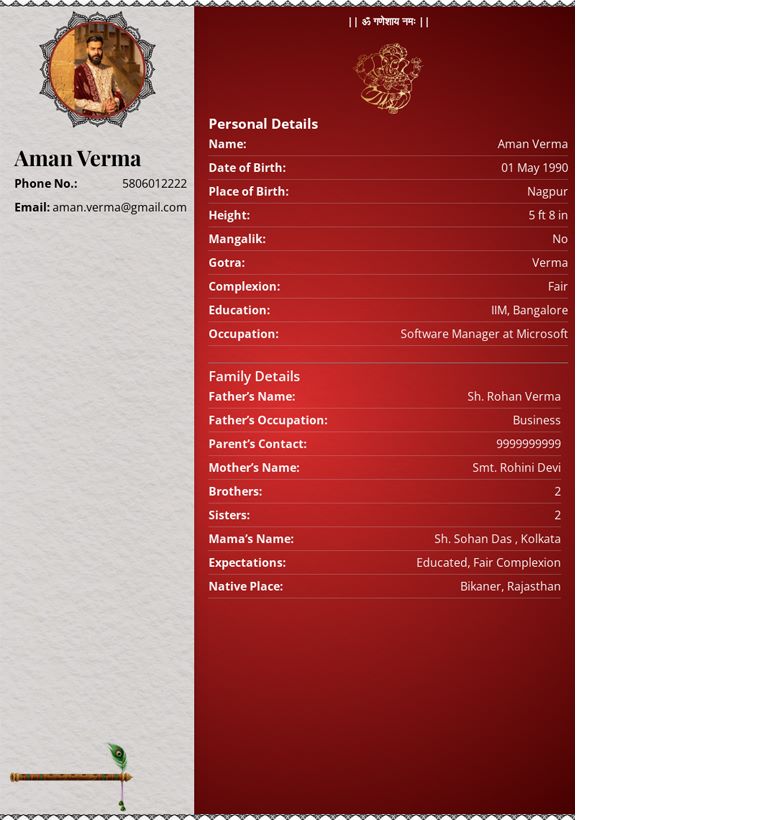
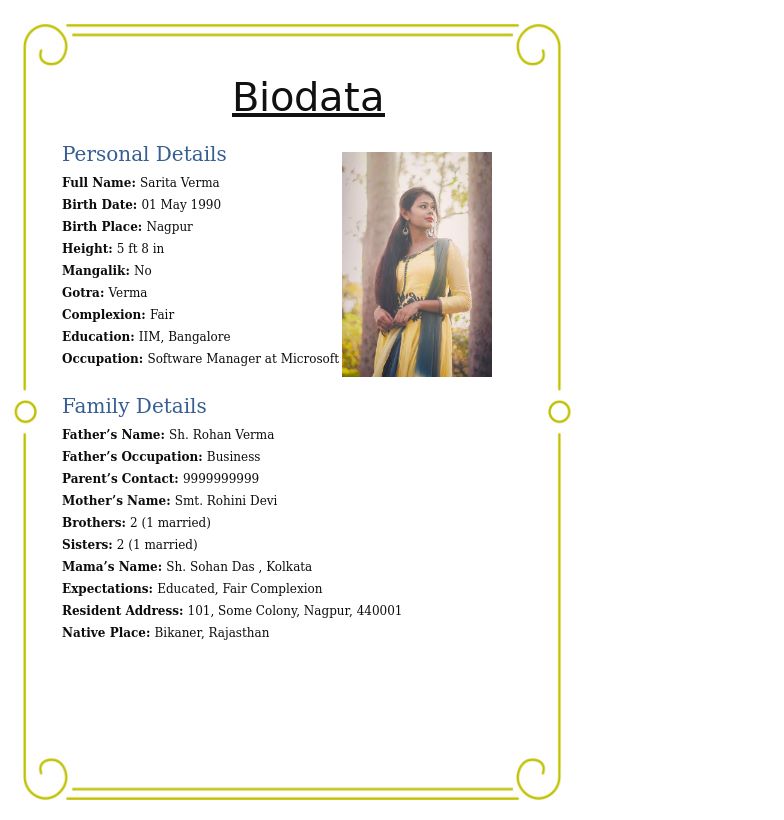
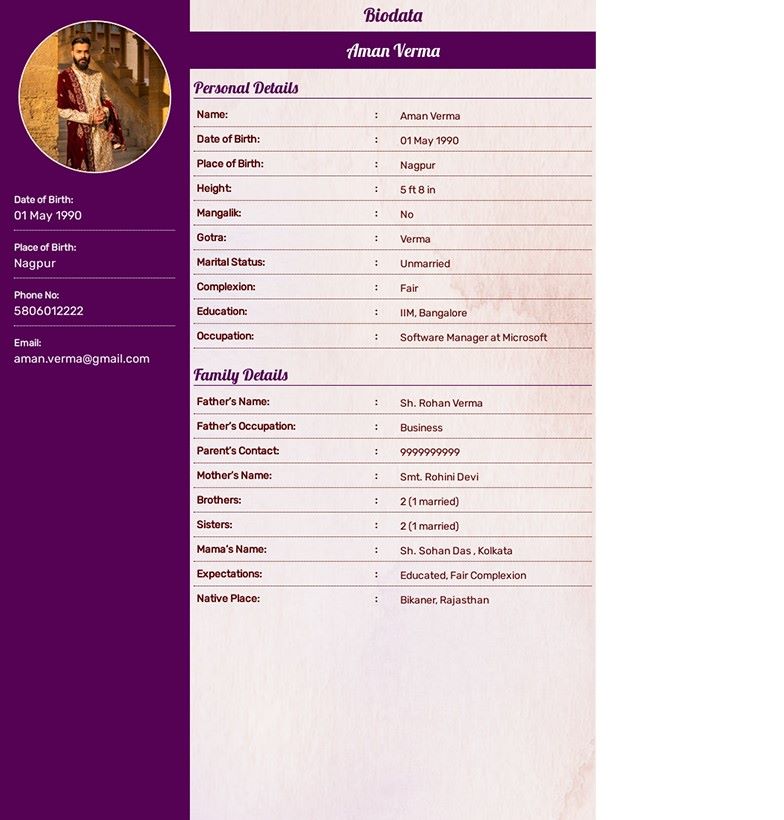
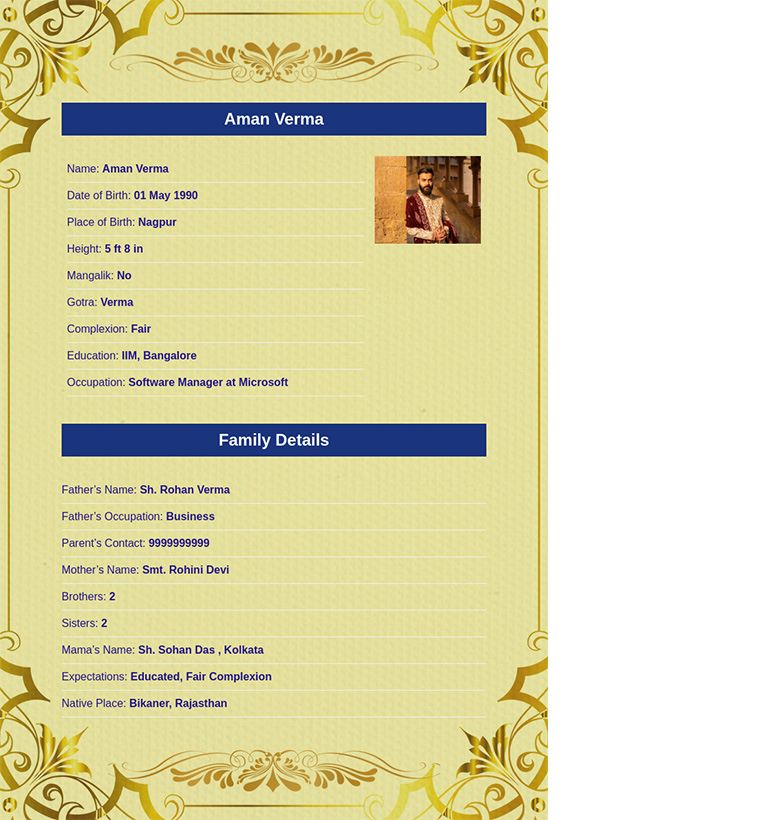
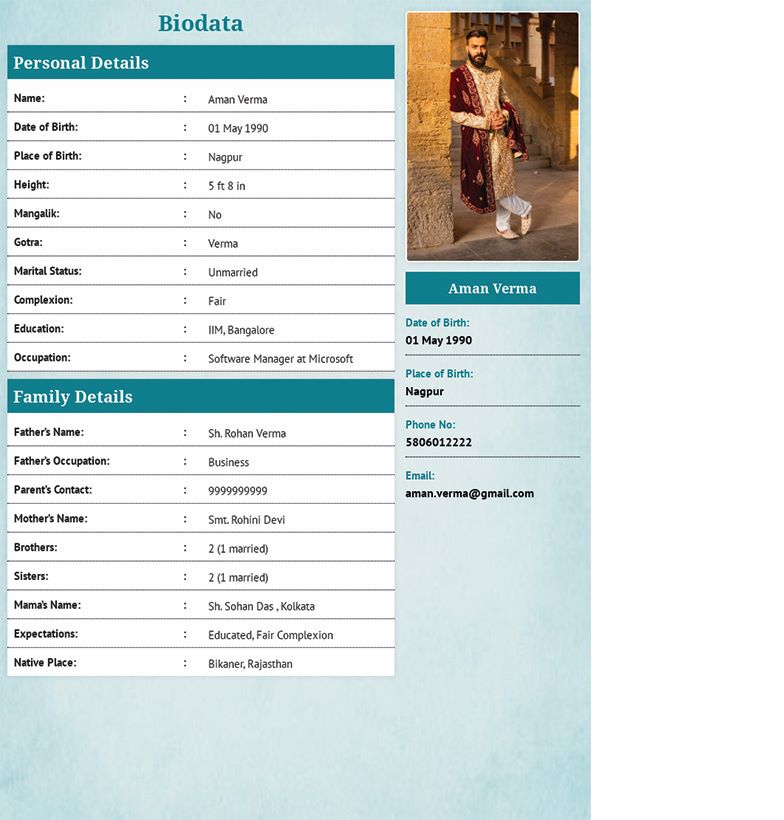
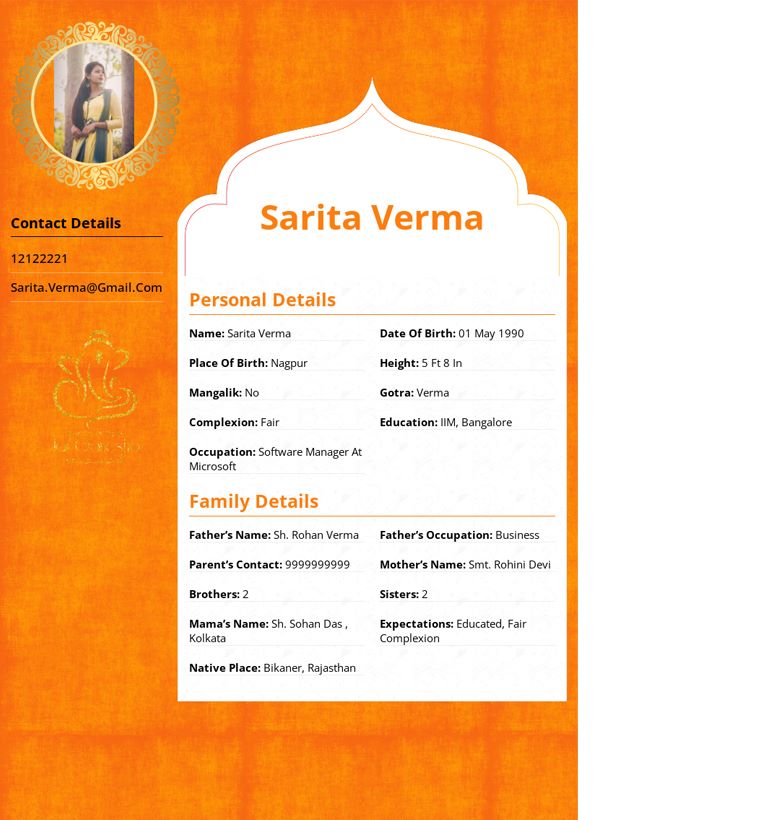
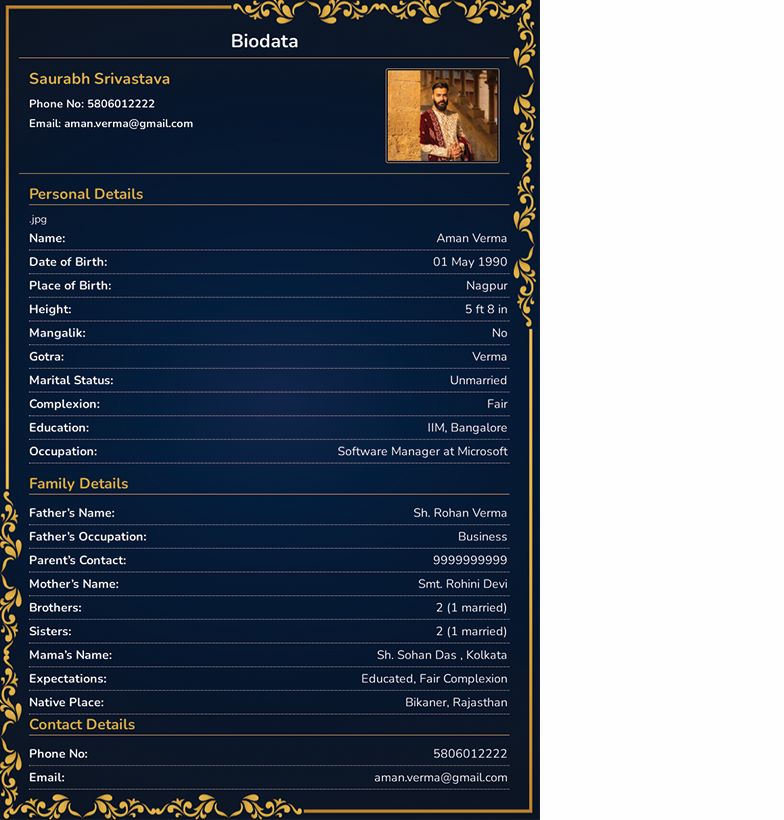
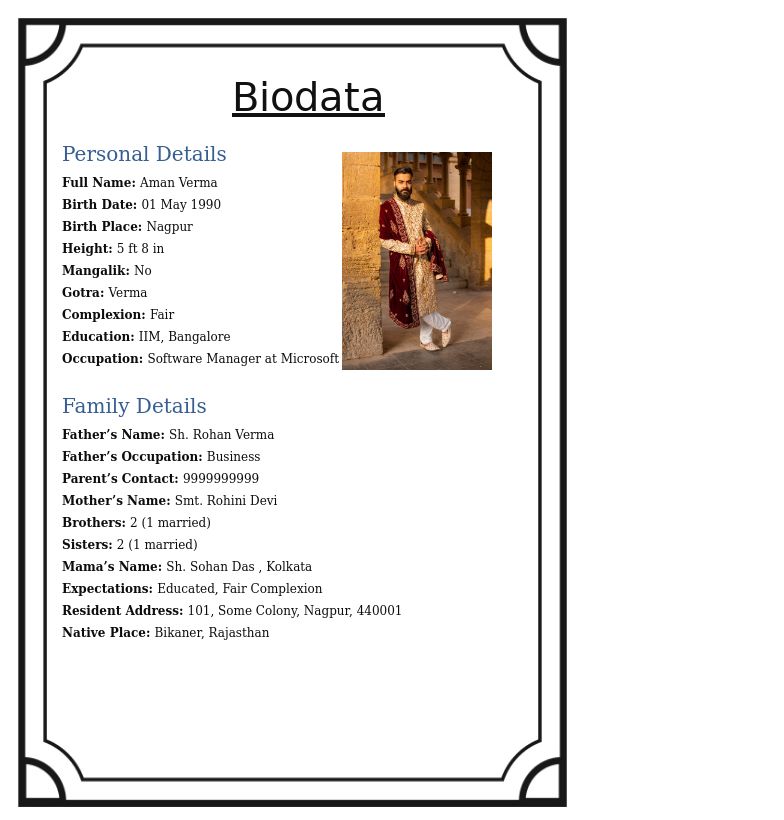
Chhattisgarhi Marriage Biodata Templates
Chhattisgarhi (Chattisgarhi) is the language of the land of 36 forts — Chhattisgarh — a state carved from Madhya Pradesh in 2000 and home to a rich tribal, agrarian, and industrial culture. Spoken across Raipur, Bilaspur, Durg, Rajnandgaon, Korba, Ambikaipur, and the tribal belts of Bastar and Surguja, Chhattisgarhi encompasses a remarkably diverse population: Hindu OBC communities (Kurmi/Sahu/Yadav/Teli), Brahmin sub-groups, tribal communities (Gond, Halba, Baiga, Satnami), and a growing industrial middle class tied to BHEL, NTPC, SAIL/BSP Bhilai, and NLC. Marriage in Chhattisgarh follows regional customs like the Tilak-Chadhana, Haldi-Teel, Parghani (welcome ceremony), and Bidaai — a Chhattisgarhi marriage biodata must reflect these community-specific layers clearly.
Chhattisgarh's Diverse Matrimonial Communities
Chhattisgarh's matrimonial landscape is stratified across several major communities. Kurmi Kshatriya — the dominant agricultural community of the Chhattisgarh plains — control large landholdings and run biradari sabhas actively. Sahu (Teli/Vaishya) families, prominent in the Raipur-Durg commercial belt, value business acumen and property in biodatas. Satnami (Satnamapanthi) — followers of Guru Ghasidas — are a major Scheduled Caste community with their own matrimonial networks and the Jaitkham (ceremonial dhwaja) as a sacred identity marker. Gond tribal families (particularly in Bastar) may follow clan-based exogamy and worship community deities. The Bhilai Steel Plant township has also created a cosmopolitan industrial worker community with its own distinct matrimonial culture, often cutting across caste lines.
Key Sections of a Chhattisgarhi Marriage Biodata
Personal Details
- Full Name
- Date of Birth & Age
- Height & Complexion
- Marital Status
- Mother Tongue: Chhattisgarhi
Caste & Community Details
- Caste / Jati — Kurmi / Sahu / Yadav / Brahmin / Rajput / Satnami / Gond / Halba / Kawar etc.
- Gotra / Clan — for Hindu communities; Gond families may list Phratry (clan totem like Baghel, Tekam, Netam)
- Kuldevi / Gram Devata — village deity veneration is important in regional custom
- Satnami families: Mention Panthi affiliation and the Bhandar (community trust) association
Education & Career
- Qualification — Pt. Ravishankar Shukla University, CSVTU, IIT Bhilai, AIIMS Raipur
- Occupation — BSP/BHEL/NTPC/South Eastern Coalfields employee, CGPSC officer, medical professional, teacher
- Annual Income
- Government Service or PSU Employment — top prestige marker
Family Background
- Father & Mother's Name and Occupation
- Native Village / Block / District — Raipur, Bilaspur, Durg, Rajnandgaon, Jagdalpur origins
- Agricultural Landholding — measured in acres; Kurmi families often mention paddy cultivation area
- Family Type: Joint / Nuclear
- Brothers & Sisters and Their Marital Status
Tips for Writing a Strong Chhattisgarhi Marriage Biodata
- Specify Tribal or Non-Tribal Clearly: Chhattisgarh has a large ST population; caste/tribe must be stated clearly as it determines marriage within or outside the tribe.
- Mention BSP/Coal India Employment: Bhilai Steel Plant and South Eastern Coalfields employment is the most prestigious career credential in the region — state grade/department explicitly.
- Include Native Village: Even urban families trace identity to the ancestral village (gaon); mention block and district along with village name.
- Satnami Families — Mention Guru Ghasidas Heritage: Reference to Satnamapanth, Jaitkham, and Bhandar membership signals community identity and values.
- Write in Hindi: Chhattisgarhi is spoken but the matrimonial biodata is written in standard Hindi/Devanagari; dialect words may be used in closing blessings.
Chhattisgarhi Marriage Biodata Formats Available
- Chhattisgarhi Hindu Biodata in Hindi — general format for the region
- Kurmi Kshatriya Chhattisgarhi Biodata — landholding, biradari affiliation, community credentials
- Satnami / Satnamapanthi Biodata — Guru Ghasidas heritage, Bhandar, Jaitkham identity
- Gond Tribal Biodata — clan totem, phratry exogamy, village deity
- Chhattisgarhi Biodata for Groom / Bride — PSU employment, education, family background
- BSP Township Biodata — cosmopolitan industrial format for the Bhilai community
Create your Chhattisgarhi marriage biodata today with our free, customisable templates. Download in PDF or Word and share across the 36-fort heartland of Chhattisgarh — from the plains of Raipur to the forests of Bastar.