Chakma Marriage Biodata Templates
The Chakma are a Buddhist Adivasi community with a history marked by displacement and resilience — the construction of the Kaptai dam in 1963 in what was then East Pakistan submerged their ancestral heartland in the Chittagong Hill Tracts (now Bangladesh), forcing mass migration into India. Today the Chakma community is concentrated in Mizoram (the Chakma Autonomous District Council), Tripura, Arunachal Pradesh (Changlang and Tirap districts), and Assam, with a smaller community in the Andaman Islands. The Chakma have their own unique indigenous script — the Chakma script (Ojhapath) — which is one of India's treasured minority writing systems. Chakma language belongs to the Indo-Aryan family, closely related to Bengali, and is written in both the Ojhapath script and Bengali script. Theravada Buddhism is the central faith — the Buddhist monastery (Kyong) is the social hub, the monk (Bhante) is the moral authority, and the annual Bizhu festival (a three-day water festival similar to Songkran, marking the Bengali New Year) is the community's most celebrated cultural event. Chakma marriage follows clan (Gotra/Goza) exogamy, with the wedding ceremony (Biyah) involving monastic blessings and community feasting.
Chakma Buddhist Identity and Matrimonial Culture
Chakma society is organised around the Goza (clan/gotra) system — major Chakma clans include Chakma (the royal clan), Tanchangya, Doibei, Marang, and various territorial gotras — and same-gotra marriage is prohibited. The Chakma Raja (hereditary chief, based in the Chakma Circle of Rangamati in Bangladesh, with a parallel community leadership in India) represents a noble lineage that still carries social prestige. The Autonomous District Councils (ADC) of Chakma in Mizoram and the presence in Arunachal Pradesh create two distinct sub-community contexts. Career pathways in the Indian Chakma community include teaching, government administration (ADC-level), nursing, and army/CRPF service. Since Chakma families in India have historically faced citizenship issues (now largely resolved by Supreme Court rulings), their community associations are deeply attuned to legal advocacy and political solidarity — a context worth being sensitive to in matrimonial communications.
Key Sections of a Chakma Marriage Biodata
Personal Details
- Full Name — Chakma names often reflect Buddhist texts (Siddharth, Dhamma, Bodhi) combined with indigenous Chakma names
- Date of Birth & Age
- Height & Complexion
- Marital Status
- Mother Tongue: Chakma (Ojhapath / Bengali script)
Clan (Goza/Gotra) & Religious Details
- Goza / Gotra (Clan) — Chakma / Tanchangya / Doibei / Marang etc.; same-Goza marriage strictly prohibited
- Religion — Theravada Buddhist; Kyong (monastery) affiliation
- State of Residence — Mizoram (Chakma ADC) / Tripura / Arunachal Pradesh (Changlang) / Assam
- Royal Chakma Lineage (if applicable)
Education & Career
- Qualification — Mizoram University, Tripura University, regional colleges
- Occupation — Government teacher, ADC/district administration, army/CRPF, nurse, NGO worker
- Annual Income
Family Background
- Father & Mother's Name and Occupation
- Goza (Clan) of Both Parents
- Native Village, ADC/District and State
- Kyong (Monastery) Affiliation — which Buddhist temple/monastery the family patronises
- Family Type: Joint / Nuclear
Tips for Writing a Strong Chakma Marriage Biodata
- Goza is the First Check: State your Goza (clan/gotra) clearly at the top — same-Goza marriage is prohibited in Chakma custom.
- Buddhist Monastery Connection Matters: Mention the home Kyong (monastery) and the Bhante who blesses your family — it signals spiritual identity and community standing.
- Bizhu Cultural Participation: Active involvement in the Bizhu festival (Chaitra Sangkranti water festival) signals cultural rootedness in the Chakma community.
- State Which Chakma Sub-community: Mizoram ADC, Tripura, and Arunachal Chakma communities have distinct social networks — specify your state clearly.
- Use Bengali or English for Written Biodata: Chakma scripts are oral-heritage; matrimonial biodatas are written in Bengali (if traditional/Tripura) or English (educated/Mizoram).
Chakma Marriage Biodata Formats Available
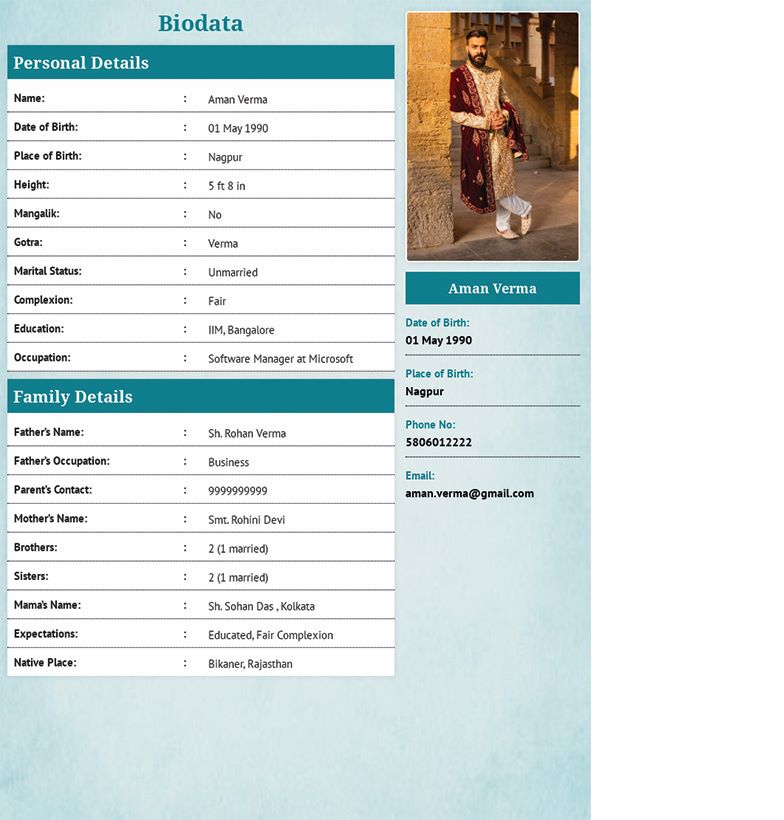
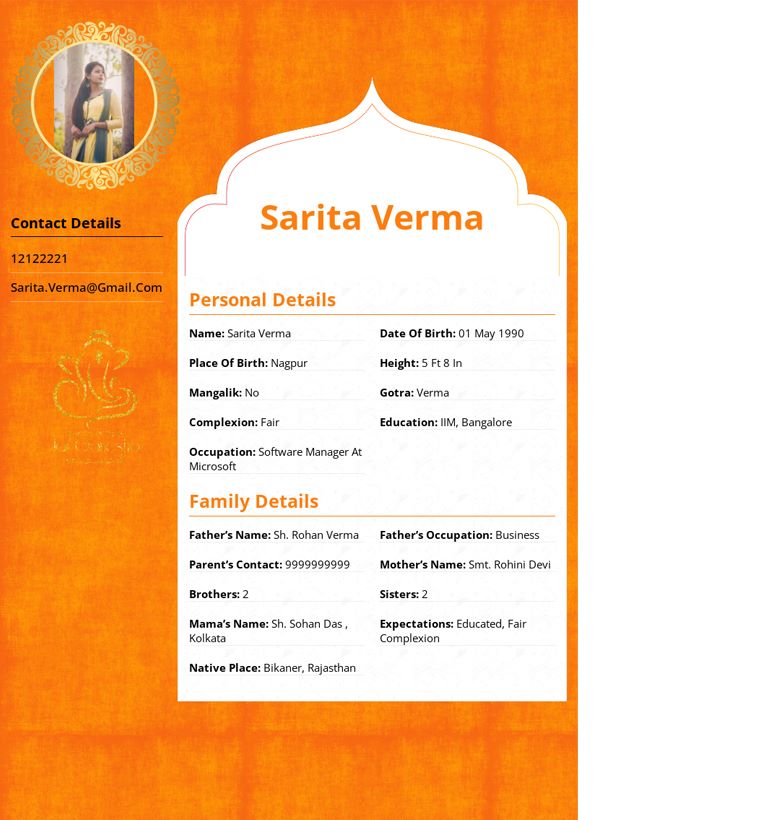
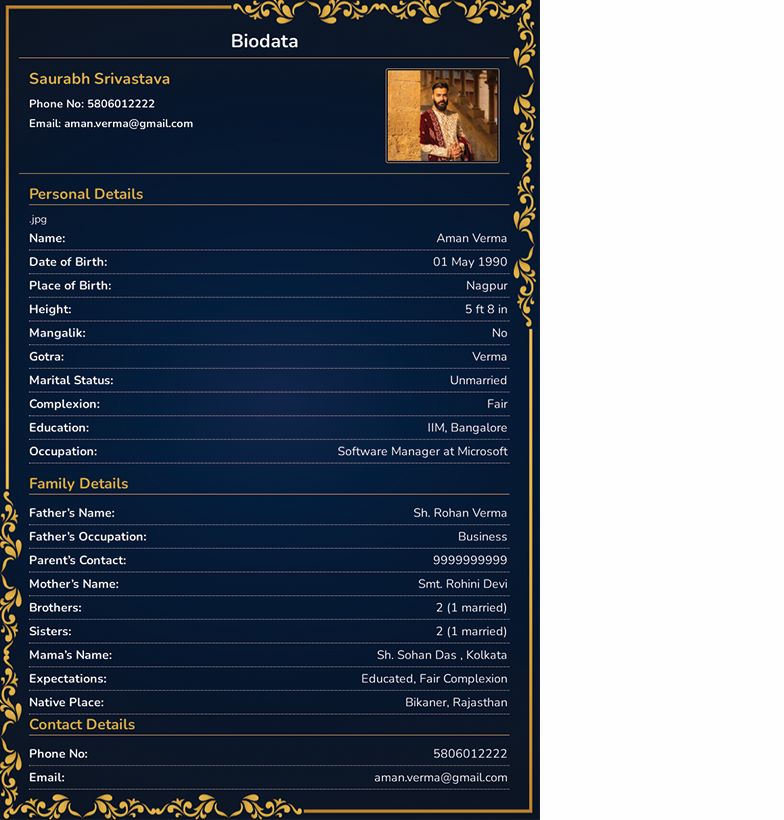
- Chakma Buddhist Biodata — Goza, Kyong affiliation, Bizhu cultural identity, Theravada faith
- Chakma Biodata in Bengali — traditional Indo-Aryan script format for Tripura/Chittagong Hill Tracts diaspora
- Chakma Biodata in English — educated format for Mizoram ADC and Arunachal Chakma
- Chakma Biodata for Groom / Bride — Goza, ADC/district origin, career credentials
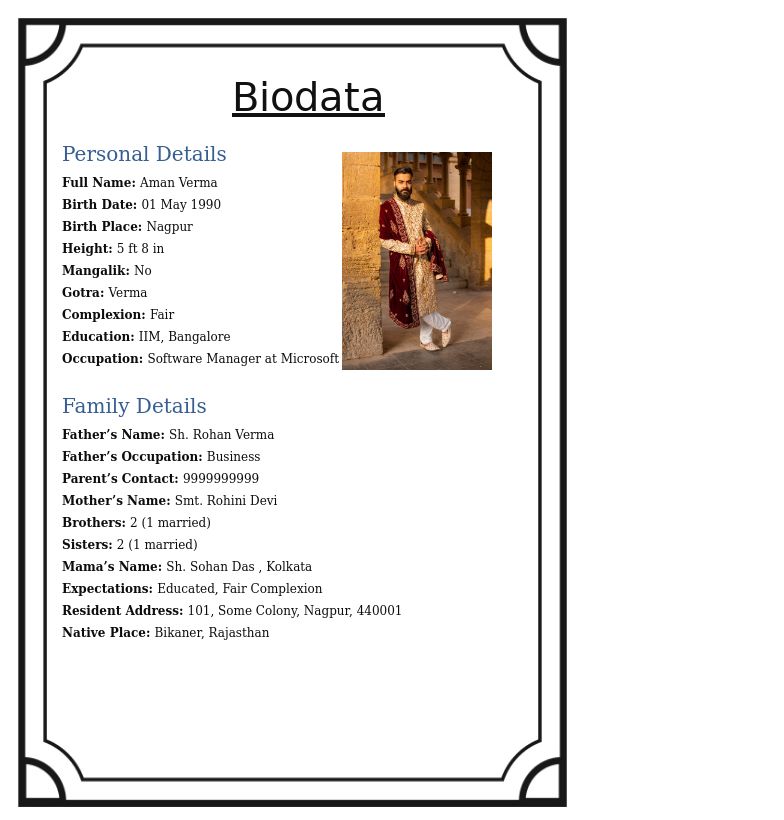
- Simple Chakma Buddhist Biodata — one-page format for monastery community introductions
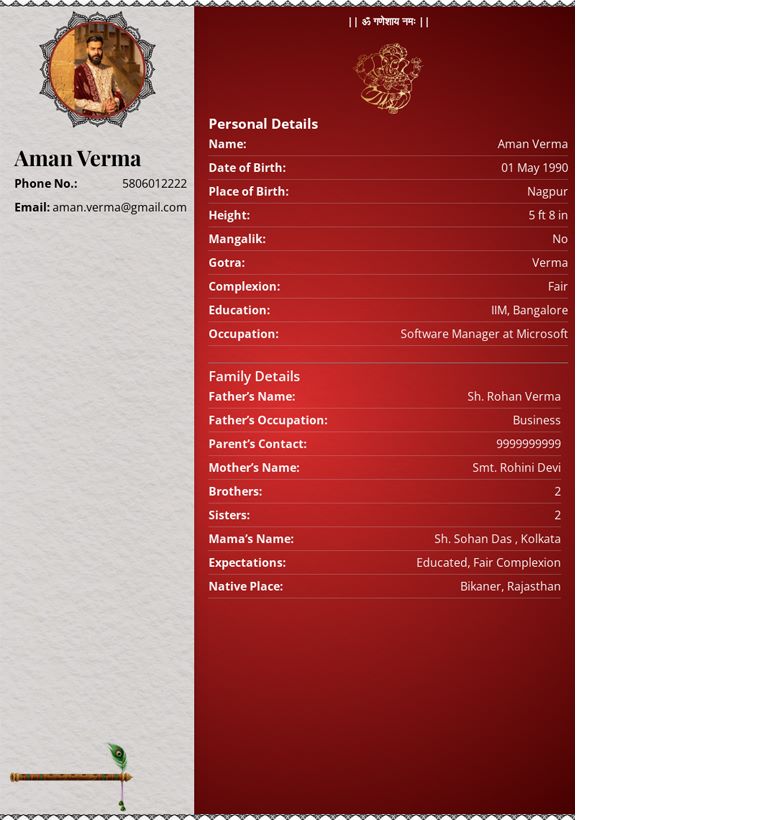
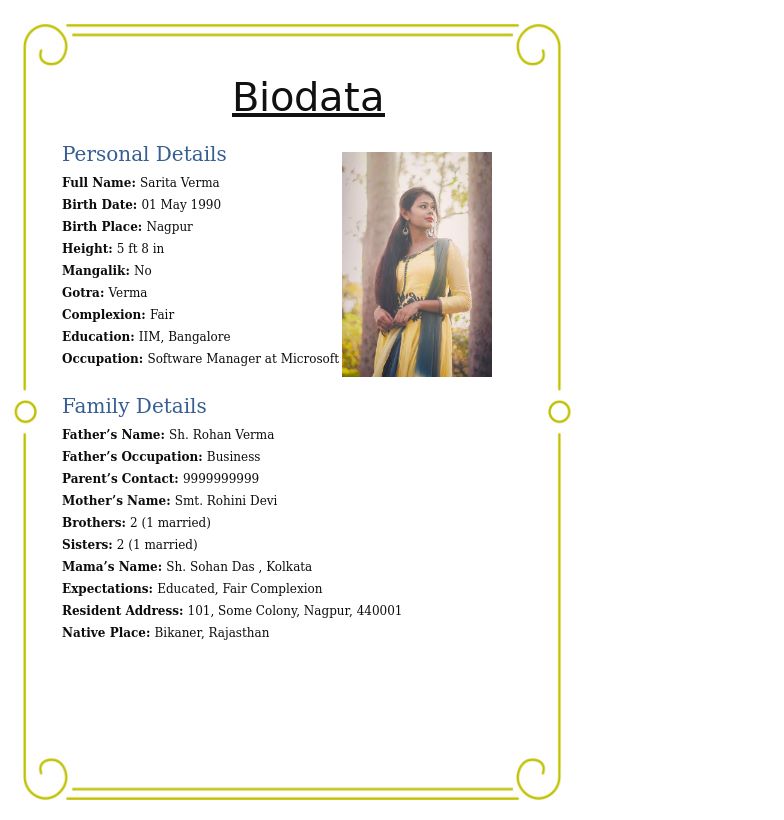
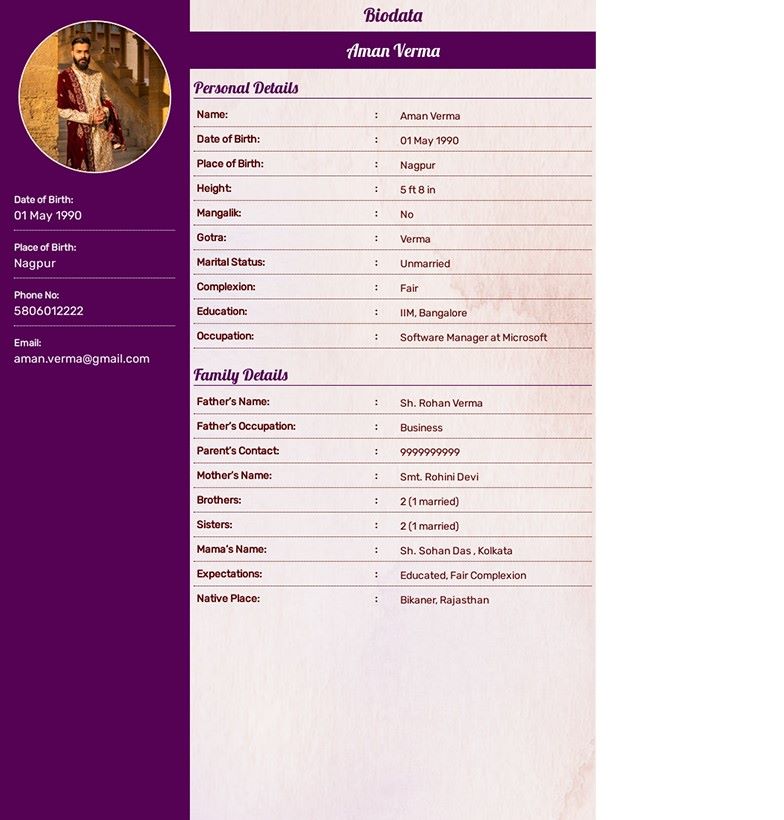
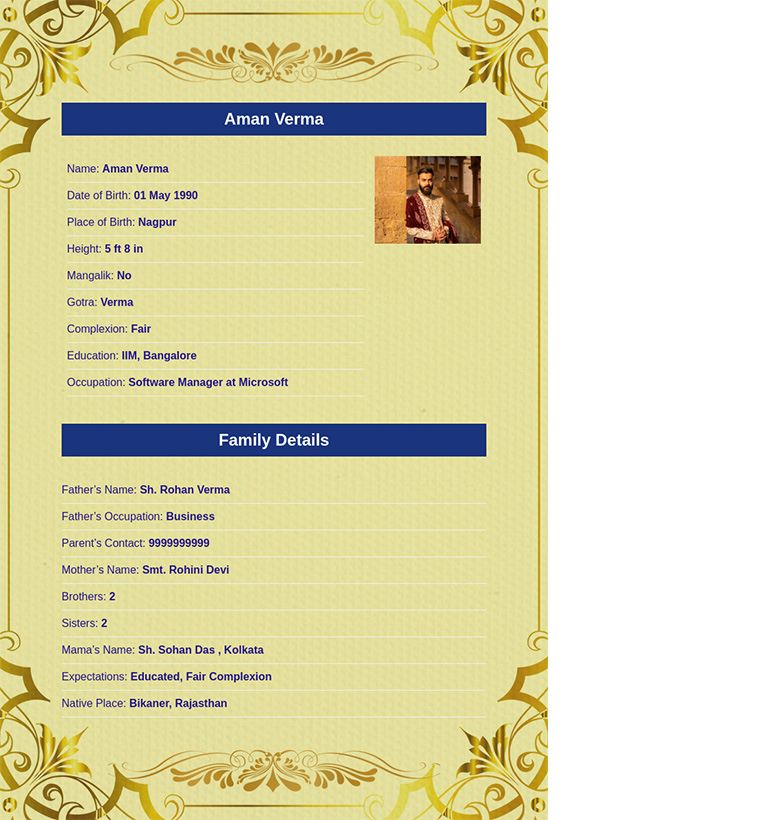
Create your Chakma marriage biodata today with our free, customisable templates. Download in PDF or Word and share across Mizoram, Tripura, Arunachal Pradesh, and the global Chakma community. Bizhu greetings!