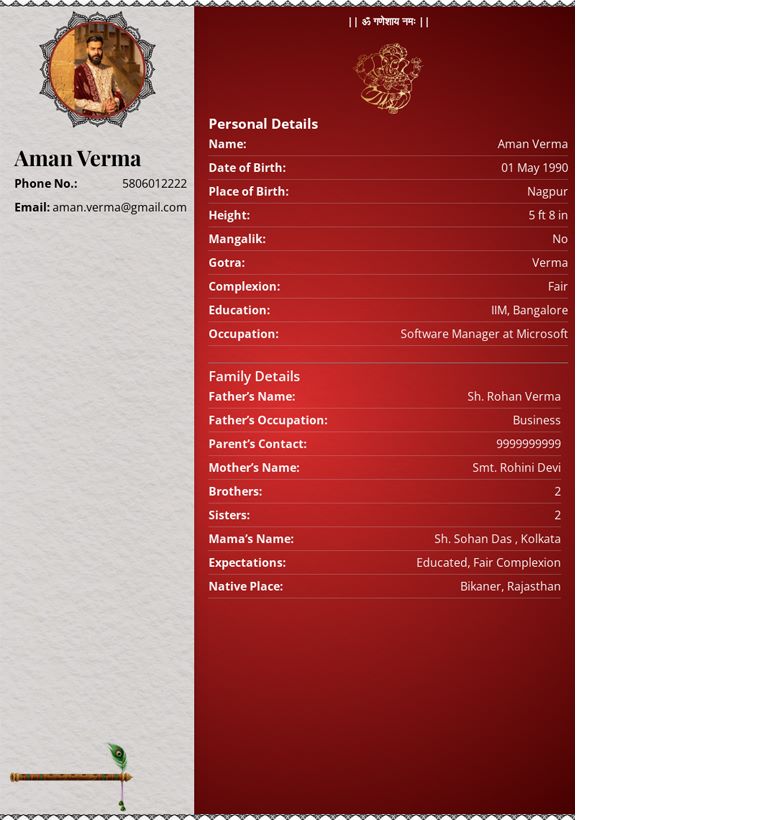
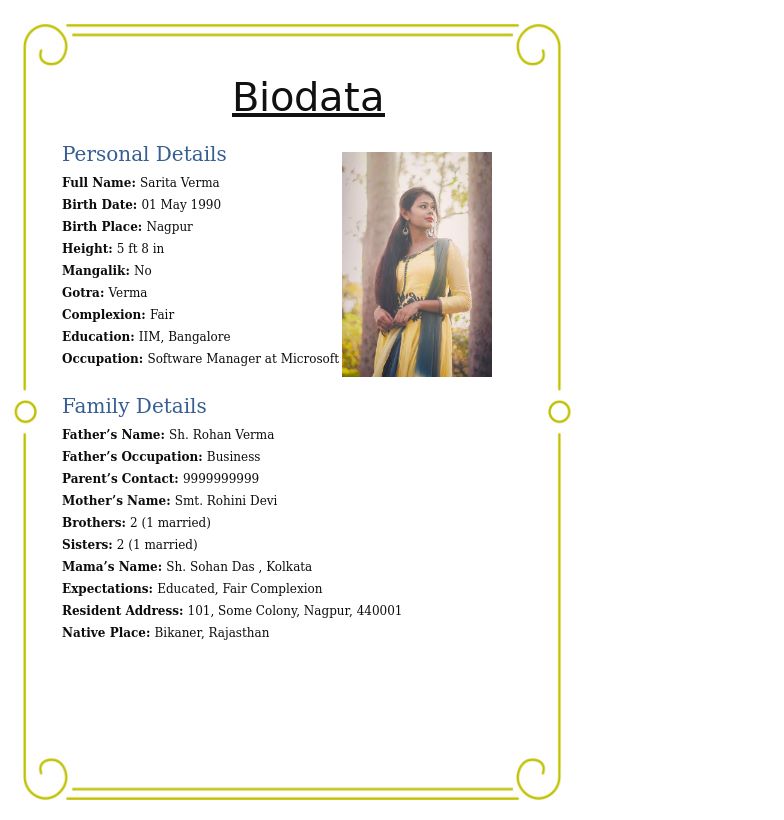
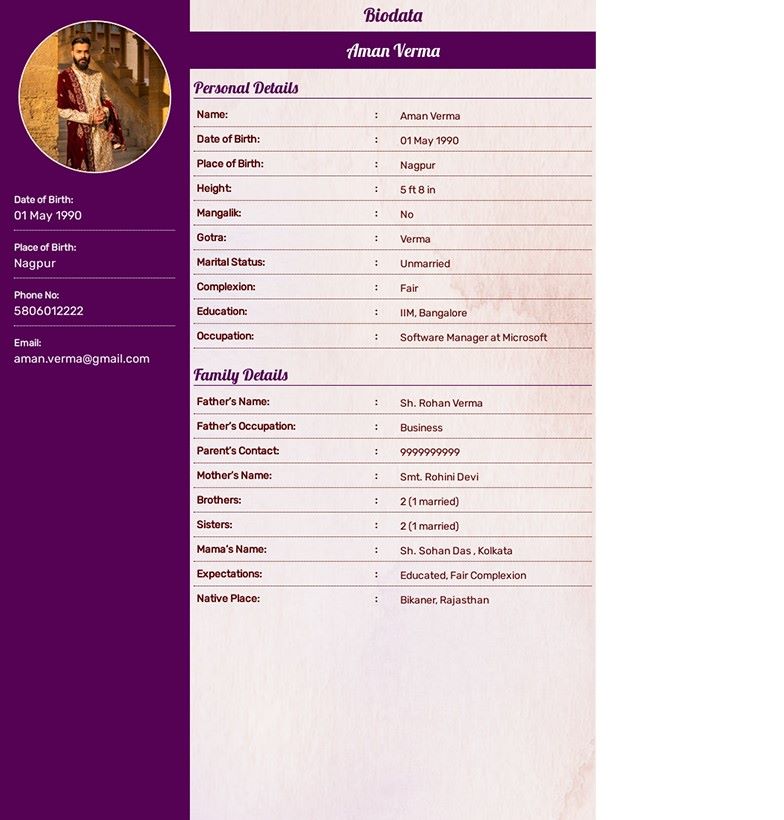
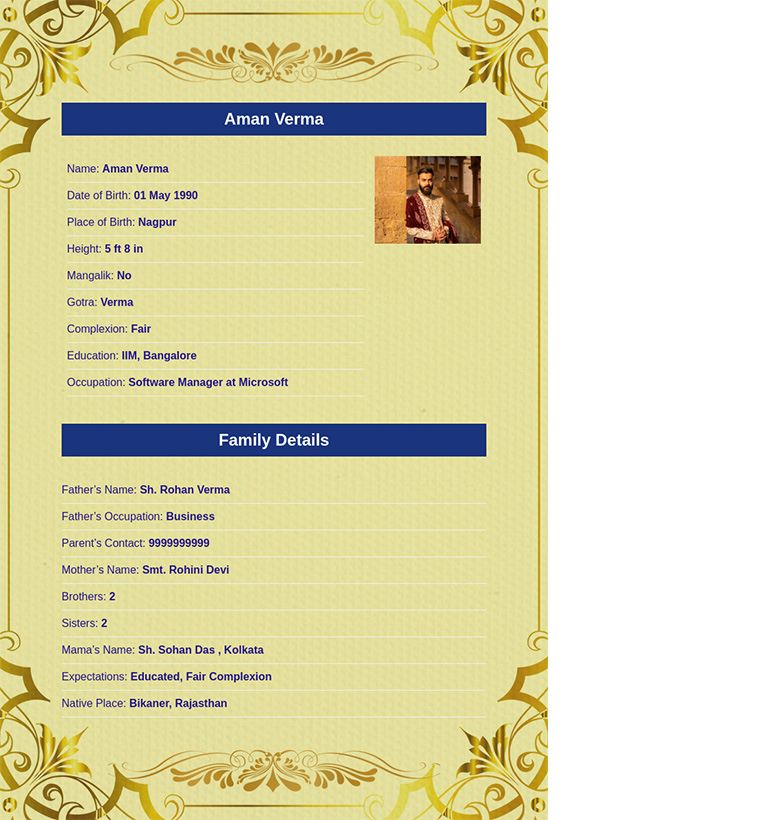
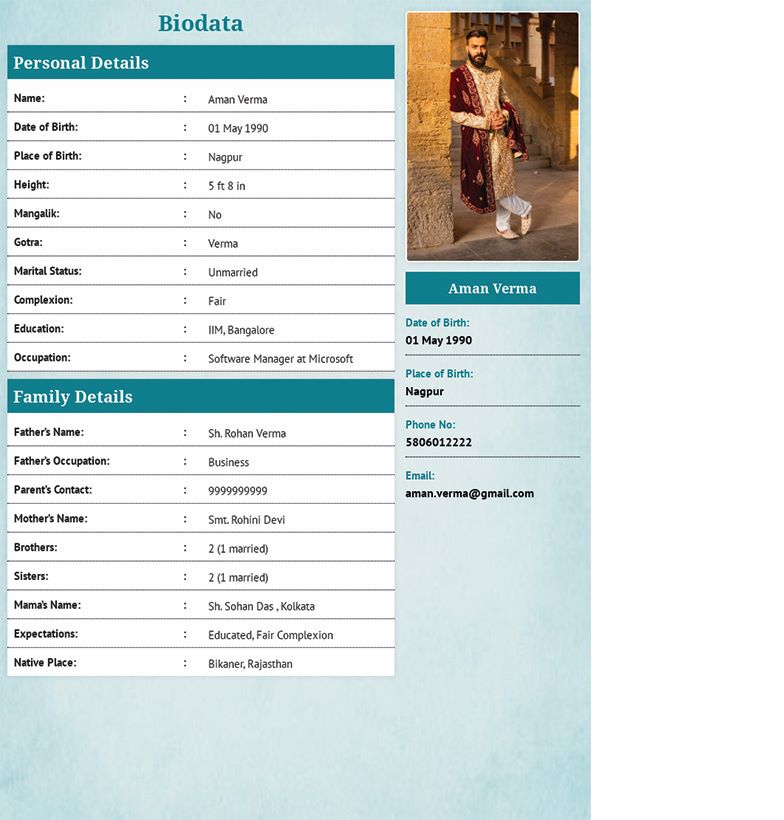
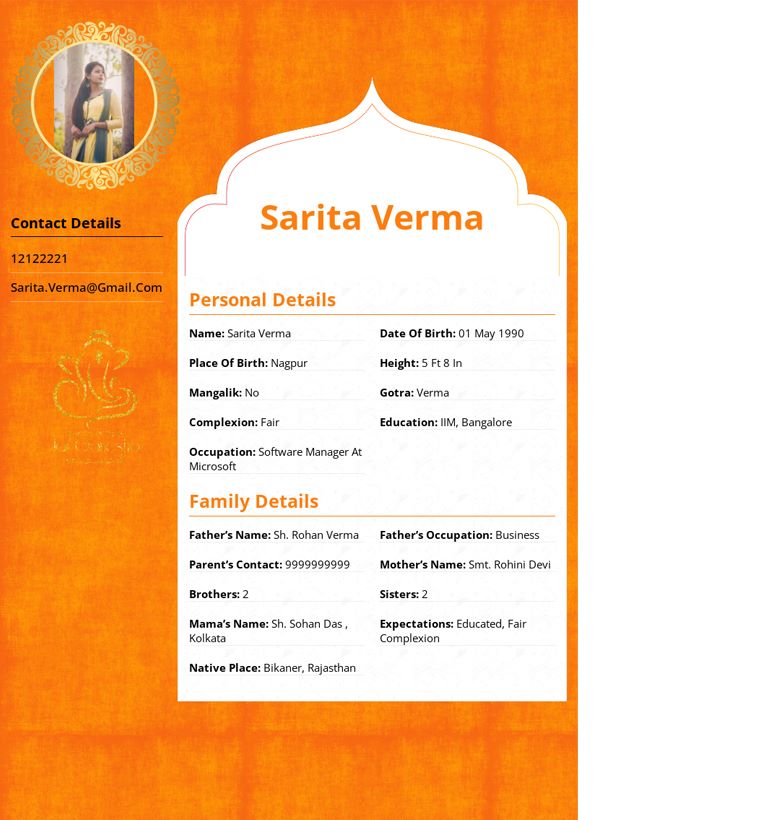
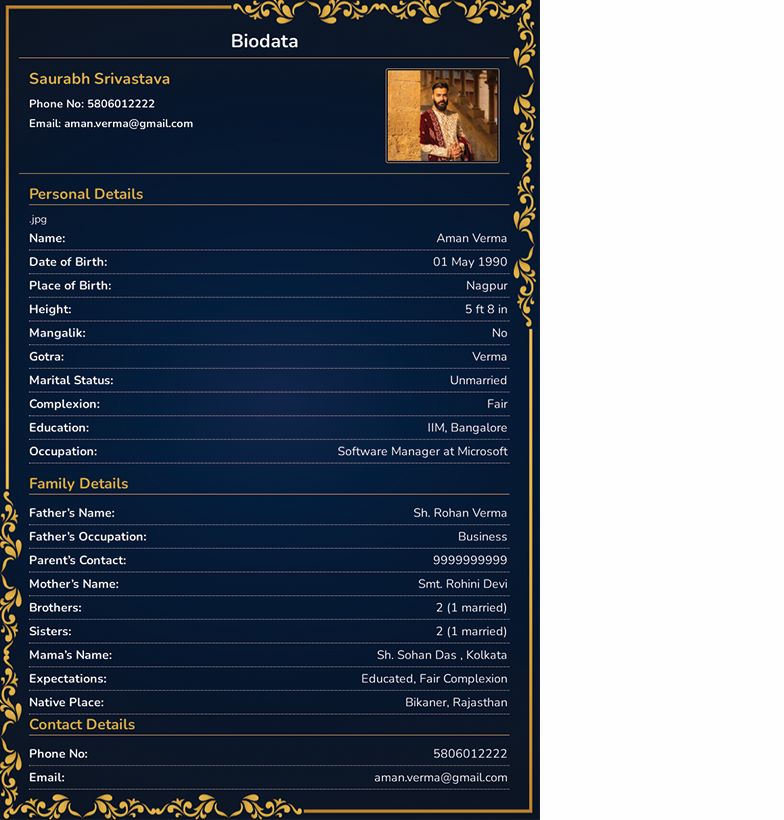
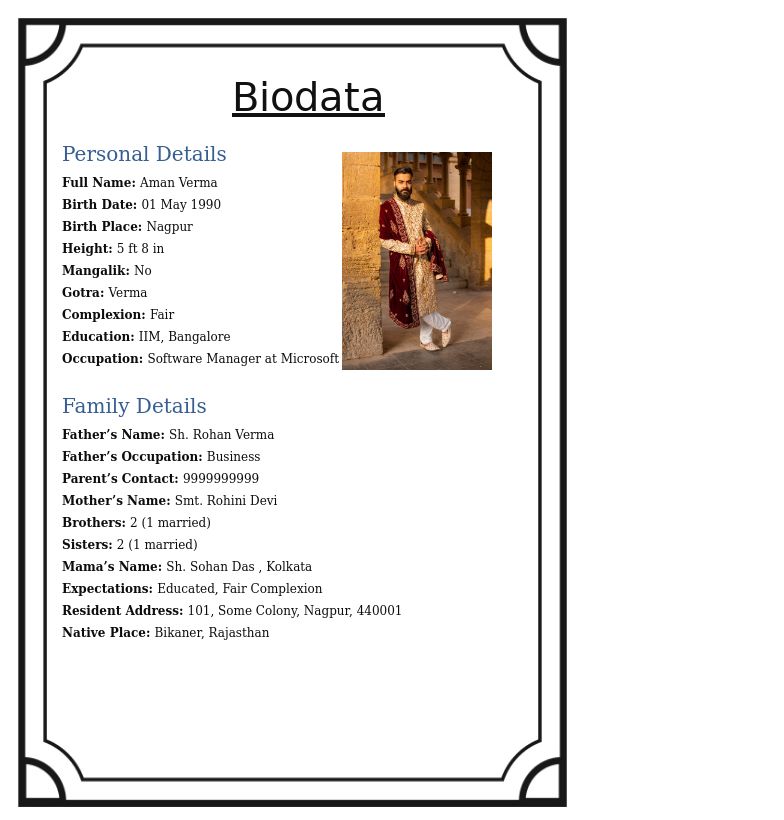
Awadhi Marriage Biodata Templates
Awadhi is the language of Goswami Tulsidas's Ramcharitmanas — the vernacular in which the story of Ram, Sita, and Lakshman was immortalised, making it sacred in every Hindu household of the Awadh region. Spoken across Faizabad (Ayodhya), Lucknow, Barabanki, Sultanpur, and Ambedkar Nagar, Awadhi carries the weight of both Nawabi refinement and deep Vaishnavite devotion. Marriage in this community is conducted with elaborate rituals — the Tilak, Haldi, Sehra Bandi, Vidaai — and the biodata shared before a match is expected to reflect not just educational credentials but kul (lineage), dharma, and tehzeeb (cultural refinement). An Awadhi marriage biodata template must balance tradition with clarity, honoring the region's proud identity.
The Awadh Region and Its Matrimonial Traditions
The Awadh region — with Ayodhya (Ram Janmabhoomi) as its spiritual heart and Lucknow as its cultural capital — shapes matrimonial expectations deeply. Saryupareen Brahmin, Kanyakubja Brahmin, Bhumihar, Kshatriya, Kayastha (particularly the Mathur-Kayastha of Lucknow), and the Shi'a/Sunni Muslim communities of Awadh each follow distinct social codes when sharing a rishta. Gotra matching and Kundali Milaan are essential for Hindu families, while for Muslim families of Awadh, the Nawabi ethos of Lucknow adds a layer of courtly tehzeeb — bio-datas here often mention Silsila (Sufi order) allegiance or whether the family hails from the old sharafat families of Aminabad or Hazratganj. Many matches from this region now reach the Gulf, UK, and North America through the Awadhi diaspora.
Key Sections of an Awadhi Marriage Biodata
Personal Details
- Full Name — as per official records; Awadhi families often include the ancestral village honorific
- Date of Birth & Age — with Vikram Samvat date for orthodox families
- Height, Complexion & Physical Description
- Marital Status — Never Married / Divorced / Widowed
- Mother Tongue: Awadhi (Hindi script used for writing)
Community & Religious Details
- Religion & Sub-sect — Hindu (Vaishnav/Shakta) or Muslim (Shia Asna Ashari / Sunni Barelvi) as widely present
- Caste / Sub-caste — Saryupareen / Kanyakubja / Bhumihar / Kshatriya / Kayastha / Yadav / Kurmi / Ansari etc.
- Gotra — critical for Brahmin families; Kashyap, Bharadwaj, Vatsa widely found
- Kuldevi / Kuladevata — ancestral goddess worshipped during Vivah Panchami
- Manglik Status — Mangal Dosha check is standard in Awadhi Hindu families
Education & Career
- Qualification — Lucknow University, Avadh University, BBAU, or UP government service credentials
- Occupation — PCS/IAS/IPS officer, UPPCL/Railway employee, medical professional, or business (particularly sugar mill/agriculture-based enterprise)
- Annual Income & Property Ownership — ancestral land holdings often mentioned
Family Background
- Father & Mother's Name and Occupation
- Ancestral Village / Tehsil / District — Faizabad, Gonda, Bahraich, Sitapur, Rae Bareli, Unnao origins are common
- Family Type — Joint family preference is strongly stated in Awadhi biodatas
- Agricultural Land / Haveli / Property — many Awadhi families mention zamindari heritage
- Siblings' Details & Their Marriages
Tips for Writing a Strong Awadhi Marriage Biodata
- Mention the Native Village Clearly: In Awadhi matrimonial culture, ancestral village identity (gram) carries social weight — include tehsil and district.
- Include Gotra and Pravara: Brahmin families in Awadh follow strict gotra exogamy; this must be stated to avoid wasted introductions.
- Reference the Ramayana Connection: For Vaishnav families, mentioning devotion to Ram (Ramlila participation, pilgrimage to Ayodhya) adds cultural resonance.
- State Joint Family Willingness: Awadhi families value ghar-jamai situations or joint living; clearly state your family structure expectations.
- Lucknow Tehzeeb in Language: If writing in Hindi/Awadhi, use respectful, refined phrasing — avoid blunt or transactional language, as the community values adab (courtesy).
Awadhi Marriage Biodata Formats Available
- Awadhi Biodata in Hindi (Devanagari) — the standard written form for Awadhi-speaking families
- Awadhi Hindu Brahmin Biodata — includes Gotra, Pravara, Kuldevi, and Kundali details
- Awadhi Muslim Biodata — Shia or Sunni format with Silsila, Nasab, and Lucknow Nawabi family details
- Awadhi Biodata for Groom / Dulha — career, land holdings, and family prestige highlighted
- Awadhi Biodata for Bride / Dulhan — education, family values, and cultural background
- Simple Awadhi Biodata — clean one-page format for quick sharing at community functions
Create your Awadhi marriage biodata today with our free, customisable templates. Download in PDF or Word format and share with families, pandits, or shaadi.com-registered families across the Awadh belt. Ram Ram!