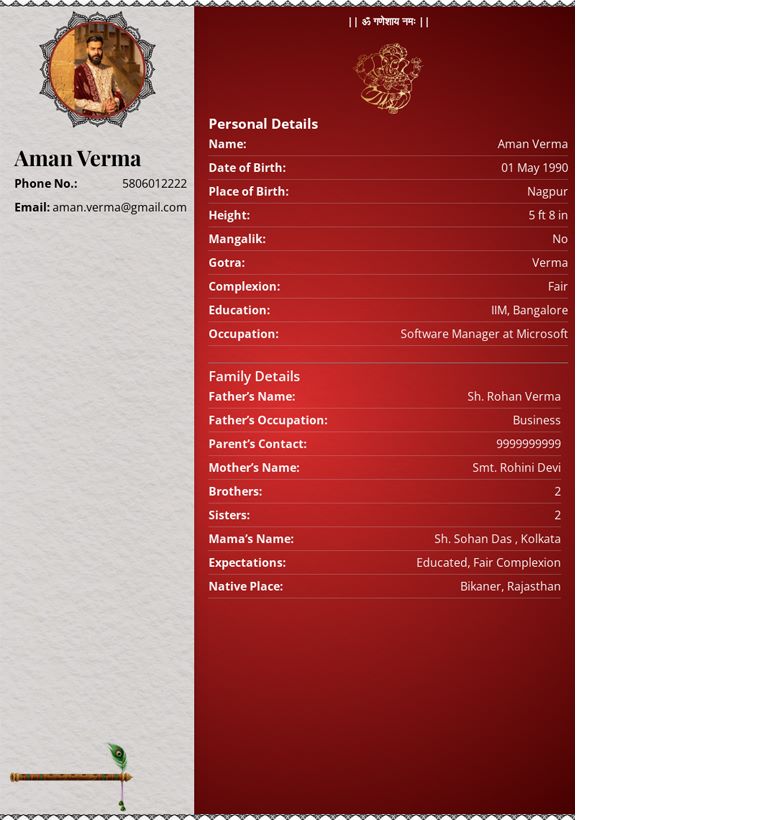
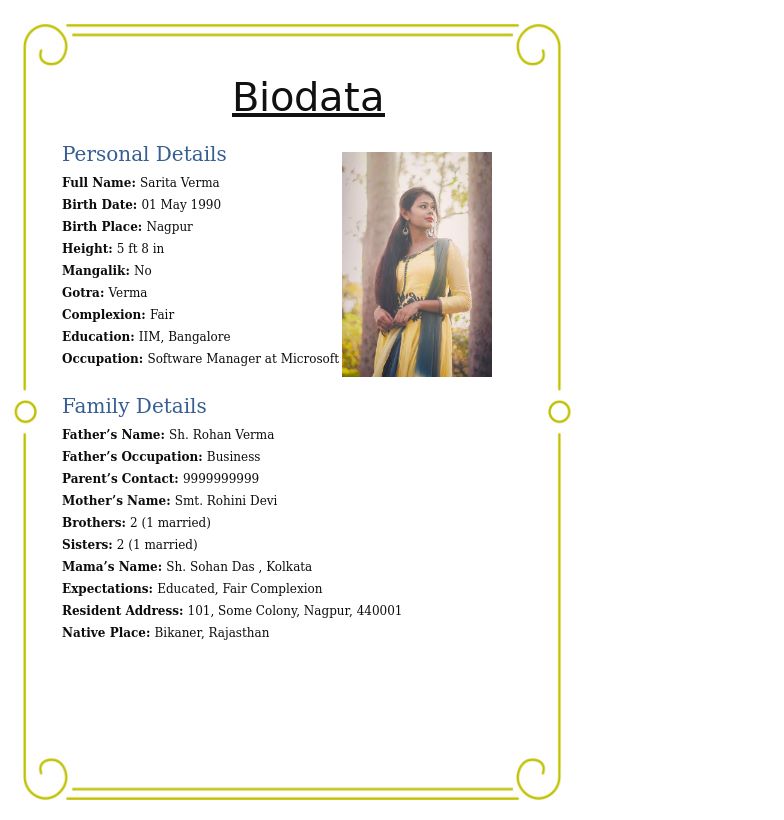
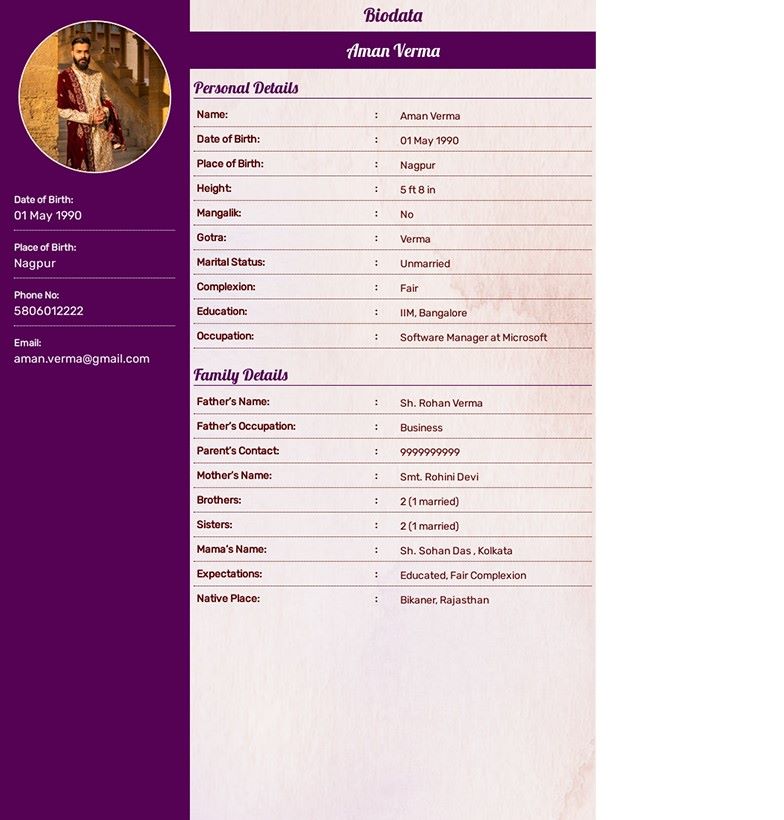
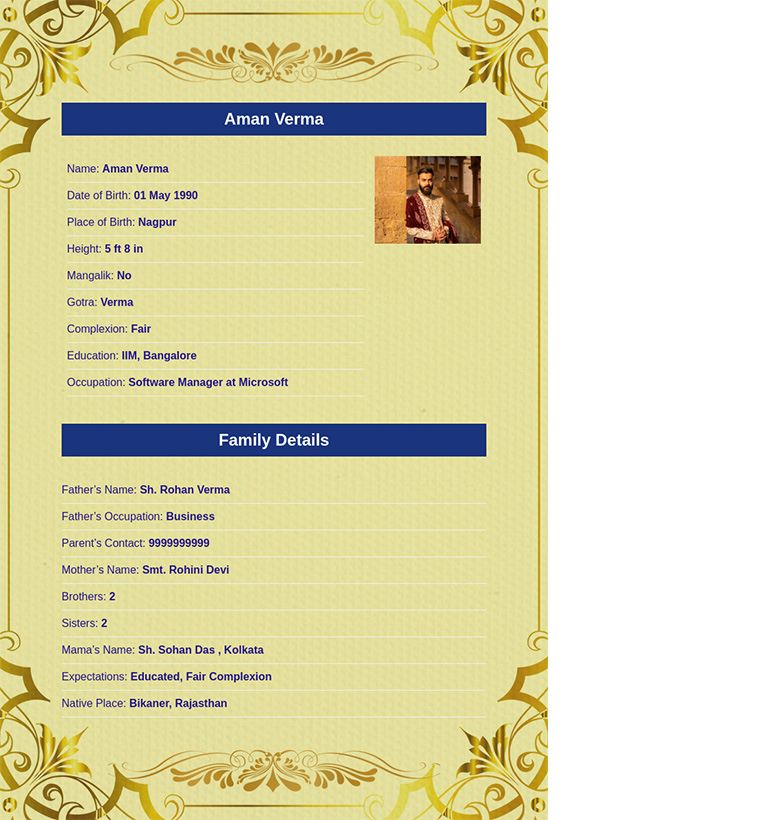
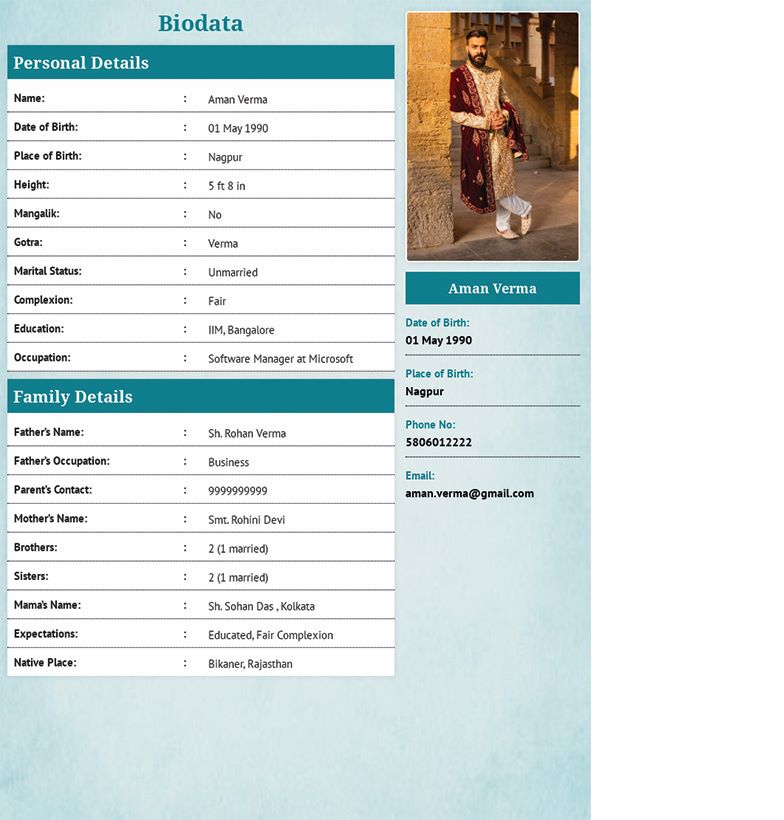
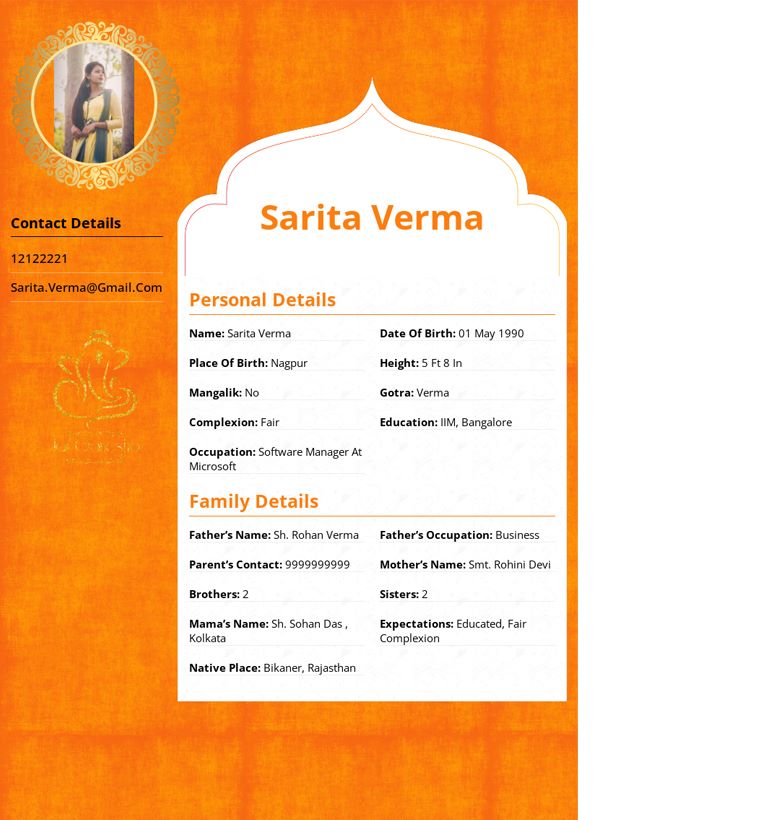
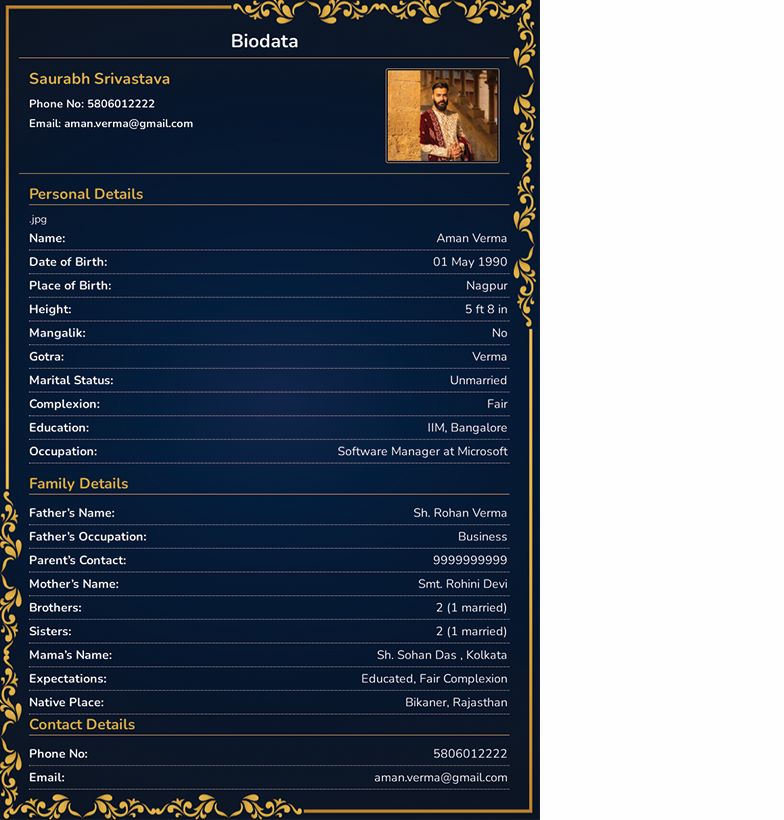
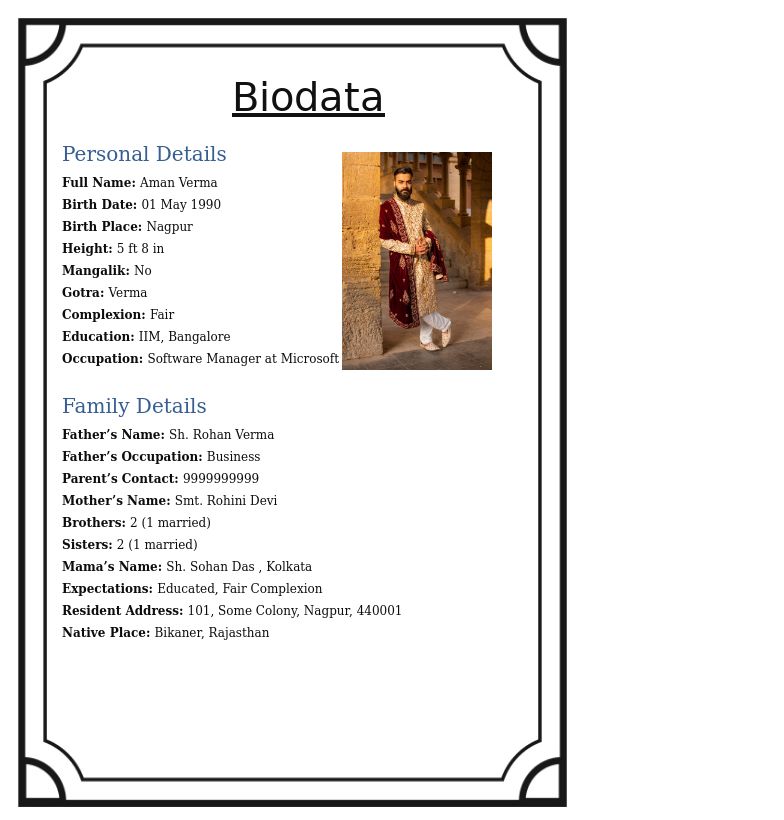
Assamese Marriage Biodata Templates
Assamese weddings are rooted in the gentle rhythms of the Brahmaputra valley — where the sound of the Dhol and Pepa fills the air during Bihu, and the sacred Sattriya traditions give ceremonies a timeless spiritual depth. The Assamese marriage biodata (বিবাহৰ বায়োডেটা) is the quiet introduction that precedes the joyful chaos of an Assamese Biya. Whether you are a Brahmin family from Barpeta’s Sattra tradition, a Kayastha family from Guwahati, a Kalita family from the Brahmaputra plains, or one of Assam’s many indigenous tribal communities — your biodata sets the foundation for a lifelong conversation between two families.
The Social Fabric of Assamese Matrimony
Assamese Hindu society is broadly divided into several communities — Brahmin (Assamese Brahmin or Barua Brahmin), Kayastha, Kalita, Koch, Bania, and Ahom — each with its own sub-groups and marriage customs. Among the Ahom community, the Paik system and clan (Burhagohain, Borgohain, Phukan, Hazarika, Mahanta, Bora, Deka) identifiers are important. Sattra-affiliated families (Vaishnava monasteries established by Srimanta Sankardeva) maintain unique religious customs that influence their matrimonial expectations. Assam’s multi-ethnic character also means biodata conventions vary considerably between the Hindu Assamese, Bengali Hindu, Muslim Assamese (Goriya-Moriya), and various tribal communities like Bodo, Mishing, Rabha, and Tiwa.
Key Sections of an Assamese Marriage Biodata
Personal Details
- Full Name (অসমীয়া নাম সহ)
- Date of Birth, Time & Place — for Kundali matching among Hindu families
- Height, Complexion
- Marital Status
- Current Location — Guwahati, Dibrugarh, Jorhat, Silchar, or outside Assam
Community & Religion
- Religion: Hindu / Muslim / Christian / Vaishnava
- Caste / Community: Brahmin, Kayastha, Kalita, Ahom, Koch, Bania, Goriya Muslim, Bodo, etc.
- Clan / Title (for Ahom): Hazarika, Mahanta, Bora, Deka, Phukan, Borgohain, etc.
- Sattra Affiliation — Auniati, Kamalabari, Dakhinpat, Garumur Sattra (for Vaishnava families)
- Gotra (for Brahmin and Kayastha families)
- Rashi & Nakshatra
Education & Career
- Qualifications — IIT Guwahati, Gauhati University, Dibrugarh University, Cotton University
- Profession — government service (APSC), oil sector (OIL/ONGC), tea industry, medicine, education, business
- Annual Income
- Current City
Family Background
- Father’s Name, Community Title, Occupation
- Mother’s Name & Maiden Family
- Siblings
- Native District / Village — Nagaon, Jorhat, Kamrup, Lakhimpur, Cachar, Dhubri, etc.
- Connection to Tea Garden Community (if applicable)
Tips for an Effective Assamese Marriage Biodata
- Include Sattra affiliation for Vaishnava families: Srimanta Sankardeva’s Eka Sharana tradition through specific Sattras is a defining identity for many Assamese families — noting it helps find genuinely compatible matches.
- Government job (APSC/IAS) carries high prestige: As in much of Northeast India, a stable government position in Assam is viewed with great respect — specify your cadre and posting.
- Note dialect if relevant: Assamese has distinct regional dialects — Goalpariya, Kamrupi, Sibsagaria — and some families prefer matches from the same regional sub-group.
- Write in Assamese script: A biodata written in the Assamese script (অসমীয়া লিপি) is warmly received by family elders and is a mark of cultural pride.
Assamese Marriage Biodata Formats Available
- Assamese Biodata in Assamese Script (অসমীয়া) — traditional format for family elders and community introductions
- Assamese Biodata in English — for urban Guwahati and outside-Assam matches
- Ahom Community Marriage Biodata — with clan title, Paik lineage, and traditional fields
- Vaishnava Assamese Biodata — with Sattra affiliation and Eka Sharana tradition details
- Goriya-Moriya Muslim Assamese Biodata — for indigenous Muslim Assamese communities
- Assamese Bride Biodata (বধূর বায়োডেটা)
- Assamese Groom Biodata (বরর বায়োডেটা)
Create your Assamese marriage biodata today in PDF or Word format. Share it with your community matchmaker, Sattradhikar, or family elders. শুভ বিয়া — may your biodata lead you to a partner who shares the warmth and cultural richness of the Brahmaputra valley.