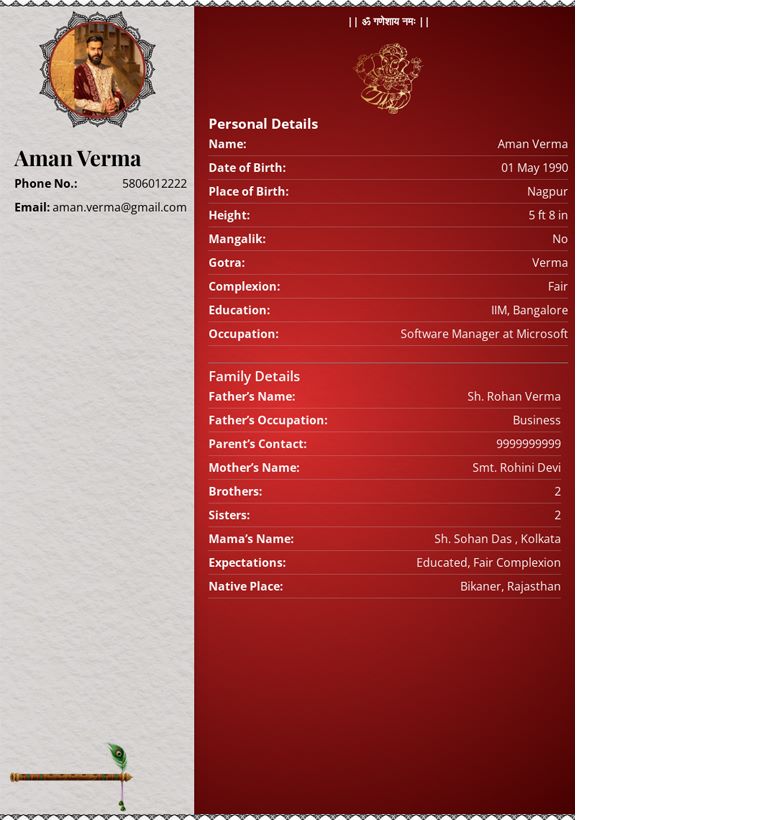
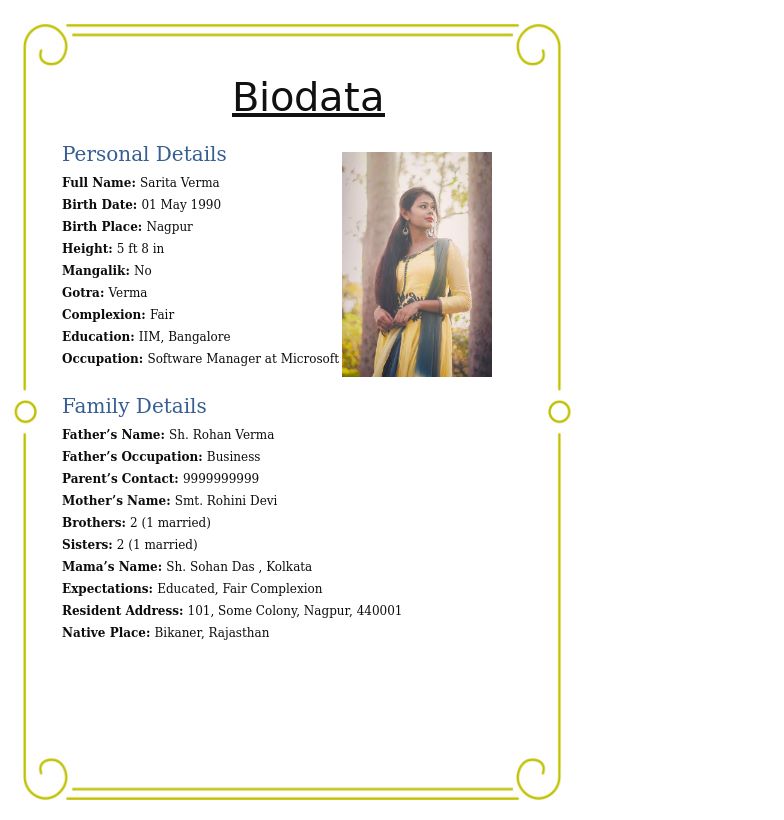
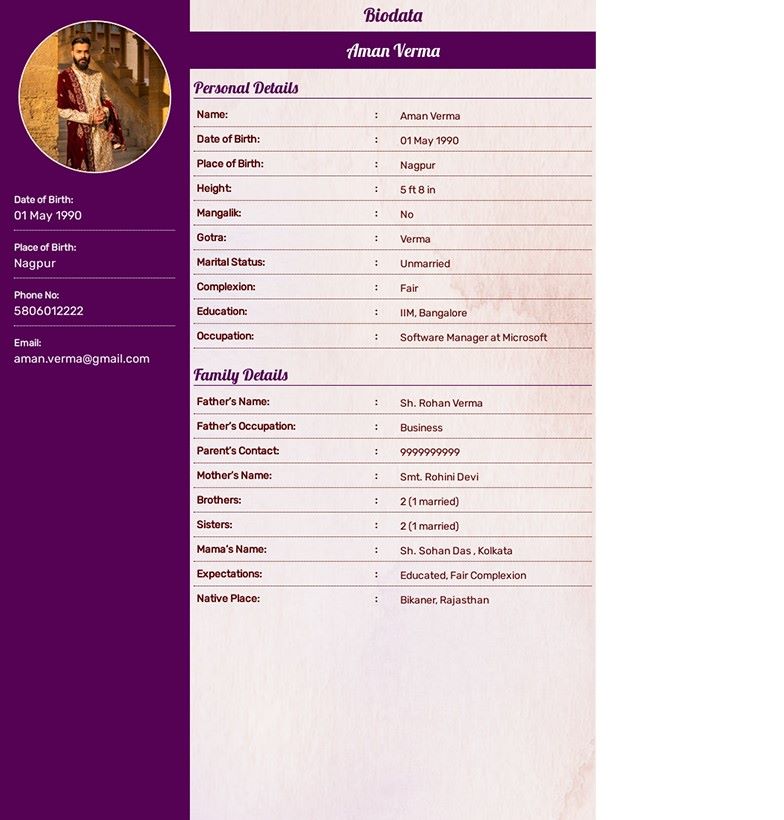
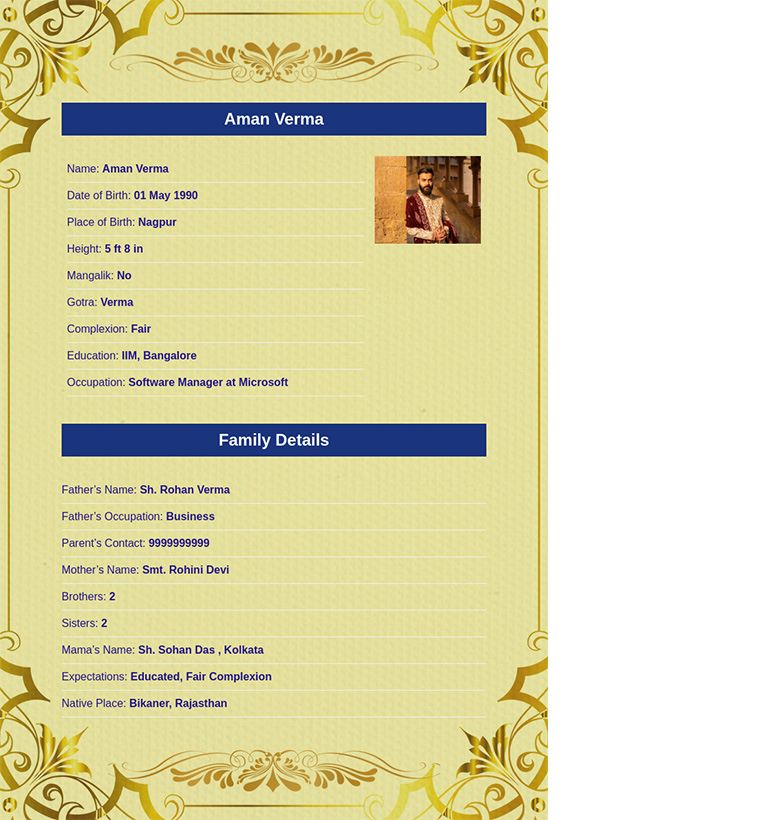
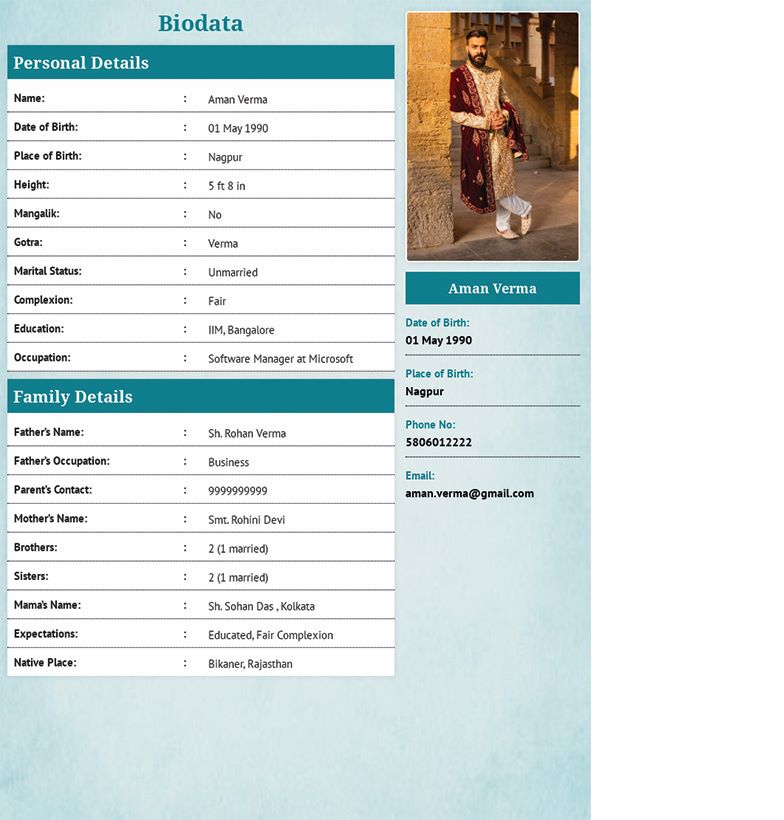
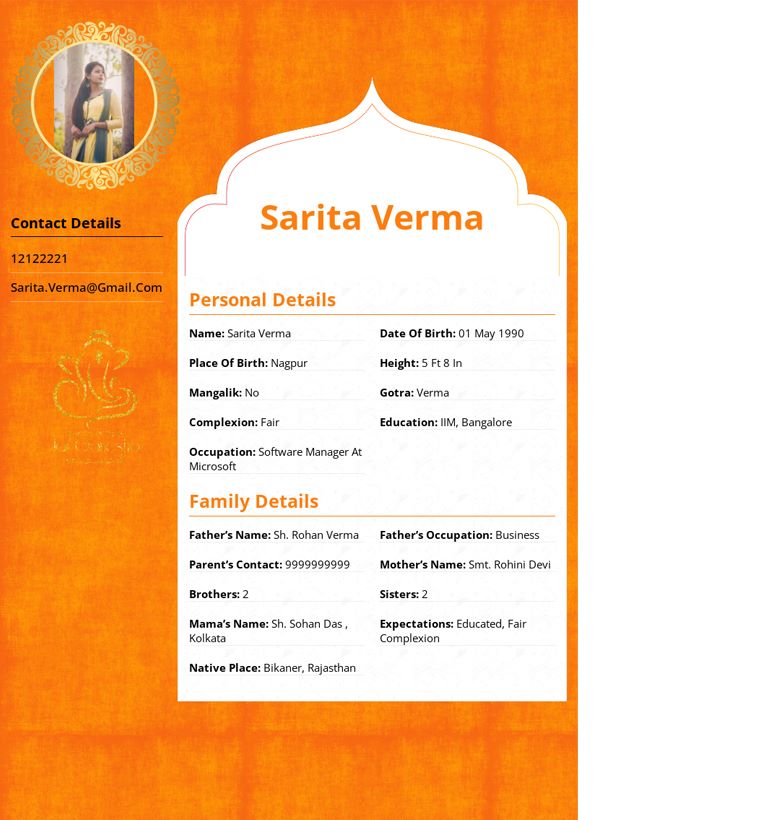
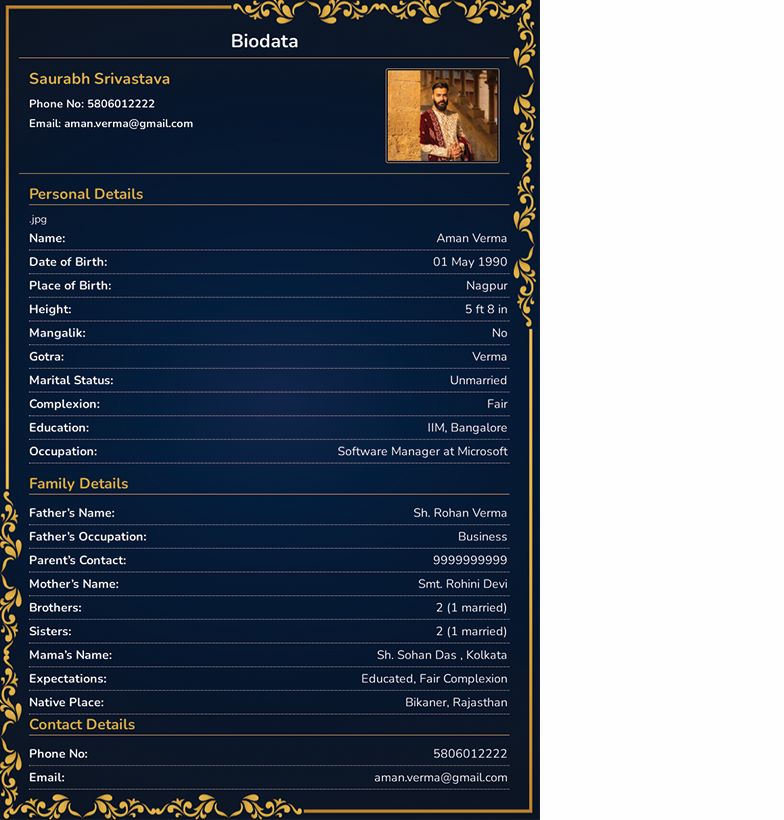
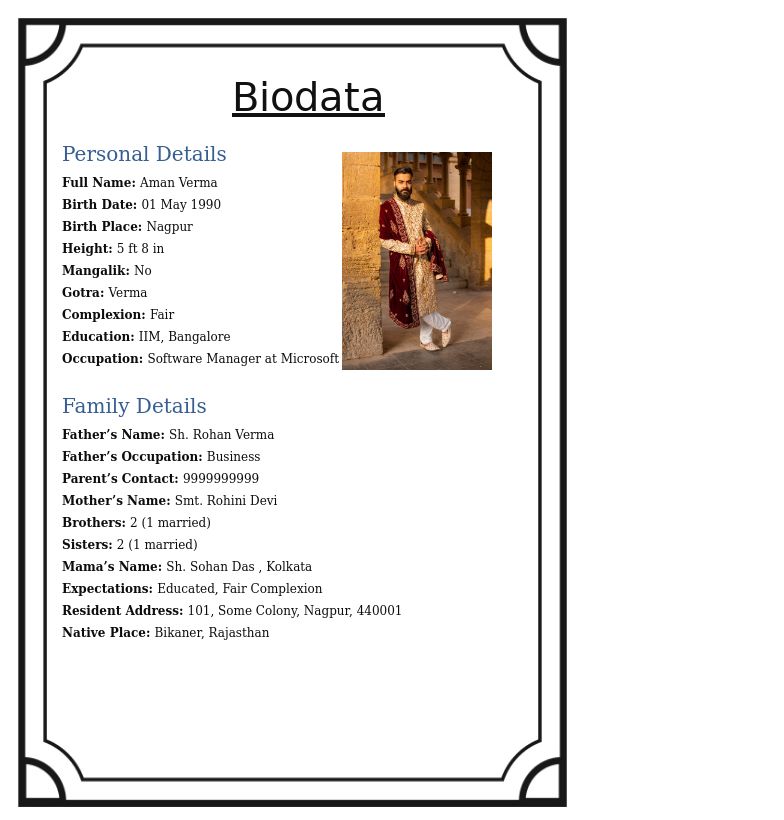
Angami Marriage Biodata Templates
The Angami Naga are one of the most prominent and influential tribes of Nagaland, inhabiting the Kohima district and the surrounding hills that form the cultural and political heart of the state. It was the Angami warriors who fought the famous Battle of Kohima in 1944 alongside British and Indian forces, and their strategic hilltop village of Khonoma — often called Asia's first green village for its century-old wildlife conservation tradition — embodies their fierce pride in heritage and ecology. Today the Angami are predominantly Christian (Baptist and Catholic), highly educated, and hold a disproportionately large share of Nagaland government and IAS/IPS service positions. Angami society is clan-based, patrilineal, and traditionally governed through the village Khel (ward) system and the Village Council (Terhüpfü). Marriage is strictly exogamous within the Tenyü Khel (clan), and the Village Council's social approval of a match carries moral weight even among educated urban families. An Angami marriage biodata must reflect Khel/clan identity, Christian denominational affiliation, and career achievement in the context of Nagaland's educated Naga society.
Angami Society: Khel, Village Council, and Matrimonial Traditions
Angami villages — Kohima village, Jotsoma, Zubza, Viswema, Khonoma, Mezoma, Thekrübama — are the primary identity anchors in matrimonial culture. The Khel (ward/clan) system means every Angami belongs to a named patrilineal group within their village, and marriage between members of the same Khel is prohibited. The Morung (traditional bachelor dormitory) historically served as the social institution where young men learned community values — its spirit of collective discipline carries over into the respectful, formal tone of Angami matrimonial profiles. Baptist Church of Nagaland (BCN) and the Catholic Church are the two primary denominational identities. Career prestige includes Nagaland Civil Service (NCS), NPSC-qualified positions, teaching (with Nagaland's high literacy), medical, army/paramilitary, and central government service. The Angami community has a strong presence in Delhi, Bangalore, and Dimapur for professional opportunities.
Key Sections of an Angami Marriage Biodata
Personal Details
- Full Name — Angami names are typically Tenyü Naga (e.g., Kevileno, Vizolie, Neifelhou, Cüzetuo)
- Date of Birth & Age
- Height & Complexion
- Marital Status
- Mother Tongue: Angami (Tenyü)
Village, Khel & Religious Details
- Home Village — Kohima / Khonoma / Jotsoma / Viswema / Thekrübama etc.
- Khel (Clan/Ward) — mandatory for exogamy verification; same-Khel marriage prohibited
- Church Denomination — Baptist Church of Nagaland (BCN) / Catholic / Presbyterian
- Home Church and Village Council Standing
Education & Career
- Qualification — Nagaland University, NEHU, Delhi University, AIIMS; many Angami attend national institutions
- Occupation — NCS/IAS/IPS officer, NPSC qualified, teacher, army officer, doctor, engineer, central government
- Annual Income
Family Background
- Father & Mother's Name and Occupation
- Home Village and Khel
- Church Membership and Community Standing
- Family Type: Nuclear (most urban Angami families in Kohima/Dimapur/Delhi)
- Village Council Recognition (if applicable for traditional families)
Tips for Writing a Strong Angami Marriage Biodata
- Home Village and Khel are Essential: Angami matrimonial compatibility begins with village and Khel verification — always include both prominently.
- Church Denomination Matters: Baptist and Catholic Angami families have different community social networks — specify denomination and home church.
- Khonoma Heritage is a Prestige Marker: Families from Khonoma carry historical and conservation prestige — mention it if applicable.
- Hornbill Festival & Cultural Identity: The Angami play a central role in Nagaland's Hornbill Festival (Sekrenyi celebration) — cultural participation shows community rootedness.
- Write in English: Nagaland's official language is English; Angami biodatas are written in English, sometimes with Tenyü phrases in closings.
Angami Marriage Biodata Formats Available
- Angami Baptist Biodata — BCN church affiliation, village, Khel, NCS/IAS career
- Angami Catholic Biodata — Diocese, parish, Kohima Catholic community
- Angami Biodata in English — standard format for educated Kohima families
- Angami Biodata for Groom / Bride — village, Khel, career credentials, church standing
- NRI Angami Biodata — for Angami professionals in Delhi, Bangalore, UK, USA
Create your Angami marriage biodata today with our free, customisable templates. Download in PDF or Word and share across Kohima, Dimapur, and the global Angami community. Mhousü!