Vaish Biodata Sample for Marriage
A strong Vaish biodata sample for marriage should sound as if a real family wrote it with care. In mercantile and professional families across several north Indian cities, readers often trust profiles that are structured, specific, and respectful more than ones filled with decorative claims.
The profile should sound composed, practical, and open to a balanced partnership. That is why the profile should make room for education, work, family setting, personal habits, and readiness for marriage in equal measure.
Why This Biodata Needs More Than a Template
The role of community context is to add understanding, not to dominate the document. A reader should come away with a sense of where the family is rooted, how the household functions, and what kind of values shape daily life. That makes the biodata easier to trust and easier to discuss within the family.
A practical way to do this is to mention the family's social setting, mother tongue, present city, and outlook toward work or relocation. Those details often help more than long explanations of status or ceremony.
Details That Should Appear Early
The practical details matter because matrimonial conversations often start at a distance. Current city, native roots, profession, and family composition help both sides understand what everyday life may look like after marriage.
For a Vaish biodata, it also helps to mention whether the family is nuclear or joint in practice, whether the person expects to continue working after marriage, and whether location is flexible. These are not minor details. They often influence compatibility far more than ornamental wording.
How to Describe the Person Behind the Profile
Most families want to know what kind of companion the person will be after the wedding photographs are gone and regular life begins. That is why everyday habits matter. A note about routine, communication style, family affection, or independent thinking often says more than a list of achievements.
Readers often remember one or two honest lines more than an entire page of polished language. If the person is composed, socially warm, ambitious, or spiritually inclined, say so directly and simply.
Connecting Professional Life With Marriage Readiness
Work details are useful only when they connect back to compatibility. If the person values a steady city base, flexible relocation, or support for a dual-career marriage, the biodata should mention it in direct language.
This matters in mercantile and professional families across several north Indian cities, where families often evaluate not only the job title but also whether the person seems steady, adaptable, and respectful of family commitments.
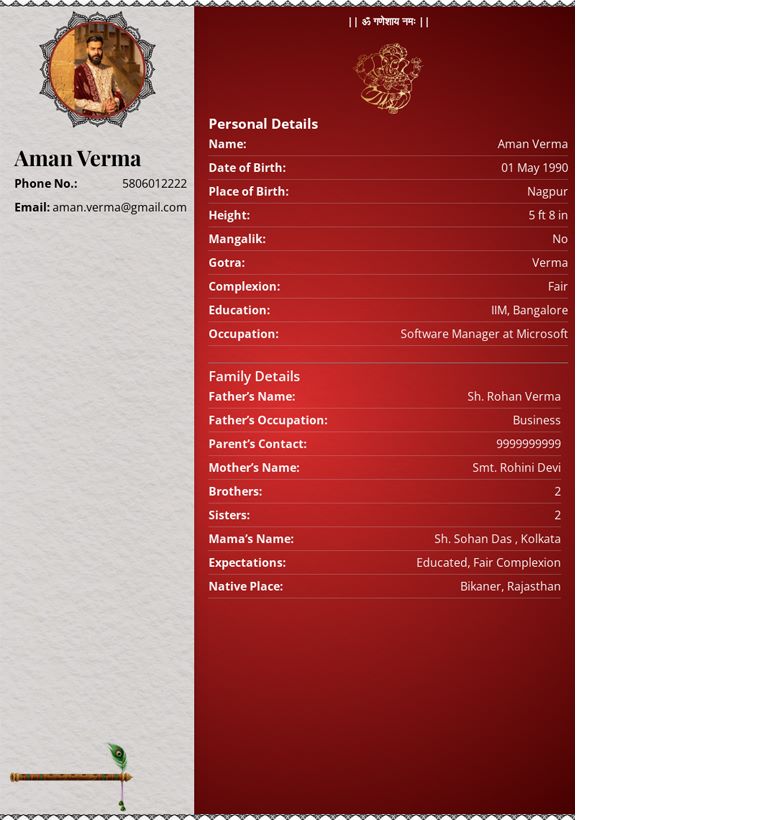
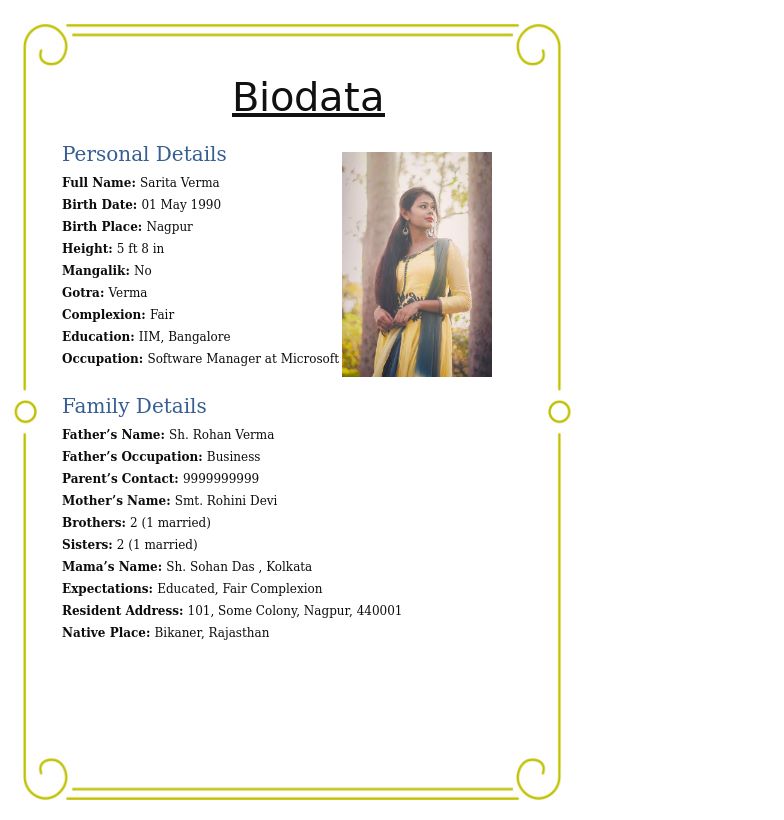
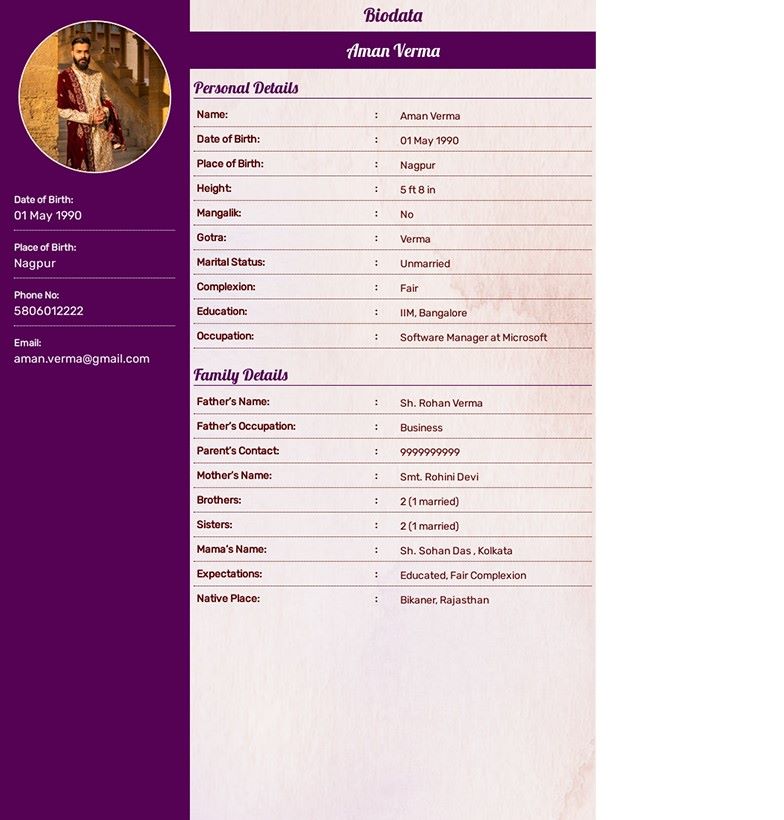
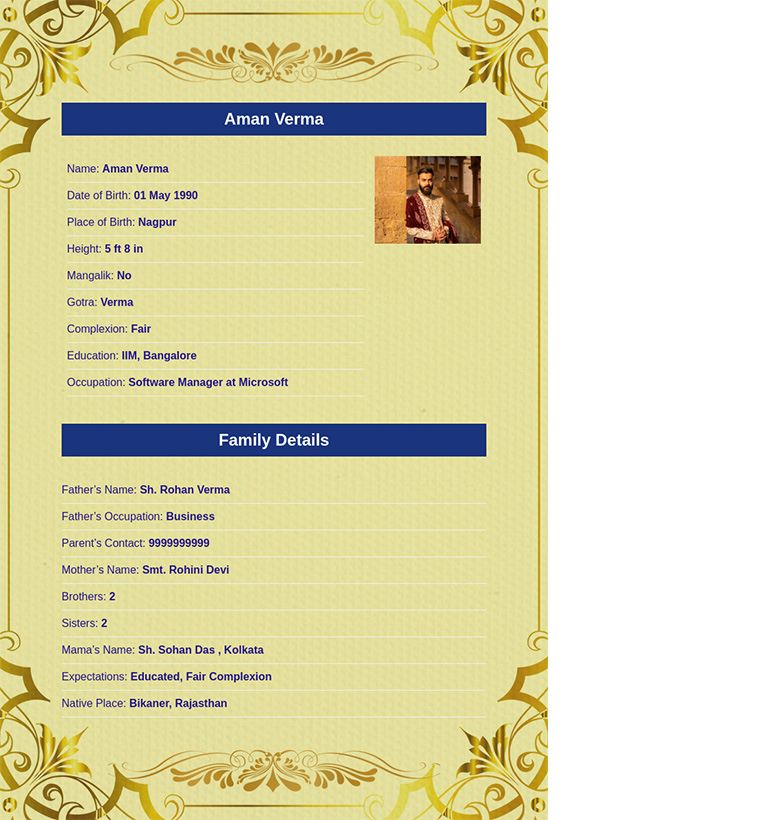
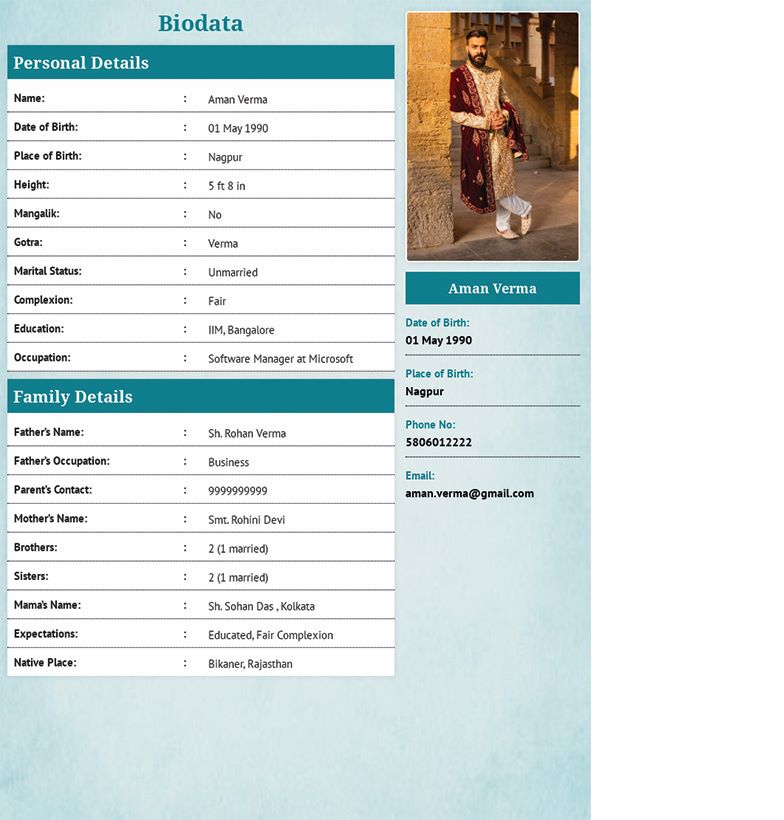
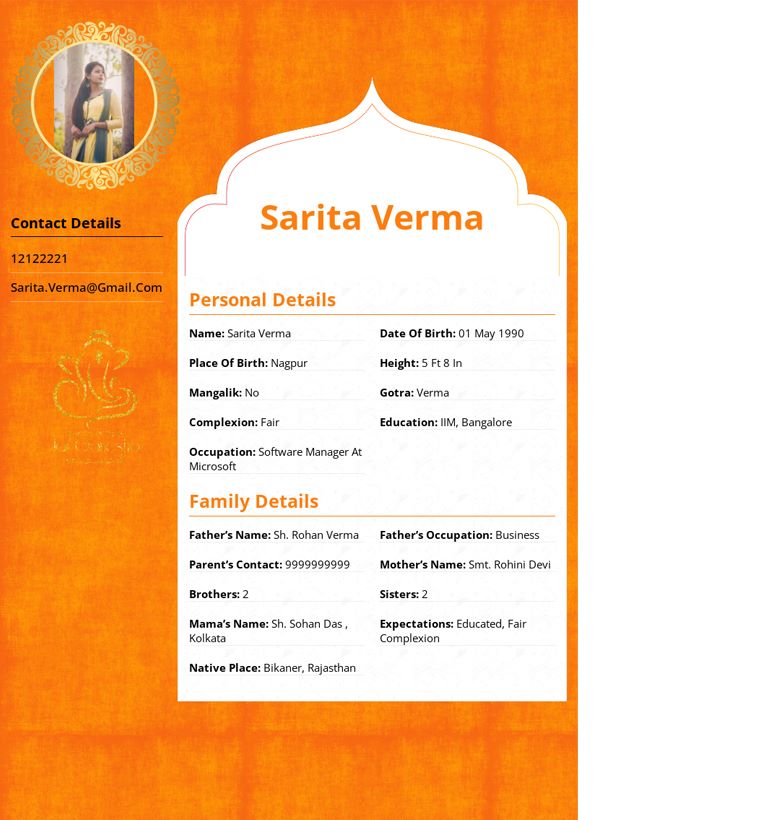
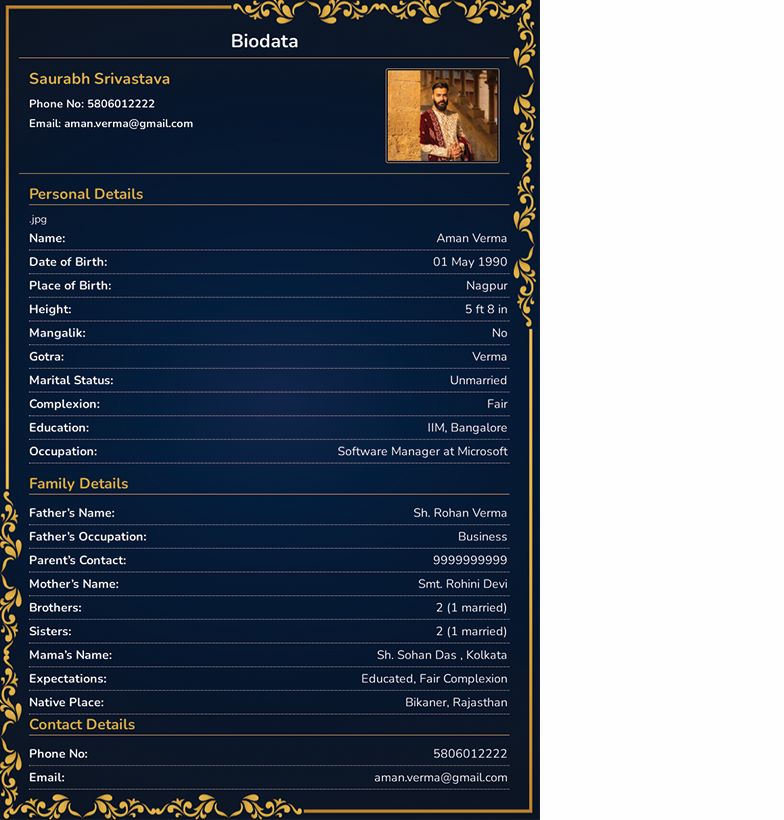
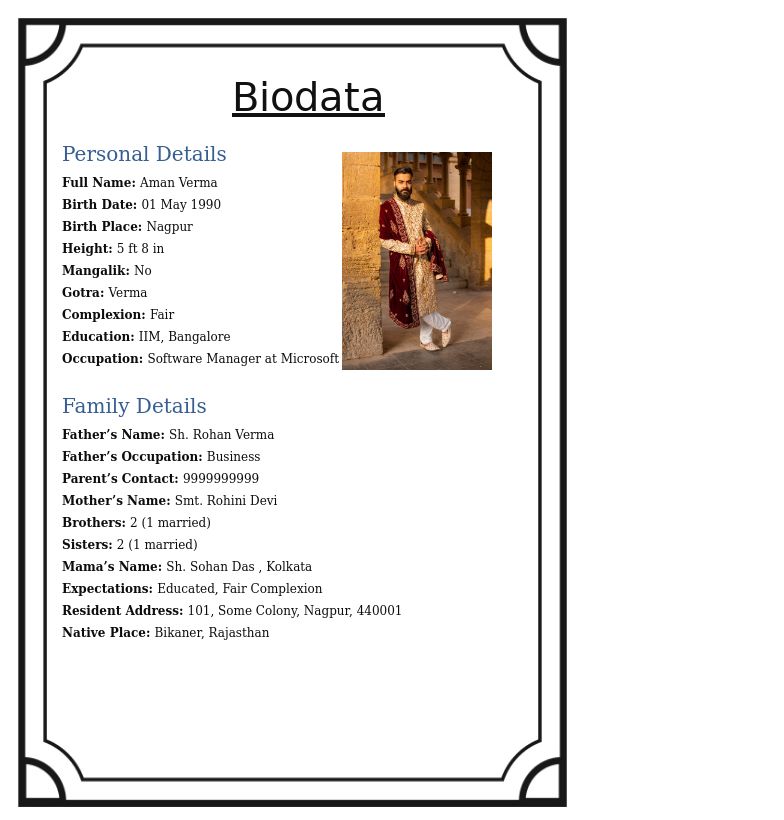
Sample Vaish Biodata for Marriage
Name: Divya Vaish
Date of Birth: 25 December 1994
Age: 32 years
Height: 5'7"
Current Residence: Kanpur
Native Place: Varanasi, Uttar Pradesh
Community: Vaish
Mother Tongue: Hindi
Education: BPT
Profession: Software Engineer with a multinational firm

Family Details:
Father: Mr. Kunal Vaish, self-employed professional
Mother: Mrs. Shreya Vaish, retired school teacher
Sibling: One elder brother working in Bengaluru
Family Type: Culturally rooted household with a calm and respectful environment

About Me:
I am cheerful, responsible, and family-oriented. I value honesty, small courtesies, and a home environment where both partners can grow with dignity.
In personal time, I enjoy reading non-fiction, short travel, light fitness, and time with family.

Partner Preference:
Looking for a well-grounded life partner with a good family background, steady temperament, and openness to shared responsibilities.
Location can be discussed for the right match.
What to Say About Compatibility
Partner preferences are useful when they are written with humility. Families may prefer a similar cultural background, a certain educational level, or openness to relocation, but these points should be expressed with dignity rather than as demands.
A sensible expectations section also signals emotional maturity. It shows that the family is thinking about shared life, not just social matching.
Mistakes That Weaken the Biodata
A biodata should never force the reader to guess about basic matters such as city, profession, family setup, or willingness to relocate. Missing essentials make even good writing less useful.
For a Vaish profile, the better approach is simple: be accurate, be specific, and let the document sound like a real introduction prepared by thoughtful people.
Conclusion
A well-written Vaish biodata sample for marriage gives families a realistic starting point. It combines personal background, family context, work life, and expectations in a format that is easy to share and easy to trust.
For this community, the best biodata is usually the one that stays balanced. It respects regional and family context, but it does not let labels overshadow the individual.
When the writing is honest and specific, the biodata does its real job: it helps meaningful conversations begin on solid ground.