Sonar Biodata Sample for Marriage
A useful Sonar biodata sample for marriage is more than a list of particulars. It should help two families understand background, temperament, and future expectations in a voice that feels human and measured, especially in goldsmith and jewellery-linked households with artisanal pride.
A biodata can respectfully mention skilled family backgrounds while still sounding modern. If the writing stays grounded, the biodata can serve both elders who review family context and the prospective match who wants to understand lifestyle and mindset.
How Families Usually Read This Profile
Families rarely make decisions on labels alone. They use those labels as background while paying closer attention to conduct, education, stability, and the person's likely fit in a long-term partnership. A biodata that reflects that reality feels much more mature.
For Sonar families, a biodata can respectfully mention skilled family backgrounds while still sounding modern. Mentioning that naturally gives the page a more lived-in quality than repeating generic lines such as cultured, caring, or well settled.
The Sections That Make the Profile Useful
A clear biodata begins with the essentials. Name, age, height, city, education, occupation, and family details create the framework. Without that structure, even a well-written personal summary can feel incomplete.
Family details should remain factual and warm. Naming parents, their occupations, siblings, and the general household atmosphere often gives a better sense of the person than a long paragraph filled with broad adjectives.
Where Personality Should Come Through
This section should also show whether the person can balance personal goals with shared life. Marriage discussions become easier when the biodata quietly answers that question before anyone has to ask it directly.
For many Sonar families, tone matters as much as content. The writing should not sound apologetic, boastful, or stiff. A confident but calm voice is usually the right middle path.
How Career and Family Life Can Be Presented Together
Professional background matters because it shapes location, routine, and long-term decisions. A biodata becomes more helpful when it says plainly how the person works today and what kind of balance they hope to keep after marriage.
A short note about future plans can also help. It may mention willingness to build a home in the current city, flexibility about living arrangements, or a preference for a partnership where both careers are respected.
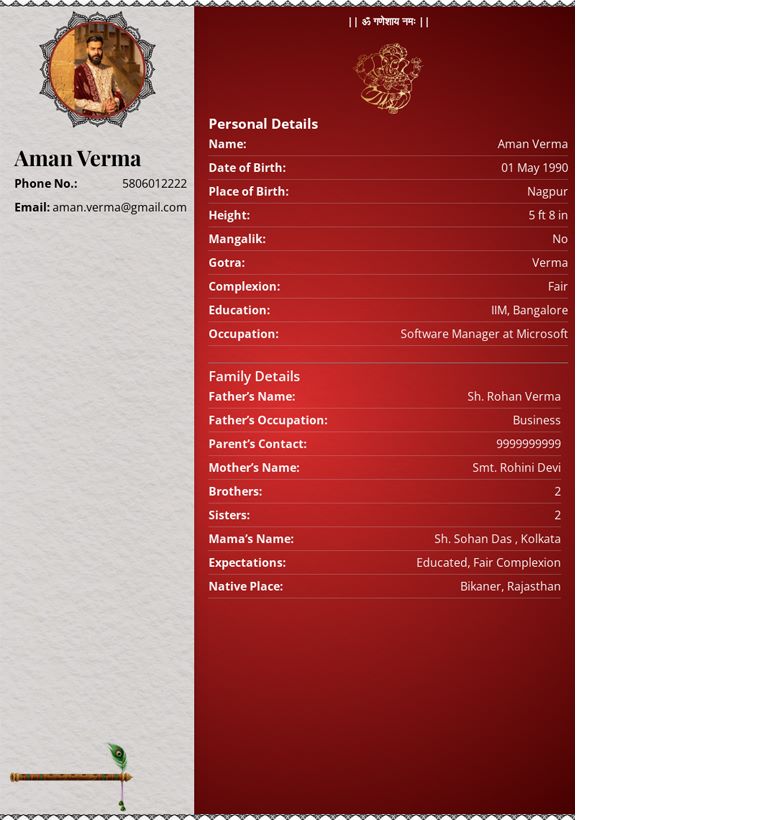
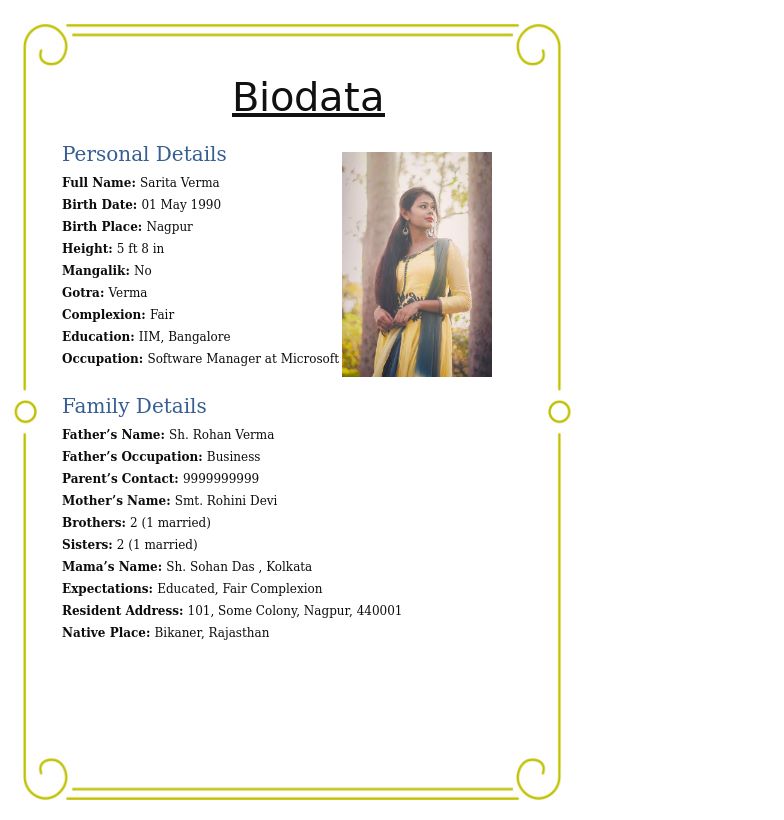
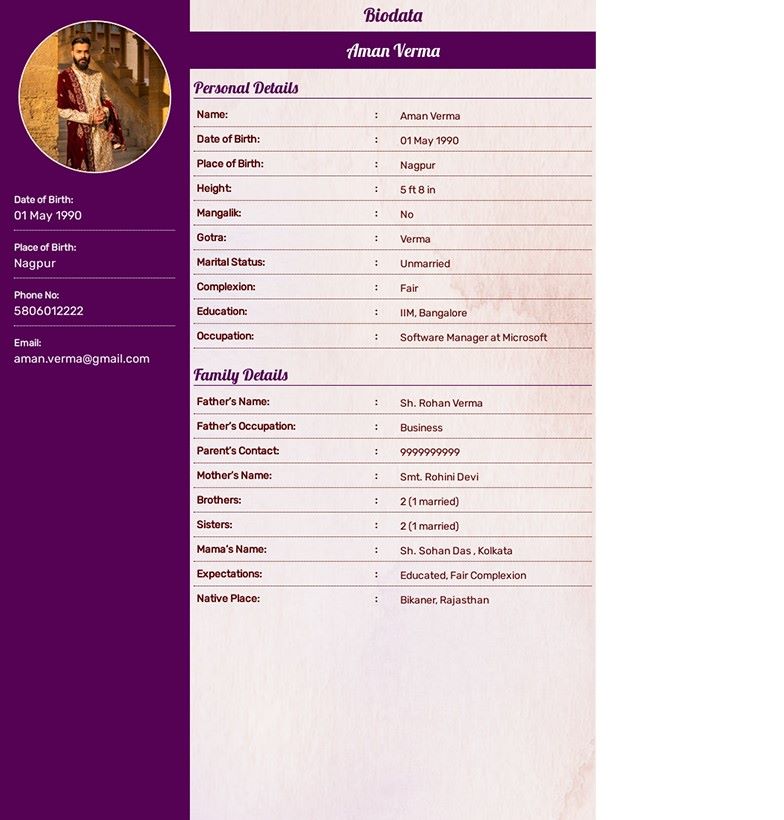
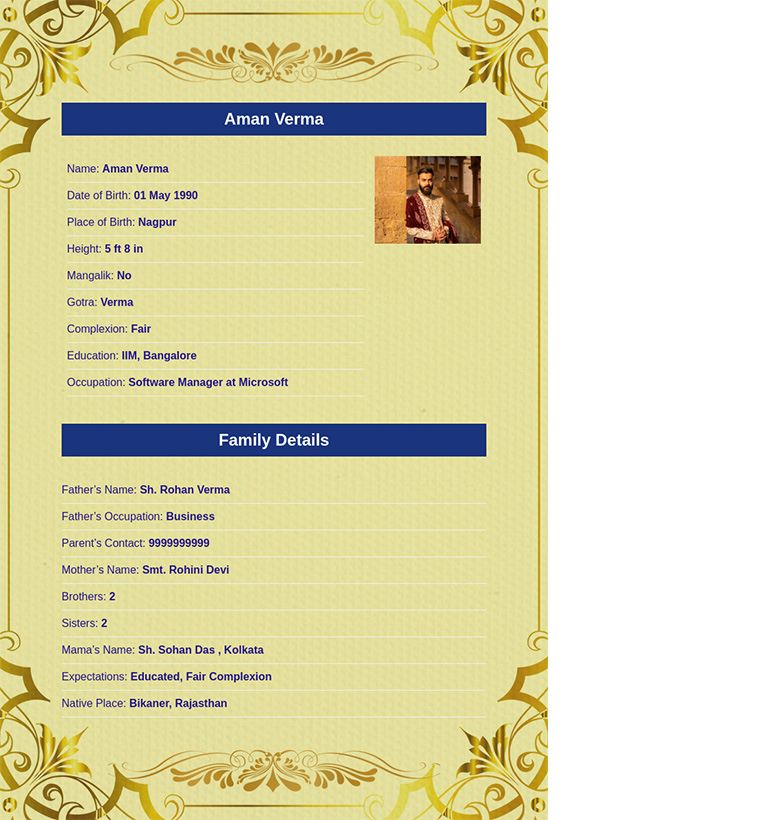
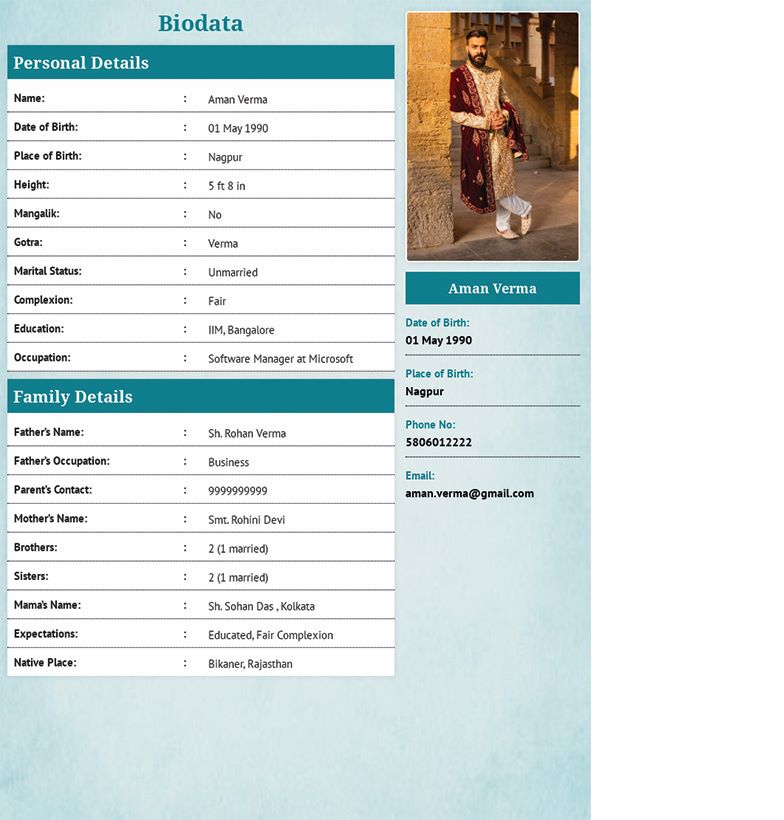
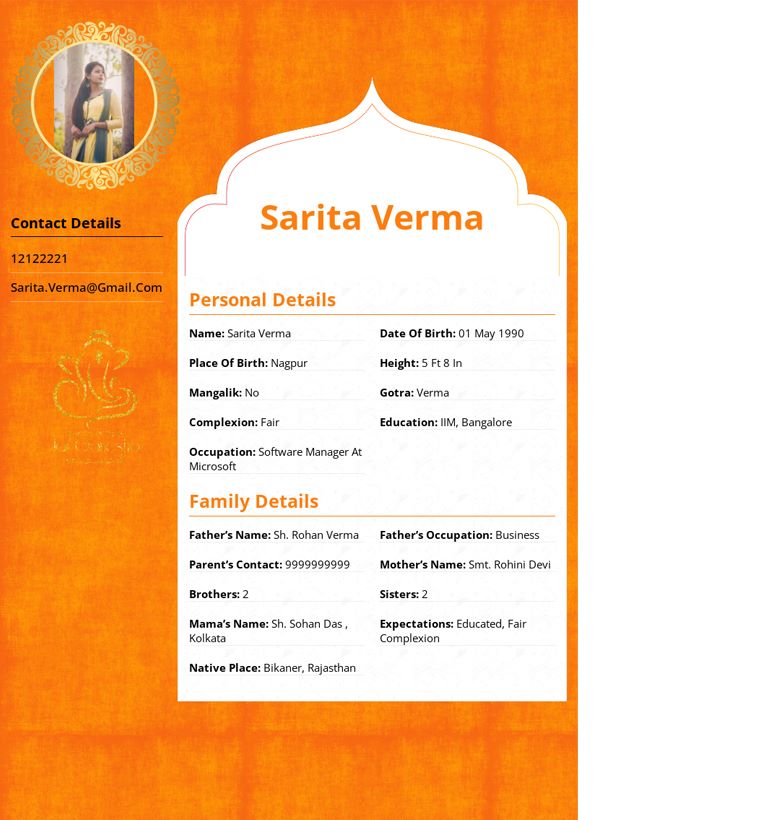
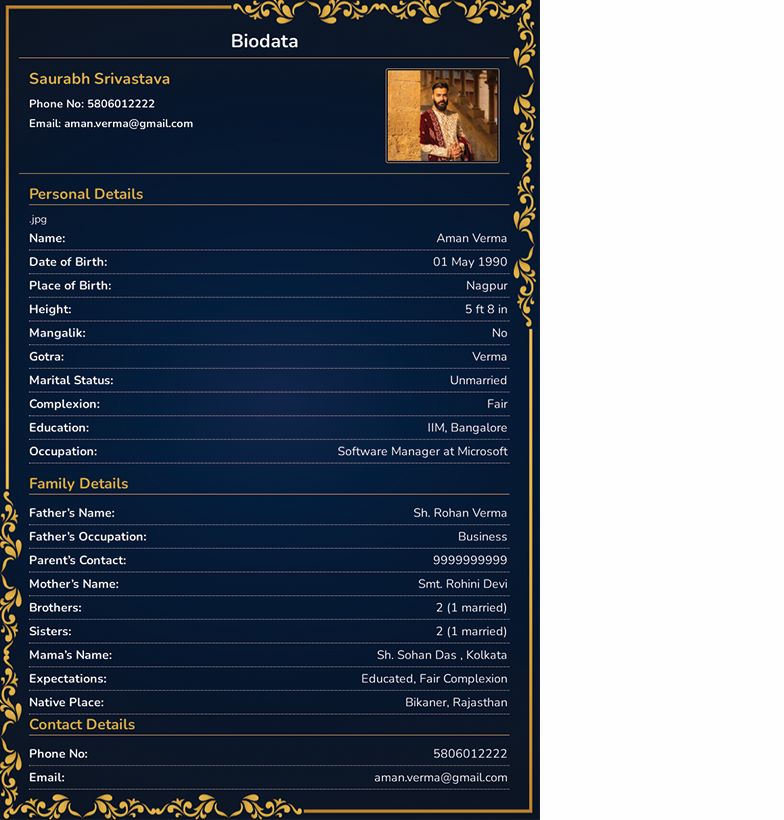
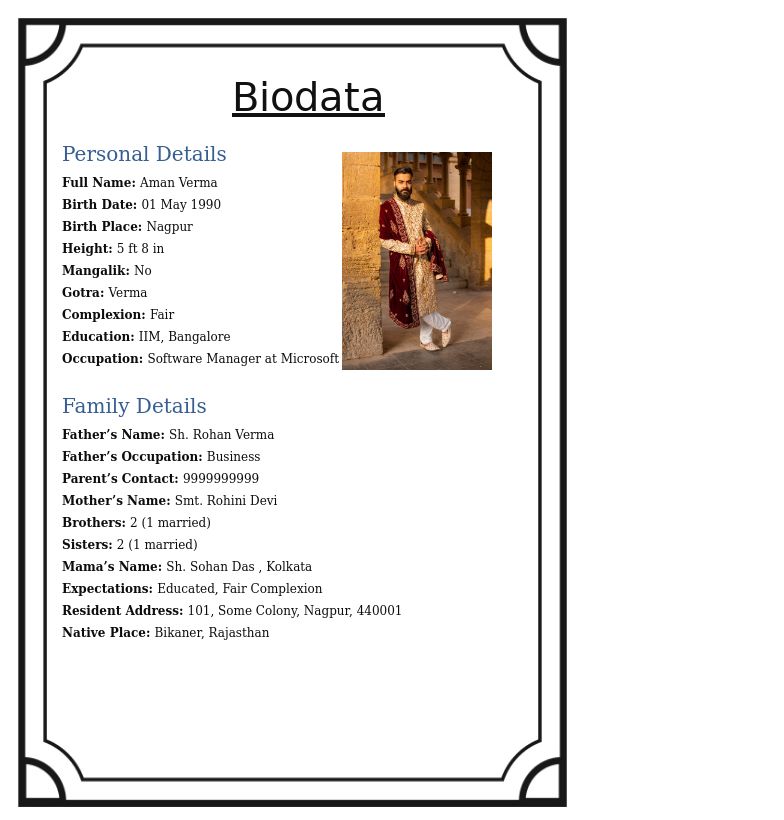
Sample Sonar Biodata for Marriage
Name: Pooja Sonar
Date of Birth: 13 June 1995
Age: 31 years
Height: 5'7"
Current Residence: Nagpur
Native Place: Akola, Maharashtra
Community: Sonar
Mother Tongue: Marathi
Education: B.Sc. Nursing
Profession: Hotel operations professional

Family Details:
Father: Mr. Akash Sonar, retired bank manager
Mother: Mrs. Divya Sonar, retired nurse
Sibling: No siblings
Family Type: Well-settled family known for discipline, warmth, and social respect

About Me:
I am practical, soft-spoken, and committed to long-term relationships built on trust. I enjoy meaningful routines more than display and prefer clarity over drama.
In personal time, I enjoy reading non-fiction, short travel, light fitness, and time with family.

Partner Preference:
Seeking an educated, kind, and emotionally mature partner who values mutual respect and family harmony.
Location can be discussed for the right match.
Presenting Marriage Expectations Without Rigidity
Compatibility is easier to assess when the biodata explains priorities clearly. Most families appreciate straightforward expectations about communication, respect, and mutual adjustment far more than a long inventory of conditions.
That approach works especially well in goldsmith and jewellery-linked households with artisanal pride, where introductions often travel through trusted circles before the individuals speak directly. Clarity keeps the process respectful for everyone involved.
What Makes a Profile Feel Unconvincing
Another frequent problem is overemphasis on salary, property, or status without enough information about character. Those details may matter, but they cannot replace temperament, communication, or family culture.
If the content is respectful and concrete, the community context adds depth. If the content is vague, community references alone cannot rescue it.
Conclusion
A well-written Sonar biodata sample for marriage gives families a realistic starting point. It combines personal background, family context, work life, and expectations in a format that is easy to share and easy to trust.
For this community, the best biodata is usually the one that stays balanced. It respects regional and family context, but it does not let labels overshadow the individual.
When the writing is honest and specific, the biodata does its real job: it helps meaningful conversations begin on solid ground.