Sikh Biodata Sample for Marriage
A Sikh biodata sample for marriage should present the person in a way that feels respectful, straightforward, and ready for serious family discussion. In many Sikh households, the biodata is not just a page of facts. It is the first impression of the person's upbringing, values, and readiness to build a stable partnership. That is why the content should be complete without sounding stiff.
Sikh families may share a broad cultural familiarity, but they still differ in profession, city life, family structure, and personal practice. Some are deeply involved in gurdwara seva and community events, while others live in fast-moving urban environments and keep a quieter routine. A well-written profile should reflect the person's real life rather than assume that every family expects the same thing.
The Information That Needs to Be Clear Early
The top of the biodata should make the basics easy to read: age, height, date of birth, present residence, native place, education, and profession. These details allow another family to understand the practical shape of the person's life before moving into broader questions.
It also helps to add a short description of the family environment. Whether the home is closely connected to extended family, professionally oriented, or rooted in simple values, that context helps the profile feel complete. Readers usually prefer a direct explanation over decorative phrases.
How Community Context Can Be Included Well
For a Sikh marriage biodata, community context may include values such as humility, seva, respect for elders, and a straightforward approach to relationships. These themes can be mentioned effectively when they are tied to actual habits and family culture. A small reference to gurdwara visits, community service, or family gatherings during Gurpurab can provide natural context.
At the same time, the biodata should still focus on the individual. The page is stronger when it explains temperament, career rhythm, and expectations from marriage rather than relying only on identity markers.
Making the Personal Section Credible
The personal introduction should help the reader imagine what day-to-day life with this person might be like. It is useful to mention work ethic, communication style, family closeness, and everyday interests. A few real details say more than a long list of flattering words.
Profiles often become more memorable when they mention ordinary routines such as fitness, music, travel, time with cousins, or active participation in family functions. These details show personality without making the biodata informal.
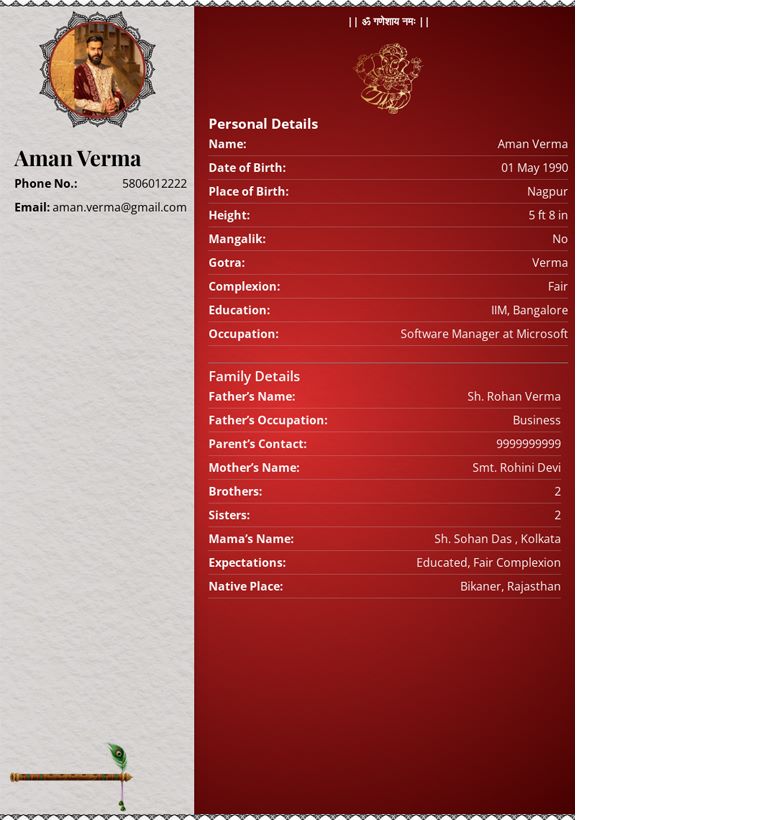
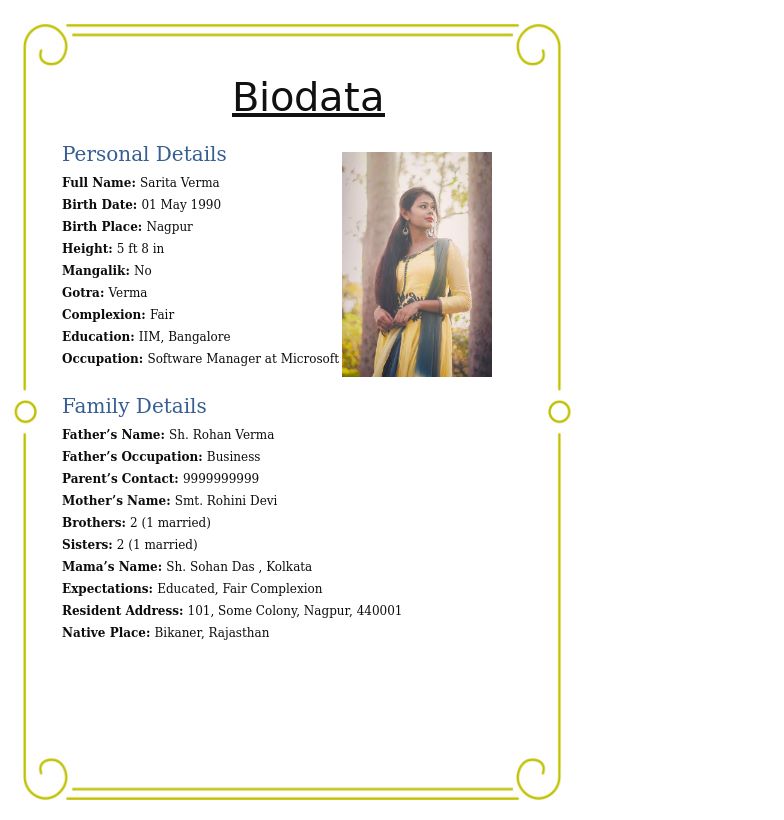
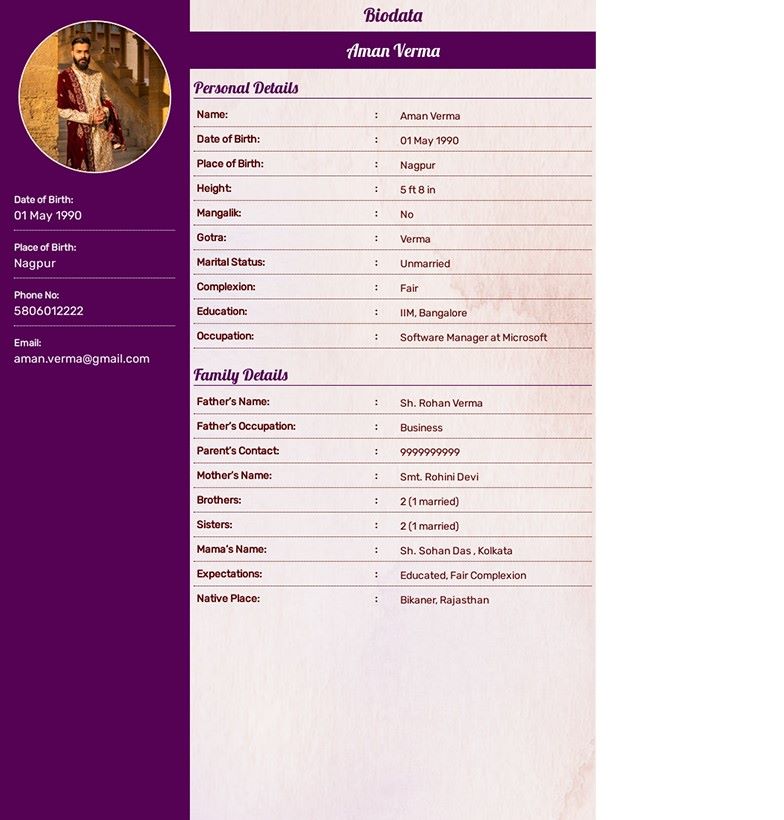
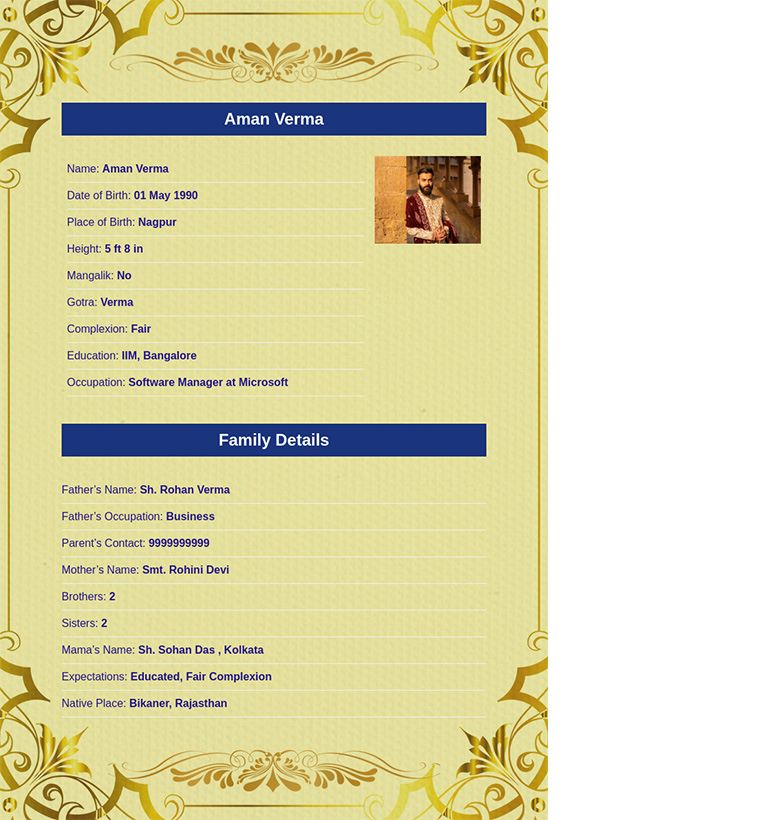
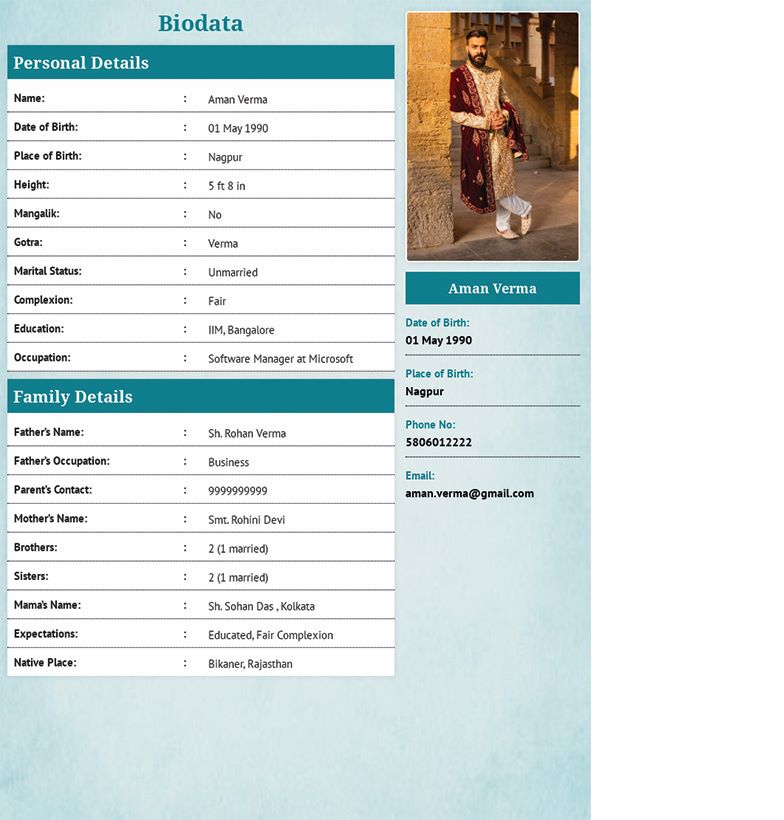
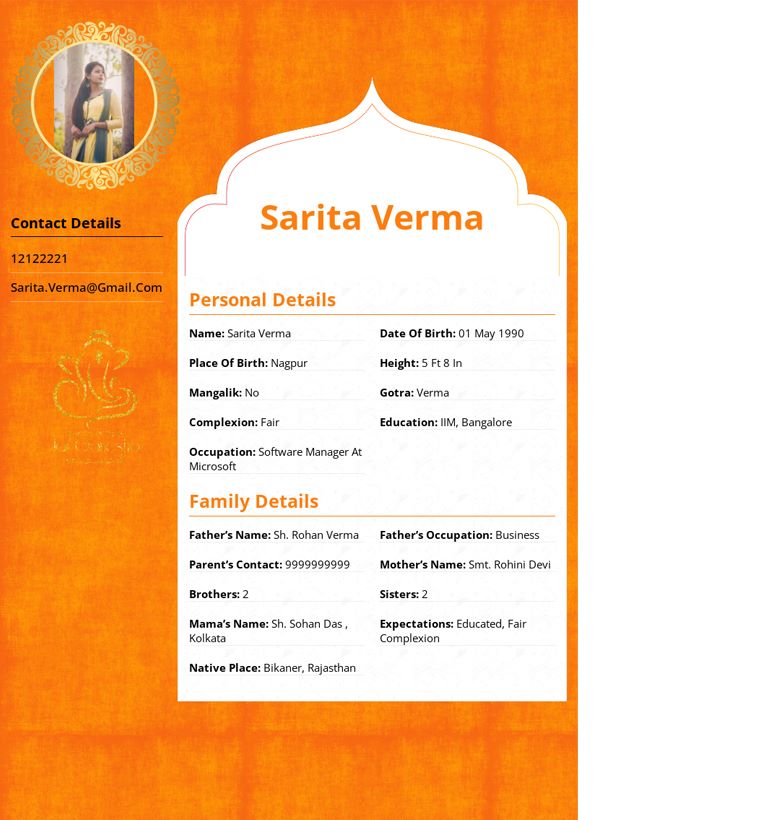
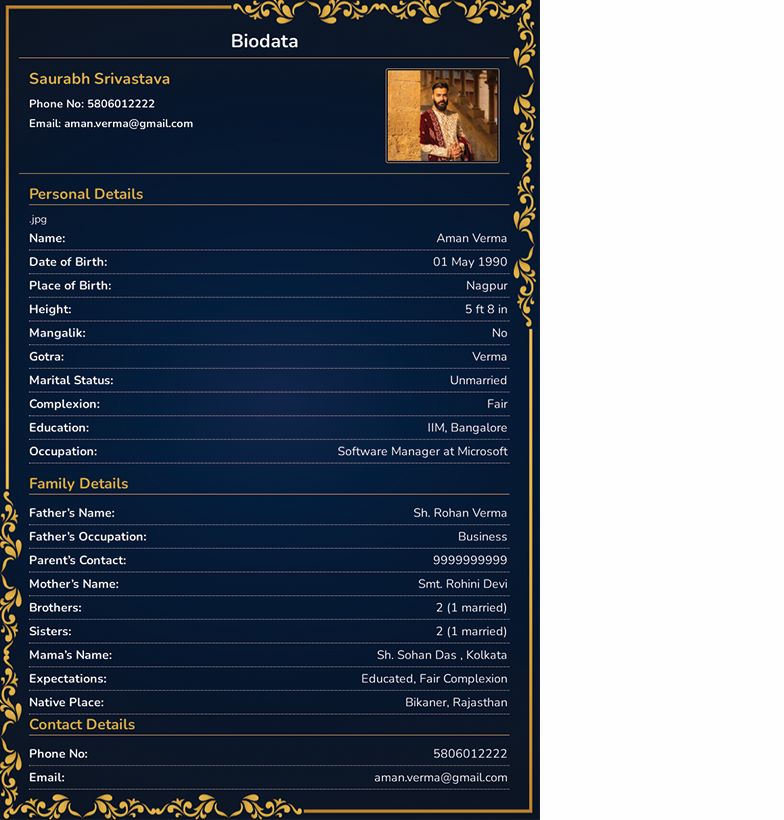
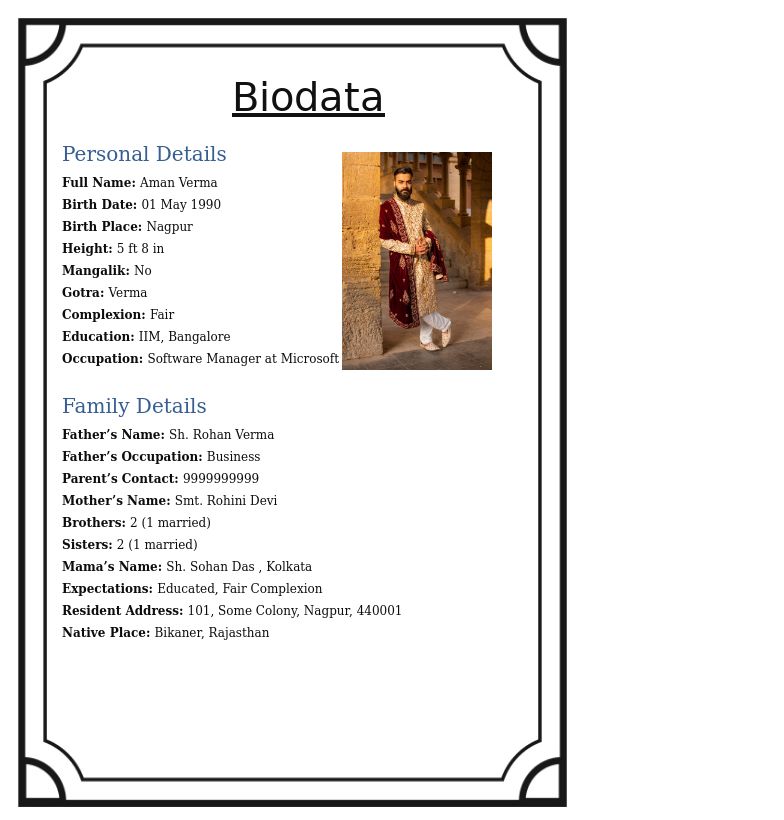
Sample Sikh Biodata for Marriage
Name: Harleen Kaur
Date of Birth: 28 May 1997
Age: 28 years
Height: 5'6"
Current Residence: Mohali
Native Place: Amritsar, Punjab
Religion: Sikh
Mother Tongue: Punjabi
Education: BDS
Profession: dental surgeon at a private clinic

Family Details:
Father: Sardar Manpreet Singh, businessman
Mother: Mrs. Jasmeet Kaur, homemaker
Sibling: One elder brother settled in Canada
Family Type: warm and grounded family with respect for tradition, education, and community values

About Me:
I am cheerful, responsible, and clear in communication. I value family ties, sincerity, and a marriage where both partners support each other with trust and respect.
In my free time, I enjoy music, fitness, family outings, and occasional seva activities.

Partner Preference:
Seeking an educated and mature partner who is respectful, family-oriented, and open to building a balanced and caring home.
Location can be discussed for a suitable match.
What the Preference Section Should Achieve
The purpose of the preference section is to help the next conversation begin smoothly. It should briefly explain values, family outlook, education preferences, and openness around career or location. The best wording is clear and firm without becoming rigid.
In Sikh families, tone matters. A biodata that sounds respectful and practical signals maturity. A biodata filled with conditions or exaggerated self-description can make even a strong profile feel less trustworthy.
Errors That Make the Profile Less Useful
One common problem is making the page too generic, as though the same content could fit any community or city without change. Another is focusing only on status markers while saying very little about attitude, emotional steadiness, or what the person wants from married life.
It also weakens the biodata when practical details are omitted. If the reader still has to ask basic questions about work, city, or family structure, the profile has not done its job well enough.
Conclusion
A strong Sikh biodata sample for marriage combines personal character, family background, and cultural context in a calm, clear format. It should feel genuine enough for families to trust and specific enough for meaningful discussion.
When the page is written honestly, it becomes more than an introduction. It becomes a reliable starting point for a conversation about partnership, family compatibility, and long-term commitment.