Sahu Biodata Sample for Marriage
When families search for a Sahu biodata sample for marriage, they are usually trying to understand how to present someone with dignity and practical detail. That matters in families with trade-linked and practical household traditions, where early impressions are often formed through the document before any direct conversation begins.
Honest writing about career, conduct, and family bonds usually works well. The best result comes from combining factual detail with a short but thoughtful explanation of how the person approaches relationships and family life.
What Readers Expect Beyond Basic Facts
In many Sahu households, the first reader is still a parent, uncle, aunt, or family friend. They want to understand age, education, profession, and family standing quickly, but they also look for tone. A profile that feels exaggerated can create distance immediately. A profile that feels balanced tends to open doors.
That is especially true here because honest writing about career, conduct, and family bonds usually works well. Community-specific context should therefore appear as a quiet layer in the writing, not as a loud headline repeated in every paragraph.
What the Opening Profile Should Cover
Basic information may sound obvious, but it is where many profiles fail. If the opening is vague or scattered, relatives must start asking for missing facts immediately. A well-arranged biodata saves that time and signals seriousness.
A short personal summary should follow these facts. That is where the profile can explain habits, personality, and hopes from marriage in a way that feels specific to the individual rather than copied from a template.
Writing the Personal Summary Well
The personal section is where the biodata becomes memorable. Instead of saying only that the person is good-natured or family-oriented, it helps to explain how those qualities appear in daily life. Does the person enjoy a disciplined routine, easy conversation, travel, reading, devotion, sport, or creative work? Specific details are easier to trust.
This is also the place to mention interests such as weekend travel, devotional visits, podcasts, and badminton. Such details may seem small, but they help another person imagine everyday compatibility.
Explaining Work, Routine, and Future Plans
Some readers focus first on occupation because they are trying to picture daily life. A clear sentence about role, sector, and work habits is often enough to answer that question without turning the page into a formal resume.
When written carefully, this section reassures both sides that the match is being considered in real-life terms rather than only through labels and broad expectations.
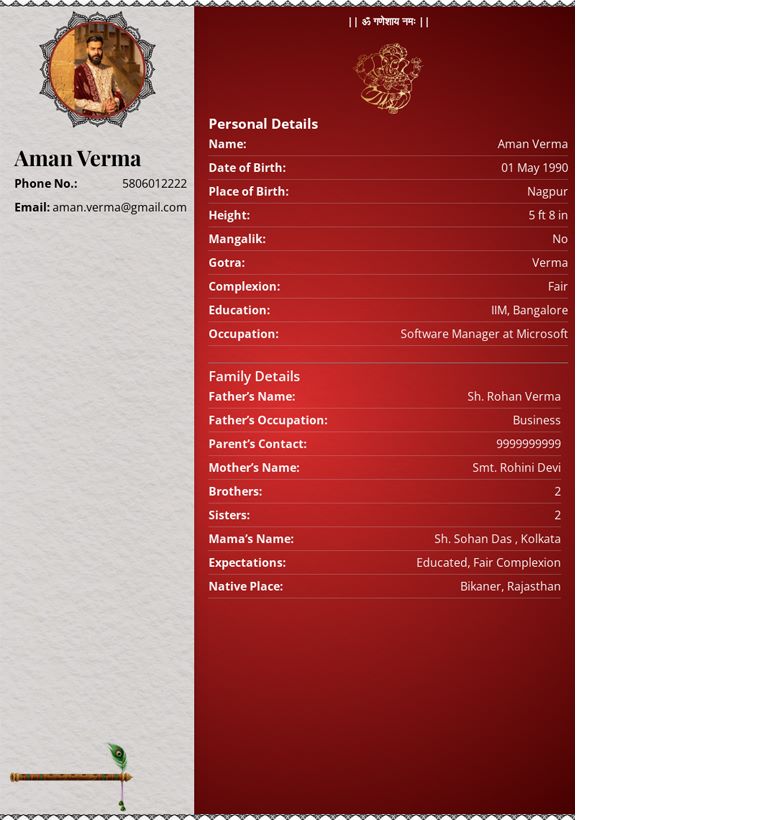
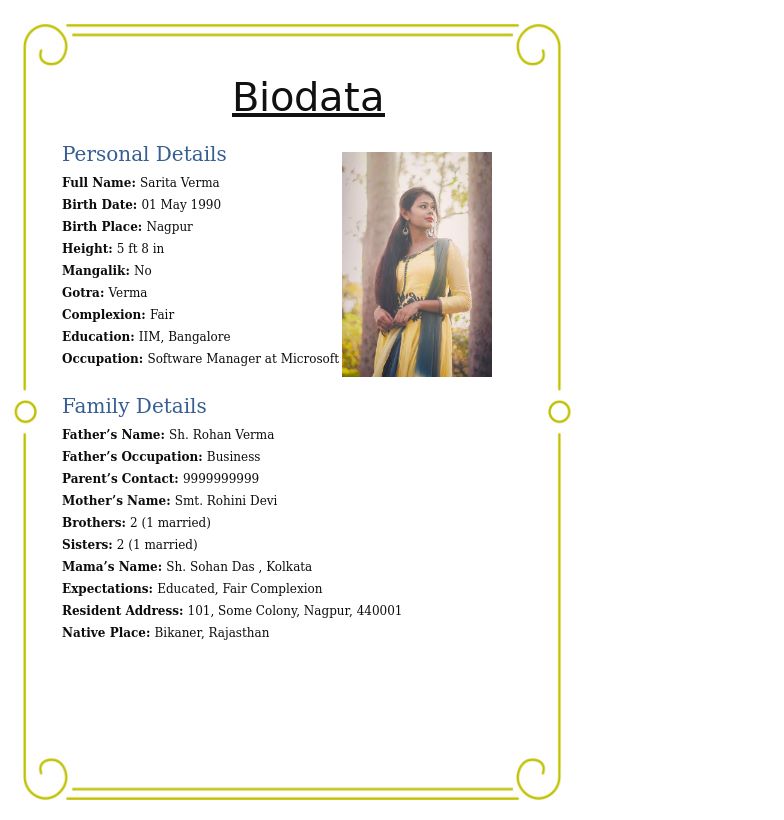
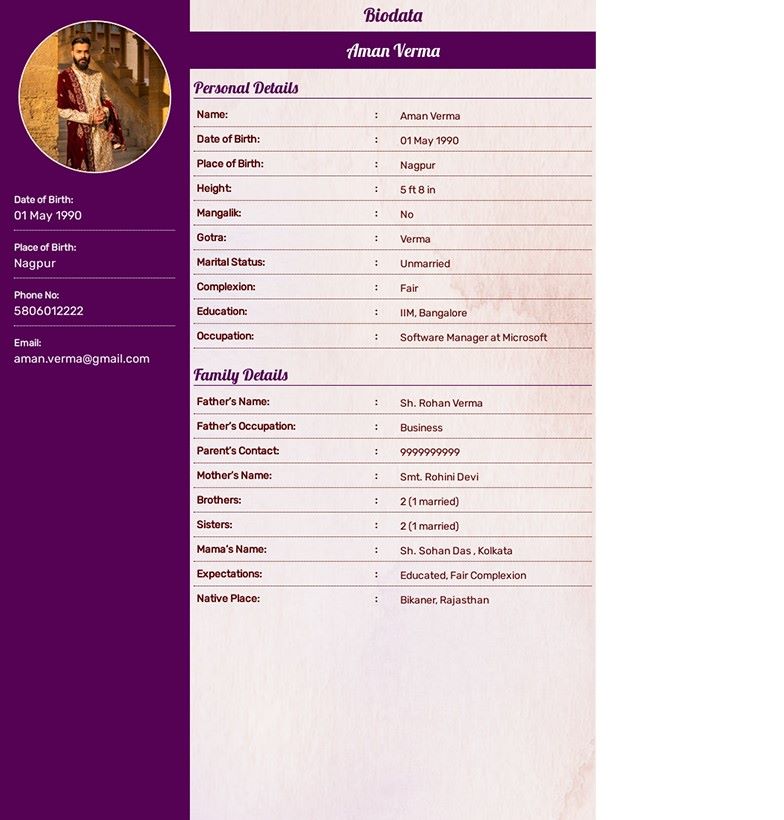
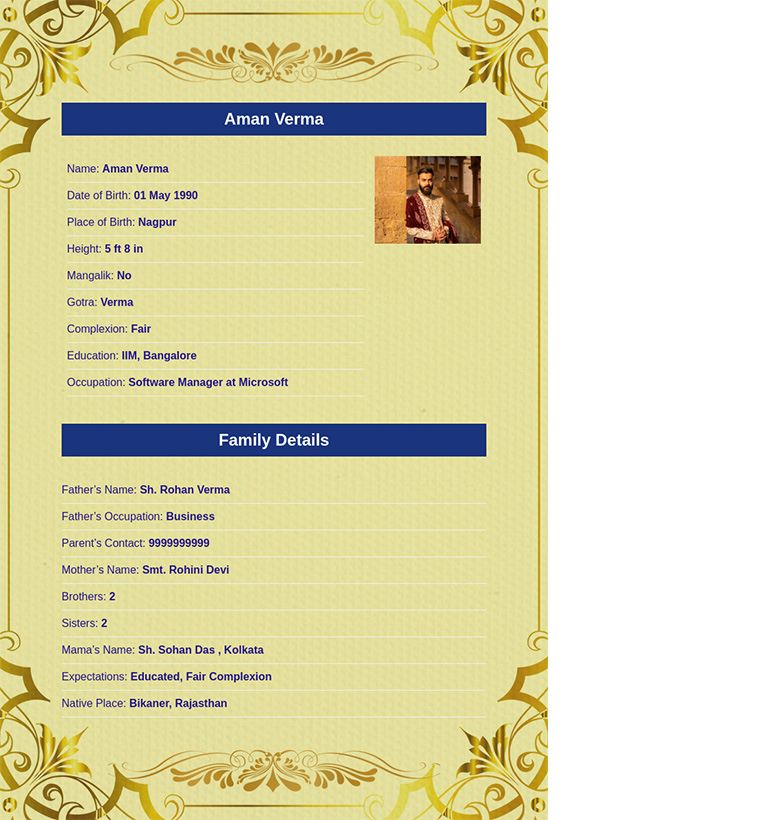
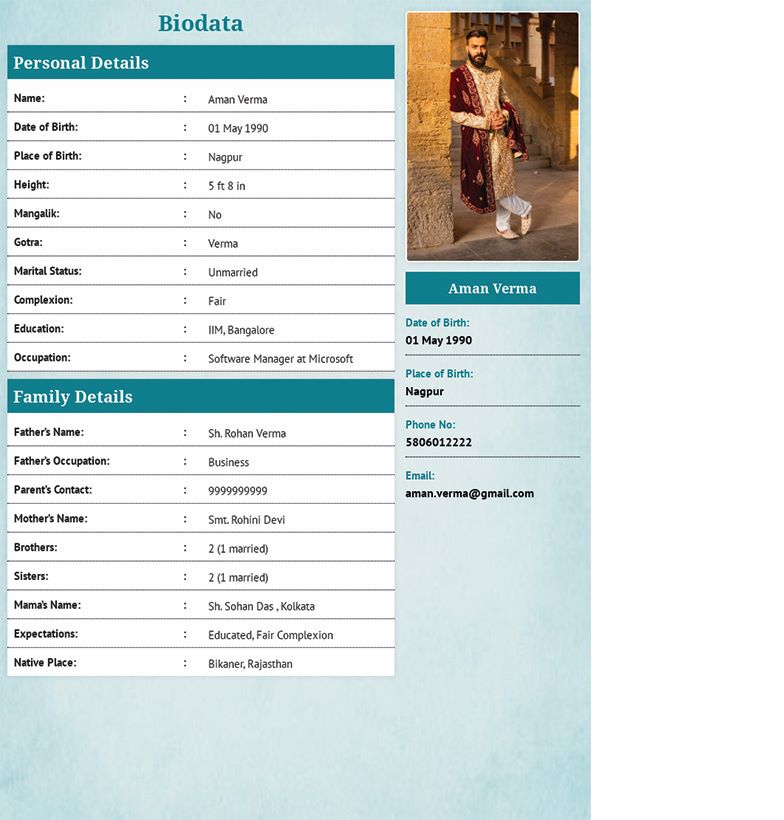
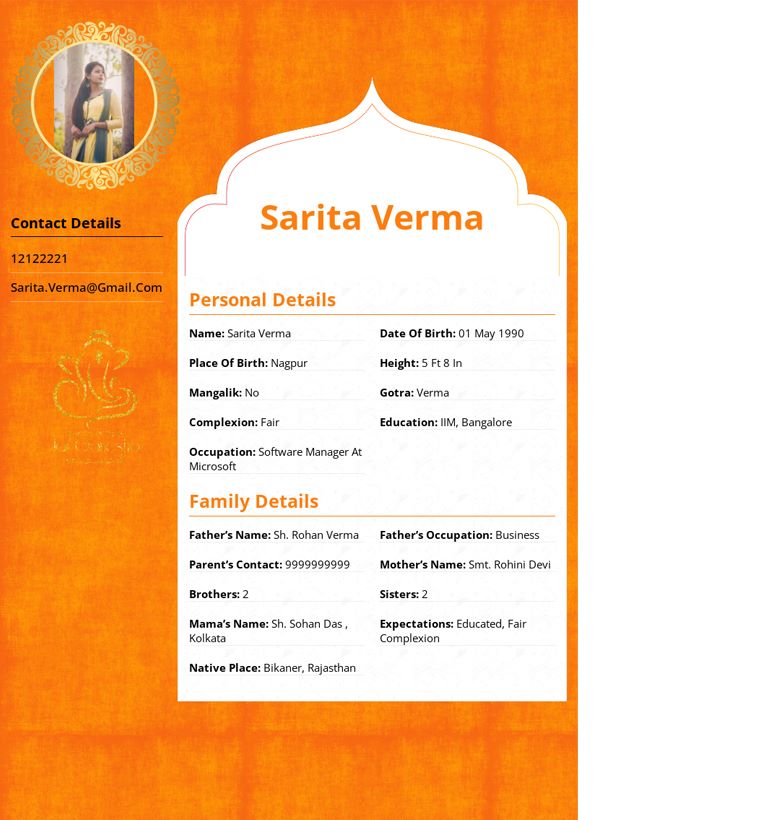
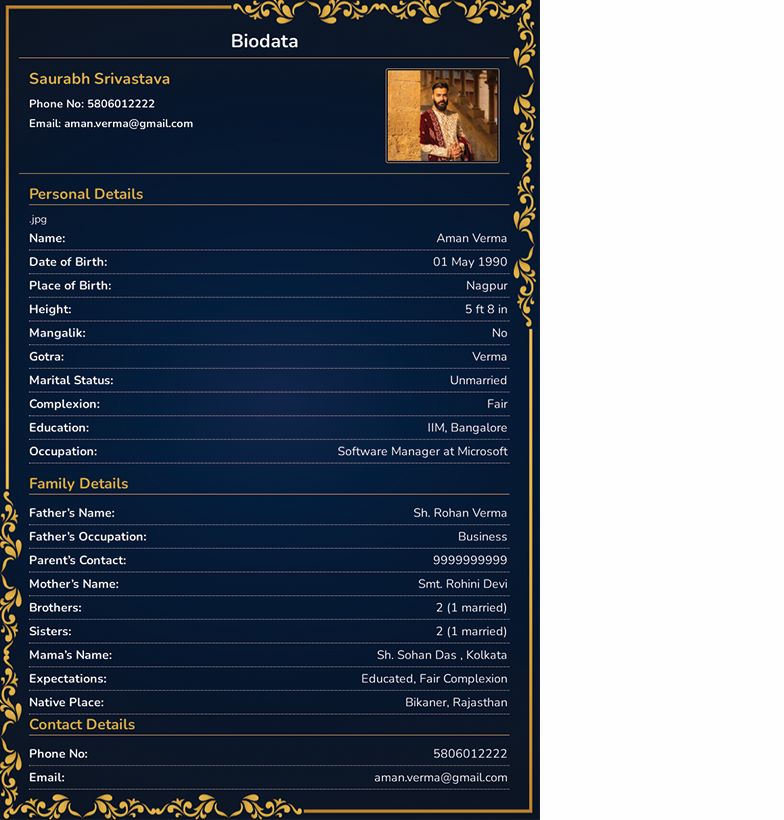
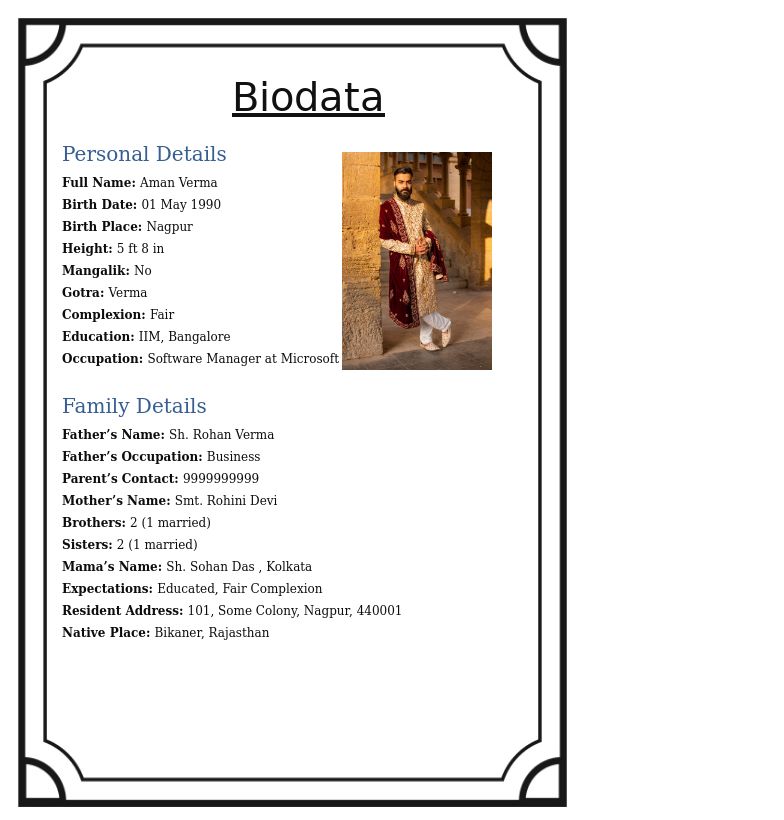
Sample Sahu Biodata for Marriage
Name: Harsh Sahu
Date of Birth: 07 March 1998
Age: 28 years
Height: 5'9"
Current Residence: Raipur
Native Place: Sambalpur, Odisha
Community: Sahu
Mother Tongue: Hindi
Education: B.Pharm, MBA
Profession: Research Engineer in an energy company

Family Details:
Father: Mr. Tarun Sahu, businessman
Mother: Mrs. Tanvi Sahu, college lecturer
Sibling: One younger sister preparing for civil services
Family Type: Moderate family that values sincerity, learning, and practical living

About Me:
I am steady, thoughtful, and comfortable in both family and professional settings. I value direct communication, emotional maturity, and consistency in everyday life.
In personal time, I enjoy books, regional food, yoga, and spending time with relatives.

Partner Preference:
Preference for someone sincere, respectful, and practical, with whom communication feels easy and future planning feels natural.
Location can be discussed for the right match.
Writing the Preference Section Carefully
The expectation section should guide conversation rather than close it. A few clear lines about values, education, family outlook, and willingness to share responsibilities are usually enough. Long checklists often make a profile feel defensive or transactional.
If there are practical constraints such as career continuity, location flexibility, or comfort with a joint family environment, those can be mentioned briefly. The goal is to make later conversations easier, not heavier.
Avoiding the Usual Biodata Errors
Some profiles also become too brief. They name the facts but reveal almost nothing about the person. Others become too long in the wrong places, spending more time on symbolic labels than on practical life.
In practice, authenticity is what makes the profile memorable. Even modest facts read well when they are arranged with clarity and sincerity.
Conclusion
A well-written Sahu biodata sample for marriage gives families a realistic starting point. It combines personal background, family context, work life, and expectations in a format that is easy to share and easy to trust.
For this community, the best biodata is usually the one that stays balanced. It respects regional and family context, but it does not let labels overshadow the individual.
When the writing is honest and specific, the biodata does its real job: it helps meaningful conversations begin on solid ground.