Muslim Biodata Sample for Marriage
A Muslim biodata sample for marriage should present the person with dignity, clarity, and enough real information to support meaningful discussion between families. In many cases, the profile is shared first with parents, siblings, or a trusted relative, so it has to answer the practical questions early while still giving a fair sense of character. A page that is thoughtful and well-organized makes that process easier for everyone.
Muslim families can have different regional backgrounds, educational settings, and levels of religious practice, so the biodata should reflect lived reality rather than a fixed script. Some households may care deeply about prayer routine and family religious discipline, while others may focus more on values, education, and compatibility in daily life. A credible profile can mention these things in a respectful way without becoming preachy or vague.
Why Clear Structure Matters
The first section should cover the essentials quickly: name, age, date of birth, education, profession, city, and family background. These details create immediate clarity and prevent the initial conversation from turning into a long exchange about missing facts. Families usually appreciate a biodata that saves time and shows seriousness.
For a Muslim marriage biodata, it can also be useful to mention the broad family environment. A short note about whether the home is traditional, moderate, or professionally oriented often gives helpful context. This should be written plainly, without trying to impress through formal wording.
How to Mention Faith and Lifestyle
Faith can be an important part of compatibility, but it should be described in a grounded way. A biodata may mention regular namaz, preference for modest living, comfort with family gatherings during Eid, or the value placed on kindness and responsibility. Those points are helpful when they come from everyday life rather than from generic claims.
It is equally important not to let the page become only a statement of religious identity. Marriage decisions also depend on communication style, emotional steadiness, work rhythm, and family expectations. A strong biodata keeps all of those dimensions visible.
Building a Personal Summary That Feels Trustworthy
The personal summary should sound like a real introduction, not a list of adjectives. It is better to explain how the person thinks, relates to family, manages work, and approaches partnership. For example, mentioning patience, straightforward communication, or an interest in service and learning creates a more believable picture than repeating that the person is simple and caring.
This is also a good place to include a few everyday interests. Reading, home cooking, fitness, Urdu literature, travel with family, or community involvement can help another family imagine what life with that person may actually look like.
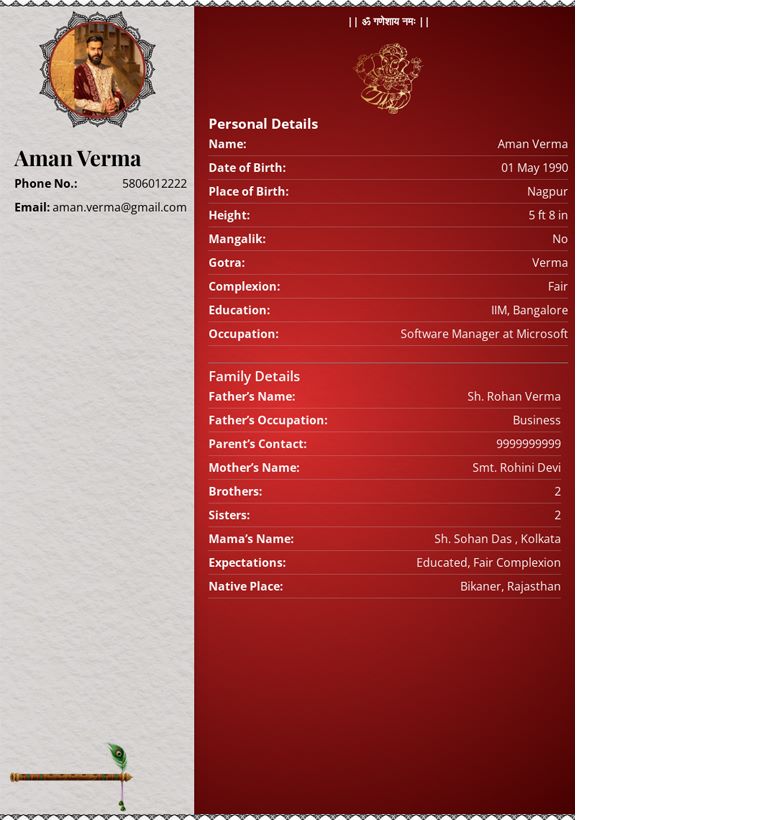
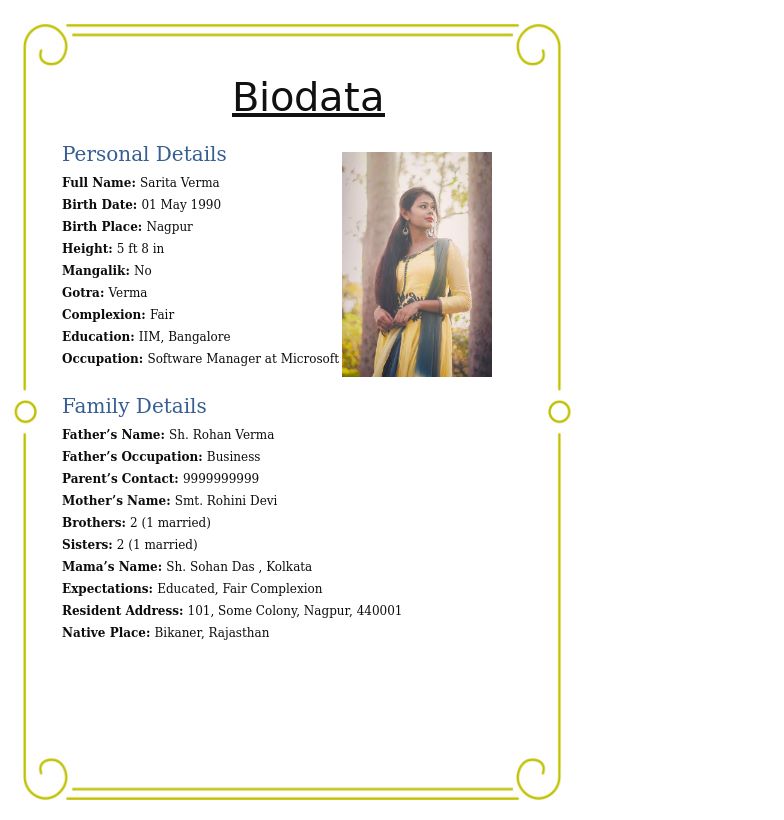
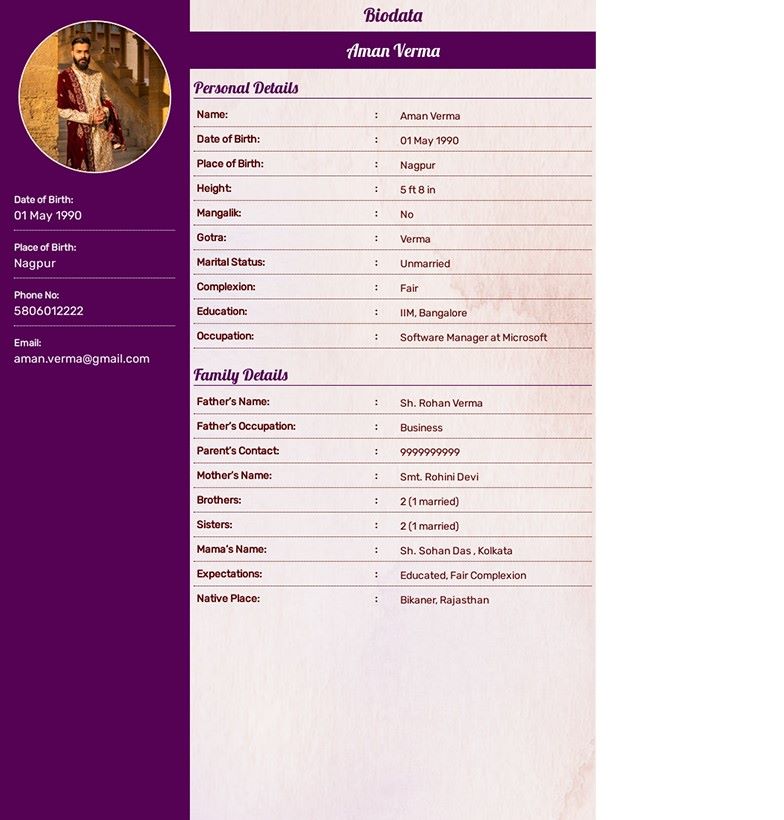
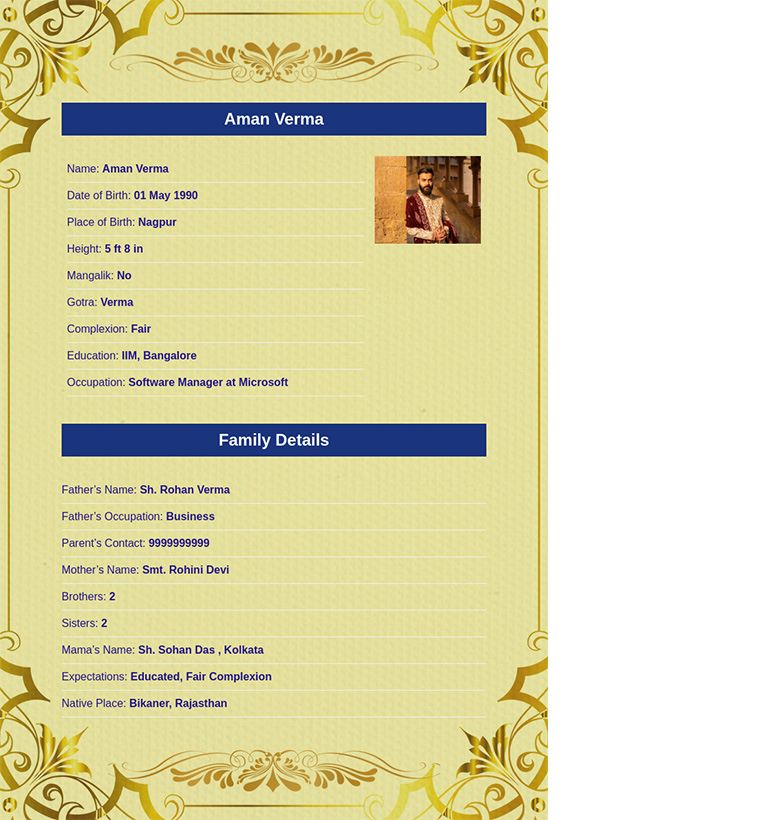
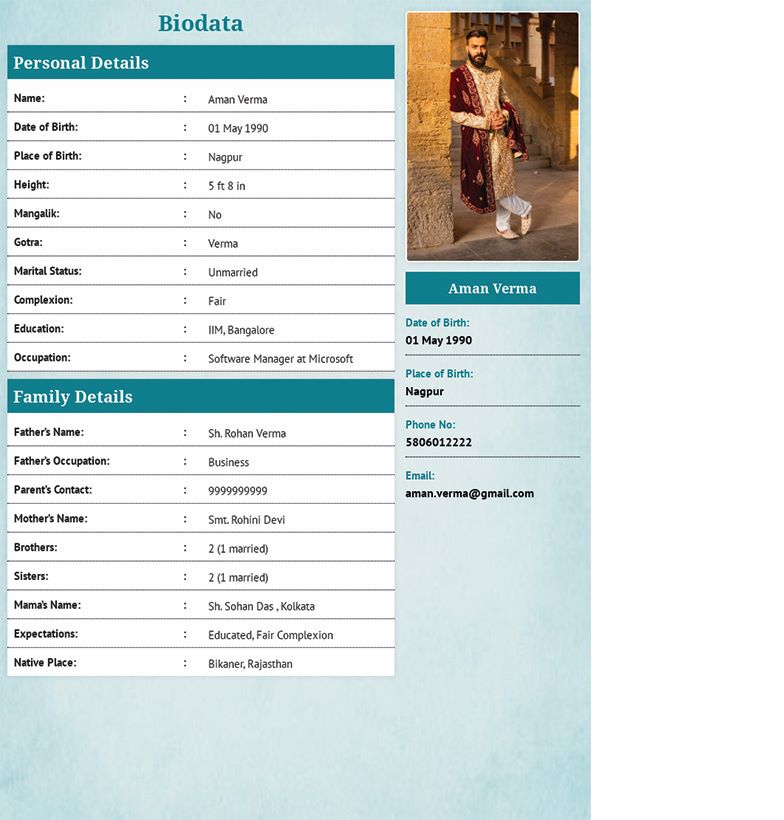
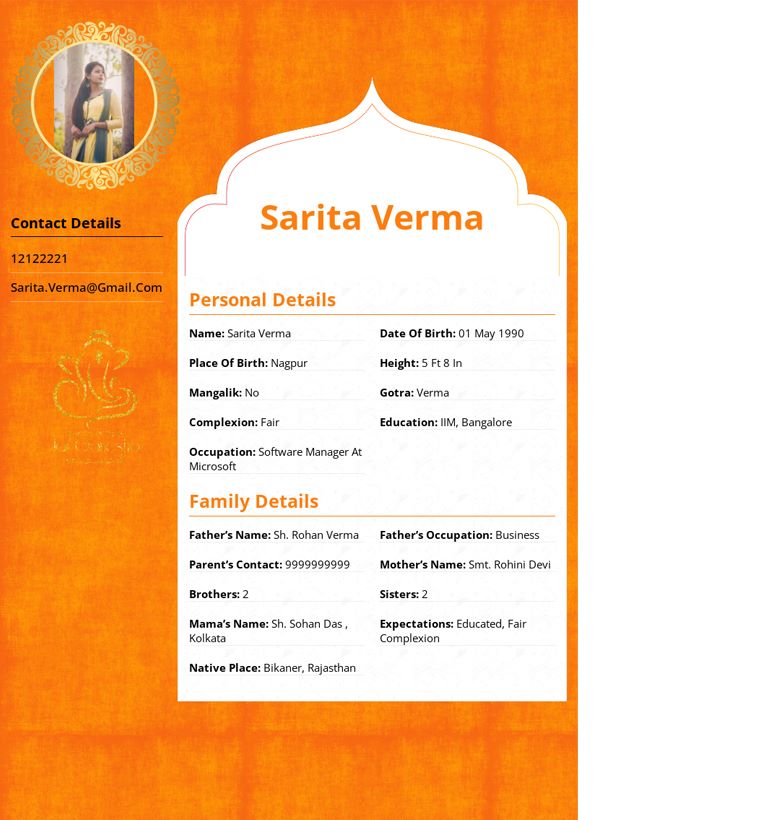
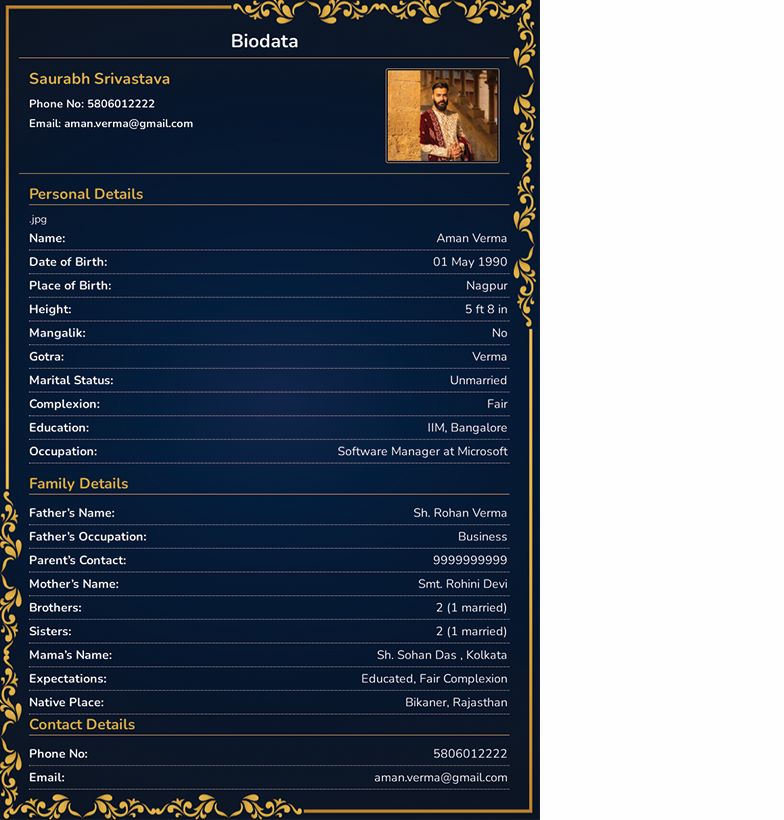
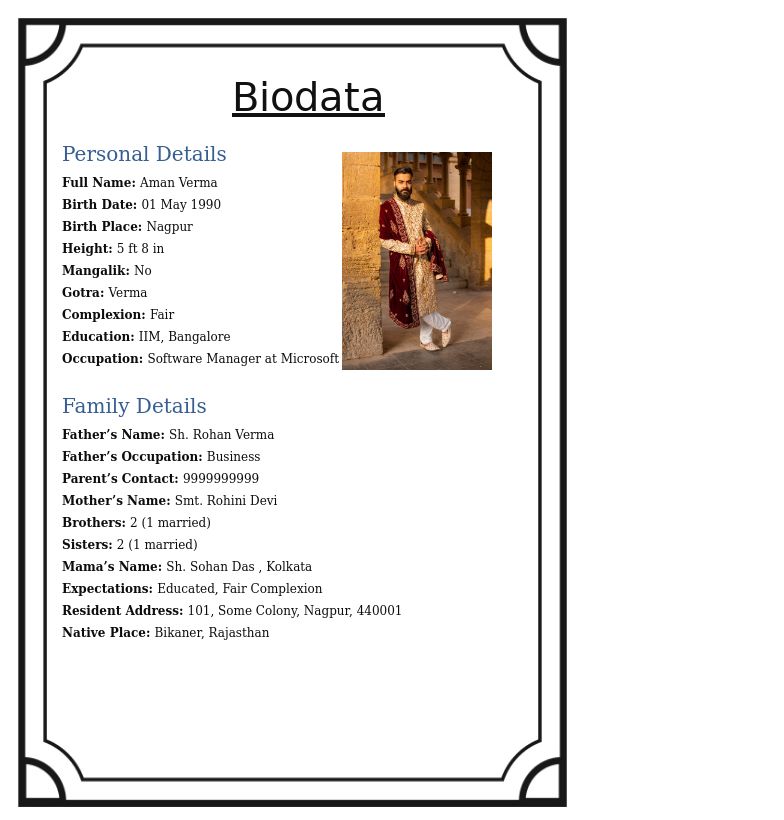
Sample Muslim Biodata for Marriage
Name: Amina Khan
Date of Birth: 21 January 1996
Age: 30 years
Height: 5'5"
Current Residence: Hyderabad
Native Place: Lucknow, Uttar Pradesh
Religion: Muslim
Community: Sunni
Mother Tongue: Urdu
Education: M.Com
Profession: finance executive with a healthcare company

Family Details:
Father: Mr. Sameer Khan, retired government officer
Mother: Mrs. Farzana Khan, homemaker
Sibling: One elder sister, married and settled in Pune
Family Type: educated family with a respectful, moderate, and closely connected environment

About Me:
I am sincere, soft-spoken, and practical in my approach to life. I value faith, family connection, and clear communication, and I believe marriage should be based on kindness and mutual trust.
I enjoy reading, trying new recipes, spending time with family, and keeping a steady daily routine.

Partner Preference:
Seeking a responsible and well-mannered partner who values deen, family respect, and emotional maturity.
Open to discussing location if the match is mutually suitable.
Writing Partner Expectations With Balance
The preference section should help the next conversation, not close it. A few direct lines about values, education, family respect, and willingness to build a stable marriage are enough for most profiles. If there are important considerations such as city flexibility or expectations around religious practice, those can be added with calm wording.
What matters most is tone. A respectful biodata sounds serious without sounding harsh. That tone can make a real difference when another family decides whether to continue the discussion.
Mistakes That Weaken a Muslim Biodata
One common mistake is relying on generic praise without giving any real picture of the person. Another is turning the biodata into a strict checklist that leaves no room for conversation. Both approaches make it harder to assess compatibility in a human way.
Profiles also become weaker when they skip practical details such as present city, profession, or family structure. In most arranged introductions, missing information creates hesitation. Clear writing reduces that friction.
Conclusion
A strong Muslim biodata sample for marriage combines faith, family context, and personal detail in a respectful and usable format. It presents the person honestly while giving families the information they need to move forward with confidence.
When the profile is written with clarity and sincerity, it becomes more than a formal document. It becomes a practical first introduction that supports meaningful, respectful discussion about marriage.