Konyak Biodata Sample for Marriage
A Konyak biodata sample for marriage should feel as though a thoughtful family prepared it for real conversations, not as a copied matrimonial form. In Nagaland, and among families who have moved to larger cities, the first impression often comes from a short profile shared over phone, email, or WhatsApp. That is why the writing has to be clear, respectful, and specific from the beginning.
Konyak biodatas become more convincing when they carry local identity with humility and explain the person's real work, education, and family culture. When the profile explains present life and family context in plain language, relatives can understand compatibility faster and the prospective match can read the page without feeling that the individual has disappeared behind labels.
Why Families Read This Kind of Profile Carefully
It helps to mention hometown ties, church values, and whether the person sees married life in Nagaland, another state, or abroad. A useful biodata therefore needs more than age, height, and job title. It should also show whether the person is dependable, open in communication, and genuinely prepared for marriage.
Many families now compare profiles across hometowns and major work centers like Mon and Dimapur. If the page does not explain daily lifestyle, professional rhythm, and family expectations, even good matches can stall before a meaningful conversation begins.
Practical Details That Belong in the Opening Section
The opening section should cover the practical details first: full name, age, date of birth, education, present city, native place, and profession. For a Konyak biodata, it also helps to mention whether the family is closely rooted in Mon or has been settled elsewhere for education and work.
Readers also appreciate a short note on family structure, such as whether the household is nuclear or closely connected to a wider family network. These details are not ornamental. They help another family imagine what daily life, relocation, and family involvement may realistically look like after marriage.
Writing the Personal Introduction Well
The personal section should not rely on broad words such as simple, caring, or well-settled without explanation. It is better to describe a few lived qualities: whether the person is calm in difficult situations, serious about work, close to parents, socially outgoing, spiritually grounded, or comfortable adapting to a new city.
That kind of writing is especially useful in a Konyak marriage biodata because language and community identity may already create familiarity. The personal introduction then has to do the next job, which is showing the individual as a real future partner with habits, values, and emotional maturity.
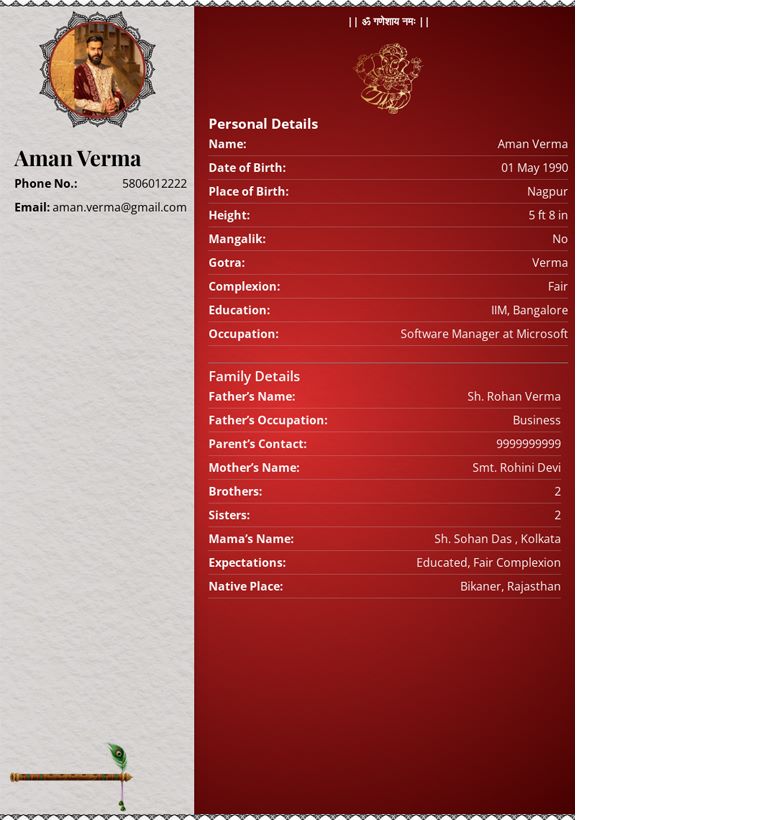
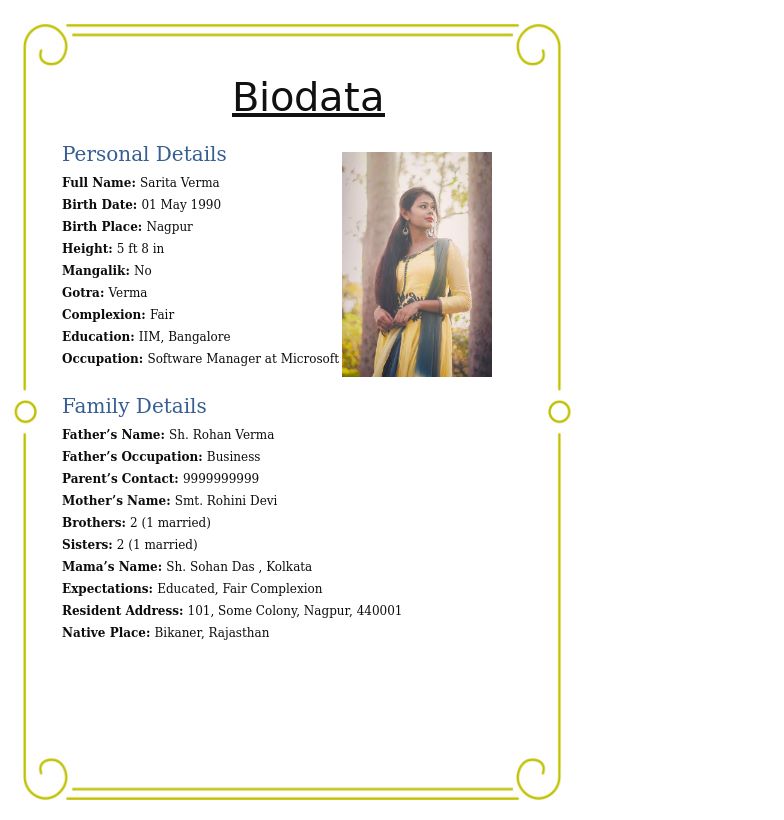
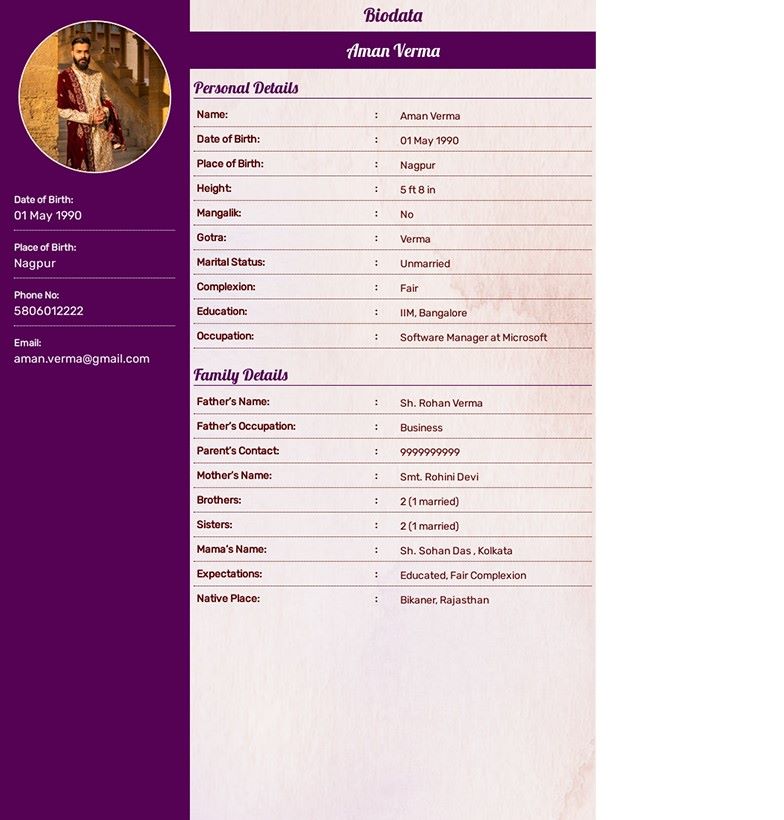
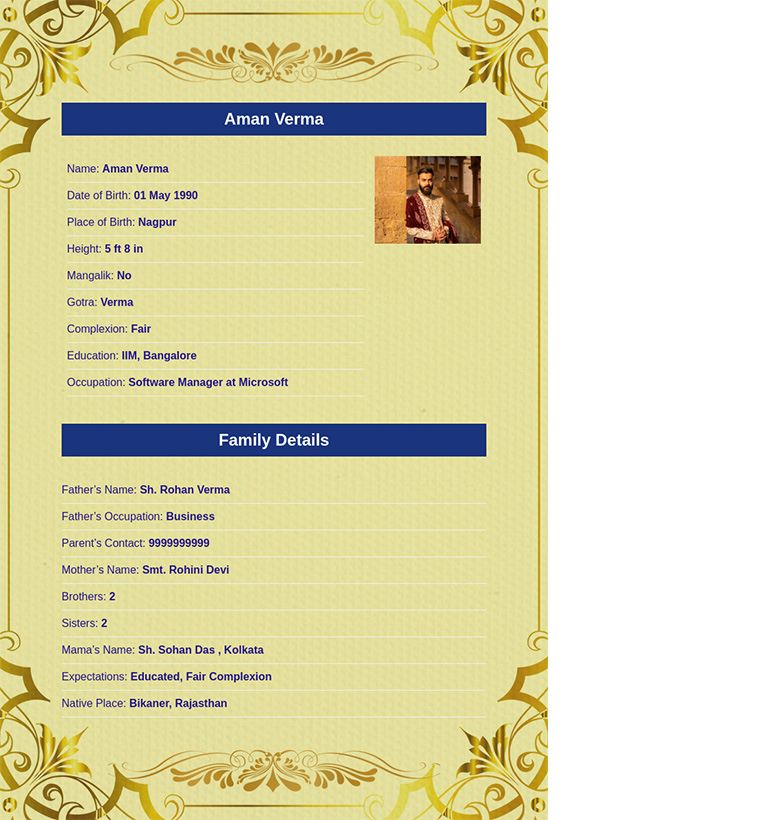
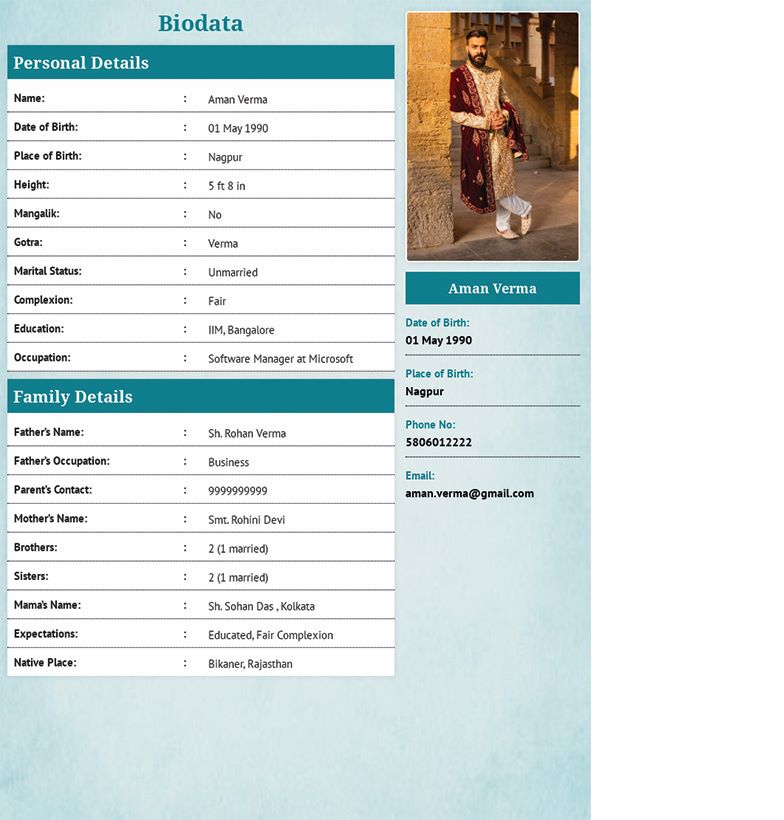
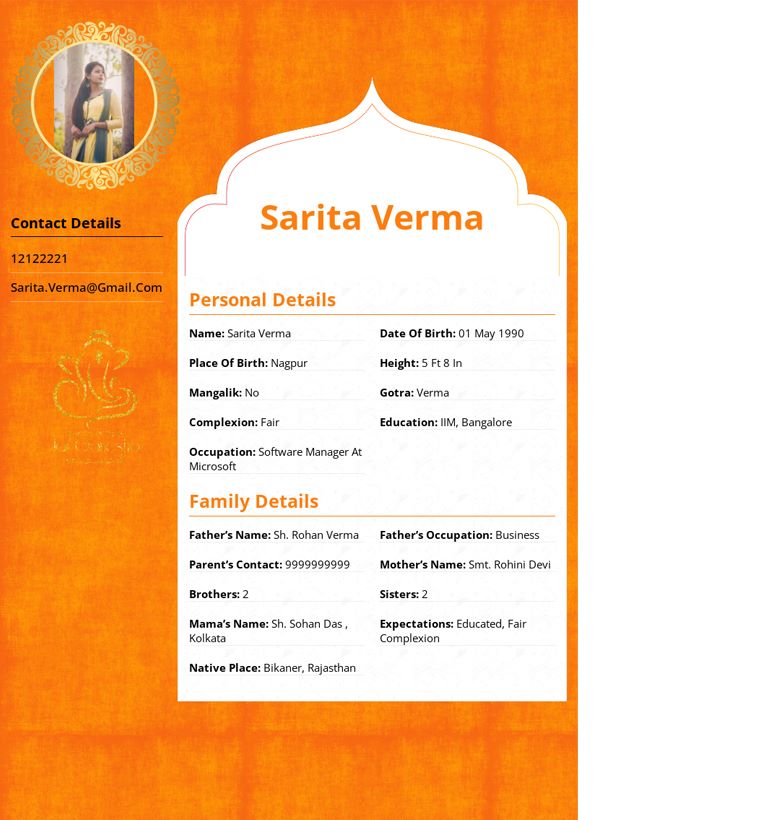
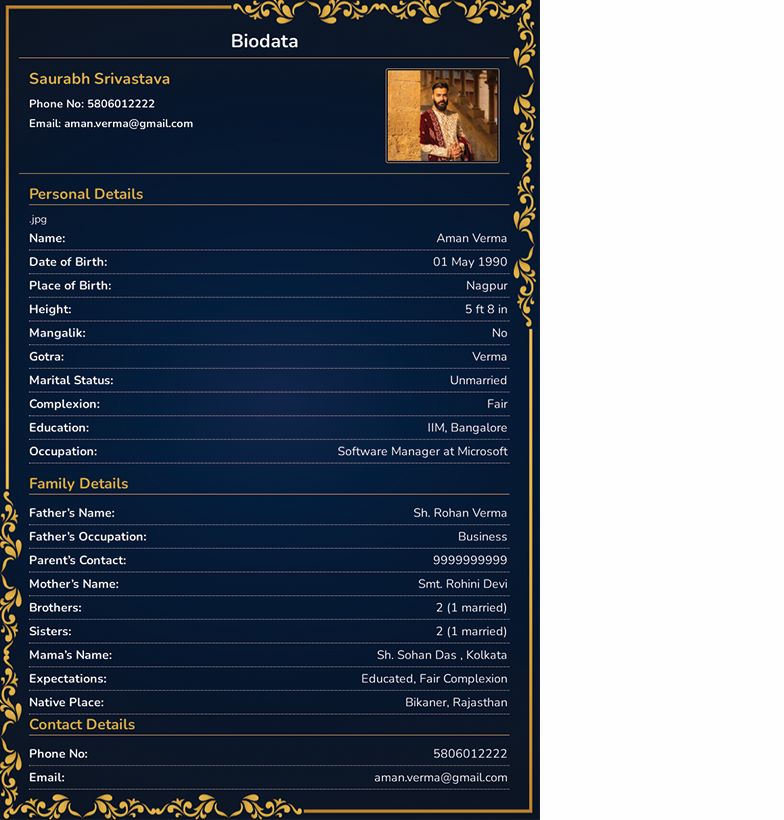
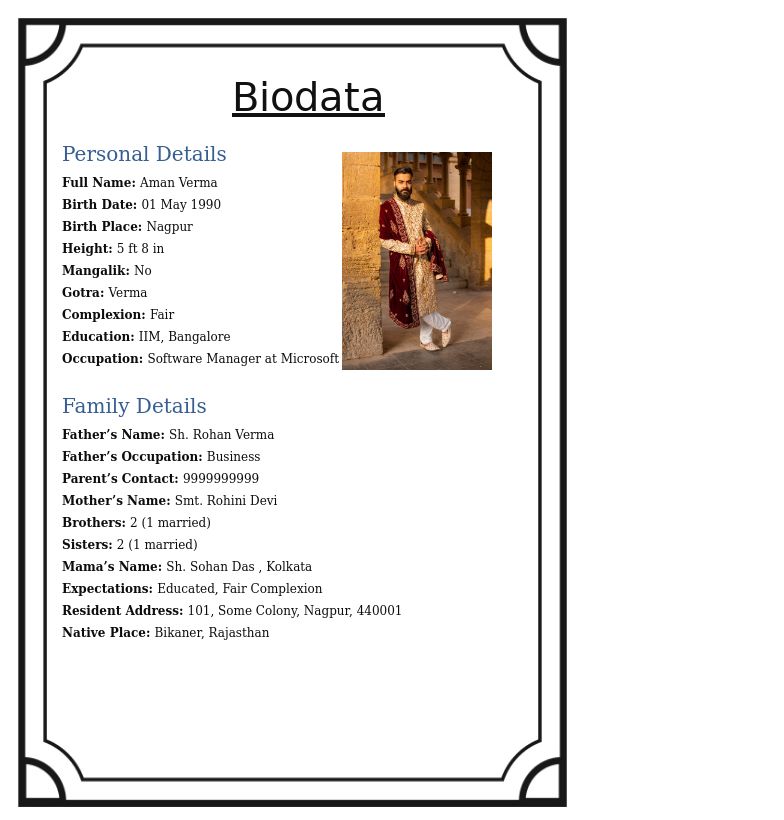
Sample Konyak Biodata for Marriage
Name: Aboi
Date of Birth: 09 January 1999
Age: 27 years
Height: 5'8"
Current Residence: Dimapur
Native Place: Mon
Community/Language: Konyak
Mother Tongue: Konyak
Education: B.Sc. and M.Sc.
Profession: banking professional in retail operations in Mon

Family Details:
Father: Mr. Rajesh, business owner
Mother: Mrs. Sushmita, homemaker and active volunteer
Siblings: Three siblings, all supportive and close to the family
Family Type: close-knit and educated family with a balanced outlook

About Me:
I see marriage as a partnership built on warmth, responsibility, and mutual understanding.
In personal time, I enjoy regional food, short trips, and keeping a steady daily routine.

Partner Preference:
Seeking a warm, balanced, and respectful life partner who values companionship, mutual respect, and a stable family life.
Location can be discussed for the right match.
What to Say About Compatibility
The expectations section should guide discussion rather than read like a list of demands. A short note about preferred values, education, family outlook, and openness to location decisions is usually enough. If faith practices, hometown ties, or support for a dual-career marriage matter, those points can be added without sounding rigid.
For many Konyak families, a biodata is not only a profile of one person but a first window into how two families may communicate. That is why respectful wording matters. Clear preferences are useful. Harsh conditions usually are not.
What Often Reduces Trust in a Biodata
One common mistake is making the page too generic. If the same sentences could fit any language, caste, or city without change, the biodata loses credibility. Another problem is crowding the page with achievements while saying very little about temperament, family relationships, or what the person is actually seeking from marriage.
It is equally risky to leave out practical details such as current residence, family background, or relocation preference. In arranged introductions, missing facts create avoidable back-and-forth. A well-made Konyak biodata should reduce confusion, not add to it.
Conclusion
A strong Konyak biodata sample for marriage works because it balances identity with practicality. It respects the language community and family setting, but it still keeps the person at the center of the page.
When the document is written with clarity, warmth, and realistic detail, it becomes easier for both families to move from a profile sheet to a meaningful conversation. That is the real purpose of a marriage biodata, whether it is shared within Nagaland or between families living far from home.