Jewish Biodata Sample for Marriage
A Jewish biodata sample for marriage should offer a thoughtful introduction that is practical enough for families and personal enough for meaningful conversation. In smaller communities, introductions often travel through relatives, elders, or trusted acquaintances, which means the biodata has to be both clear and respectful from the start. A well-written page helps families understand not only the basic facts, but also the values and lifestyle behind them.
Jewish families may come from different traditions and migration histories, including long-settled Indian communities and families living across global cities. Because of that, the biodata should avoid assumptions and instead describe the person's real family culture, professional life, and level of community involvement. A grounded page is always more useful than one built from borrowed labels.
What Readers Usually Need First
At the beginning, the biodata should cover the core facts in an easy order: age, date of birth, city, education, profession, family background, and present lifestyle. These details allow another family to understand the person's current life quickly and make an informed decision about whether to continue the conversation.
For a Jewish marriage biodata, it may also help to include a short note on family roots and community connection when that is relevant. This can be done simply, without turning the page into a historical summary. The purpose is to provide context, not to overwhelm the profile.
How to Mention Tradition and Modern Life Together
Many families want to understand how tradition fits into day-to-day life. A biodata can briefly mention synagogue participation, holiday observance, family meals, or the value placed on learning and close family ties. These references are most effective when they are tied to real routine rather than presented as general claims.
At the same time, the document should also explain work life, personality, and future plans. Marriage is not built on identity alone. It is built on communication, compatibility, steadiness, and the ability to create a supportive home.
Writing a Personal Summary That Feels Human
The personal section should help another family picture the person clearly. It is more persuasive to describe the person's temperament, work habits, and relationships than to use only broad praise. A short explanation of how the person handles responsibility, values family time, or adapts to change gives the biodata real substance.
This section can also mention a few ordinary interests such as reading, cooking, travel, music, community events, or hosting family dinners. Such details make the page feel credible because they sound natural and individual.
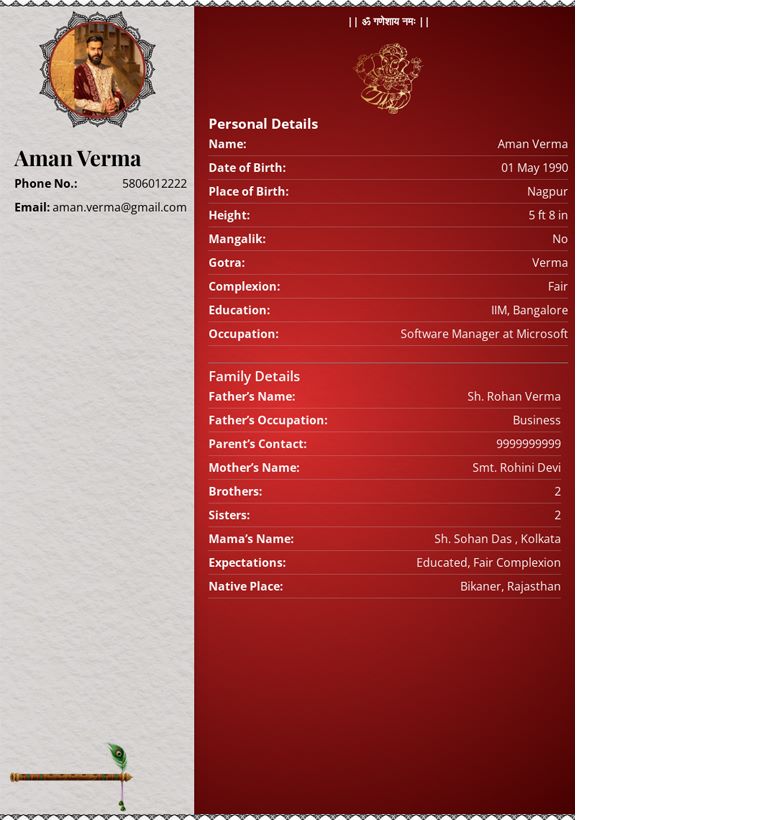
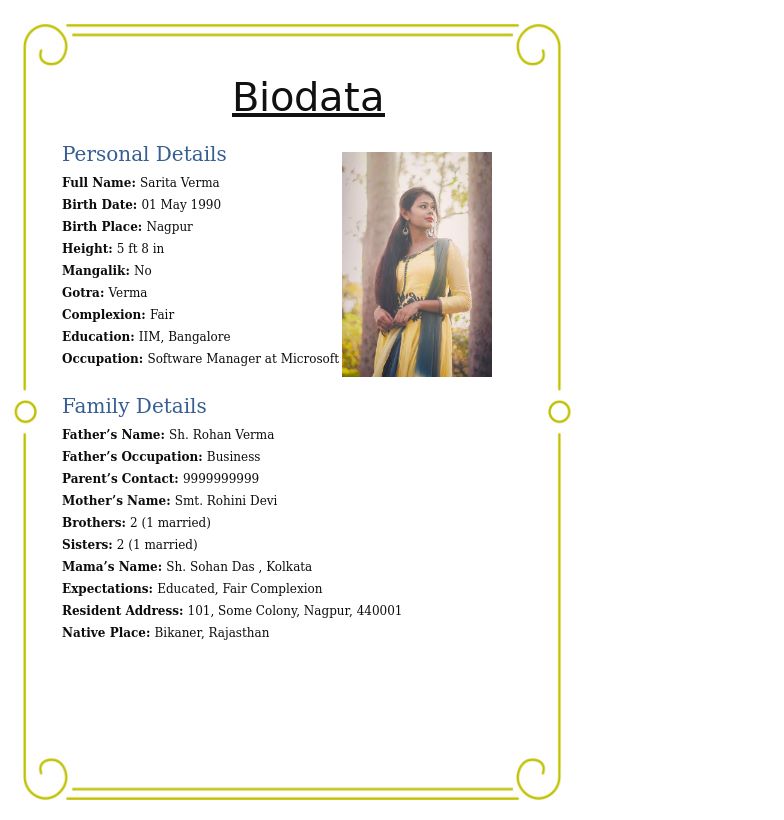
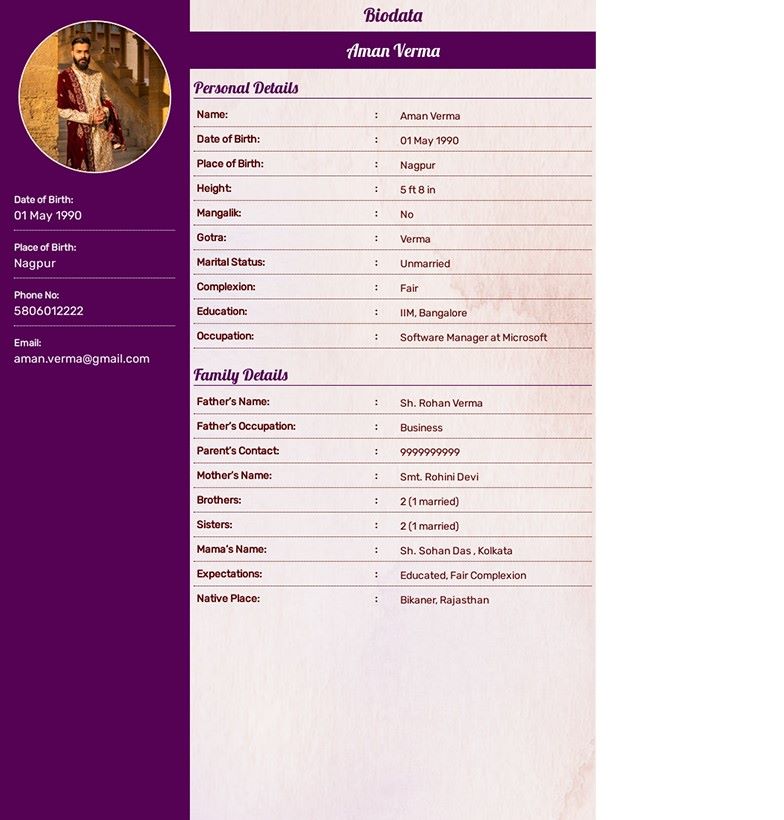
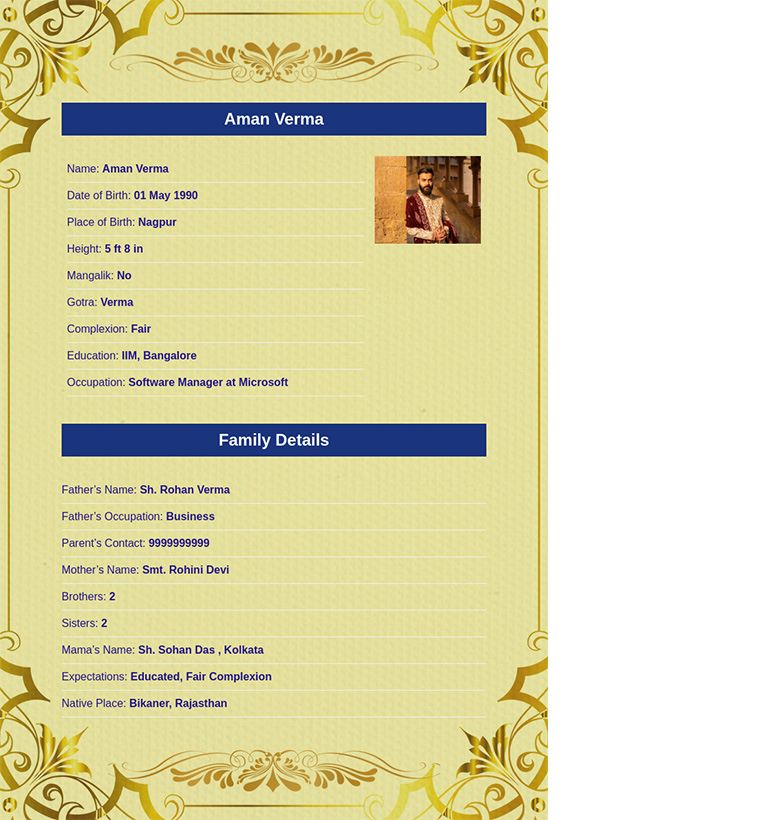
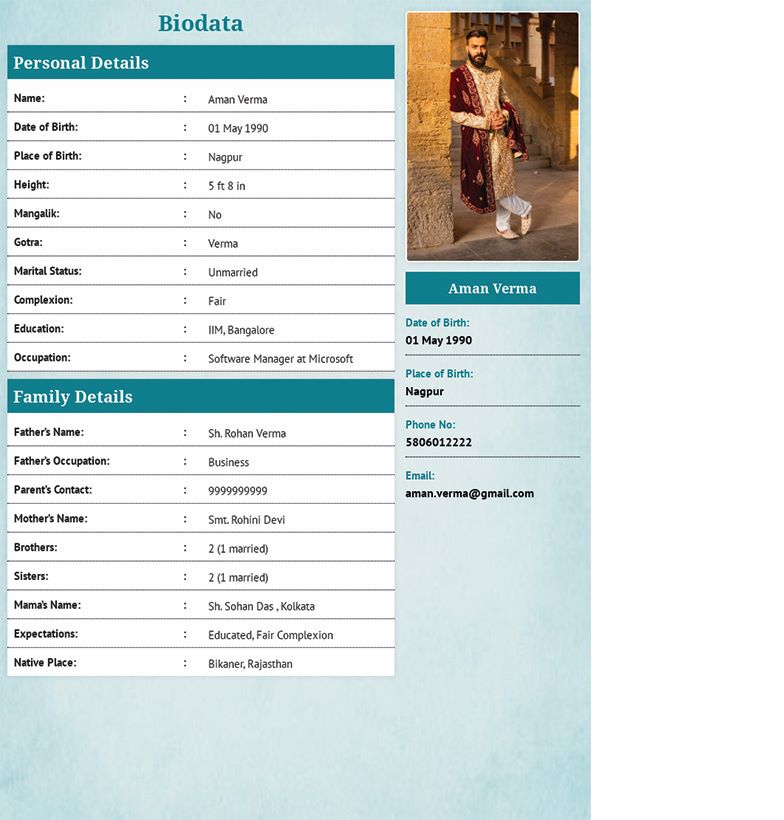
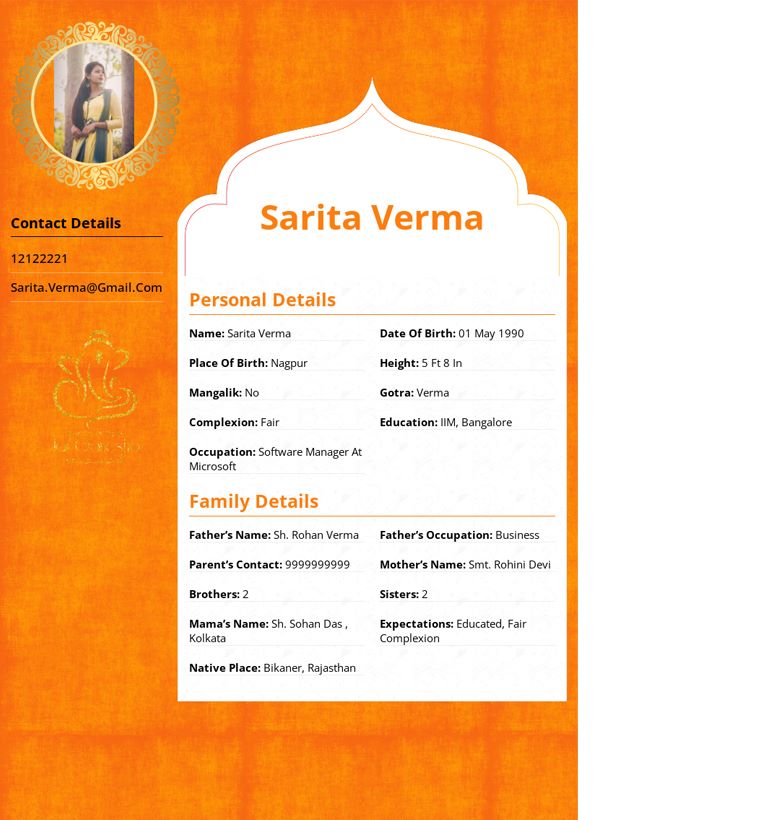
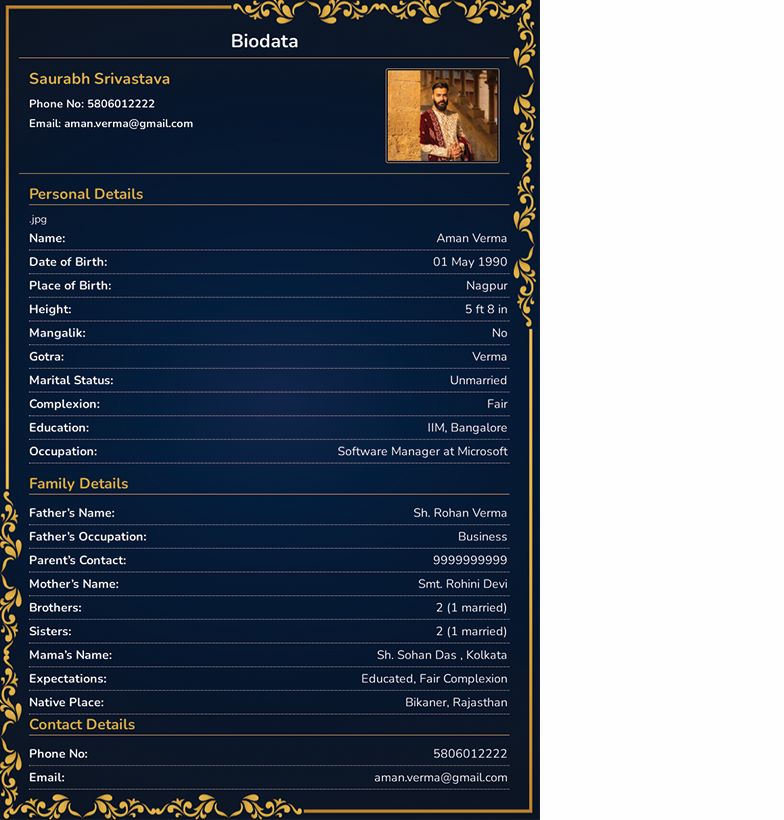
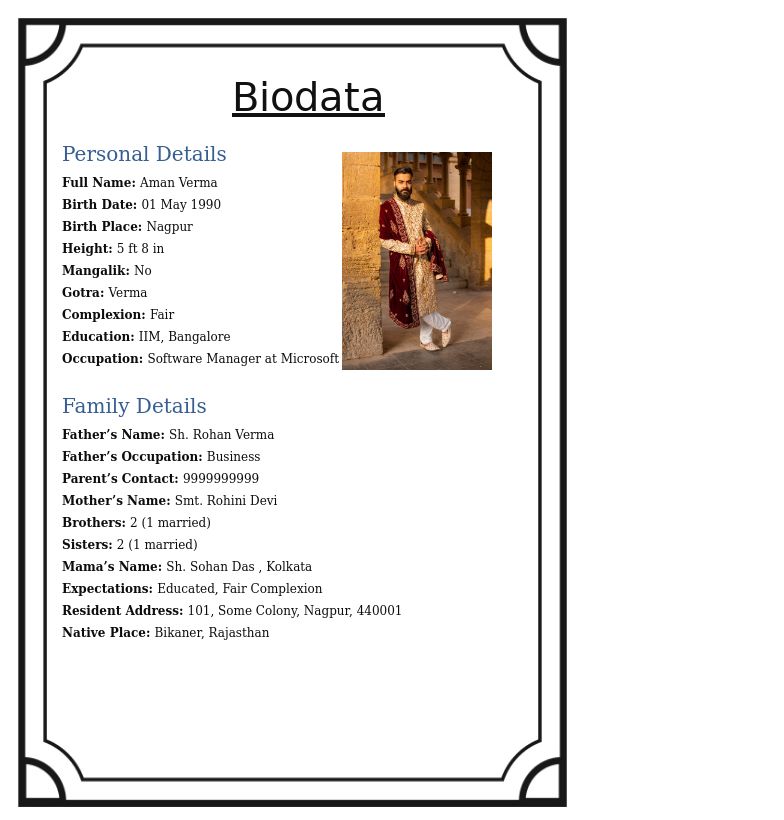
Sample Jewish Biodata for Marriage
Name: Rachel Ezra
Date of Birth: 18 September 1995
Age: 30 years
Height: 5'5"
Current Residence: Mumbai
Native Place: Mumbai
Religion: Jewish
Community: Bene Israel
Mother Tongue: English
Education: M.A. in Communications
Profession: brand strategist with a media company

Family Details:
Father: Mr. David Ezra, retired naval officer
Mother: Mrs. Sarah Ezra, school counselor
Sibling: One younger brother studying architecture
Family Type: close and educated family with strong community ties and a balanced modern outlook

About Me:
I am thoughtful, warm, and dependable. I value family connection, mutual respect, and a partnership where both people can communicate openly and grow together.
I enjoy reading, cooking for family gatherings, music, and spending time with close friends and relatives.

Partner Preference:
Seeking a mature and kind partner who values family, sincerity, and long-term commitment.
Open to discussing city and professional plans based on mutual comfort.
How to Keep Partner Preferences Clear
The expectations section should be concise and realistic. It can mention values, family orientation, education, and openness to location or career planning. If community involvement or comfort with shared traditions matters, that can be stated in an understated and respectful way.
This part of the biodata works best when it sounds like an invitation to conversation rather than a fixed set of conditions. Families generally respond better to clarity than to rigidity.
Common Problems to Avoid
Some biodatas become too generic and lose the specific family context that makes them trustworthy. Others focus so heavily on identity and background that they neglect temperament, work rhythm, and the practical realities of married life. Both approaches leave important questions unanswered.
Another weakness is writing in a tone that feels distant or overly formal. Marriage introductions work better when the biodata sounds composed but personal, complete but not inflated.
Conclusion
A strong Jewish biodata sample for marriage presents family background, personal character, and community context in a clear and respectful way. It should be informative enough for families and natural enough for the person behind the profile to feel visible.
When the biodata is written with honesty and balance, it becomes a useful first step toward a serious conversation. That is the real value of a profile meant for marriage introductions.