Hindu Biodata Sample for Marriage
A Hindu biodata sample for marriage should help families understand the person beyond a basic list of facts. In many homes, the profile is still read first by parents and close relatives, so the page has to explain background, education, family values, and everyday lifestyle with clarity. When the biodata feels balanced, it becomes easier for both sides to move into a respectful conversation.
Hindu families can differ widely in language, region, customs, and level of religious observance, so a useful profile should not assume that one model fits everyone. It is better to show how the person actually lives, whether that includes temple visits, festival participation, vegetarian food at home, or a modern urban routine shaped by work and travel. That practical honesty makes the document more credible and more useful.
What Families Usually Want to Understand First
The first reader often wants a quick view of age, height, education, present city, native place, and profession. Those details matter because they set the foundation for every later question. If they are missing or scattered, the biodata creates extra follow-up instead of making introductions easier.
For a Hindu marriage biodata, it also helps to mention family outlook in a natural way. Some families want to know whether the home is traditional, moderate, or more modern in day-to-day routines. A short, plain description usually works better than grand language about culture or values.
How to Present Religious and Family Context Respectfully
Religion-specific context should support the profile, not dominate it. A sentence about festival participation, spiritual routine, or family customs can be useful when it reflects real life. At the same time, the biodata should still focus on the individual, their temperament, and the kind of marriage they are hoping to build.
This matters because Hindu households are not identical. One family may be deeply ritual-focused, while another may express faith through simple observances and family gatherings. A well-written profile leaves room for that variation instead of reducing the person to a label.
Writing a Personal Summary That Feels Genuine
The strongest personal sections explain daily habits and character in a specific way. Instead of only saying that the person is caring, respectful, or family-oriented, it is more effective to describe how those qualities appear in real life. That may include how the person handles work pressure, stays connected to elders, or balances personal independence with family responsibility.
It also helps to mention a few steady interests such as reading, yoga, cooking, music, travel, volunteering, or spending time with relatives during festivals. Those details make the profile easier to trust because they sound lived-in rather than copied.
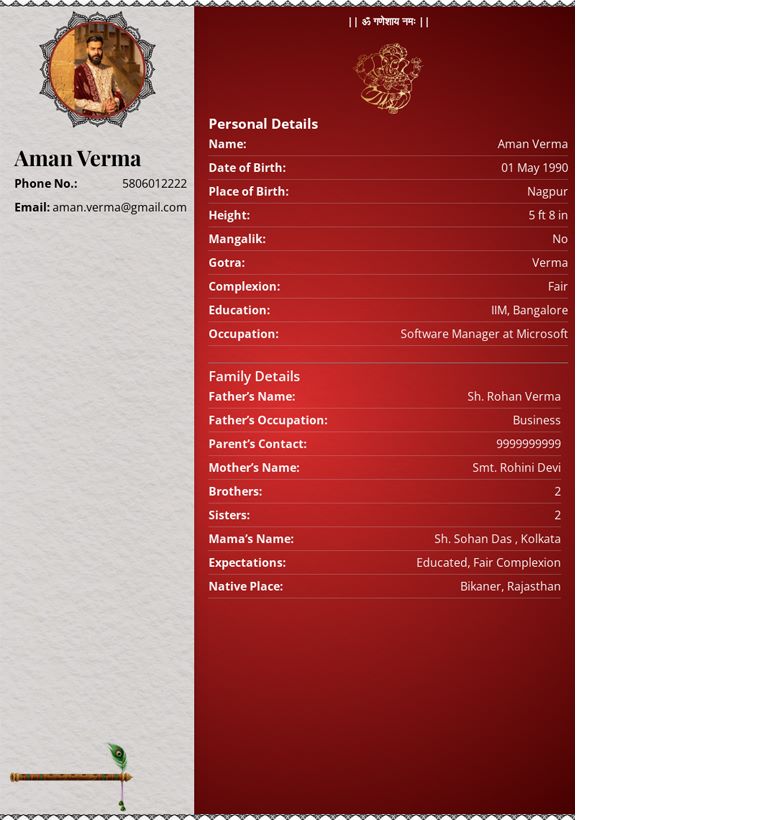
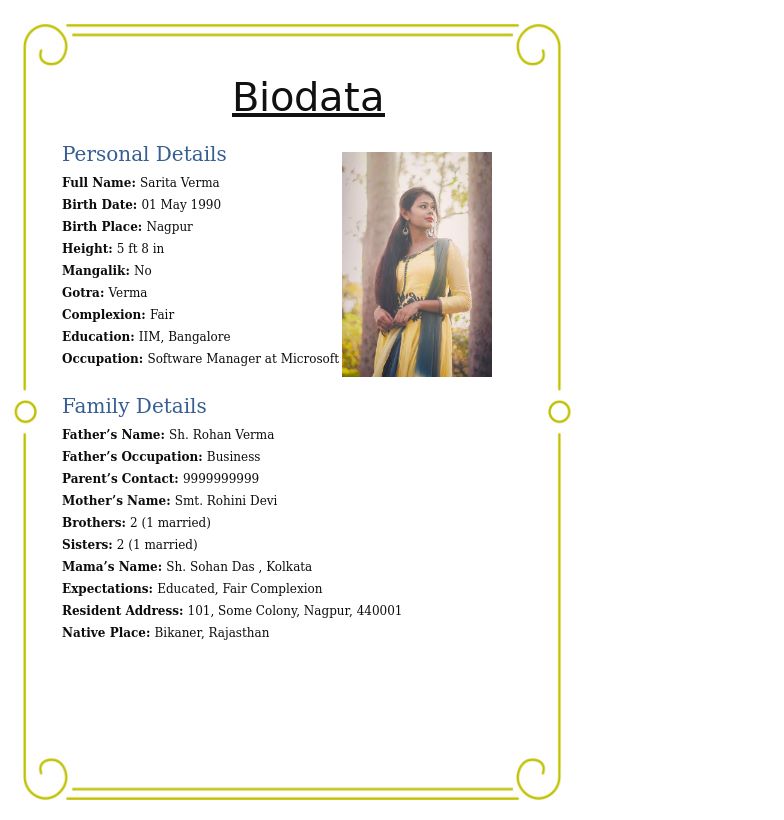
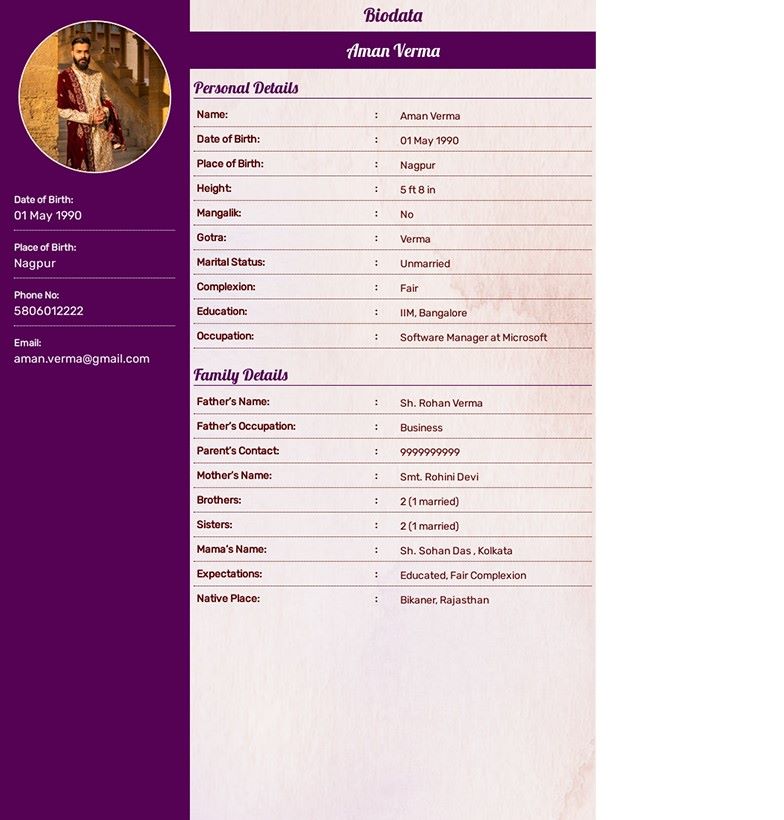
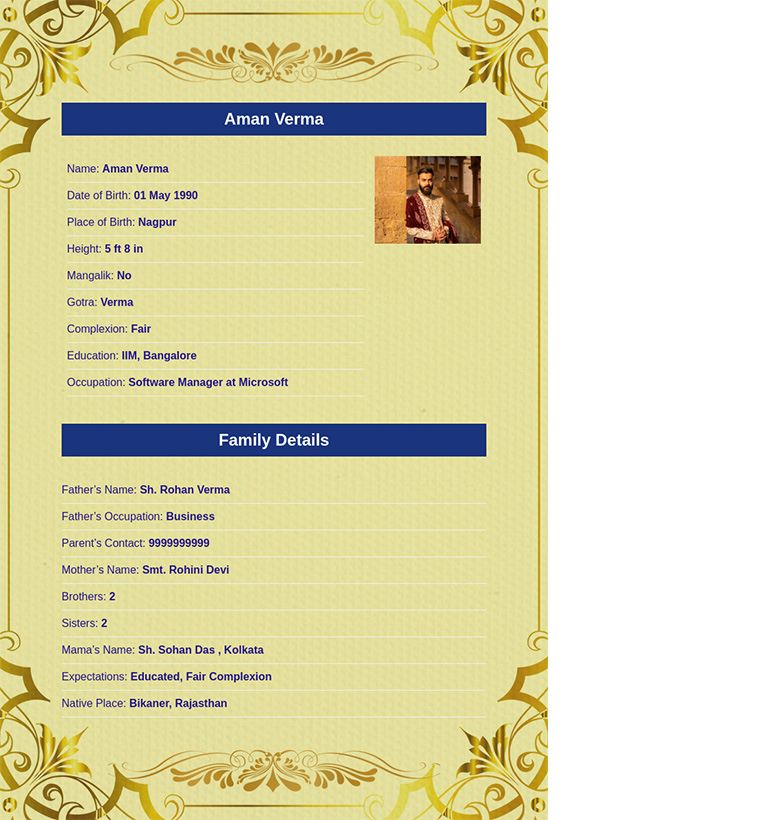
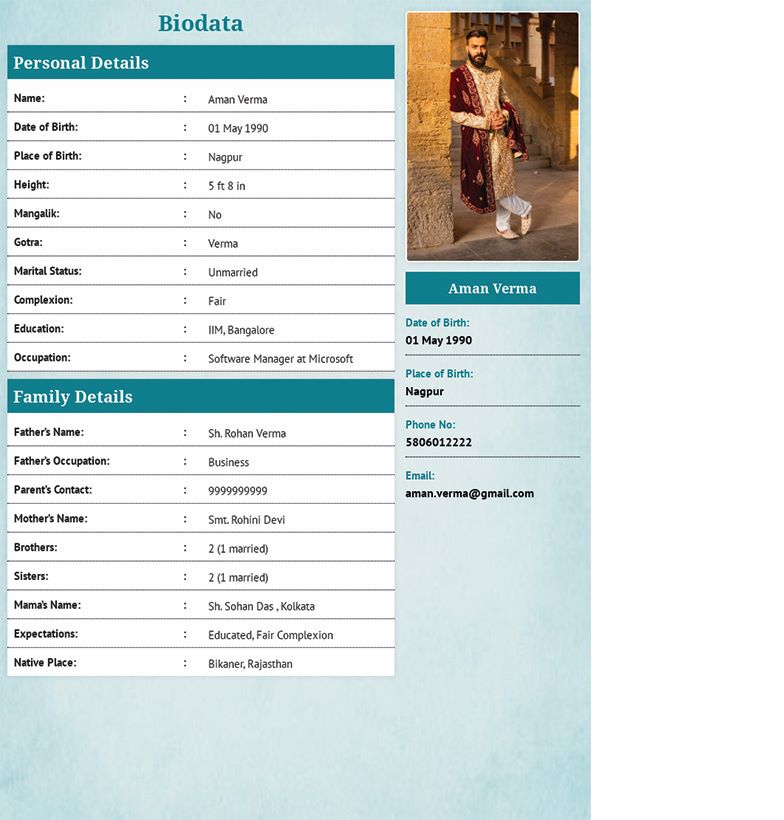
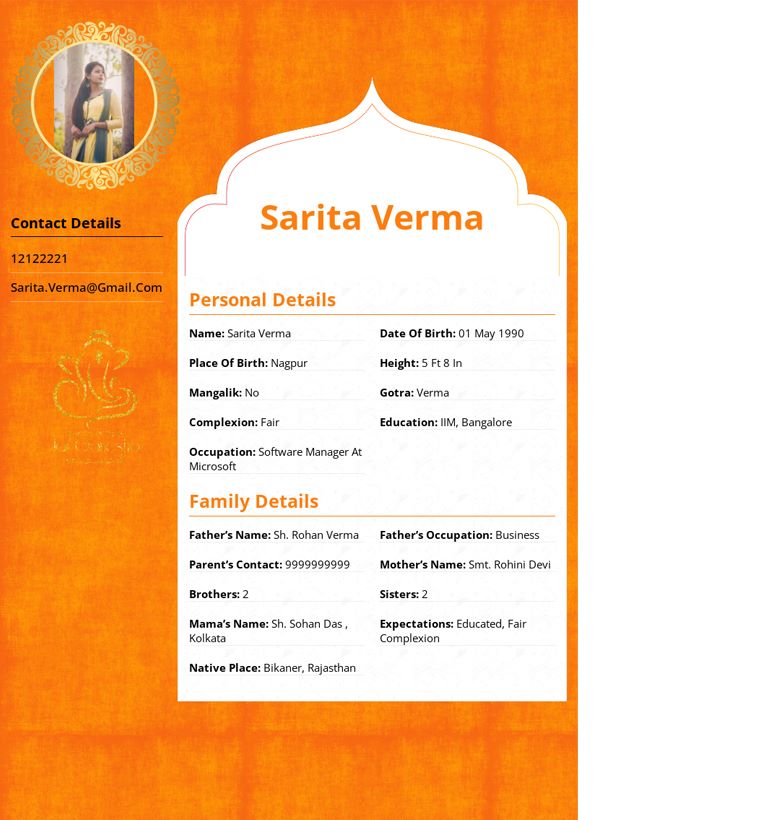
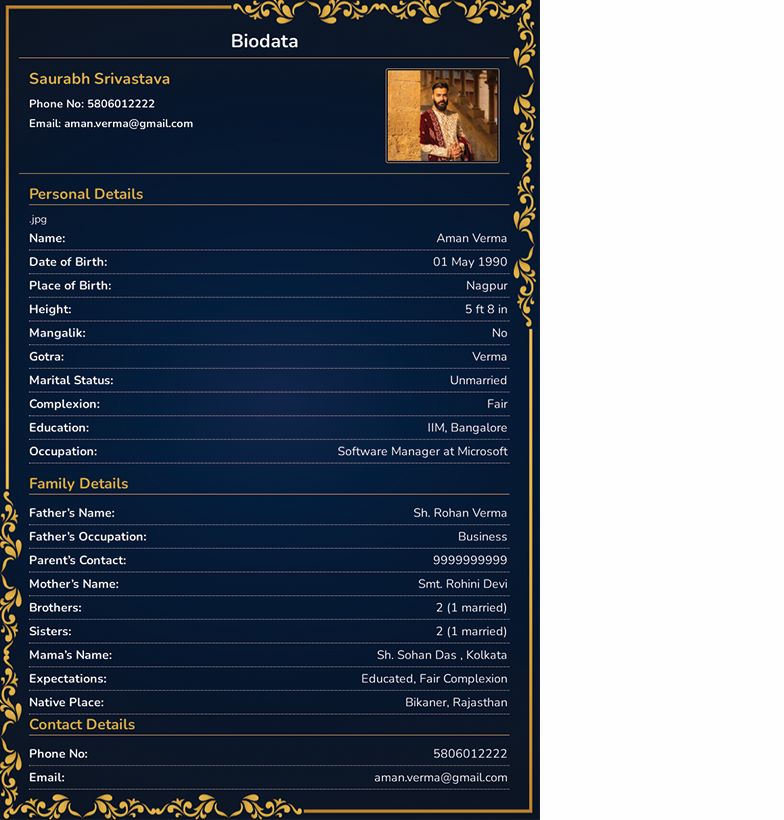
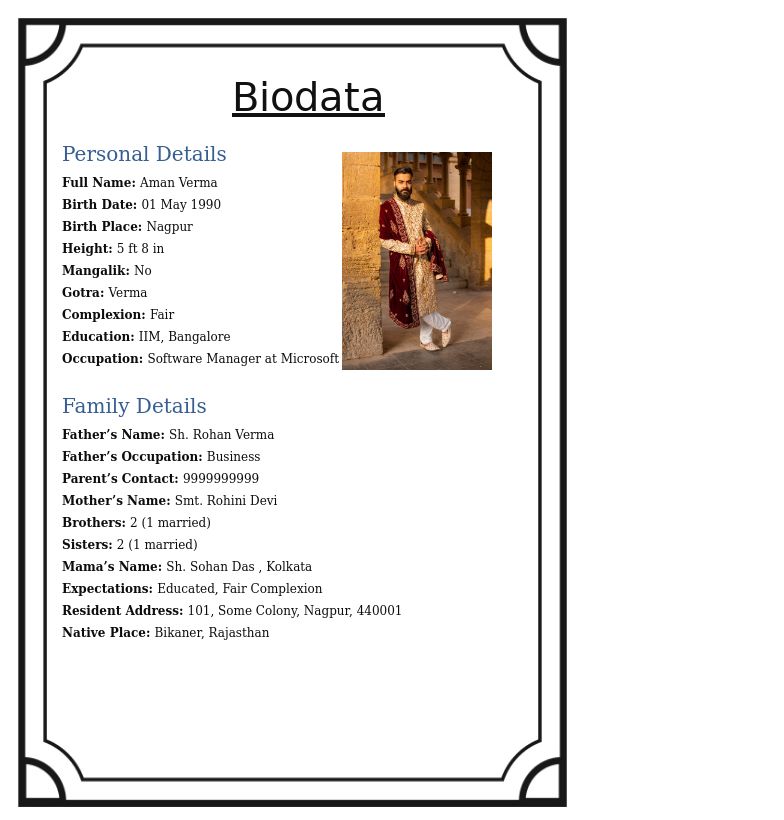
Sample Hindu Biodata for Marriage
Name: Nandini Sharma
Date of Birth: 12 August 1995
Age: 30 years
Height: 5'4"
Current Residence: Bengaluru
Native Place: Jaipur, Rajasthan
Religion: Hindu
Community: Sharma
Mother Tongue: Hindi
Education: B.Tech in Information Technology
Profession: product analyst with a fintech company

Family Details:
Father: Mr. Rajesh Sharma, retired bank officer
Mother: Mrs. Kavita Sharma, homemaker
Sibling: One younger brother working in Pune
Family Type: close-knit family with a balanced outlook and simple religious observance

About Me:
I am calm, practical, and affectionate by nature. I value honesty, mutual respect, and a home where both people can speak openly and support each other's goals.
I enjoy reading, classical music, occasional temple visits with family, and planning short trips when work allows.

Partner Preference:
Seeking an educated and grounded partner who values family bonds, emotional maturity, and a respectful partnership.
Open to discussing location and career plans for the right match.
What to Include in the Preference Section
The partner preference section should stay realistic and constructive. A few lines about values, education, family approach, and openness to shared responsibilities are usually enough. Long demand lists often weaken the tone of the page and make the profile feel more transactional than sincere.
If a family has practical considerations, such as comfort with relocation, a vegetarian household, or a preference for someone who respects religious occasions, those points can be stated plainly. The best wording is calm and direct rather than rigid.
Common Problems That Make the Profile Less Effective
Some biodatas become too ceremonial and say very little about the actual person. Others are so brief that they offer no real sense of routine, personality, or future plans. In both cases, the family reading the page is left with broad labels but very little understanding.
Another mistake is sounding exaggerated. A biodata does not need to present perfection. It needs to present a reliable picture of someone who is ready for marriage and open to building a stable relationship.
Conclusion
A strong Hindu biodata sample for marriage balances personal identity, family background, and practical detail. It respects faith and family customs without allowing them to overshadow the individual.
When the profile is written with honesty and specificity, it gives both families a solid starting point. That is what makes the biodata useful: it helps a serious conversation begin with clarity instead of confusion.