Christian Biodata Sample for Marriage
A Christian biodata sample for marriage should read like a sincere introduction prepared for a real family conversation. Many Christian families prefer a profile that is simple in tone but complete in information, so the biodata should make it easy to understand background, education, work, family life, and hopes for marriage. When the page is thoughtful, it helps both families move forward without unnecessary uncertainty.
Christian families in India and abroad may differ in denomination, language, region, and church involvement, which means the biodata should reflect the actual life of the person rather than a borrowed pattern. Some families may value active parish participation, while others may focus more on character, stability, and shared values in a modern professional setting. The writing should be respectful of faith while still grounded in daily reality.
What Should Appear in the Opening Section
The first part of the biodata should present the essential facts clearly: full name, age, date of birth, present city, native place, education, and profession. These details are the starting point for every marriage discussion because they help another family understand the person's current stage of life.
It is also useful to include a short note on family background. Readers often want to know whether the family is close-knit, how education is valued at home, and whether the person has grown up in a supportive environment. A plain explanation is usually stronger than decorative language.
How Faith Can Be Included Naturally
In a Christian marriage biodata, faith can be an important part of compatibility, but it should be described with proportion. A brief reference to church participation, prayerful values, or a service-oriented outlook can help another family understand the person's grounding. The key is to keep the tone practical and human.
That is because marriage decisions are shaped not only by religious identity, but also by communication, maturity, financial stability, and the ability to build a home with patience. A strong biodata should give enough room to all of those areas.
Writing a Personal Introduction That Feels Real
The personal summary should show temperament and daily life in a natural way. It helps to say whether the person is steady, warm, disciplined, community-minded, or adaptable in new environments. These qualities become more believable when paired with small but concrete details from everyday routine.
For example, a profile might mention enjoying choir music, reading, walking, family dinners after Sunday service, mentoring students, or maintaining a balanced work schedule. Specific details create trust because they sound lived and recognizable.
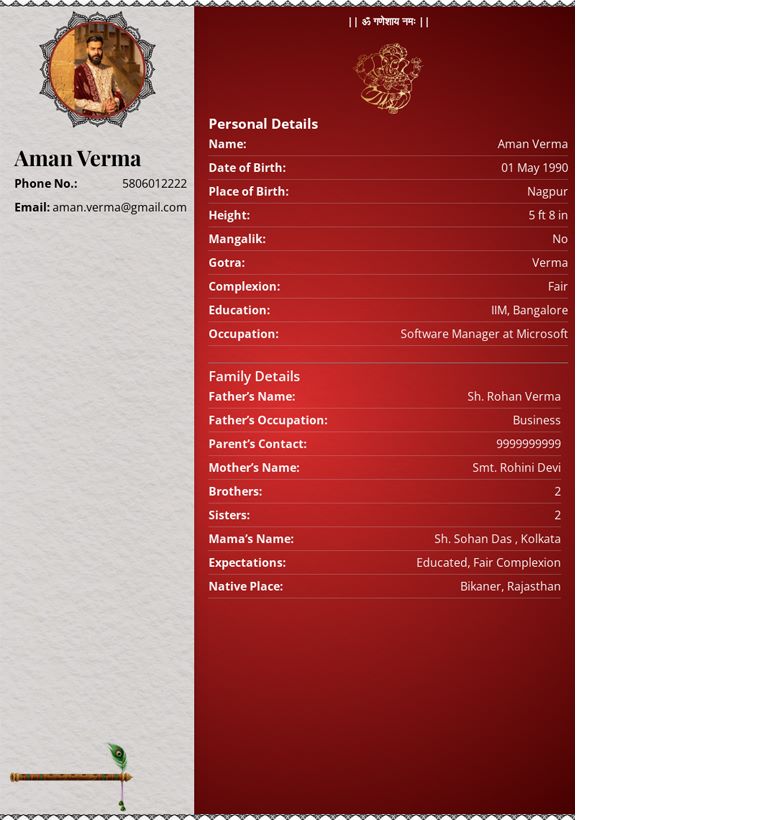
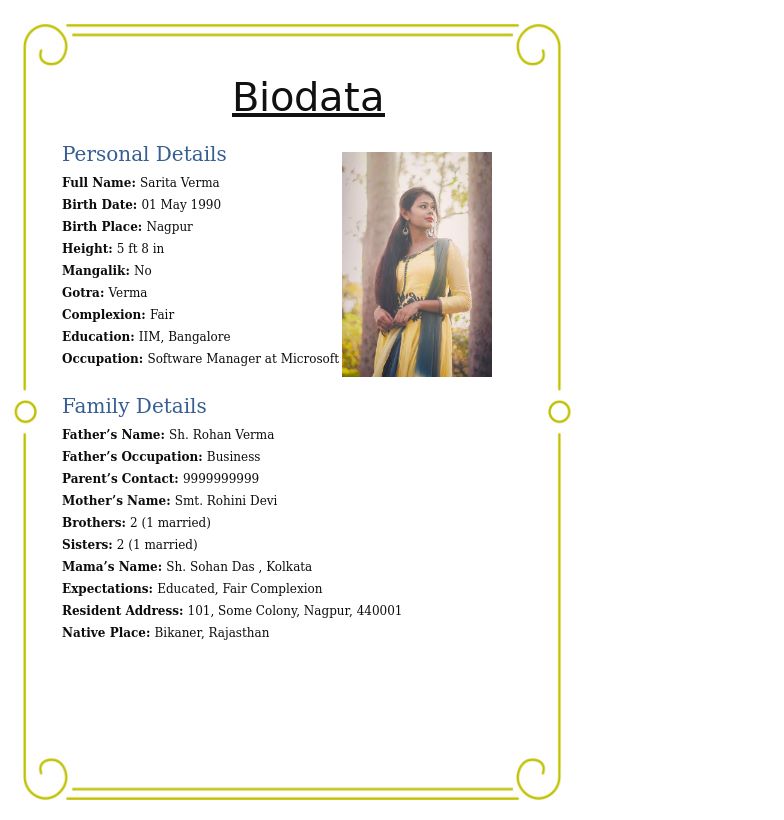
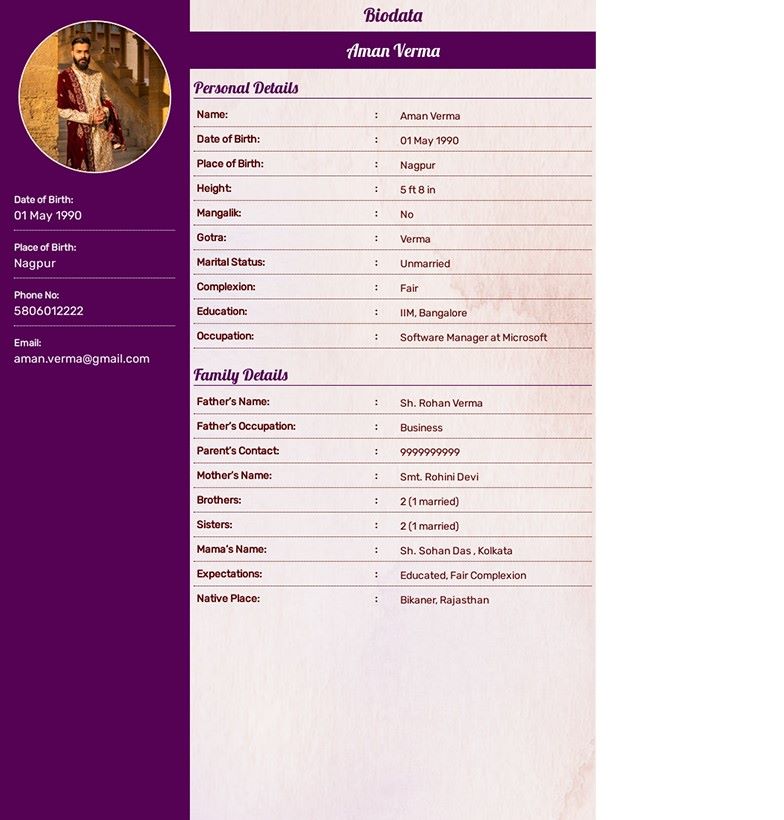
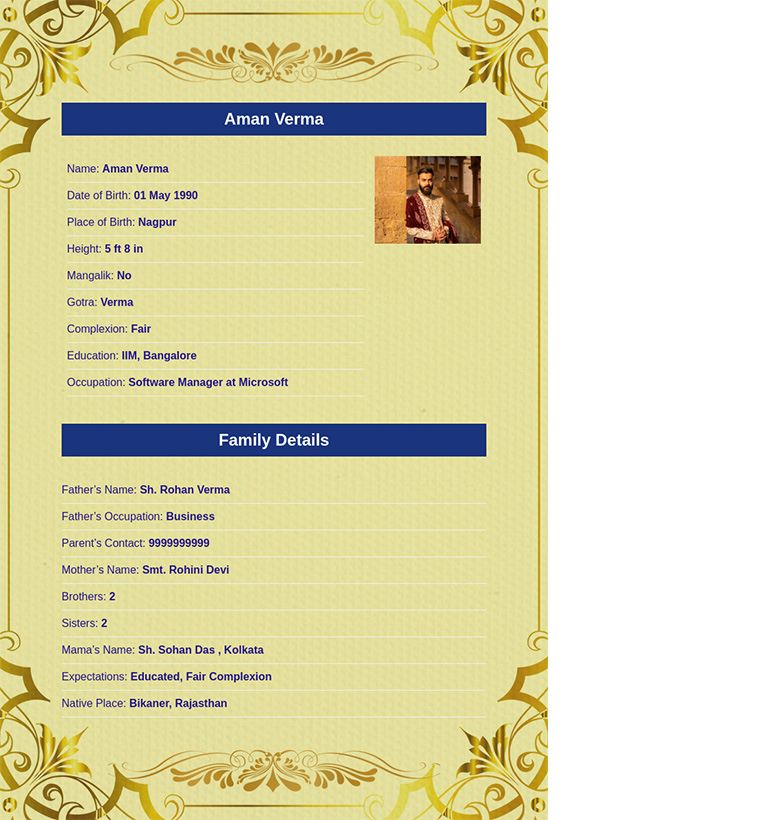
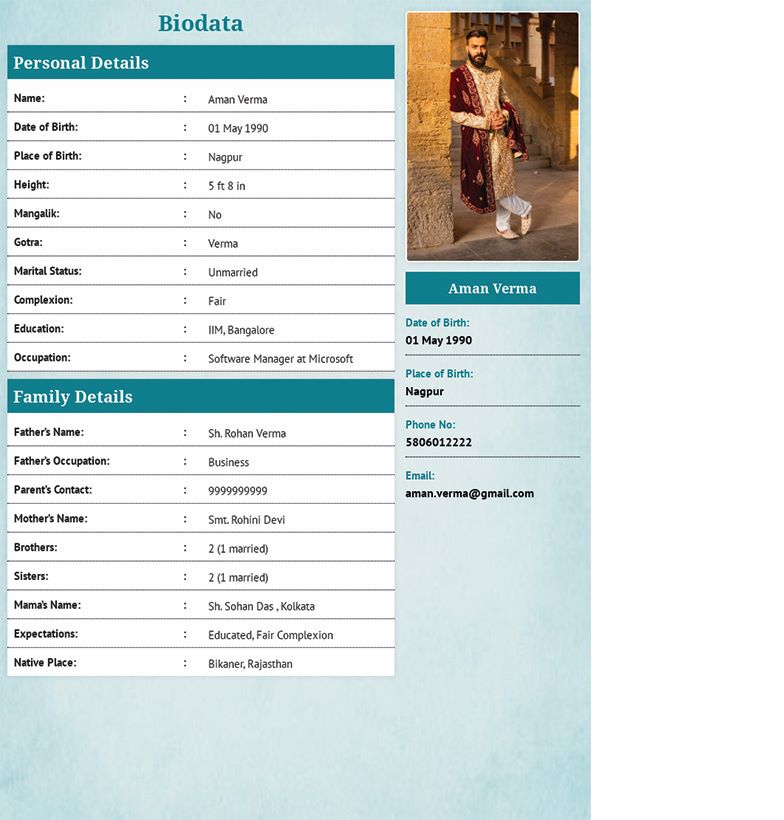
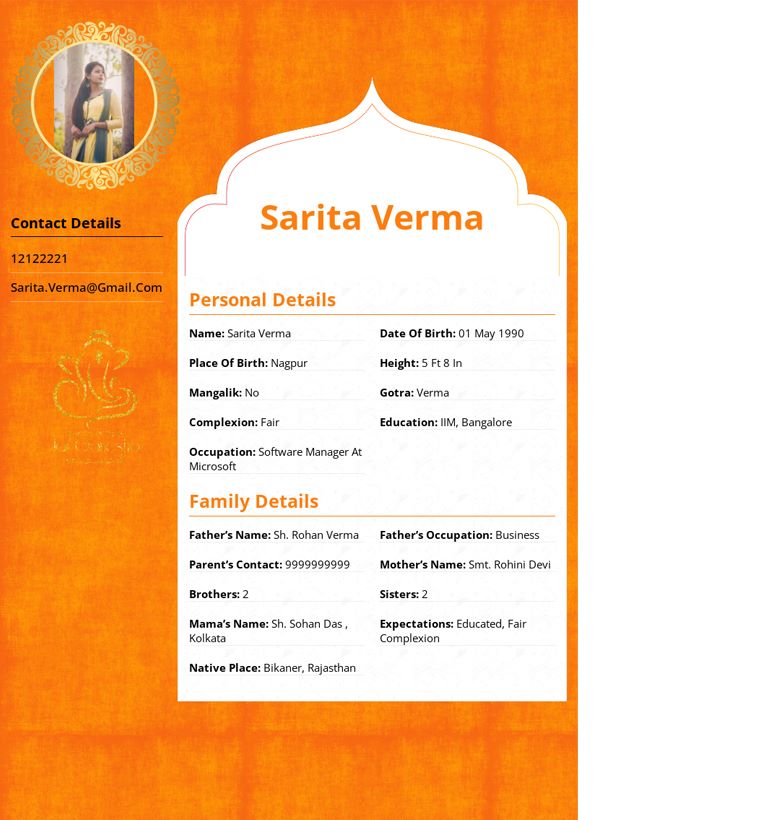
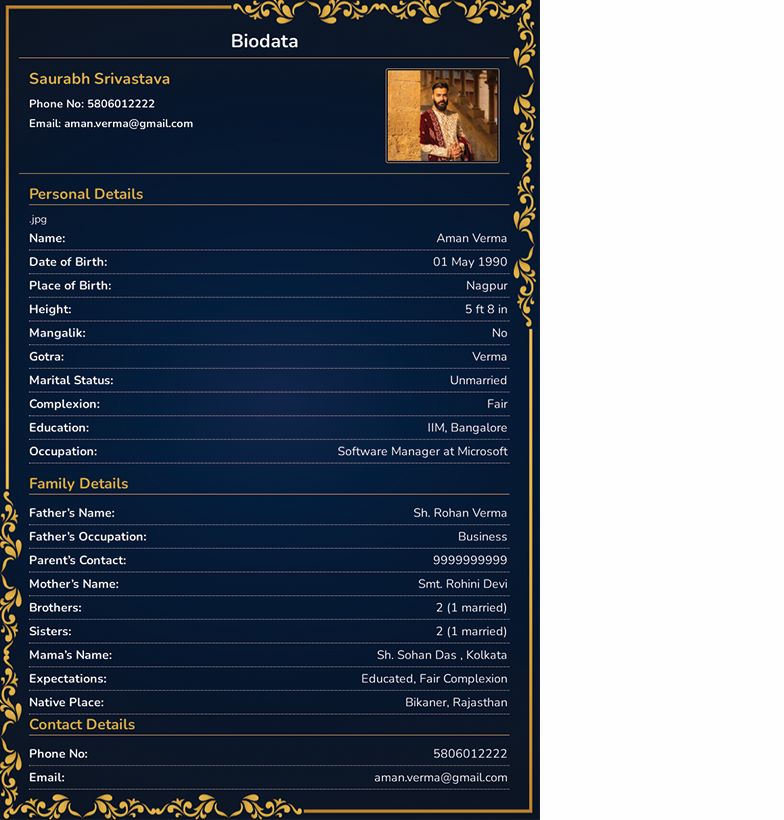
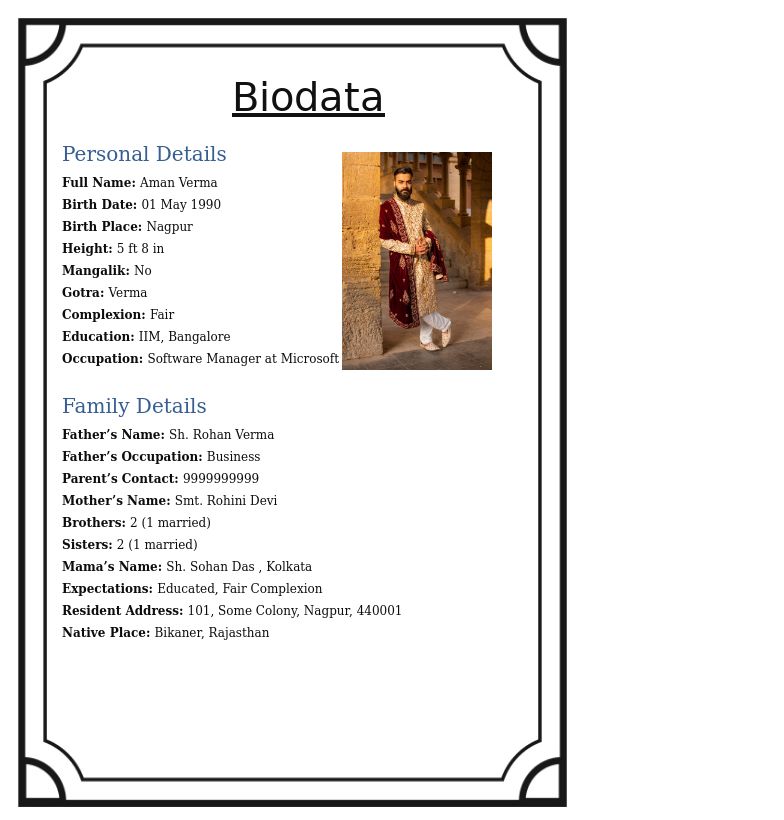
Sample Christian Biodata for Marriage
Name: Joel Mathew
Date of Birth: 09 November 1994
Age: 31 years
Height: 5'10"
Current Residence: Kochi
Native Place: Kottayam, Kerala
Religion: Christian
Denomination: Catholic
Mother Tongue: Malayalam
Education: B.Com, MBA in Marketing
Profession: regional sales manager with a medical devices company

Family Details:
Father: Mr. Mathew Joseph, retired teacher
Mother: Mrs. Elsamma Mathew, homemaker
Sibling: One younger sister working in Bengaluru
Family Type: prayerful and educated family with a warm and balanced outlook

About Me:
I am responsible, patient, and family-oriented. I value faith, steady communication, and a home life where both partners support each other with honesty and care.
I enjoy reading, choir music, weekend drives, and spending time with family after work.

Partner Preference:
Seeking a kind, mature, and grounded partner who values faith, mutual respect, and long-term commitment.
Open to discussing career and location decisions together.
How the Preference Section Should Be Framed
The expectations section should guide the next stage of conversation with clarity. A short note about preferred values, education, family outlook, and willingness to share responsibilities is usually sufficient. If church life or openness to relocation matters, it can be mentioned without turning the biodata into a list of demands.
Christian families often appreciate moderation in tone. A biodata that sounds respectful and grounded suggests maturity. A biodata that sounds overly formal or overly demanding can create distance even when the match is otherwise promising.
Frequent Issues to Avoid
Some biodatas focus so much on education and work that they forget to describe the person. Others speak only in moral language and leave out practical facts. Neither approach helps a family understand compatibility fully.
It is also unhelpful to use broad statements that could belong to anyone. A strong profile should make the reader feel that they have met a real person with a real family setting, not a generic page copied from somewhere else.
Conclusion
A useful Christian biodata sample for marriage combines faith, family background, and everyday realism in a clear format. It should be respectful in tone, complete in information, and centered on the person rather than on borrowed phrases.
When that balance is achieved, the biodata becomes a dependable first introduction. It helps families assess compatibility carefully and supports a more meaningful conversation about marriage.