Buddhist Biodata Sample for Marriage
A Buddhist biodata sample for marriage should be calm in tone, practical in structure, and honest about the person's life. Families often look for a profile that explains background, education, work, and family setting without unnecessary ornament. When the page is clear and respectful, it helps everyone focus on compatibility rather than on guessing what has been left unsaid.
Buddhist families may come from very different cultural and regional contexts, including urban professional homes, Himalayan communities, Maharashtrian Buddhist families, and diaspora settings. Because of that range, a good biodata should not rely on assumptions. It should describe the individual's actual upbringing, values, and daily routine so that the profile feels accurate rather than symbolic.
Starting With the Facts That Matter
The opening section should establish the practical details clearly. Name, age, date of birth, current city, native place, education, profession, and family background are the facts another family will usually want first. If these are arranged well, the conversation can move quickly toward more meaningful questions.
For a Buddhist biodata, it can also be helpful to describe the home environment in a short sentence. Whether the family values simplicity, education, social service, or a reflective lifestyle, that context gives the profile a grounded shape.
How to Reflect Values Without Sounding Abstract
Many families appreciate qualities such as patience, self-discipline, compassion, and emotional steadiness, but these should not be mentioned as abstract ideals alone. The biodata becomes stronger when it explains how those values appear in daily life, such as calm communication, respect toward elders, balanced habits, or thoughtful decision-making.
If spiritual practice is relevant, it can be referred to briefly through meditation, simple observances, or participation in community events. That information helps when it is presented naturally and kept in proportion to the rest of the profile.
Creating a Strong Personal Summary
The personal section should help the reader understand temperament and routine. It is more useful to describe how the person approaches work, family relationships, and everyday life than to rely on generic praise. Specific details allow another family to picture compatibility more accurately.
This is where small interests matter. Reading, mindful travel, nature walks, social service, cooking, or maintaining a disciplined daily schedule can say a great deal about personality when written simply.
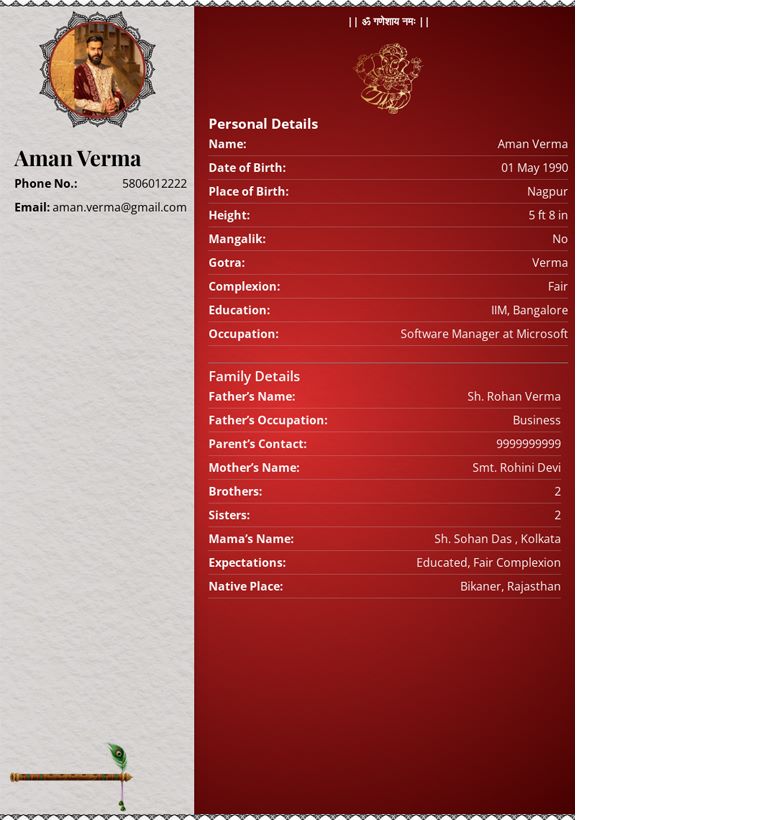
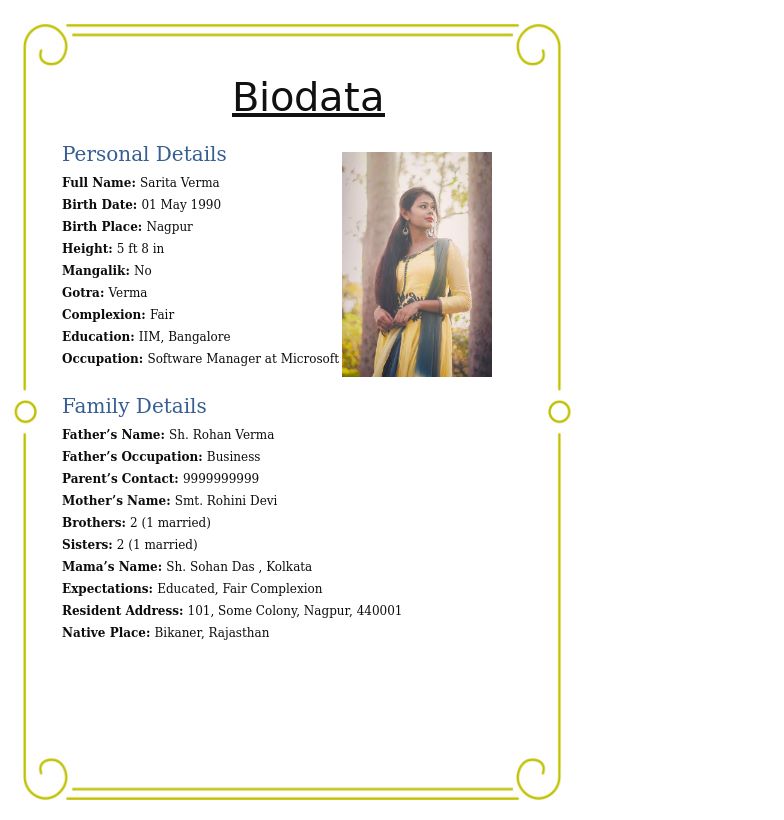
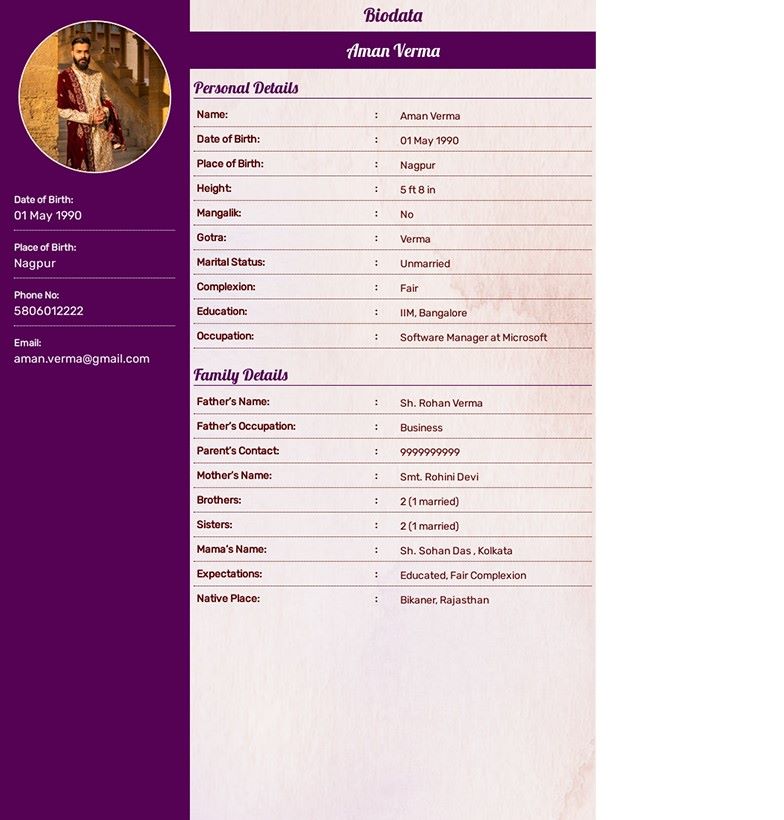
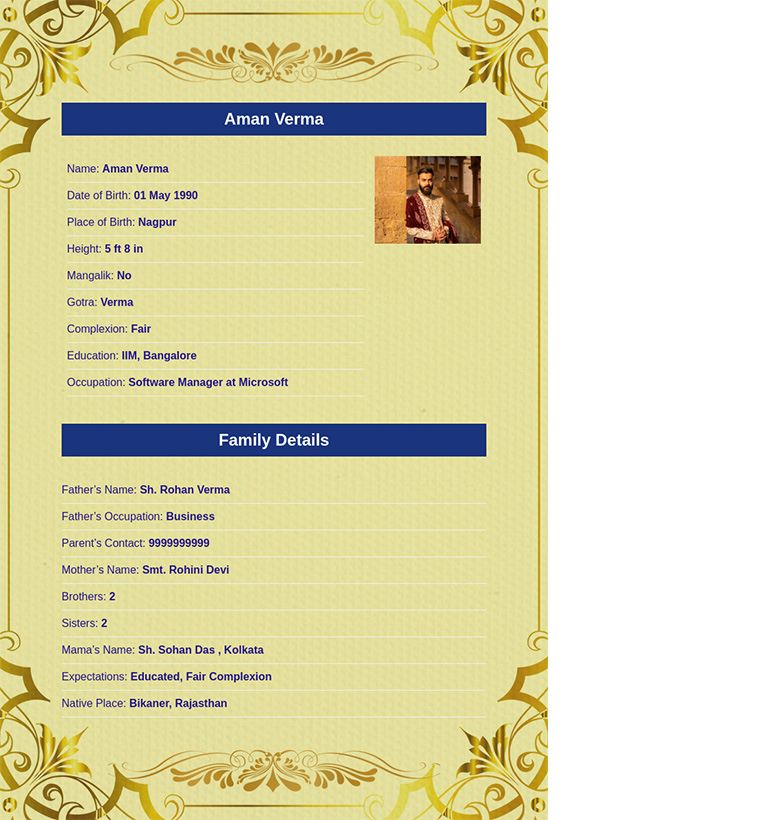
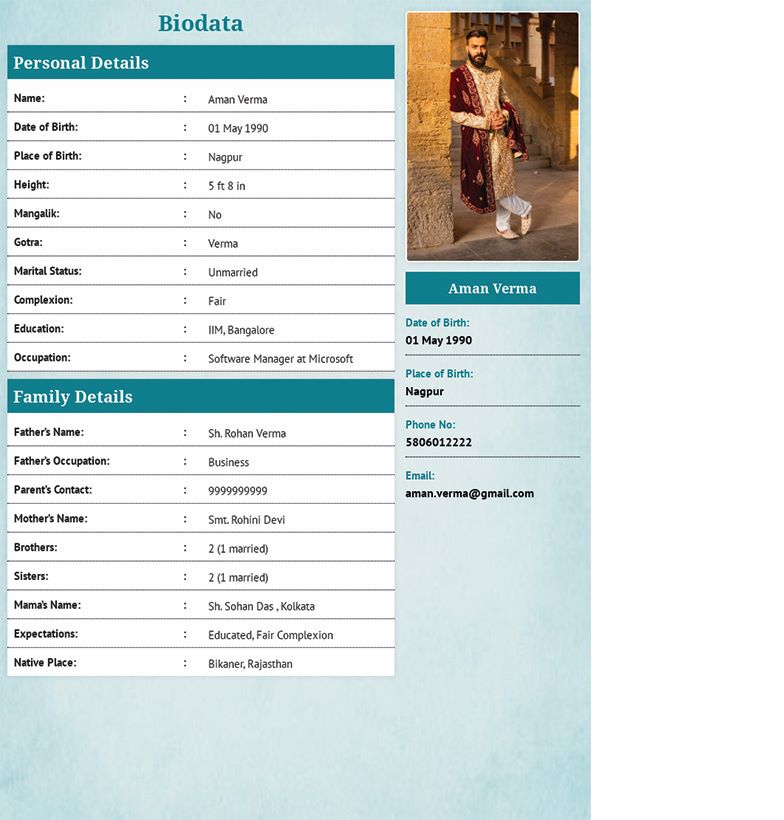
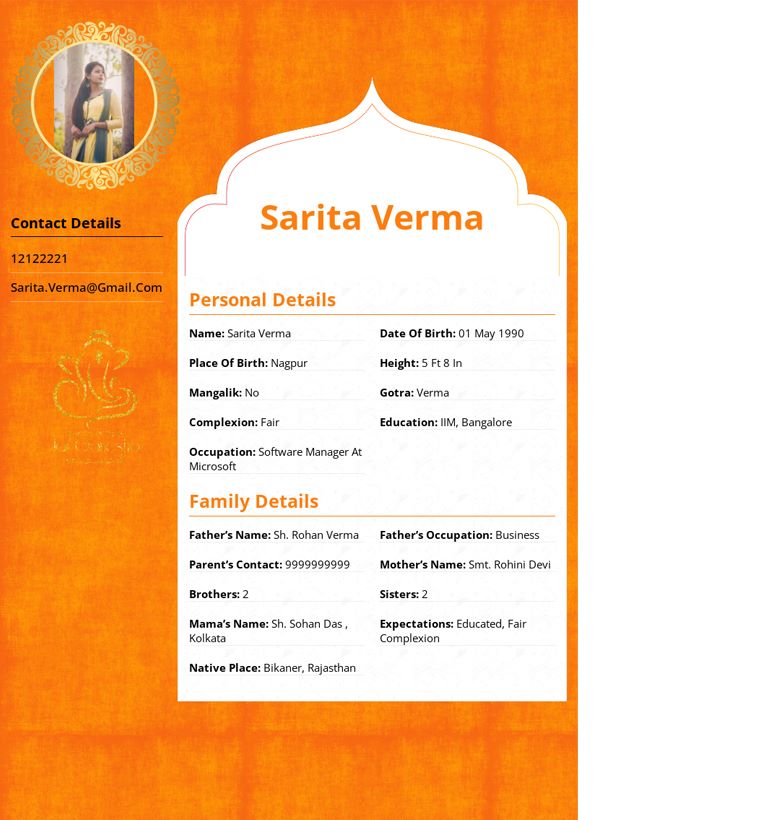
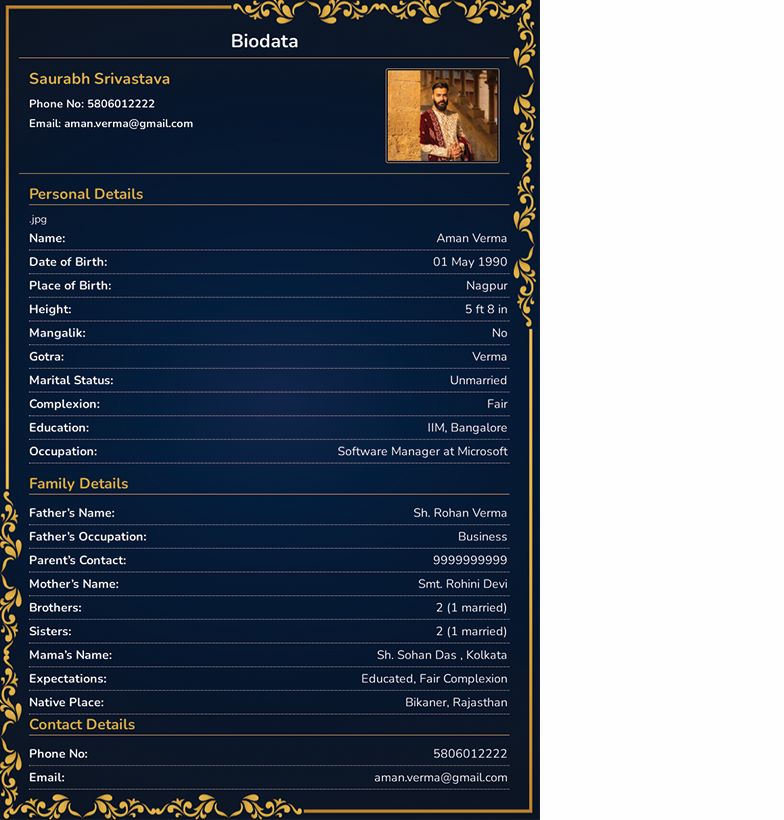
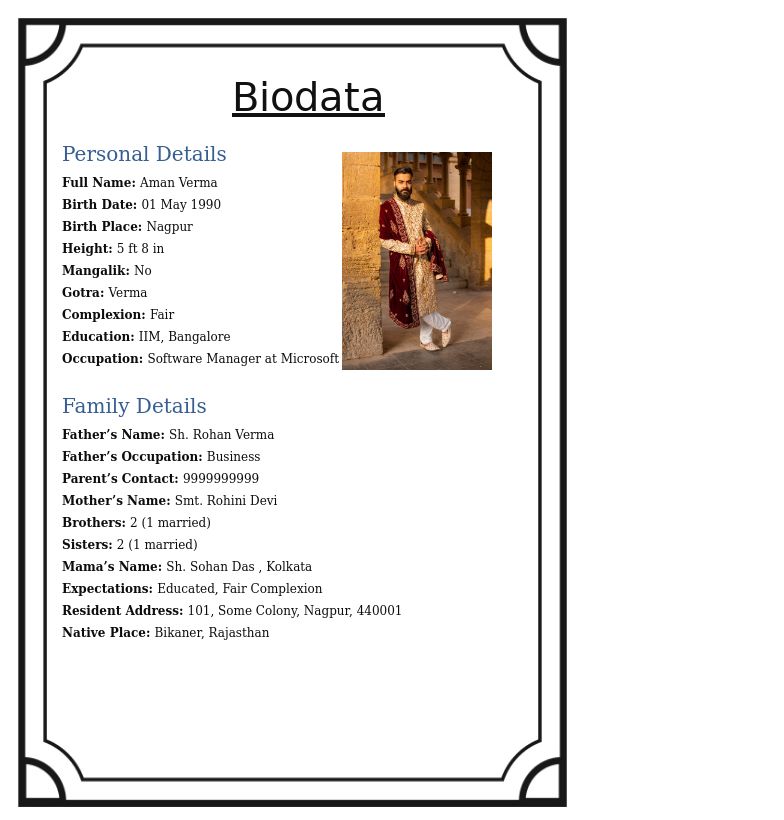
Sample Buddhist Biodata for Marriage
Name: Sandeep Bodhi
Date of Birth: 14 February 1995
Age: 31 years
Height: 5'8"
Current Residence: Nagpur
Native Place: Aurangabad, Maharashtra
Religion: Buddhist
Mother Tongue: Marathi
Education: M.A. in Public Administration
Profession: assistant manager in a development sector organization

Family Details:
Father: Mr. Ramesh Bodhi, retired railway employee
Mother: Mrs. Meena Bodhi, homemaker
Sibling: One younger sister preparing for civil services
Family Type: educated and humble family that values dignity, discipline, and mutual support

About Me:
I am steady, thoughtful, and sincere in relationships. I value respectful communication, personal growth, and a marriage where both partners can build a peaceful and supportive home.
I enjoy reading, early morning walks, family time, and participating in community programs when possible.

Partner Preference:
Seeking an understanding and grounded partner who values equality, emotional maturity, and a balanced family life.
Open to discussing city and career plans together.
How to Write Expectations Sensibly
The expectation section should stay realistic and kind. A few lines about values, education, family nature, and openness to shared decisions are enough for most biodatas. If relocation, career continuation, or a simple lifestyle matters, those points can be included in direct language.
The aim is not to control the discussion but to make it clearer. Families usually respond better to honest guidance than to long, restrictive checklists.
Common Weak Points in Biodata Writing
Some profiles sound so formal that they reveal almost nothing about the person. Others become overly philosophical and forget to include practical details. Both problems make it harder to judge compatibility with confidence.
Another frequent mistake is using lines that could fit anyone. A strong biodata should feel anchored in one real person's life, routine, and family setting.
Conclusion
A useful Buddhist biodata sample for marriage is thoughtful without being vague and practical without being dry. It should combine family background, values, work life, and personal temperament in a clear and respectful format.
When written with sincerity and detail, the biodata becomes a dependable introduction. It helps families move toward a serious conversation with greater clarity and comfort.