Bhandari Biodata Sample for Marriage
A Bhandari biodata sample for marriage should reflect the person with accuracy, warmth, and practical detail. Bhandari families are found in different regions and social settings, especially across Maharashtra and the Konkan belt, but the expectations around marriage biodata are often quite similar to other modern matrimonial searches. Families want to understand the person’s upbringing, education, work, habits, and family values without reading through exaggerated or mechanical content.
That is why a useful Bhandari biodata should feel personal rather than copied. It should help elders understand family background while also helping the prospective match understand personality, lifestyle, and future plans. The profile becomes stronger when it respects community context but does not reduce the person to that identity alone.
Why a Well-Written Biodata Matters
The first stage of matrimonial communication is often document-based. A biodata is circulated through relatives, friends, matrimonial networks, or online platforms. Before anyone speaks directly, the biodata shapes the first impression. If it is vague, overdone, or impersonal, families may hesitate. If it is clear and respectful, it creates confidence.
For a Bhandari marriage biodata, this means presenting the essentials with discipline: personal facts, family details, education, profession, and a readable self-description. If the person is settled in Mumbai, Pune, Navi Mumbai, Goa, or outside India, location can influence compatibility discussions, so it should be clearly stated. The same is true for language comfort, work commitments, and openness to relocation.
What to Include in the Opening Profile
The biodata should begin with full name, age, date of birth, height, current city, native place, mother tongue, and educational qualifications. These details give the reader structure right away. Profession should follow with enough precision to show stability and direction. If the person works in hospitality, government service, IT, banking, design, healthcare, shipping, or family business, mention it plainly.
The family section should include parents, siblings, and the nature of the household. A small note about the family being educated, close-knit, culturally rooted, or progressive in outlook can be helpful. Many readers want to know not only who is in the family but also how the family functions socially and emotionally.
Making the Personal Introduction More Real
This is the part that differentiates one biodata from another. A Bhandari biodata sample for marriage should describe everyday qualities that actually matter in partnership. For example, is the person cheerful, dependable, responsible, and calm? Do they value family occasions but also enjoy professional independence? Do they like home-cooked meals, coastal travel, music, books, spiritual practice, or outdoor activity? Specific writing creates a more believable picture.
It is also useful to describe the person’s approach to marriage. A line about valuing mutual respect, emotional maturity, and shared decision-making tells the reader far more than a list of generic adjectives. Good biodata writing helps both families imagine how conversations may progress after marriage, not just how introductions begin.
Respecting Regional and Cultural Nuance
Some Bhandari families may prefer to mention native village, family roots in the Konkan region, or cultural practices tied to festivals and language. These details can add warmth if they are relevant. At the same time, the biodata should remain inclusive in tone. Cultural identity should be presented as context, not as a reason to create distance.
If the person is multilingual or comfortable in Marathi, Hindi, and English, mentioning that can also help. Matrimonial conversations often involve families living in different cities, and language comfort can make an early difference. Again, the biodata should state facts simply rather than adding decorative claims.
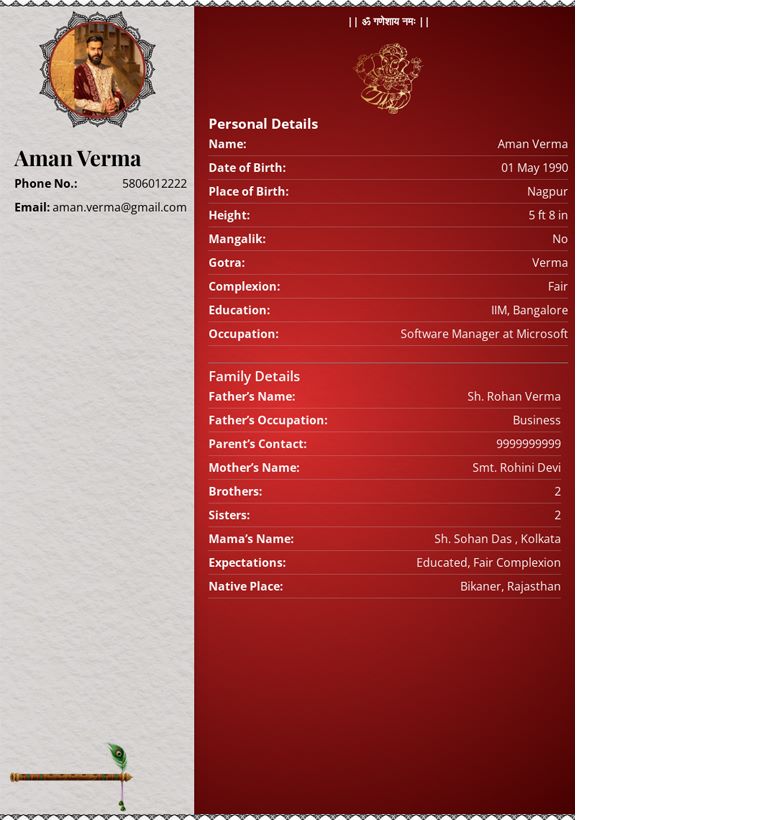
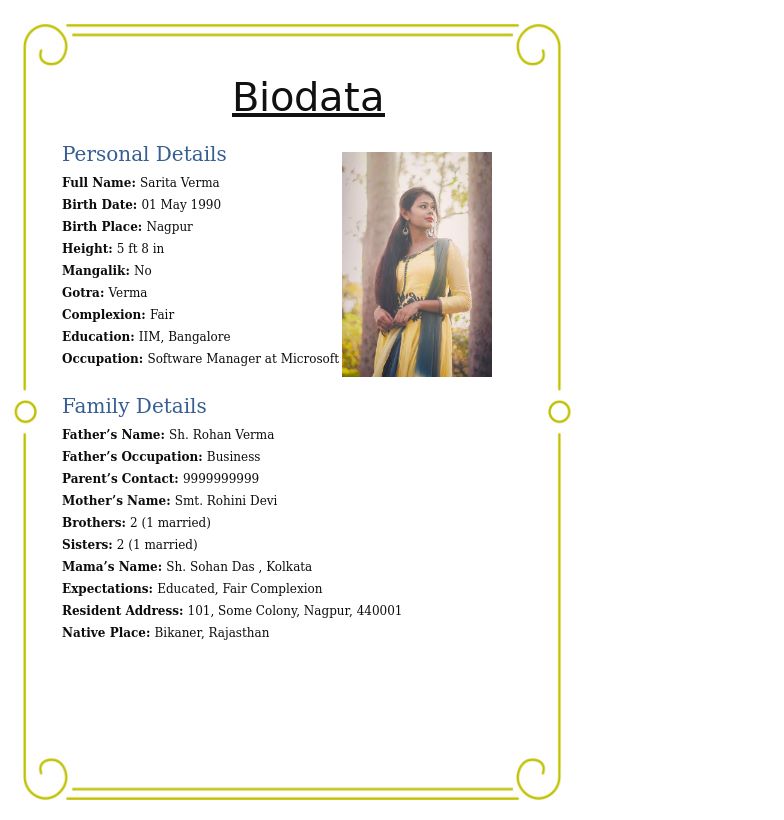
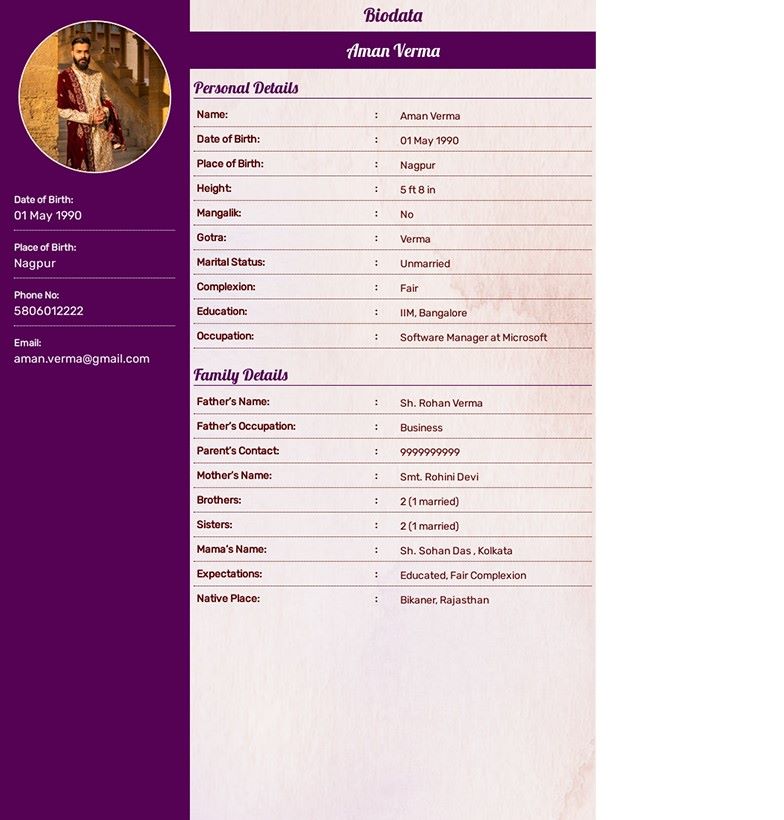
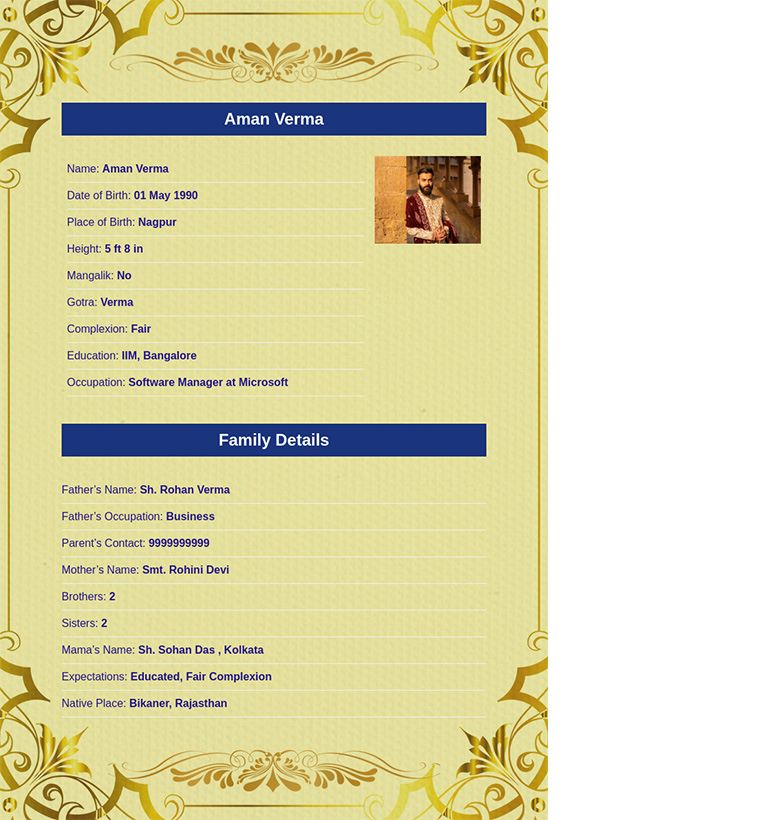
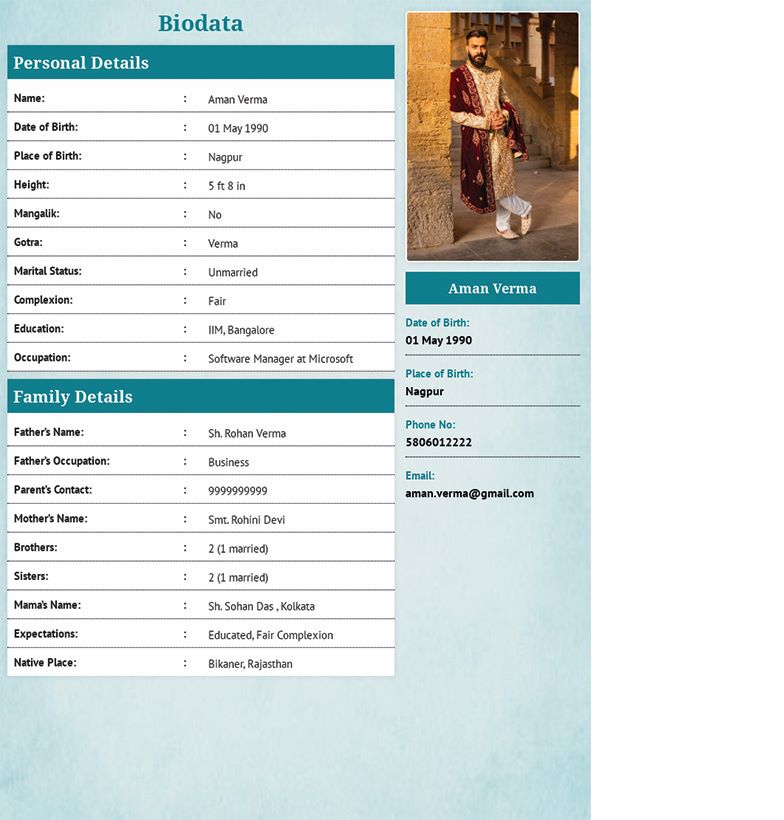
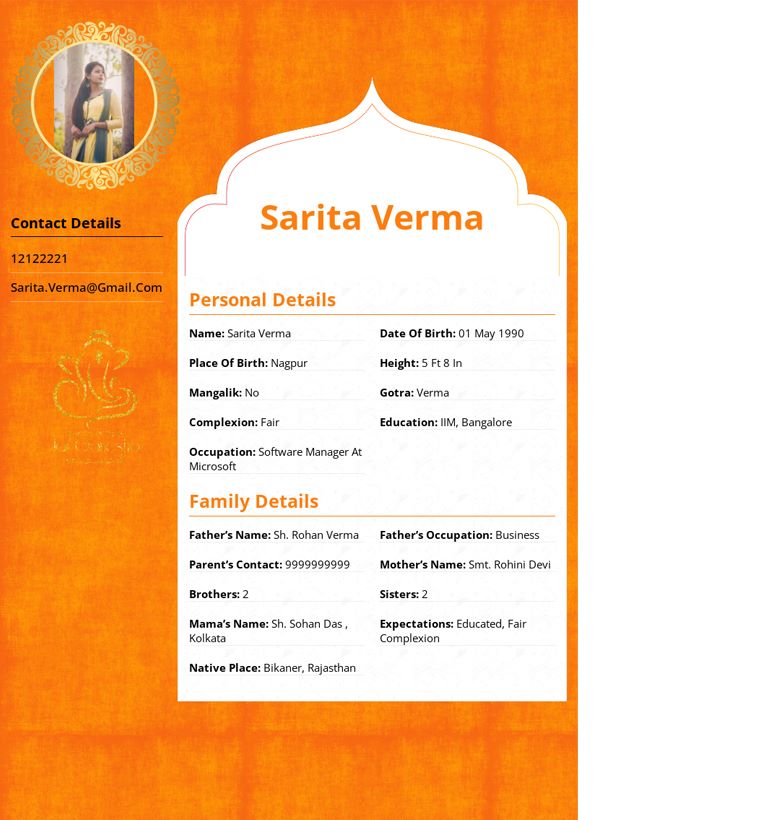
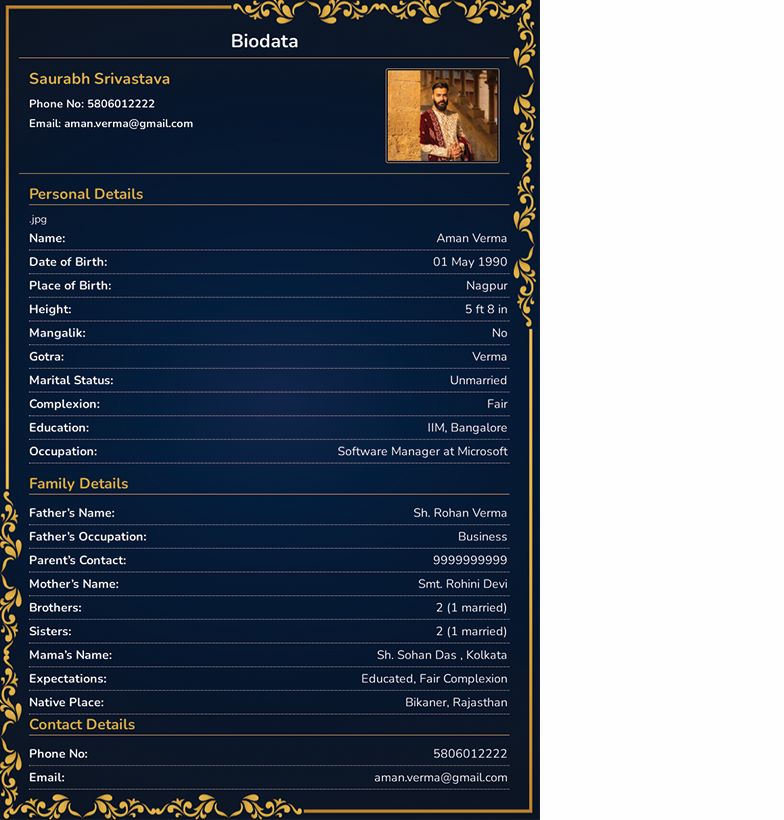
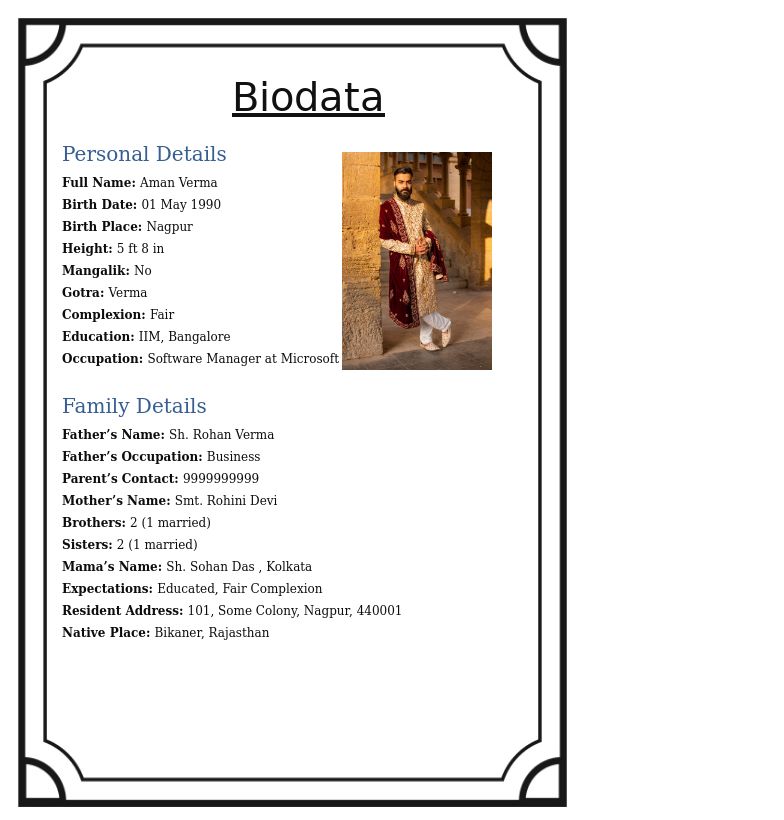
Sample Bhandari Biodata for Marriage
Name: Sneha Bhandari
Date of Birth: 07 July 1996
Age: 29 years
Height: 5'5"
Current Residence: Mumbai, Maharashtra
Native Place: Ratnagiri, Maharashtra
Community: Bhandari
Mother Tongue: Marathi
Education: B.Sc., MBA in Operations
Profession: Operations Lead with a logistics company in Mumbai

Family Details:
Father: Mr. Mahesh Bhandari, retired bank employee
Mother: Mrs. Vaishali Bhandari, homemaker
Sibling: One elder brother, married and settled in Pune
Family Type: Warm, educated family with moderate and respectful values

About Me:
I am responsible, composed, and affectionate toward family relationships. I value honesty,
simple communication, and a balanced lifestyle. I enjoy music, coastal travel, trying new recipes,
and staying active through walking and yoga.

Partner Preference:
Seeking a well-educated, caring, and mature partner from a good family background.
Preference for someone who values mutual respect, family bonding, and a supportive marriage.
How to Write Partner Preferences Carefully
An expectations section should guide, not dominate. Most families want a partner who is educated, stable, respectful, and family-oriented. That can be said in straightforward words. If preferences around city, profession, food habits, or relocation exist, they should be mentioned briefly. There is no need to turn the biodata into a screening document filled with conditions.
The tone should remain open. The biodata is usually the start of a conversation, not the final decision. Respectful flexibility makes the profile more approachable and often leads to better discussions.
Mistakes That Reduce Credibility
The biggest mistake is using recycled language that could apply to anyone. Another mistake is focusing so much on degrees and job titles that the person’s actual character disappears. Marriage compatibility depends on values, emotional balance, and willingness to build a shared life. A biodata that ignores these dimensions feels incomplete.
It is also better to avoid unnecessary social boasting. A profile should be confident but not performative. Families usually trust simple, well-arranged information more than grand claims. Clean formatting, meaningful paragraphs, and real details always work better.
Conclusion
A strong Bhandari biodata sample for marriage combines family context, personal identity, and practical expectations in one readable profile. It helps families see the individual clearly and encourages more informed conversations. That makes it useful not only in matrimonial sharing but also as SEO-friendly content for readers looking for realistic examples.
When written with care, the biodata respects both tradition and modern partnership. It introduces the person as someone rooted, capable, and ready for marriage in a mature sense. That is the standard a good Bhandari marriage biodata should aim to meet.
The best result comes from being specific, honest, and balanced. If those qualities are present, the biodata will do its job well.