Baniya Biodata Sample for Marriage
A Baniya biodata sample for marriage should present a person and family with straightforward honesty. In many Baniya households, matrimonial discussions often involve a practical assessment of values, upbringing, financial responsibility, family compatibility, and future plans. A biodata should support that process, not complicate it. When written well, it becomes a simple but effective introduction that helps families move from basic information to serious conversation.
The Baniya community includes a wide range of regional traditions, business backgrounds, professions, and urban lifestyles. For that reason, a good biodata should avoid assumptions. Some families are deeply involved in long-standing family businesses. Others are fully professional, corporate, academic, or entrepreneurial. The profile should reflect the actual circumstances of the individual rather than relying on standard phrases that could fit anyone.
What Families Usually Look For First
Parents and elders often begin with the essentials: age, height, education, occupation, city, and family details. They may also want to know whether the family is joint or nuclear, whether the person is willing to relocate, and whether the match should share similar values around family involvement. A strong Baniya marriage biodata gives these details clearly in the opening sections.
At the same time, younger readers often focus on the person’s lifestyle, communication style, and approach to partnership. That is why the biodata should include a meaningful personal introduction. A short, honest profile can show whether the person is responsible, grounded, adaptable, independent, and respectful. Those qualities matter more in long-term compatibility than decorative language.
Writing About Professional and Financial Stability
In many Baniya families, financial discipline and work ethic are respected. That does not mean the biodata should become a balance sheet. If the individual works in finance, commerce, law, technology, medicine, government, retail, or business, mention that clearly. If the person contributes to a family enterprise, say what their role is and how engaged they are in operations. This gives a realistic view without sounding boastful.
Stability should be implied through clarity rather than self-promotion. A sentence about steady career growth, active business responsibility, or professional goals is more useful than a list of vague claims. Families generally respond better to credible information than to inflated status descriptions.
How to Describe Family Background
Family details should be concise but thoughtful. Include the parents’ occupations, siblings, base city, and general household atmosphere. Many Baniya matrimonial discussions place importance on how family members interact, whether the environment is supportive, and how decisions are taken. A short line such as culturally rooted, educated, and moderate family may be enough when it reflects the truth.
If the family has a long association with business or community activities, that can be mentioned briefly. But the biodata should stay centered on marriage suitability, not social display. The purpose is to help another family understand the person’s background, not to overwhelm them.
Personal Qualities That Add Depth
The most effective Baniya biodata sample for marriage includes a human voice. Mention how the person lives, thinks, and spends time outside work. Do they enjoy devotional practices, fitness, books, food exploration, travel, music, or spending weekends with relatives? Are they calm, disciplined, cheerful, and practical? Specific details create trust because they sound lived-in rather than copied.
This section is also a good place to show balance between modern life and family grounding. A person may be professionally ambitious while still valuing family connections and shared traditions. A biodata that expresses both sides usually performs better because it feels realistic to today’s matrimonial audience.
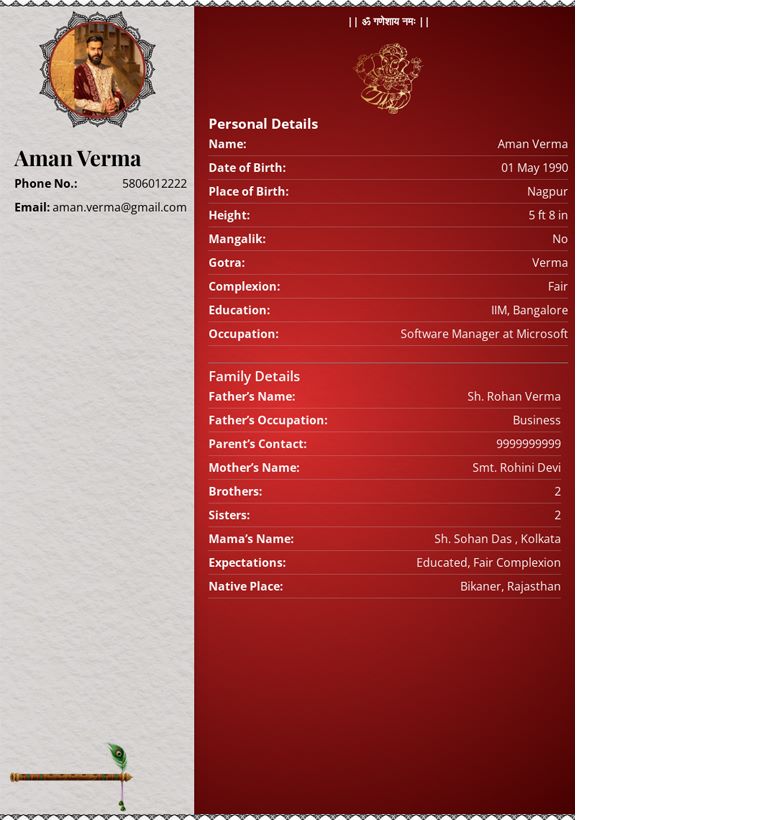
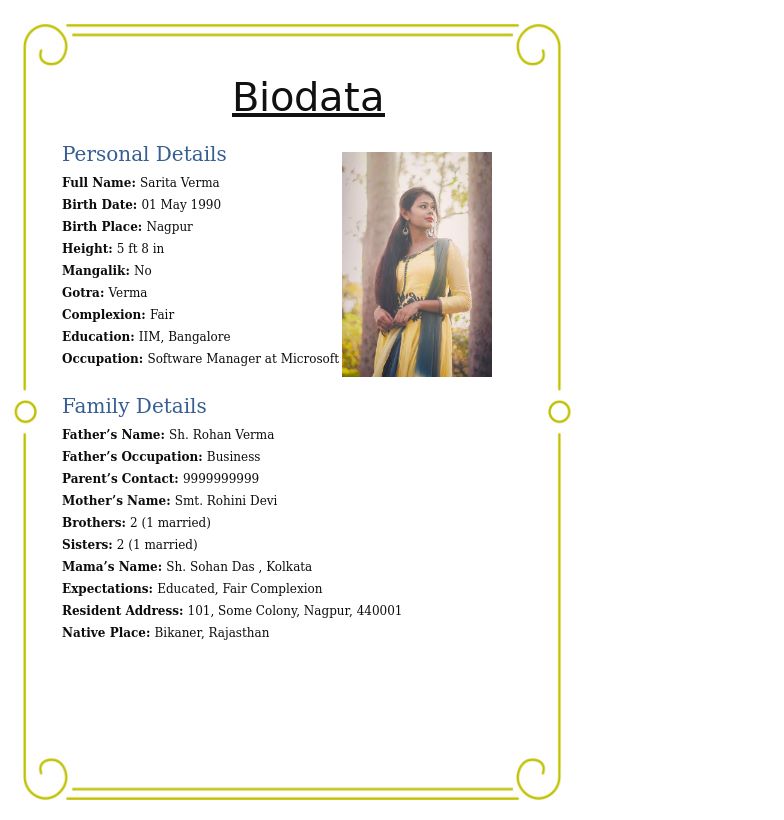
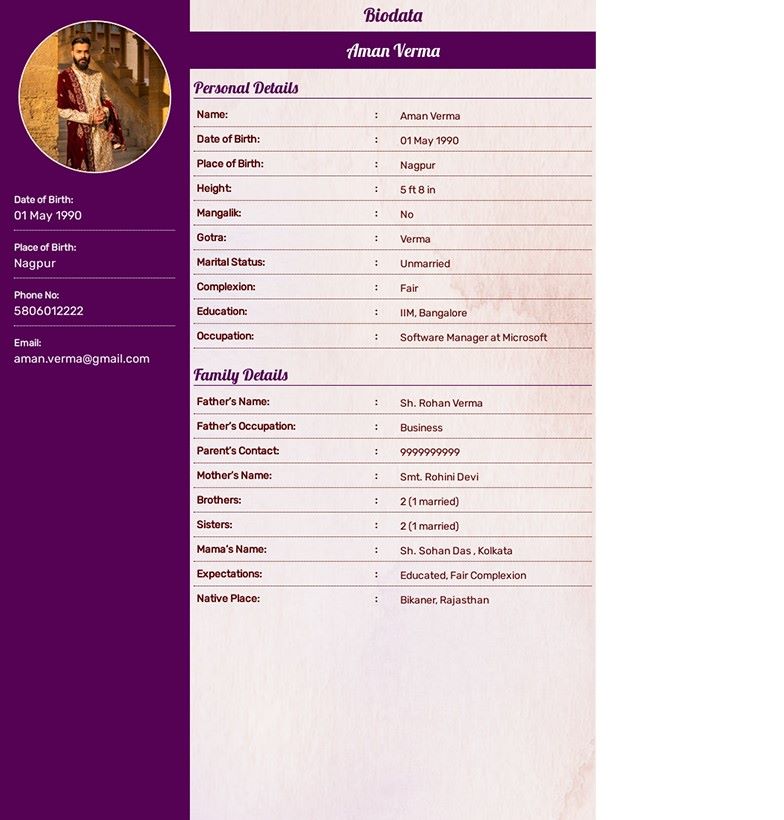
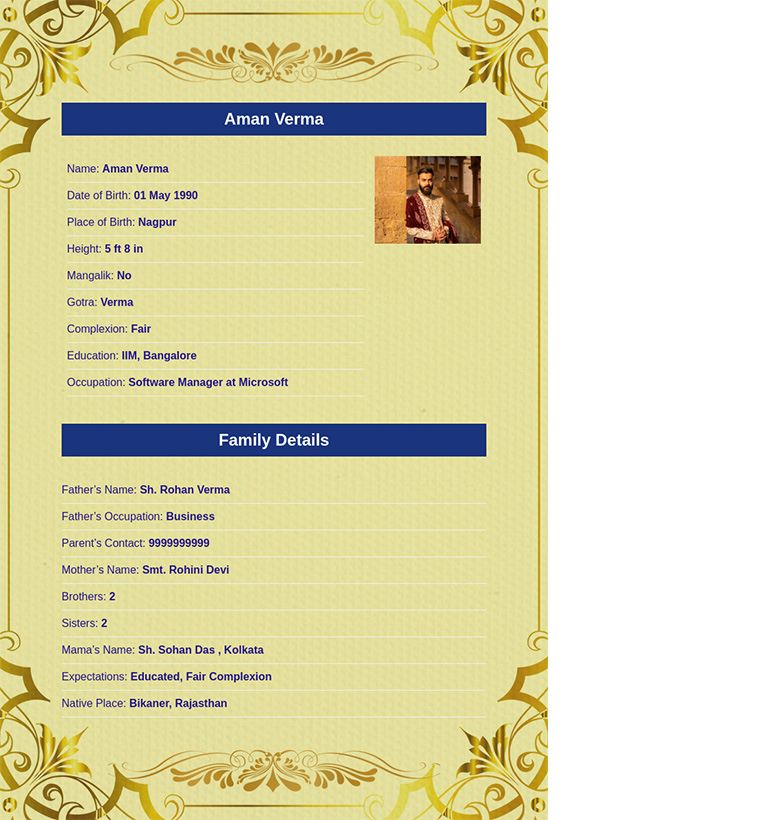
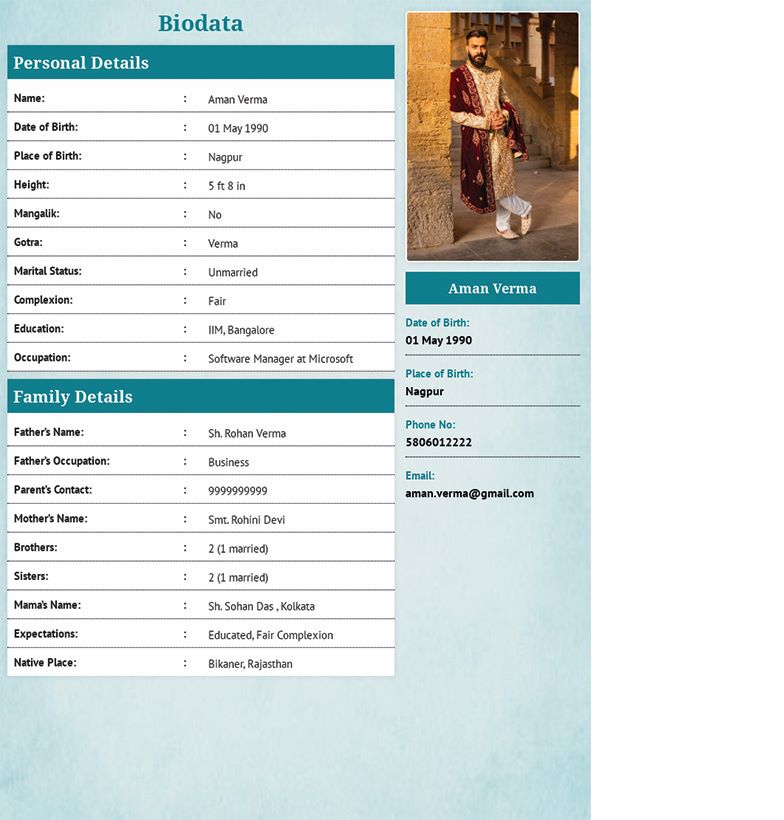
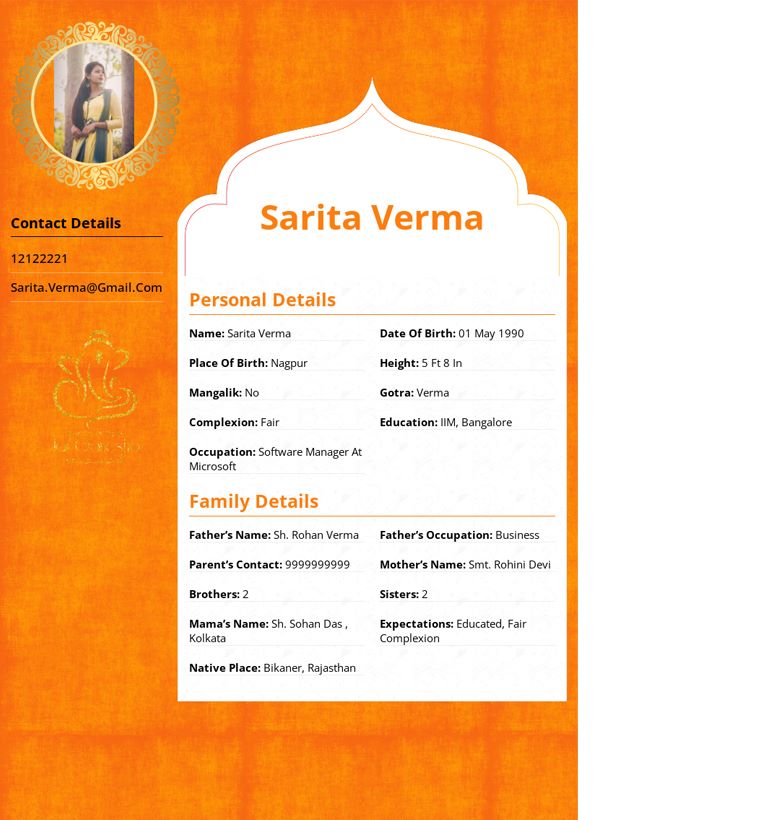
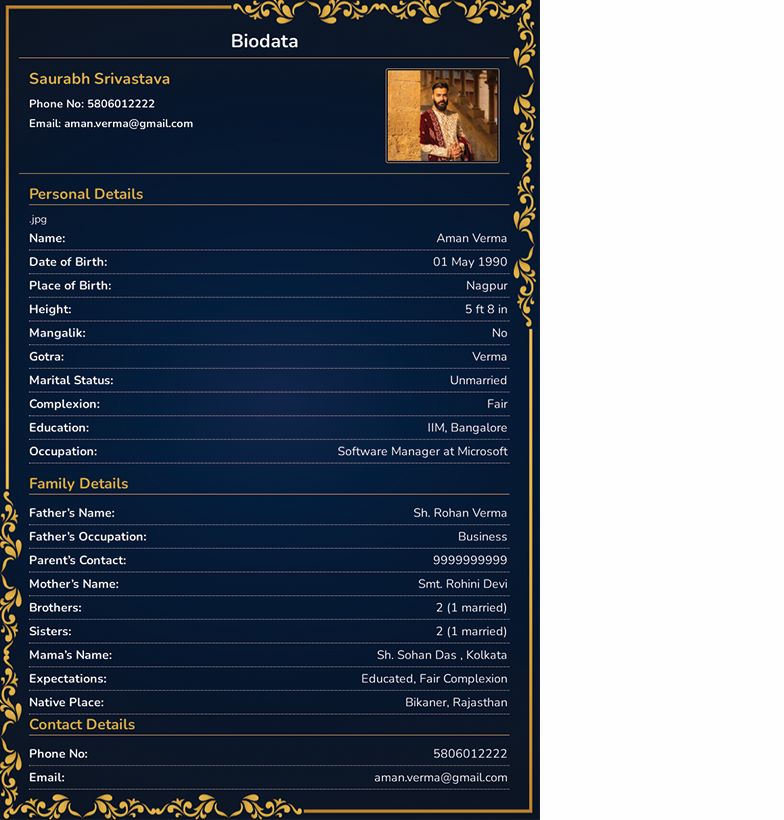
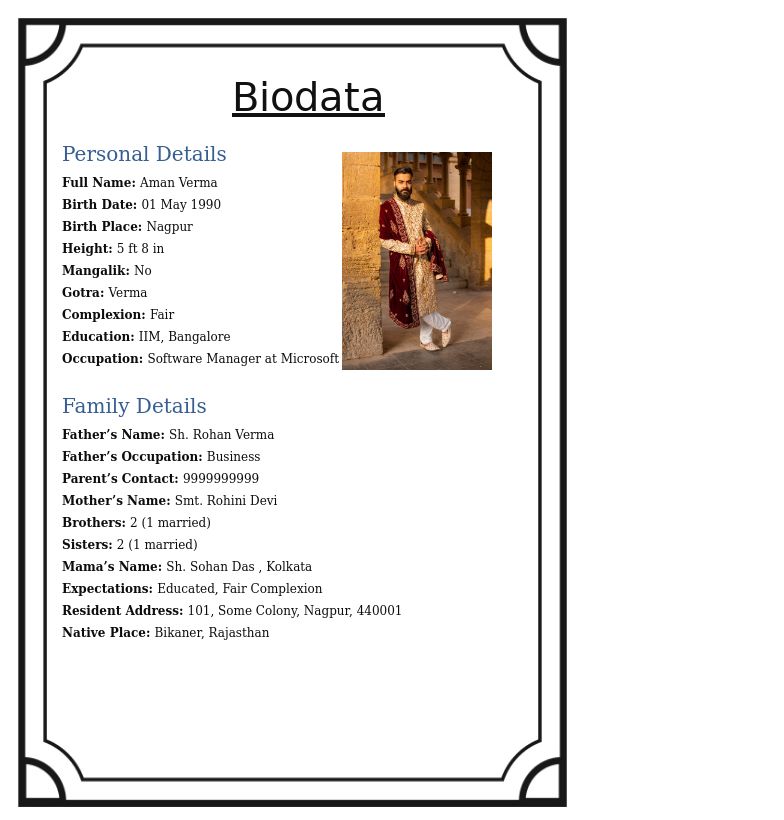
Sample Baniya Biodata for Marriage
Name: Priyanshu Baniya
Date of Birth: 02 December 1994
Age: 31 years
Height: 5'9"
Current Residence: Indore, Madhya Pradesh
Native Place: Kanpur, Uttar Pradesh
Community: Baniya
Mother Tongue: Hindi
Education: BBA, PGDM in Marketing
Profession: Works with family wholesale distribution business

Family Details:
Father: Mr. Dinesh Baniya, businessman
Mother: Mrs. Kavita Baniya, homemaker
Sibling: One younger sister, pursuing postgraduate studies
Family Type: Respectable, close-knit family with balanced traditional and modern values

About Me:
I am practical, easygoing, and sincere in relationships. I believe in shared effort,
clear communication, and respect for both families. I enjoy reading, business podcasts,
temple visits with family, and occasional travel.

Partner Preference:
Looking for an educated, understanding, and family-oriented partner who values honesty,
compatibility, and mutual support. Open to a working or professionally inclined partner.
How to State Expectations Sensibly
The partner preference section should be sincere and measured. Many families want similar cultural values, educational compatibility, and emotional maturity. Some may also look for flexibility around city, work, or family arrangement. These preferences can be stated politely in two or three sentences without sounding rigid.
For instance, the biodata may say that the family is seeking a warm, educated, and understanding partner who values respect, communication, and family harmony. If the individual prefers someone open to living in a business family environment or comfortable with relocation, that should be mentioned directly and respectfully.
Why Original Wording Matters
Families notice when a biodata feels copied. Repeated phrases like simple, homely, caring, and cultured do not tell the reader enough. Original wording does not mean dramatic writing. It means describing the real person with ordinary but specific language. That builds credibility and makes the profile more memorable.
This matters even more if the content is being published online. Search-friendly matrimonial content should still feel natural to a human reader. The article should answer practical questions and provide useful examples. A biodata sample works best when it is both readable and rooted in actual matchmaking needs.
Conclusion
A well-prepared Baniya biodata sample for marriage helps families focus on compatibility instead of guesswork. It combines clear personal details, balanced family information, realistic professional context, and thoughtful expectations from marriage. That is what makes the document useful in real introductions.
The most effective profile is neither too brief nor too elaborate. It gives enough information to start a serious conversation while preserving dignity and openness. For Baniya matrimonial use, that balance is often the difference between a biodata that is ignored and one that genuinely helps move a match forward.
If the writing remains truthful, calm, and structured, the biodata becomes a strong first step toward a more informed and respectful marriage discussion.