Baishya Biodata Sample for Marriage
A Baishya biodata sample for marriage should introduce the individual in a way that is practical, respectful, and rooted in real life. The Baishya identity appears across different regions and social contexts, so a useful biodata should not assume a single lifestyle or family pattern. Instead, it should focus on what truly helps in matrimonial discussions: personal background, education, occupation, family setting, values, and the kind of marriage the person is hoping to build.
Many families want a biodata that feels easy to read for elders but still relevant for modern bride and groom conversations. That balance matters. A profile written only for elders may become too brief and factual. A profile written only for the younger generation may overlook family background and practical expectations. The best Baishya biodata bridges both by staying clear, grounded, and warm.
The Role of Community Context
In matrimonial settings, community information can help families understand social background, native roots, and cultural habits. At the same time, it should never dominate the profile. A Baishya biodata should not turn into a social label sheet. It should use community identity as one part of the picture, alongside education, personality, career, and family culture. That creates a healthier and more realistic first impression.
Where appropriate, the biodata may mention language, region, dietary preference, or traditional family customs. These details are useful only when they affect compatibility or family communication. If they are added, they should be written in a calm and factual tone. The emphasis should remain on the person and the family environment rather than on broad assumptions.
Essential Information for a Baishya Marriage Biodata
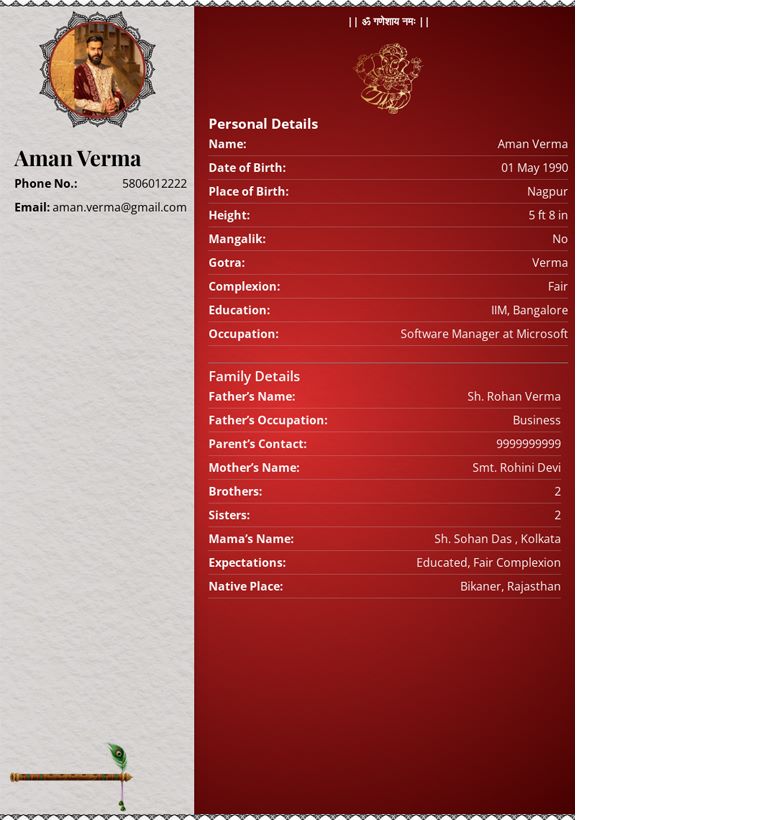
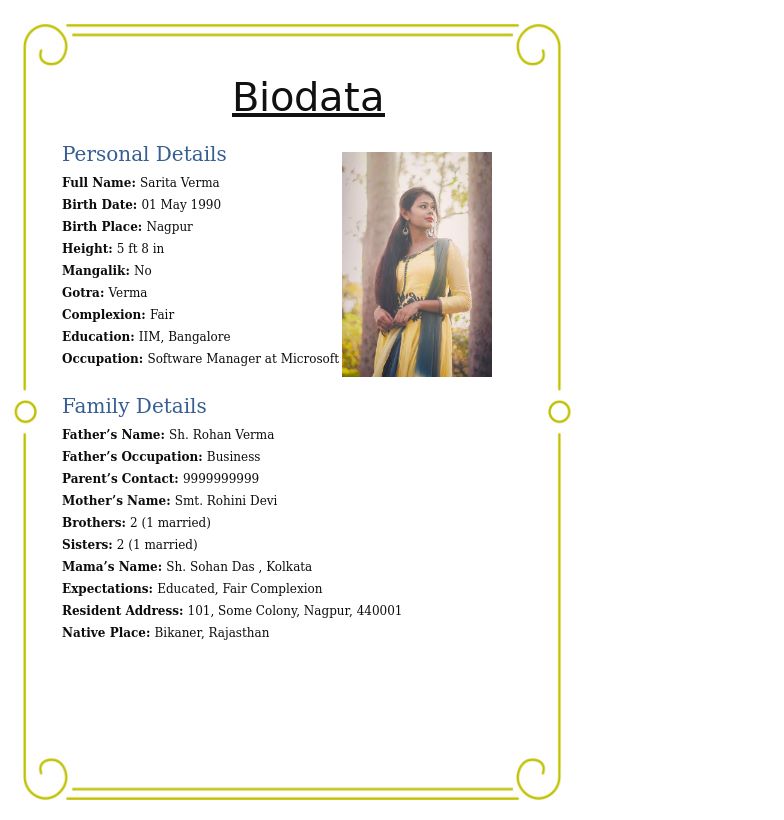
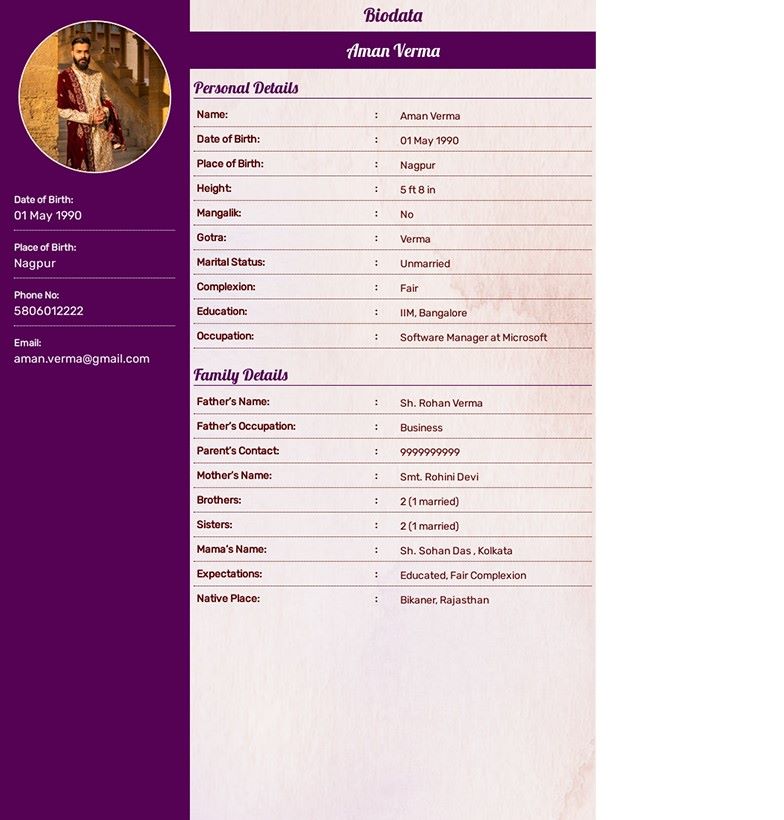
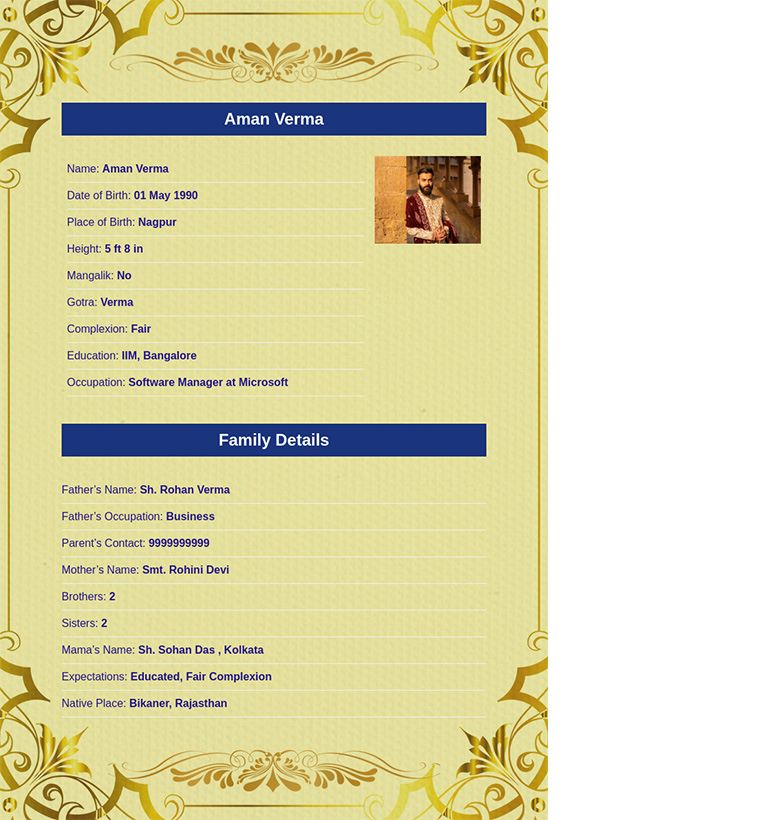
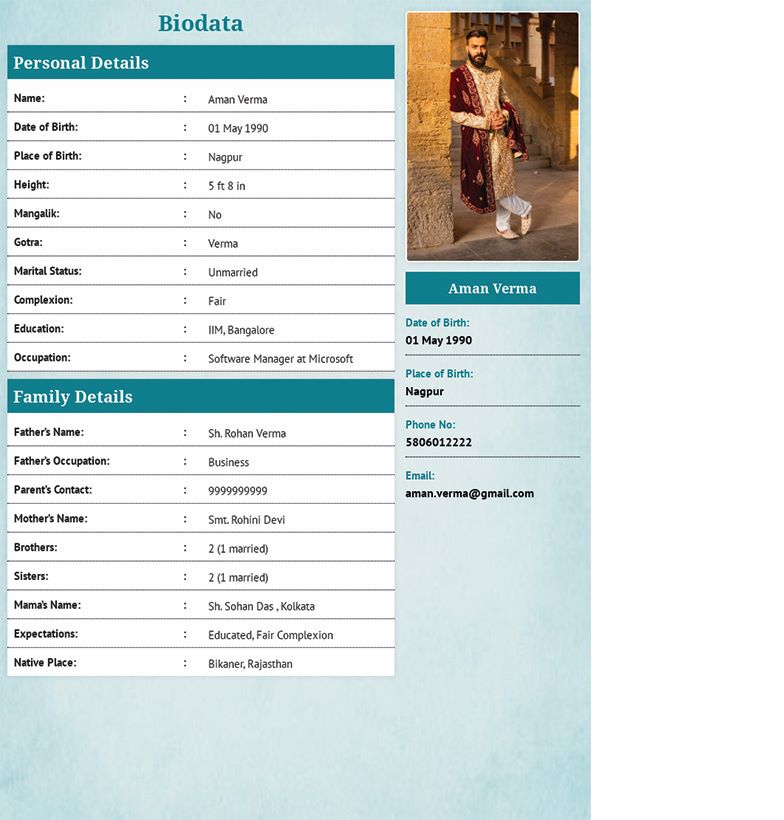
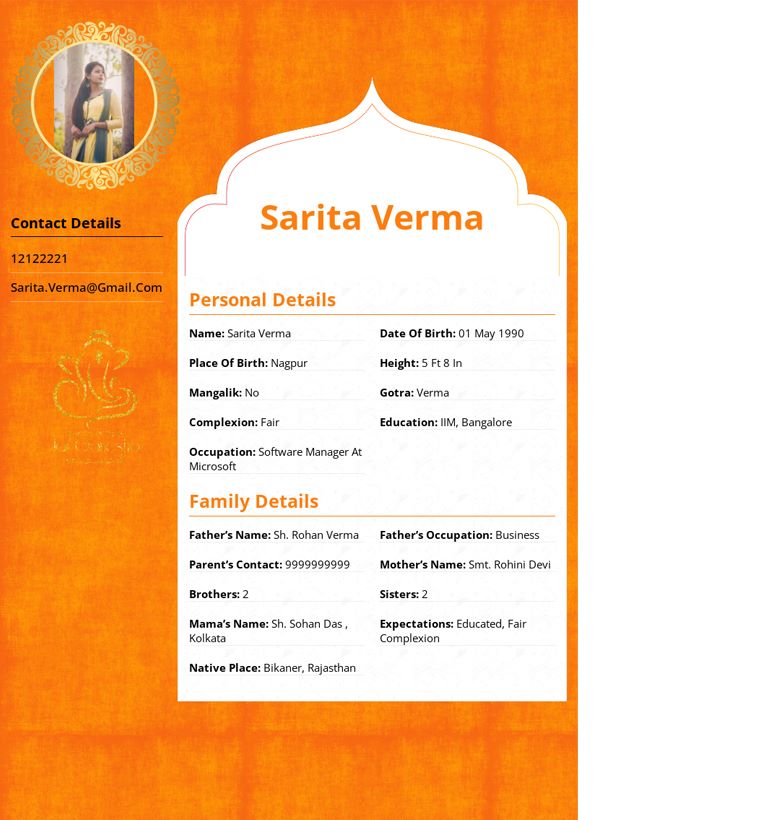
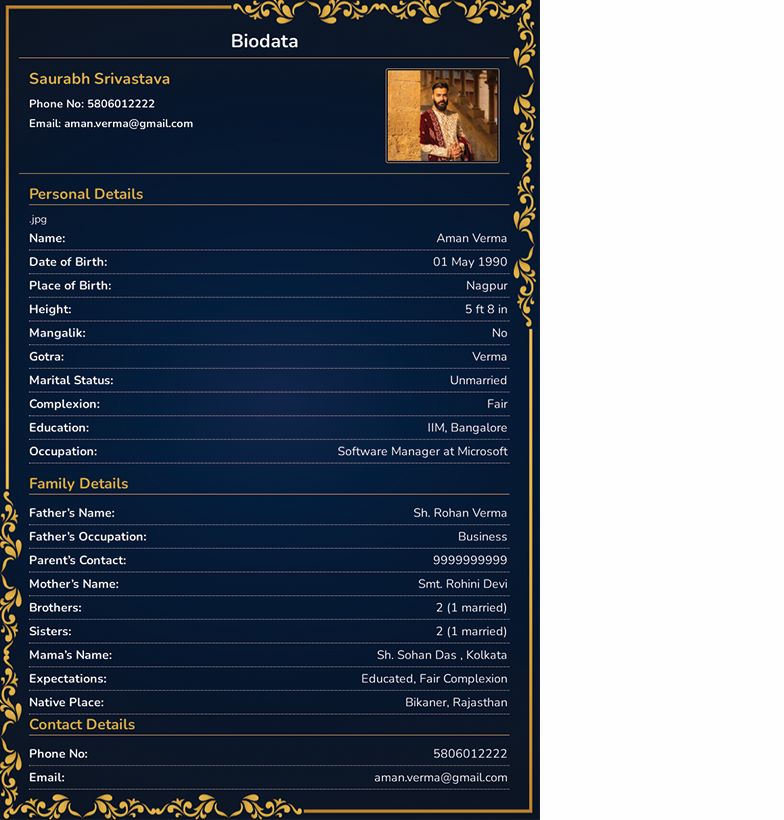
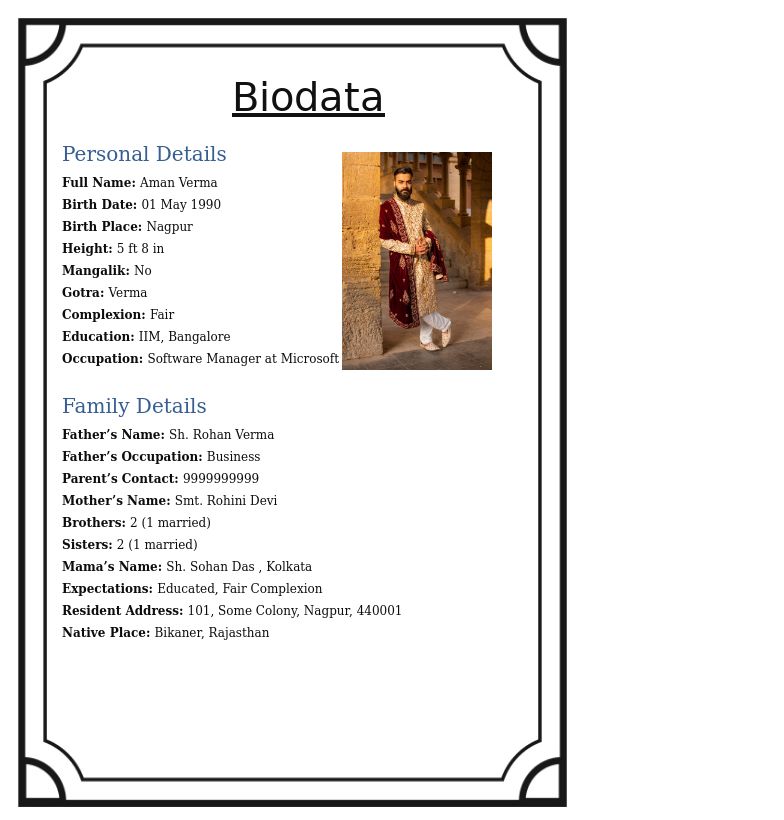
The profile should begin with the standard basics: full name, age, date of birth, height, present residence, native place, mother tongue, and educational qualification. After that, profession and family details should follow. Families typically want to know whether the person works in a private or public role, runs a business, is pursuing higher studies, or is settled abroad. These details are especially helpful when families are trying to understand future mobility and long-term planning.
Family information should include the parents, siblings, occupation background, and general household nature. The wording should remain natural. Instead of grand descriptions, a simple line such as educated, close-knit family with balanced values often says enough. That gives structure to the profile without making it sound inflated.
Building a Personal Profile That Feels Genuine
Many matrimonial biodatas become forgettable because they rely on generic language. A more effective approach is to describe the person with a small number of concrete traits. Is the person soft-spoken, ambitious, socially aware, organized, warm, or independent? Do they enjoy reading, travel, cooking, devotional activities, classical music, trekking, or spending time with relatives? Details like these make the biodata easier to relate to.
For a Baishya biodata sample for marriage, it is often helpful to describe how the person balances ambition with family responsibility. Whether the individual prefers a joint family environment, a nuclear setup, or is comfortable with both, such clarity can be useful. So can openness about relocation, work-life balance, and expectations around decision-making after marriage.
How to Write About Career and Future Plans
Career details should be informative but not promotional. If the person is employed, mention the role, employer type, and city. If the person is self-employed or part of a family business, describe the nature of work accurately. Some Baishya families value enterprise, discipline, and financial responsibility, but that does not require boastful wording. Factual career presentation is more credible and more useful for compatibility.
It can also help to mention future plans in one or two lines. For example, if the person intends to continue working after marriage, pursue advanced study, grow a business, or remain open to relocation, this gives the prospective match a more realistic sense of shared planning. Marriage decisions become easier when day-to-day expectations are visible early.
Sample Baishya Biodata for Marriage
Name: Sohini Baishya
Date of Birth: 24 April 1996
Age: 29 years
Height: 5'3"
Current Residence: Guwahati, Assam
Native Place: Nagaon, Assam
Community: Baishya
Mother Tongue: Assamese
Education: M.Com, Diploma in Banking and Finance
Profession: Assistant Manager at a private bank

Family Details:
Father: Mr. Pradip Baishya, retired public sector employee
Mother: Mrs. Minati Baishya, homemaker
Sibling: One elder brother working in Bengaluru
Family Type: Respectful, educated family with moderate values

About Me:
I am sincere, organized, and family-oriented. I value mutual respect, emotional maturity,
and a peaceful home environment. My interests include reading, Assamese music, cooking,
short travel, and staying connected with family traditions in a balanced way.

Partner Preference:
Seeking an educated, kind, and responsible life partner who values family relationships,
clear communication, and a supportive approach to marriage. Location is flexible for the right match.
Partner Preferences That Sound Practical
The expectations section should help families understand the match being sought, but it should not become a long checklist. A biodata may say that the family is looking for an educated, respectful, and stable partner from a good family background who believes in mutual trust and shared responsibility. That gives direction without sounding rigid.
If certain practical matters matter, such as willingness to relocate, comfort with a working spouse, or a preference for similar cultural grounding, those can be mentioned briefly. The key is that the biodata should remain open enough to allow meaningful discussions. Excessively narrow filters often reduce the quality of conversations rather than improving them.
Common Writing Errors to Avoid
One problem with many community-based matrimonial profiles is that they copy the same wording from one file to another. That weakens trust immediately. Another issue is that some biodatas place too much weight on external markers while ignoring personality, communication style, and emotional maturity. Marriage is not only a meeting of family backgrounds; it is also a daily partnership between two individuals.
Avoid too many abbreviations, exaggerated claims, or lines that sound mechanical. If the profile is being used for SEO-supported content on a matrimonial site, readability matters even more. Each paragraph should add value. Each section should answer a real question families might have.
Conclusion
A well-written Baishya biodata sample for marriage is clear, respectful, and specific enough to start serious conversations. It gives equal importance to personal character, family environment, professional background, and future expectations. That balance helps both elders and the prospective match understand the profile with confidence.
When the writing is honest and practical, the biodata becomes more than a formal document. It becomes a thoughtful introduction that reduces confusion and encourages better dialogue. For Baishya matrimonial profiles, that kind of clarity is what makes the biodata genuinely useful in real matchmaking settings.
The strongest profile is not the one that sounds most polished. It is the one that sounds real, well-structured, and considerate. That is the standard a Baishya marriage biodata should aim for.