Parsi Marriage Biodata Format: A Complete Guide
Marriage in the Parsi community is a sacred and joyous occasion, celebrated with elegance, tradition, and deep cultural significance. Parsi weddings are unique, blending Zoroastrian rituals with modern customs. The Parsi marriage biodata format is designed to highlight these values, helping individuals and families find compatible partners who share similar beliefs and aspirations. This guide provides a detailed overview of the Parsi marriage biodata format, its essential components, and tips for creating a meaningful profile.
Understanding Parsi Marriage
Parsi marriages are based on the teachings of Zoroastrianism, emphasizing the importance of truth, purity, and harmony. The wedding ceremony, known as "Lagan," is performed in the presence of a priest, with rituals that include prayers, blessings, and the exchange of vows. The couple pledges to support each other in their spiritual and worldly journeys, upholding Parsi values throughout their lives.
Why a Parsi Marriage Biodata Matters
- Introduces the Individual: Provides a snapshot of the person’s background, personality, and aspirations.
- Highlights Parsi Values: Showcases commitment to Zoroastrian principles, religious practices, and community involvement.
- Facilitates Compatibility: Helps families assess compatibility based on spiritual, cultural, and personal factors.
- Builds Trust: Fosters transparency and openness in the matchmaking process.
Essential Components of a Parsi Marriage Biodata
- Personal Information
- Name
- Date of Birth and Age
- Gender
- Photograph
- Contact Details
- Family Details
- Father’s Name and Occupation
- Mother’s Name and Occupation
- Siblings (with brief details)
- Family’s Religious and Cultural Background
- Location and Community
- Educational Qualifications
- Academic Degrees
- Institutions Attended
- Achievements and Awards
- Professional Background
- Current Occupation
- Work Experience
- Career Aspirations
- Physical Features
- Height
- Weight
- Complexion
- Health and Lifestyle
- Spiritual and Religious Practices
- Participation in Parsi Rituals
- Involvement in Community Events
- Commitment to Zoroastrian Values
- Personal Interests and Hobbies
- Hobbies
- Social Activities
- Volunteer Work
- Travel and Adventure
- Partner Preferences
- Desired Qualities
- Spiritual Compatibility
- Family Values
- Location Preferences
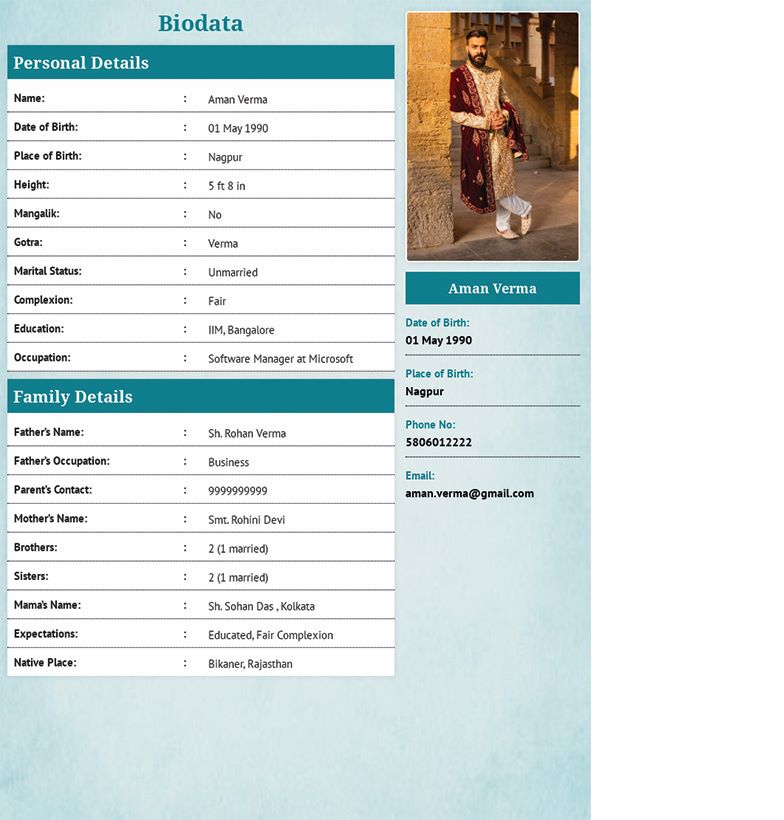
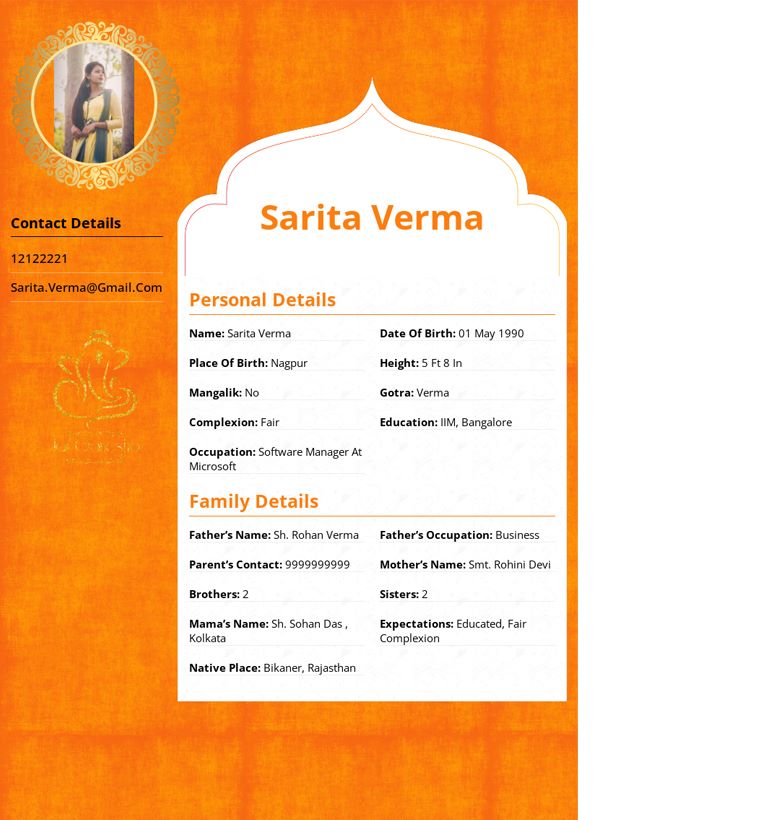
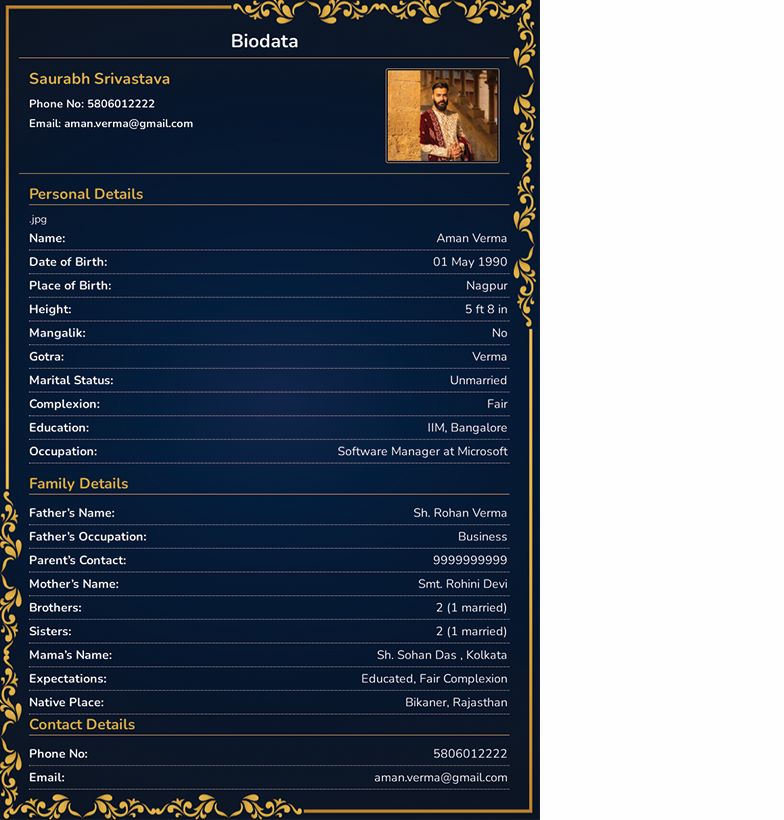
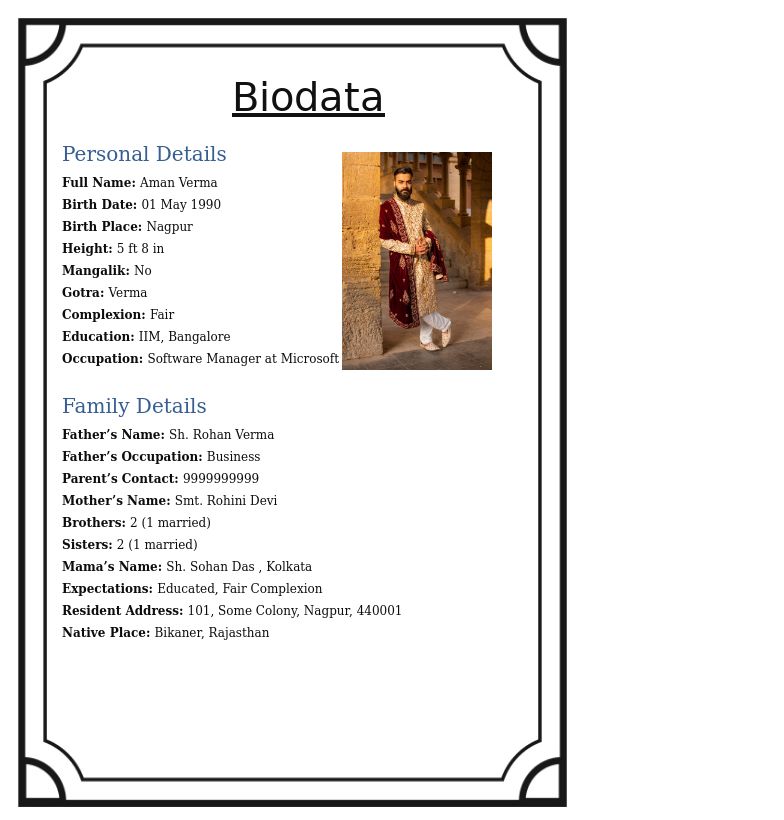
Sample Parsi Marriage Biodata Format
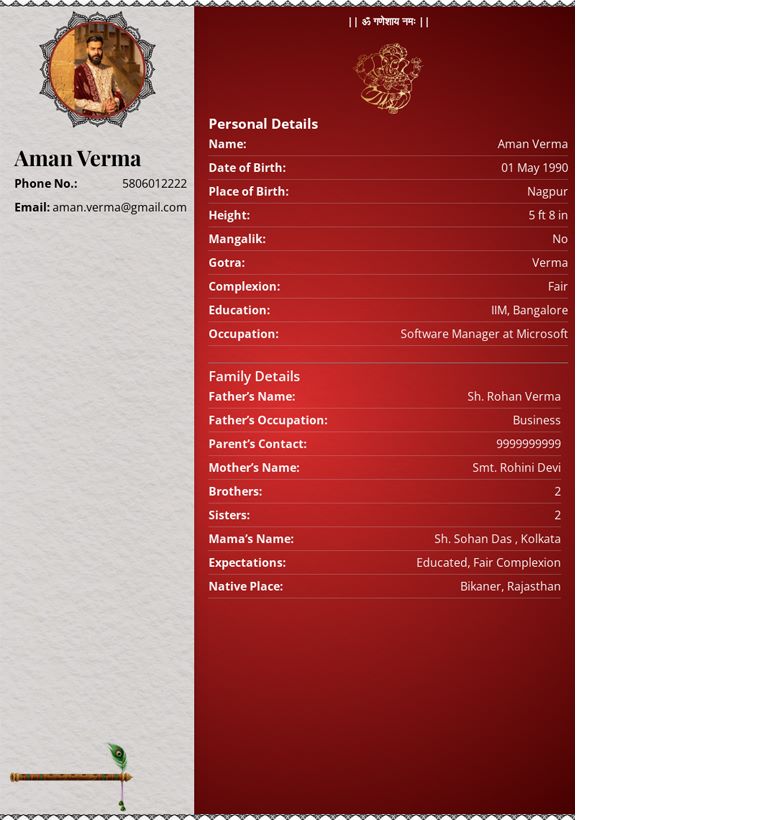
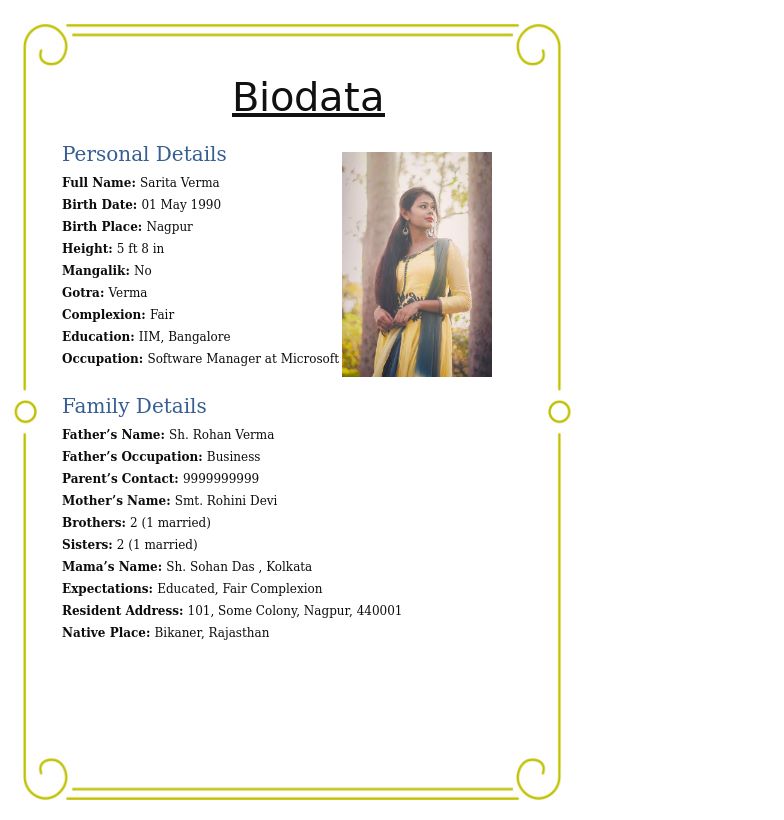
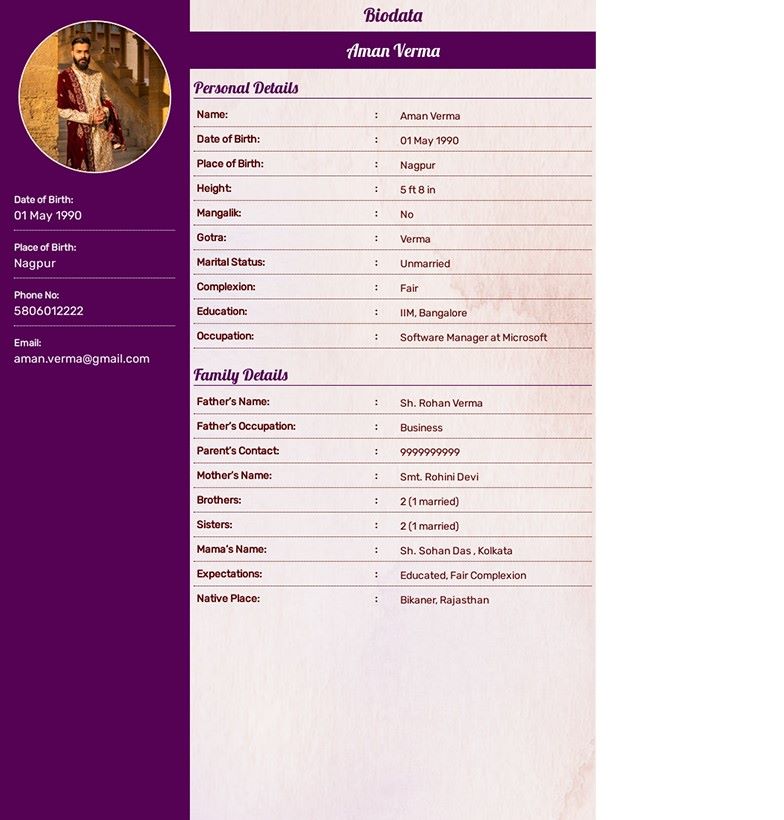
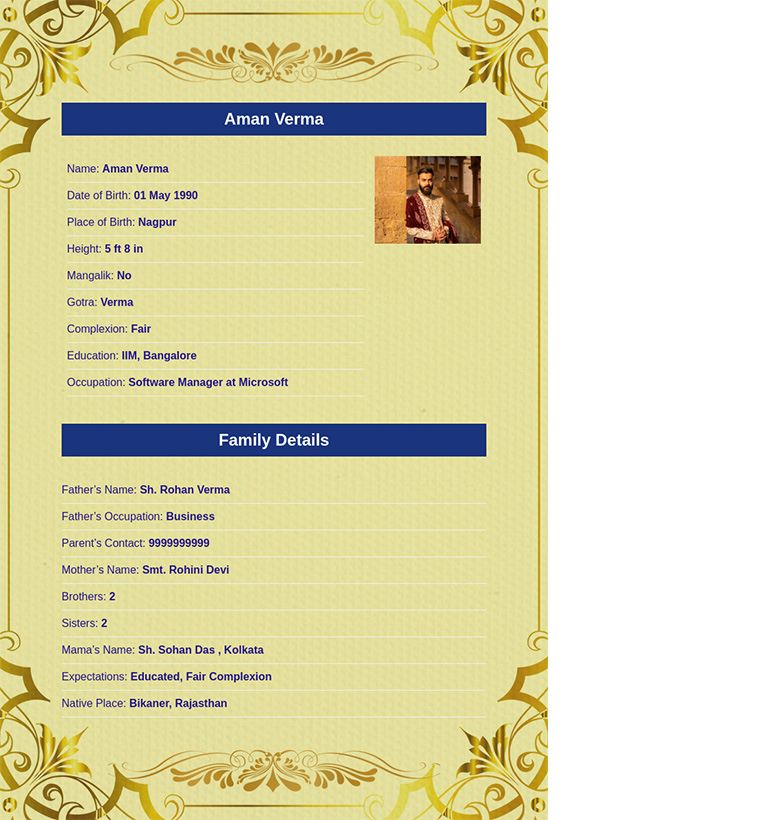
Name: [Full Name]
Date of Birth: [DD/MM/YYYY]
Age: [Age]
Gender: [Male/Female/Other]
Photograph: [Attach Recent Photo]
Contact Details: [Phone, Email, Address]

Family Details:
Father’s Name: [Name], Occupation: [Job]
Mother’s Name: [Name], Occupation: [Job]
Siblings: [Details]
Family’s Religious Background: [Brief Description]
Location: [City, State, Country]

Educational Qualifications:
Degree: [Degree], Institution: [Name], Year: [Year]
Achievements: [Awards, Honors]

Professional Background:
Occupation: [Job Title]
Work Experience: [Years, Companies]
Career Aspirations: [Goals]

Physical Features:
Height: [Feet/Inches]
Weight: [Kg]
Complexion: [Fair/Wheatish/Dark]
Health: [General Health, Lifestyle]

Spiritual and Religious Practices:
Participation in Parsi Rituals: [Details]
Community Events: [Frequency, Type]
Commitment to Zoroastrian Values: [Description]

Personal Interests and Hobbies:
Hobbies: [Music, Art, Sports, etc.]
Social Activities: [Clubs, Groups]
Volunteer Work: [NGOs, Charities]
Travel: [Favorite Destinations]

Partner Preferences:
Desired Qualities: [Kind, Compassionate, etc.]
Spiritual Compatibility: [Practices, Beliefs]
Family Values: [Traditional/Modern]
Location Preferences: [City, State, Country]
Tips for Creating an Effective Parsi Marriage Biodata
- Be Honest and Transparent: Authenticity is valued in Zoroastrian teachings. Be truthful about your background, beliefs, and aspirations.
- Highlight Religious Practices: Mention your involvement in Parsi rituals, community events, and Zoroastrian festivals.
- Showcase Compassion and Purity: Share examples of how you practice these values in daily life.
- Include Family and Community Values: Parsi marriages emphasize family and community. Highlight your commitment to these values.
- Use Clear and Concise Language: Avoid jargon and keep your biodata easy to read.
- Attach a Recent Photograph: A clear, recent photo helps build trust and transparency.
- Specify Partner Preferences: Clearly state what you are looking for in a partner, including spiritual compatibility and family values.
Parsi Wedding Rituals and Traditions
- Lagan: The main wedding ceremony, performed in the presence of a priest.
- Exchange of Vows: The couple pledges to uphold Zoroastrian values.
- Community Feast: The wedding meal is a celebration of unity and joy.
- Community Involvement: The ceremony often includes community prayers and support.
The Role of Truth and Purity in Parsi Marriage
- Truth and purity are central to Parsi marriage.
- Family support and guidance are highly valued.
- Community involvement strengthens bonds.
Challenges in Parsi Marriage and How to Overcome Them
- Differences in beliefs or lifestyle can be addressed through open communication and mutual respect.
- Seeking guidance from Zoroastrian teachings and community elders helps resolve conflicts.
- Commitment to spiritual and personal growth is essential.
Frequently Asked Questions about Parsi Marriage Biodata
- What makes a Parsi marriage biodata unique?
It emphasizes truth, purity, and community, reflecting Zoroastrian values. - How important is community involvement?
Active participation in community events and rituals is highly valued. - Can interfaith marriages be included?
Yes, but beliefs and expectations should be clearly stated. - What role does family play?
Family is central, providing support and guidance. - How can I make my biodata more appealing?
Highlight your commitment to Zoroastrian values, community service, and personal growth.
Conclusion: Creating a Meaningful Parsi Marriage Biodata
The Parsi marriage biodata format is a reflection of your journey, values, and aspirations. By thoughtfully presenting your background, religious practices, and partner preferences, you can attract compatible matches who share your vision for a harmonious and spiritually enriching marriage. Be authentic, compassionate, and open, and let your biodata serve as a bridge to a fulfilling partnership.