Ladakhi Marriage Biodata Format: A Complete Guide
Ladakhi matrimonial culture is shaped by family respect, regional identity, emotional maturity, and a practical view of partnership. A Ladakhi marriage biodata format should introduce the person in a calm and dignified way, covering both individual achievements and family background. It should feel sincere rather than copied.
Why This Biodata Is Important
Families often want a clear first summary before moving into deeper conversation. A biodata helps organize the essentials: age, education, profession, native roots, family structure, lifestyle, and expectations from marriage. This makes proposals easier to understand and compare.
Recommended Sections
- Basic profile: Name, age, birth details, height, and residence.
- Regional identity: Ladakhi background, native place, and language.
- Academic details: Degree, institution, and specialization.
- Work details: Profession, organization or business, and city.
- Family information: Parents, siblings, and values.
- Personal note: Nature, interests, and life goals.
- Partner expectations: Values, education, and location choice.
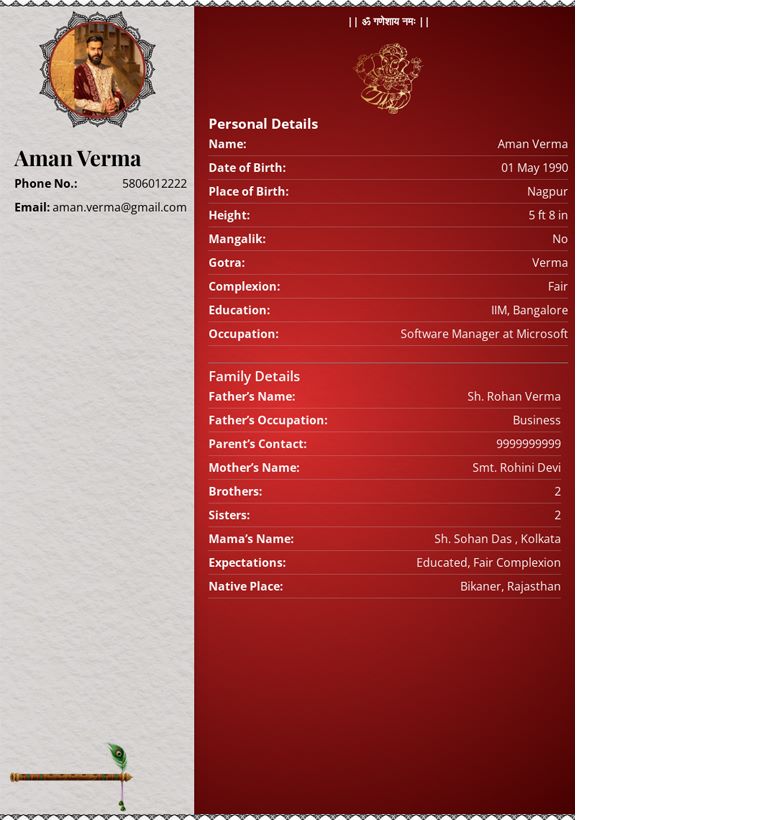
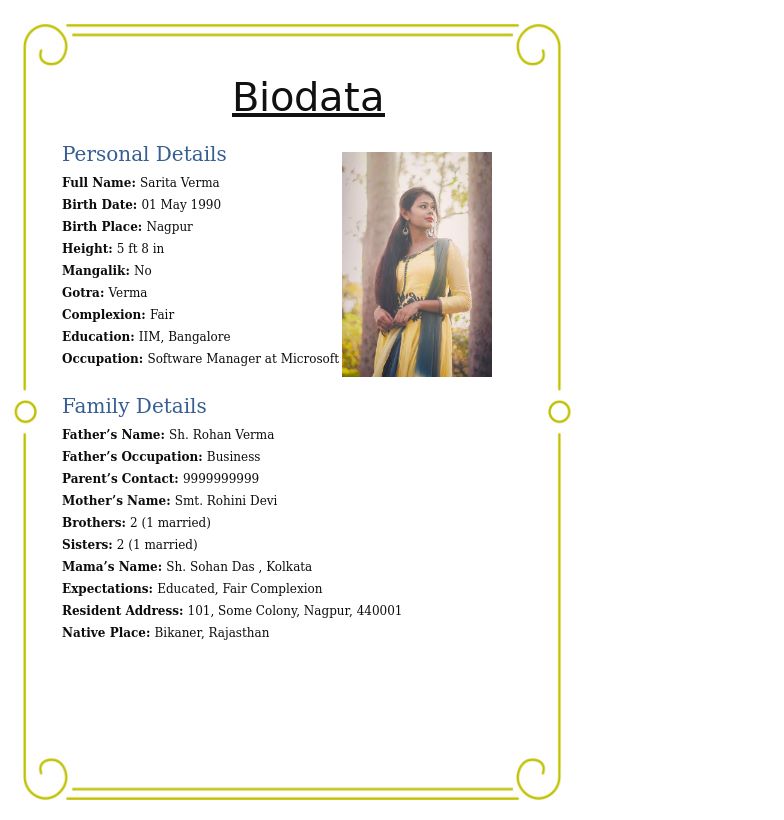
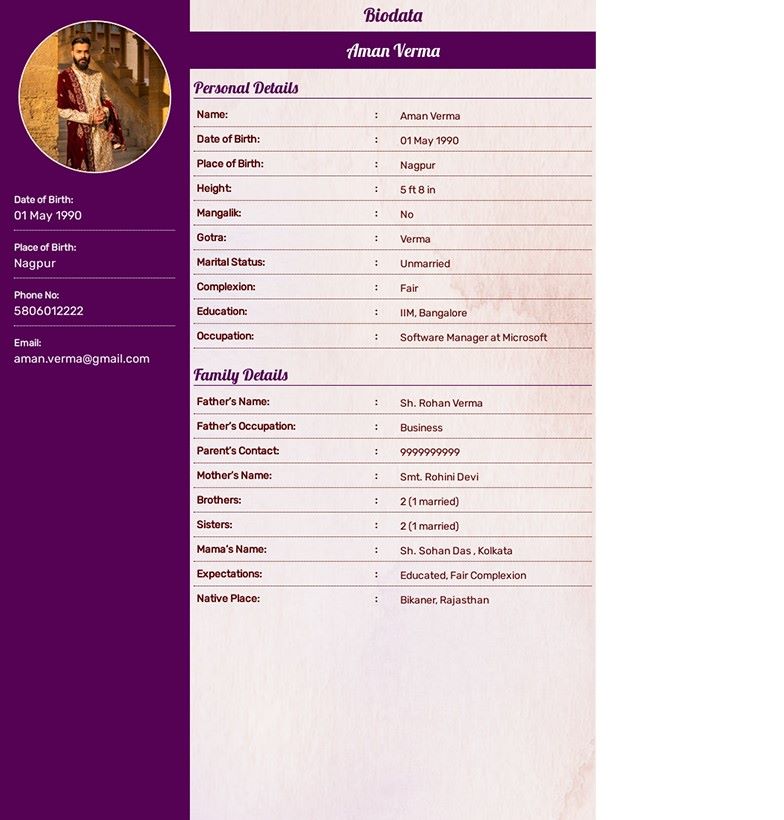
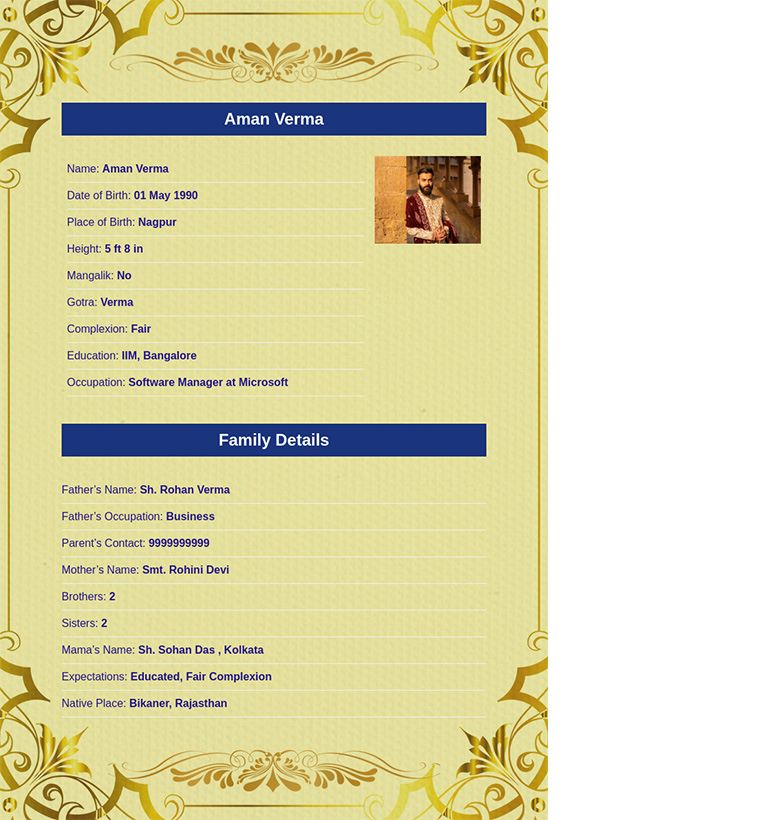
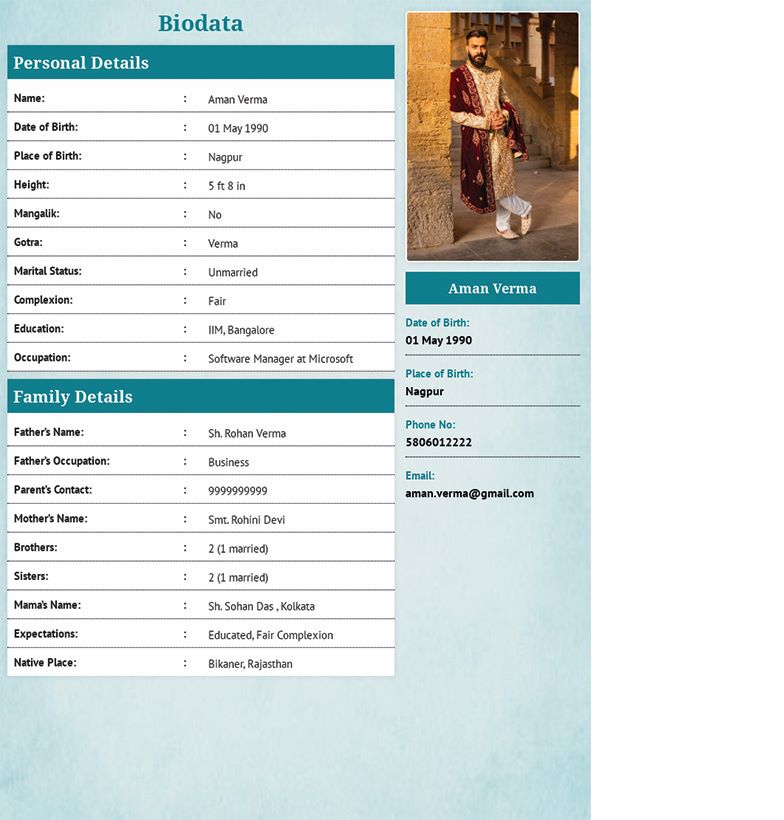
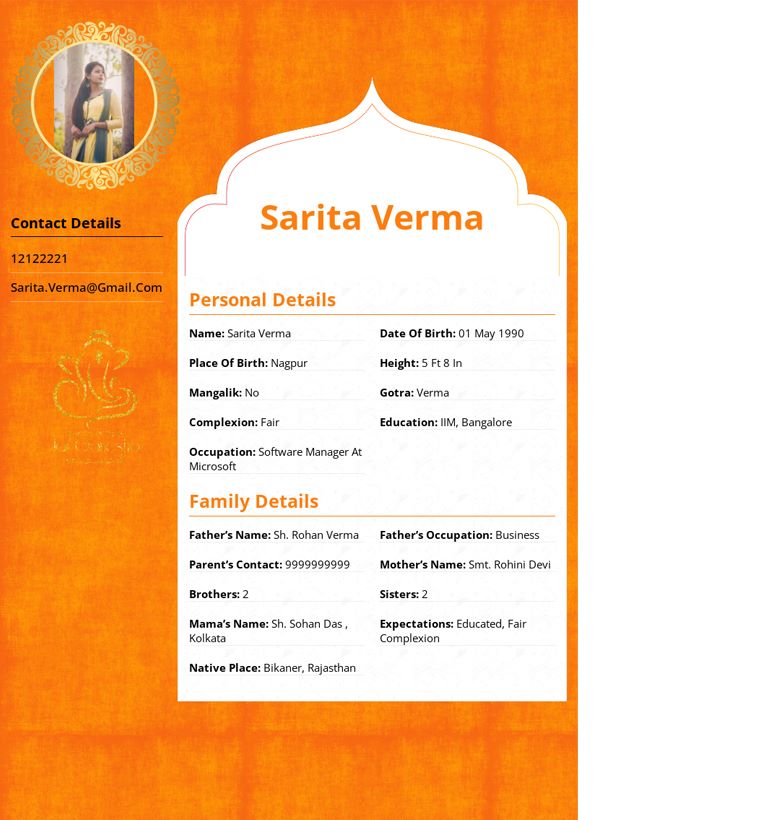
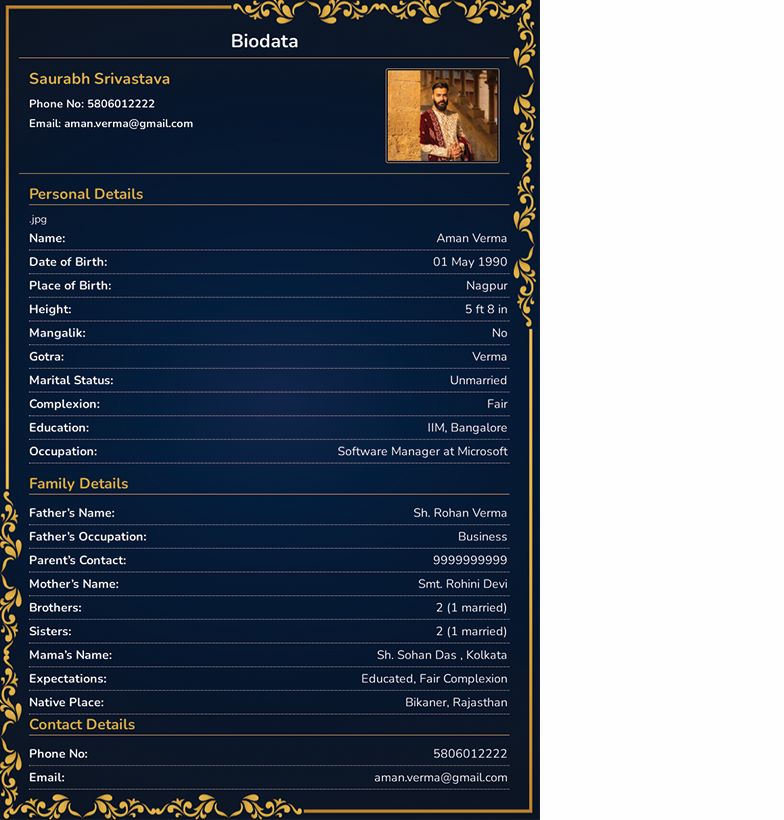
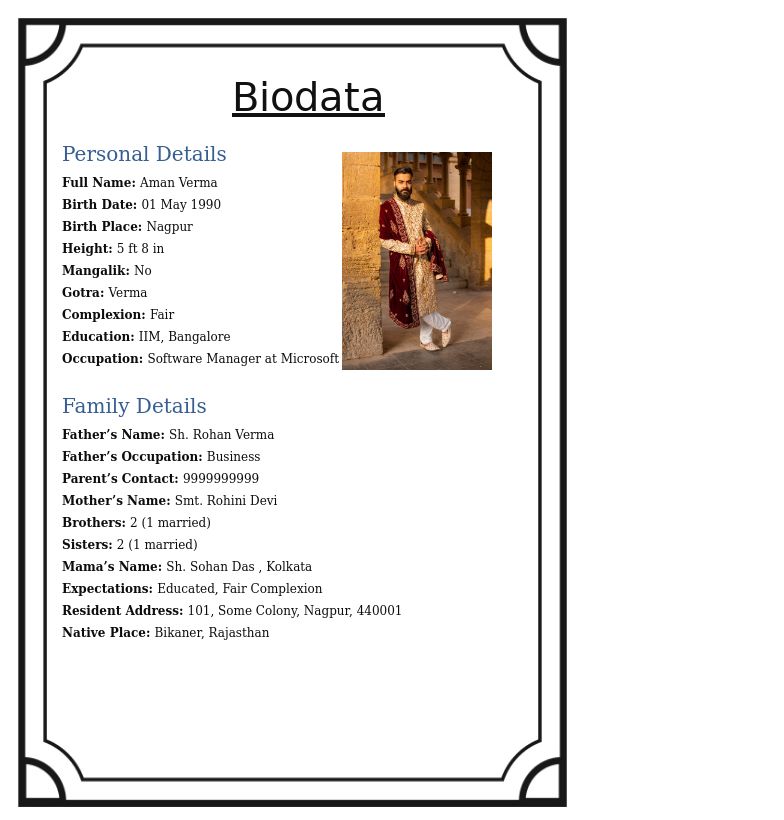
Sample Ladakhi Marriage Biodata Format
Name: [Full Name]
Date of Birth: [DD/MM/YYYY]
Age: [Age]
Height: [Feet/Inches]
Current Residence: [City/Town]
Language/Background: Ladakhi
Native Place: [Region]

Education:
Degree: [Degree]
Institution: [Name]

Profession:
Occupation: [Job/Business]
Location: [City]

Family Details:
Father: [Name, Occupation]
Mother: [Name, Occupation]
Siblings: [Details]
Family Values: [Traditional/Moderate/Modern]

Personal Profile:
Nature: [Balanced, thoughtful, practical, respectful]
Interests: [Travel, culture, reading, trekking, music]

Partner Preferences:
Education: [Preference]
Values: [Preference]
Location: [Open/Specific]
A well-written Ladakhi marriage biodata format gives families a respectful and realistic introduction. That is what makes it genuinely useful in matrimonial search.