Kurmi Marriage Biodata Format: A Complete Guide
The Kurmi community is known across several Indian states for its agrarian heritage, industrious mindset, social mobility, and strong family bonds. Today, Kurmi families are represented not only in agriculture but also in education, government, business, healthcare, technology, and urban professions. This evolving profile means that a Kurmi marriage biodata format should reflect both community roots and modern aspirations. It should be clear, respectful, and informative enough to support serious matrimonial decisions.
Why a Kurmi Marriage Biodata Is Useful
A biodata helps families understand the person beyond surface-level details. In Kurmi matchmaking, it is often used to evaluate education, profession, family background, values, and approach toward marriage. Families may also care about regional background, language, and cultural comfort. A good biodata reduces ambiguity and allows both sides to begin discussions with mutual clarity.
Main Sections to Include
- Personal details: Name, date of birth, age, height, and residence.
- Community background: Kurmi identity, native place, and language.
- Education: Degrees, institutions, and achievements.
- Profession: Occupation, employer or business, and future plans.
- Family profile: Parents, siblings, occupations, and values.
- Personal section: Nature, interests, lifestyle, and goals.
- Partner preferences: Education, values, profession, and location openness.
Marriage Culture in Kurmi Families
Kurmi weddings are usually festive, family-oriented, and rooted in regional Hindu traditions. Engagement customs, Haldi, Mehendi, pheras, family blessings, and community celebration are common. The importance of family participation remains high, which is why a biodata should communicate respect, maturity, and willingness to build a stable marriage rather than only emphasizing career or appearance.
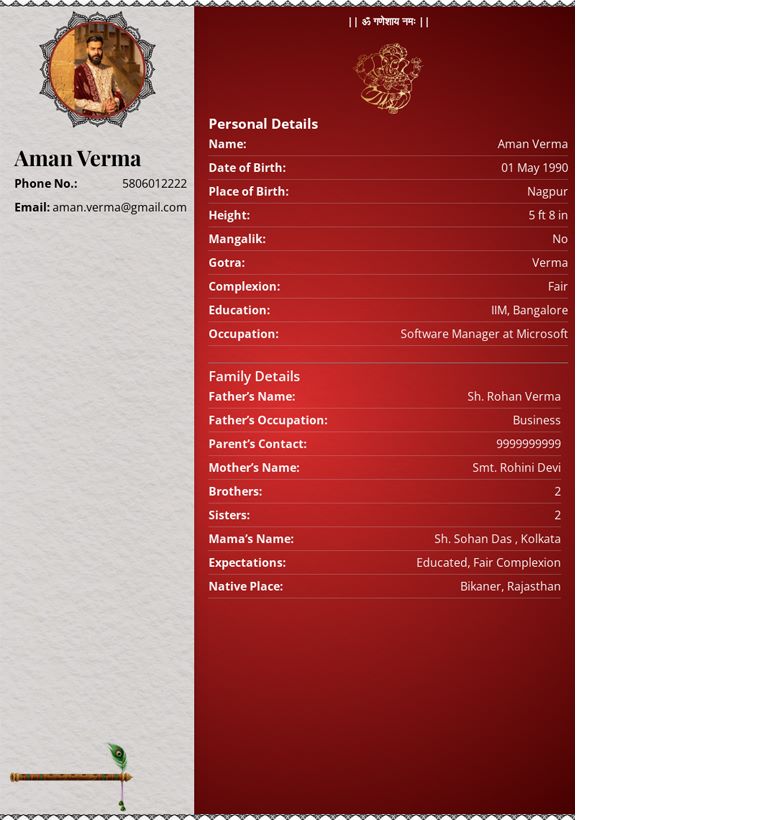
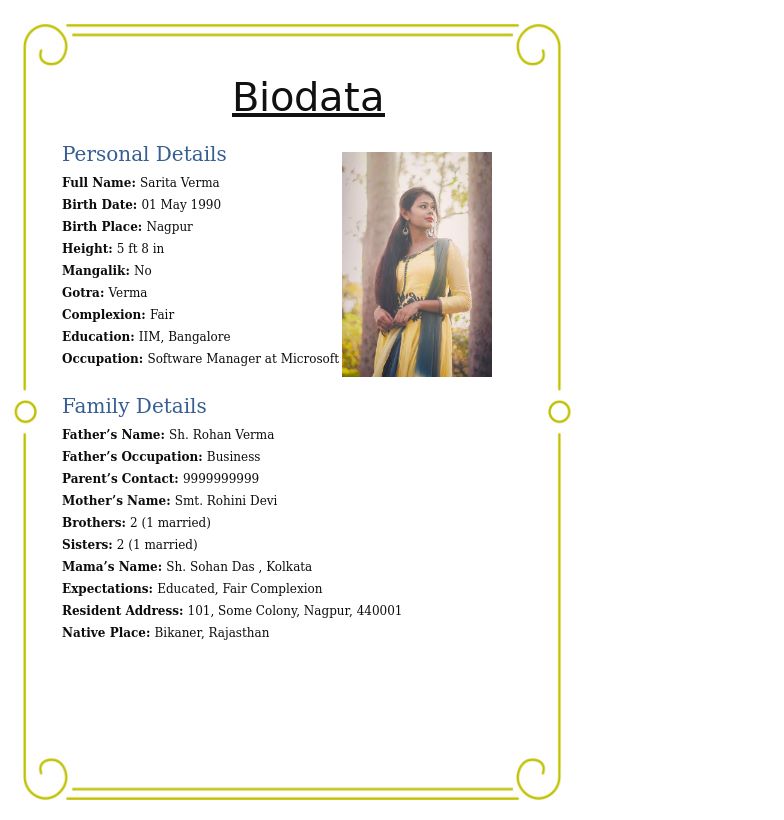
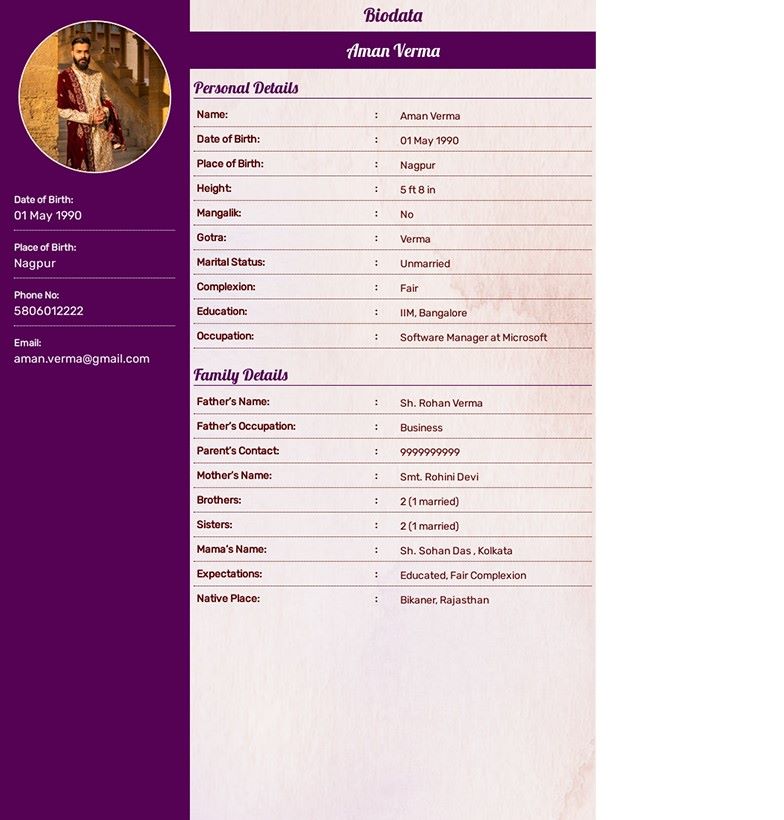
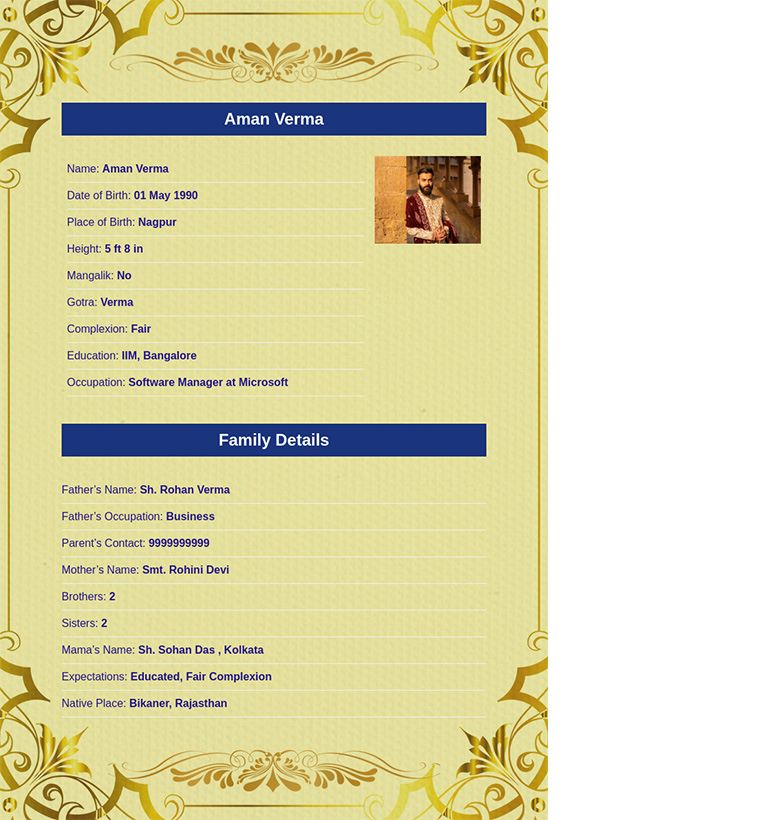
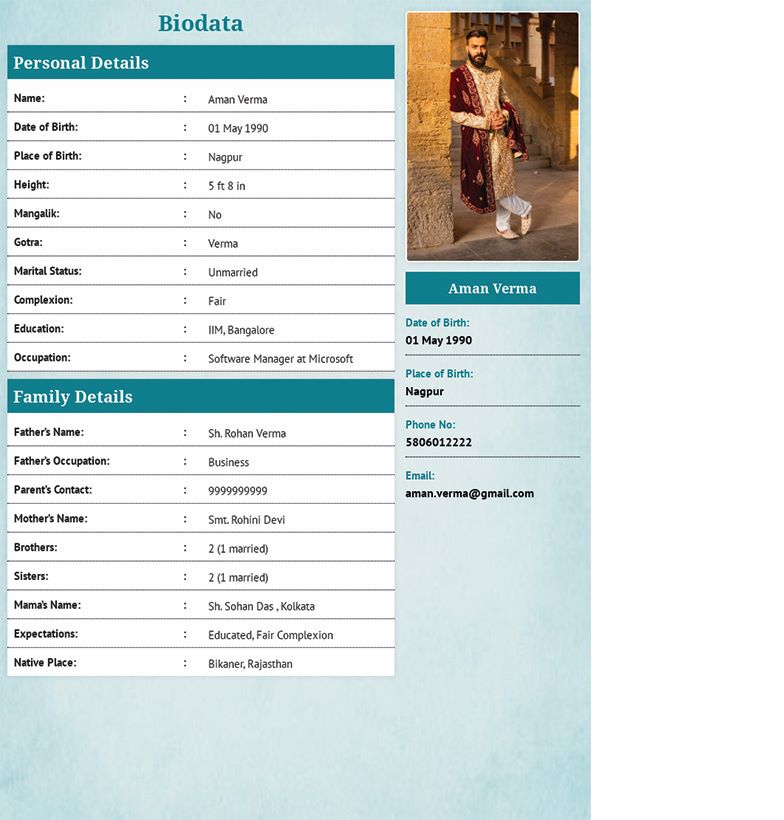
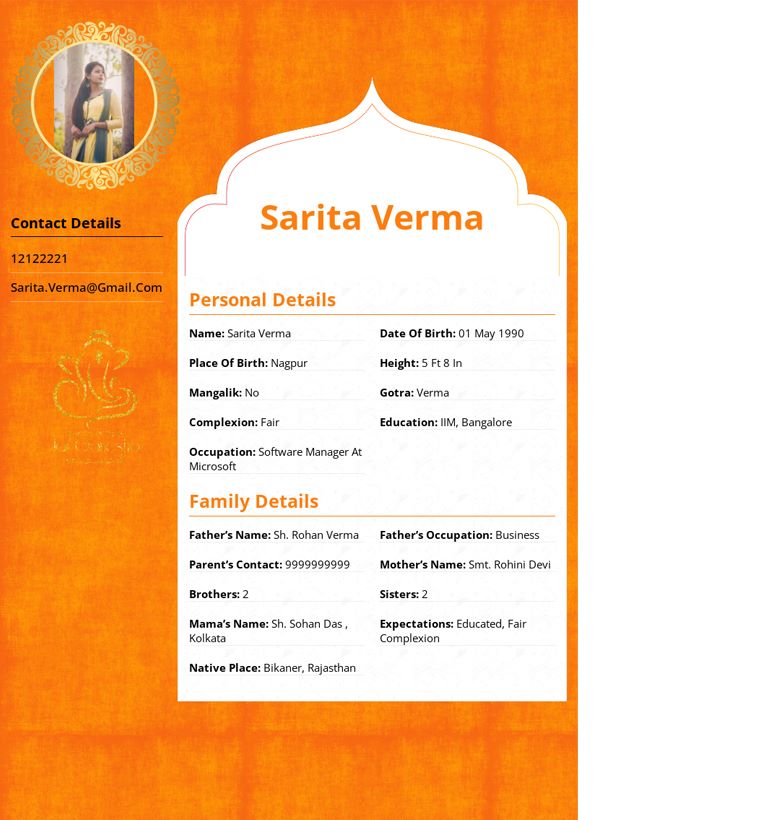
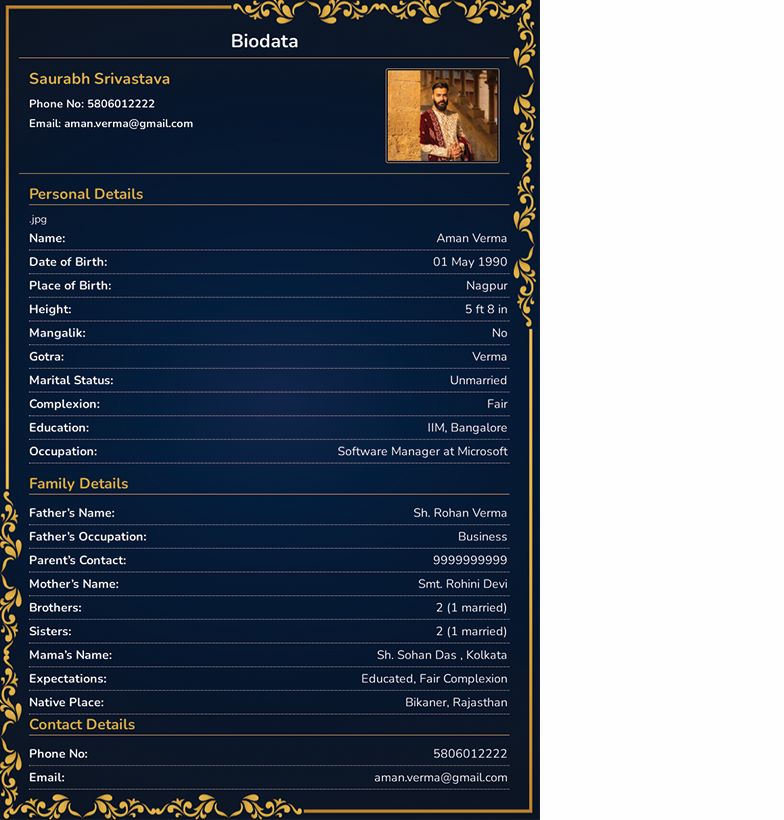
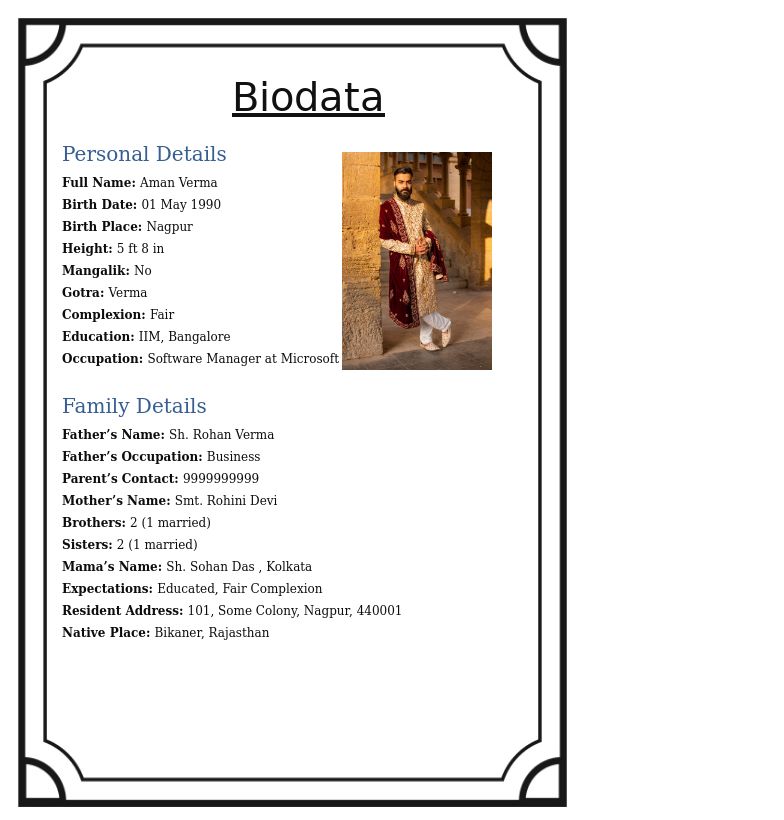
Sample Kurmi Marriage Biodata Format
Name: [Full Name]
Date of Birth: [DD/MM/YYYY]
Age: [Age]
Height: [Feet/Inches]
Current City: [City]
Community: Kurmi
Native Place: [Region]
Mother Tongue: [Language]

Education:
Degree: [Degree]
Institution: [University]

Profession:
Occupation: [Job/Business]
Location: [City]
Career Plans: [Brief note]

Family Details:
Father: [Name, Occupation]
Mother: [Name, Occupation]
Siblings: [Details]
Family Type: [Joint/Nuclear]
Family Values: [Traditional/Moderate/Modern]

Personal Profile:
Nature: [Family-oriented, practical, calm, ambitious]
Interests: [Travel, fitness, books, music, social activities]

Partner Preferences:
Education: [Preference]
Profession: [Preference]
Values: [Preference]
Location: [Open/Specific]
Conclusion
A Kurmi marriage biodata format should present the person with realism, warmth, and structure. When it includes accurate family context, cultural background, and thoughtful partner preferences, it becomes a strong foundation for compatible matrimonial conversations and a genuinely useful page for search users.