Kshatriya Marriage Biodata Format: A Complete Guide
The Kshatriya identity carries strong associations with heritage, leadership, courage, responsibility, and social dignity. Across different regions of India, families who identify as Kshatriya may follow distinct local traditions, yet many share emphasis on lineage, honor, family reputation, and clarity in marital decisions. A Kshatriya marriage biodata format should present the individual with respect, structure, and enough personal and family context to support meaningful matchmaking conversations.
Why Community-Specific Biodata Matters
Marriage discussions in Kshatriya families often involve attention to both personal achievement and family background. Education, profession, temperament, and values matter, but so do upbringing, cultural compatibility, and the tone of family life. A biodata helps organize these factors into one readable document. When done well, it reduces confusion and helps families judge compatibility without relying on assumptions.
Essential Elements of a Kshatriya Biodata
- Personal information: Name, age, date of birth, height, and residence.
- Community and regional background: Kshatriya identity, native place, and family roots.
- Education: Degree, college, training, and achievements.
- Profession: Occupation, business or employer, city, and future plans.
- Family profile: Parents, siblings, occupations, and home environment.
- Personal description: Nature, interests, values, and life goals.
- Partner preferences: Expected values, education, and family outlook.
Wedding Traditions and Family Outlook
Kshatriya weddings are often marked by ceremonial grandeur, family pride, and visible traditional symbolism. Depending on region, rituals may include engagement customs, Haldi, Mehendi, baraat, sacred rites, blessings from elders, and reception. Families often value confidence, respect, and commitment in both bride and groom. A biodata that reflects steadiness, maturity, and awareness of family responsibilities usually performs better than one focused only on status.
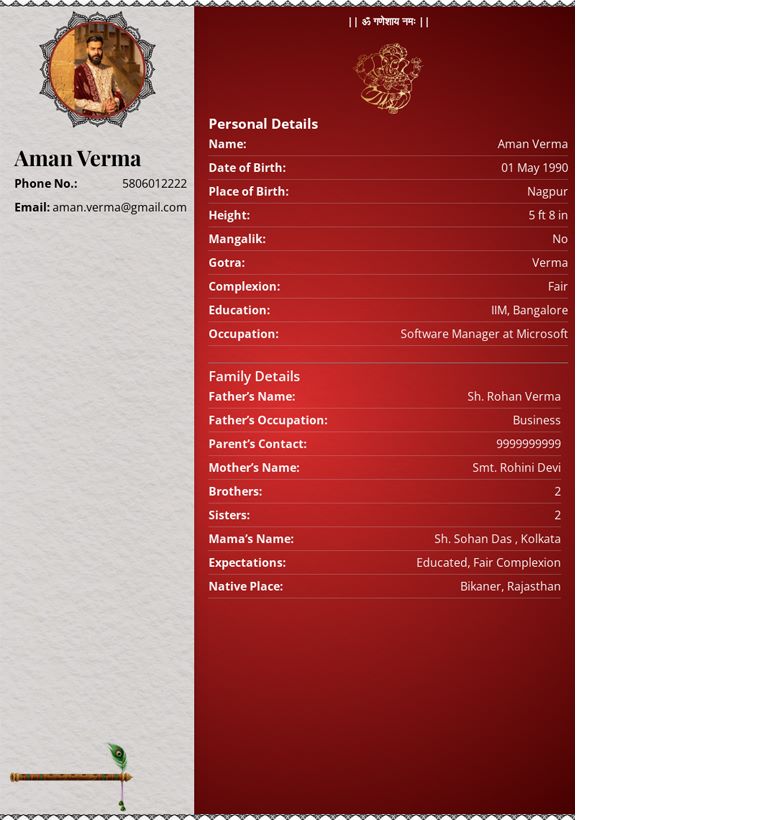
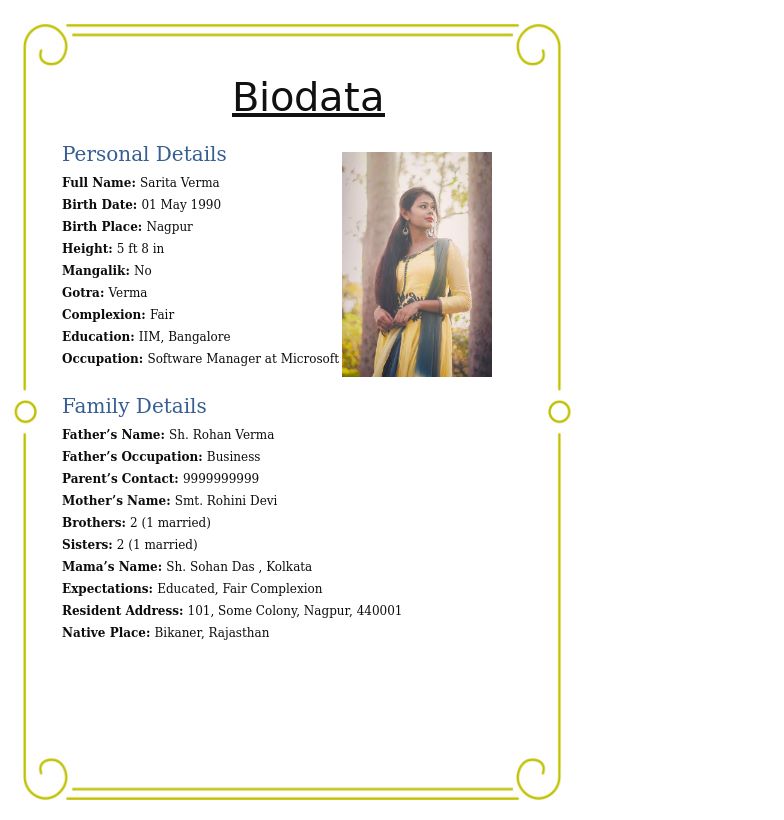
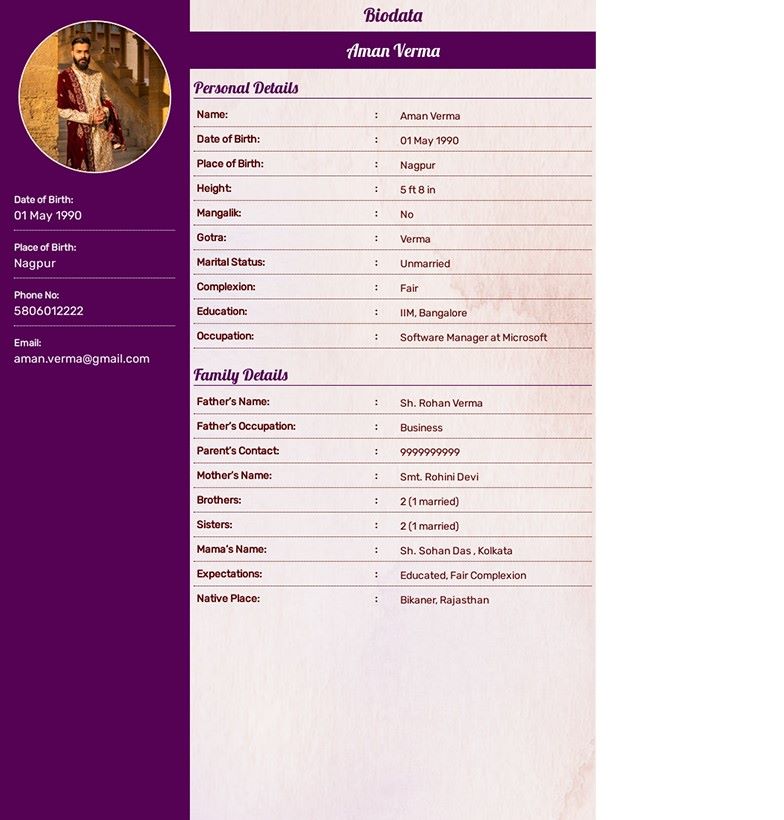
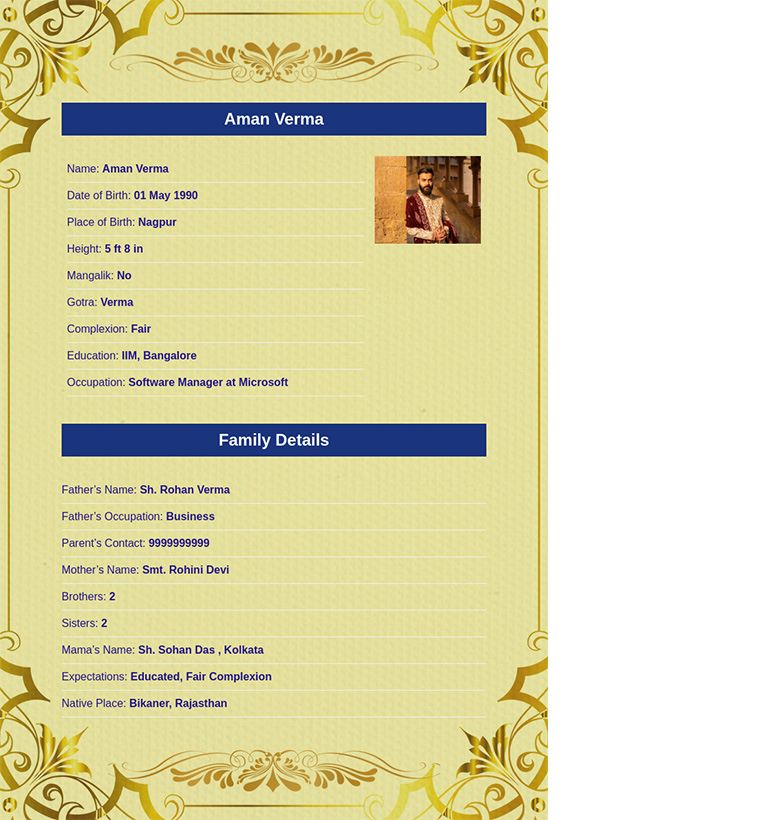
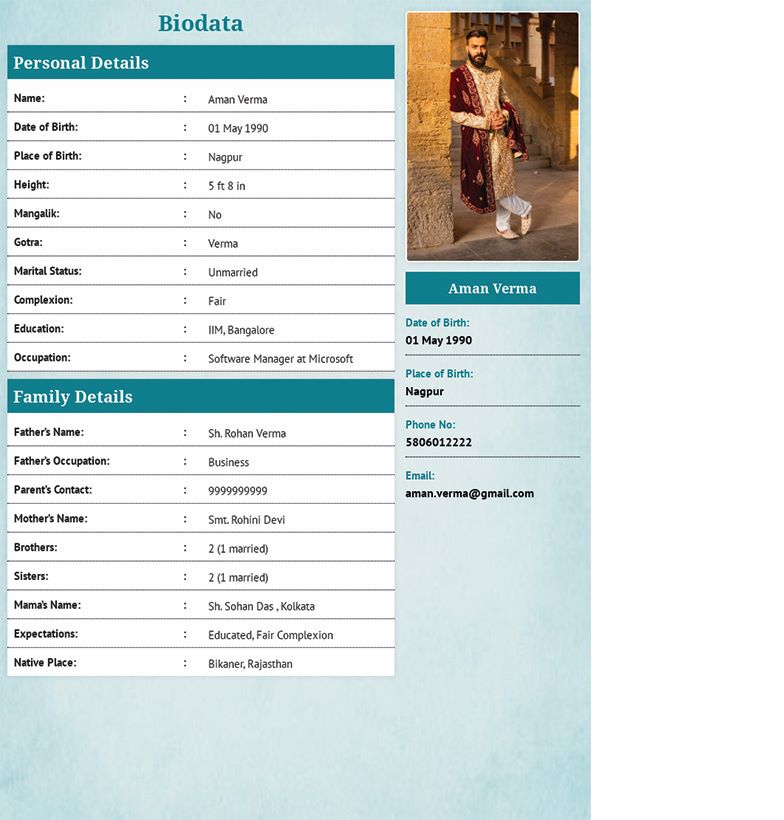
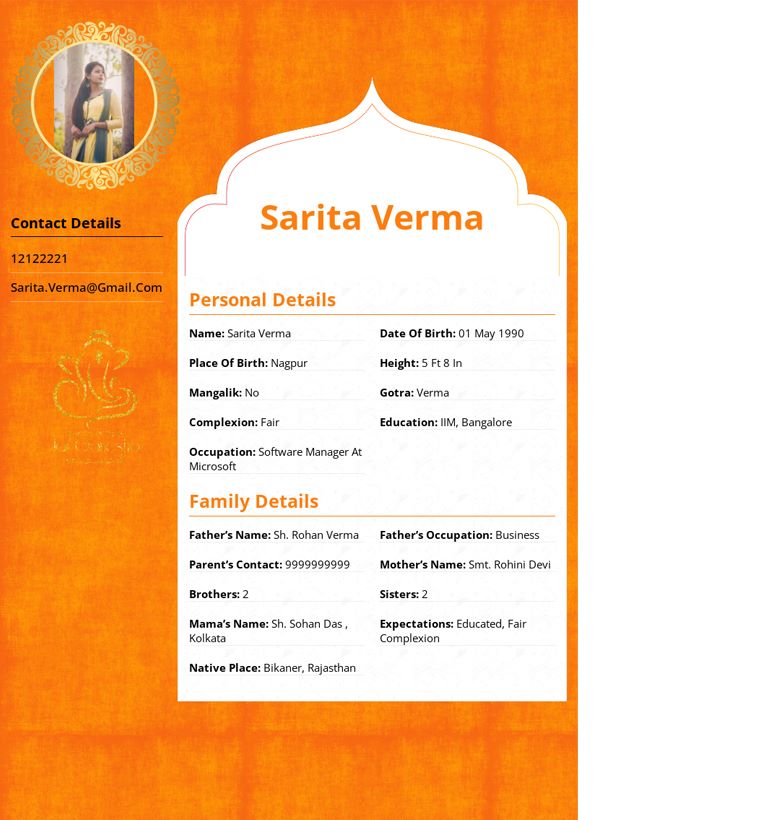
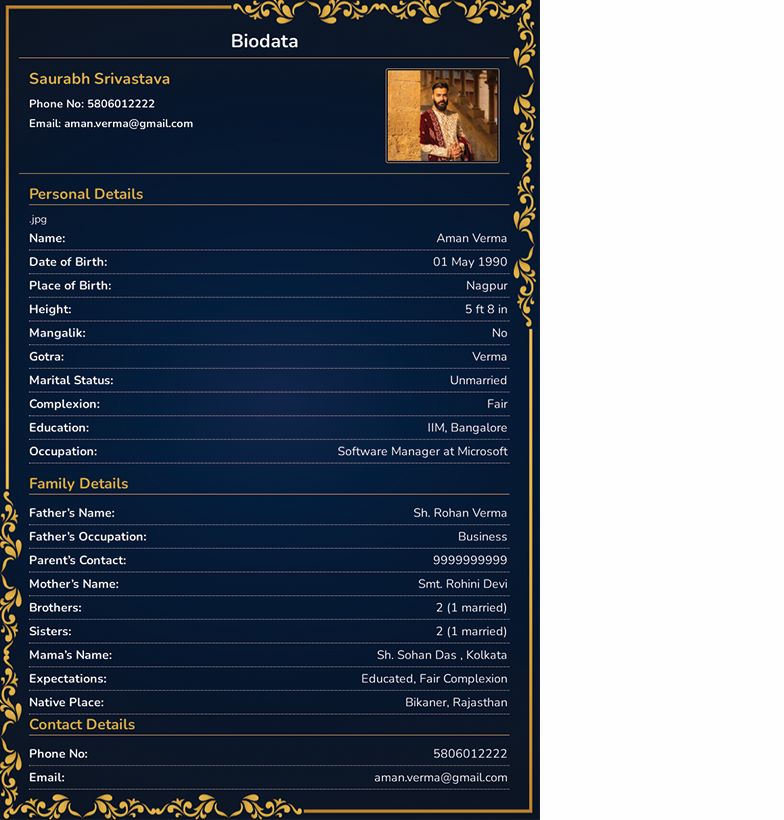
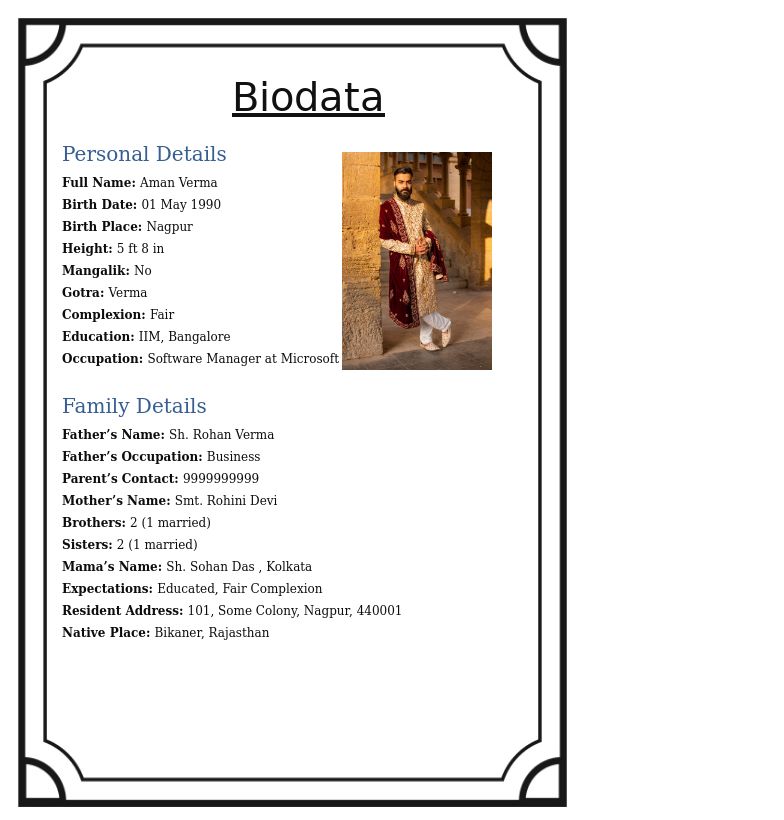
Sample Kshatriya Marriage Biodata Format
Name: [Full Name]
Date of Birth: [DD/MM/YYYY]
Age: [Age]
Height: [Feet/Inches]
Current City: [City]
Community: Kshatriya
Native Place: [Region]
Mother Tongue: [Language]

Education:
Degree: [Degree]
Institution: [University]

Profession:
Occupation: [Job Title/Business]
Organization: [Company/Business]
Location: [City]

Family Details:
Father: [Name, Occupation]
Mother: [Name, Occupation]
Siblings: [Details]
Family Values: [Traditional/Moderate/Modern]

About Me:
Nature: [Calm, confident, family-oriented, practical]
Interests: [Fitness, travel, reading, culture, etc.]

Partner Preferences:
Education: [Preference]
Profession: [Preference]
Values: [Preference]
Location: [Open/Specific]
Conclusion
A Kshatriya marriage biodata format should carry clarity, dignity, and authenticity. When it explains the candidate’s background, personality, and expectations without exaggeration, it becomes a strong and useful document for families looking for a compatible match grounded in shared values.