Konkani Marriage Biodata Format: A Complete Guide
The Konkani identity is shaped by language, coastal heritage, regional diversity, and a strong cultural memory that stretches across Goa, Karnataka, Maharashtra, Kerala, and Konkani-speaking families settled elsewhere in India and abroad. Because the term Konkani refers as much to language and cultural belonging as to community background, marriage biodata for Konkani families often needs to present cultural details with extra clarity. A well-written Konkani marriage biodata format should explain background, family values, education, lifestyle, and partner expectations in a way that feels personal and specific.
Cultural Background and Matchmaking Context
Konkani-speaking families may belong to different religious, caste, and regional traditions, but they often share attachment to language, food, festivals, music, and family customs. This makes the matrimonial process especially sensitive to cultural nuance. One family may emphasize temple traditions and regional customs, while another may focus more on education, profession, and linguistic familiarity. A biodata has to create clarity early so that families can quickly understand whether their expectations align.
Because of this, a Konkani marriage biodata should not be generic. It should mention mother tongue, native roots, current city, cultural practices, and the overall tone of family life. That creates a better basis for trust and compatibility.
Why a Konkani Marriage Biodata Format Matters
In many cases, the biodata is the first structured introduction exchanged between families. It helps answer practical questions such as education, profession, location, and family background. But in a Konkani matrimonial context, it also helps clarify cultural identity. This is useful when the families come from different states but share a linguistic or traditional connection.
Important Sections to Include
- Basic details: Name, age, date of birth, height, and residence.
- Cultural background: Konkani identity, mother tongue, native place, and regional roots.
- Education: Degree, institution, achievements, and specialization.
- Profession: Occupation, organization or business, and location.
- Family details: Parents, siblings, occupations, and family values.
- Personal profile: Nature, hobbies, lifestyle, and personal outlook.
- Partner preferences: Cultural compatibility, education, profession, and family expectations.
Konkani Wedding Culture
Konkani wedding traditions vary according to region and religion, but they are usually deeply rooted in family participation, music, food, and ceremonial warmth. Whether the wedding follows Hindu, Christian, or other customs, the event often reflects strong regional identity. Families may place importance on language familiarity, shared customs, and ease with family traditions.
For this reason, a biodata that clearly communicates cultural comfort can be very helpful. Even a simple note about language, food habits, and family customs can make the profile more meaningful.
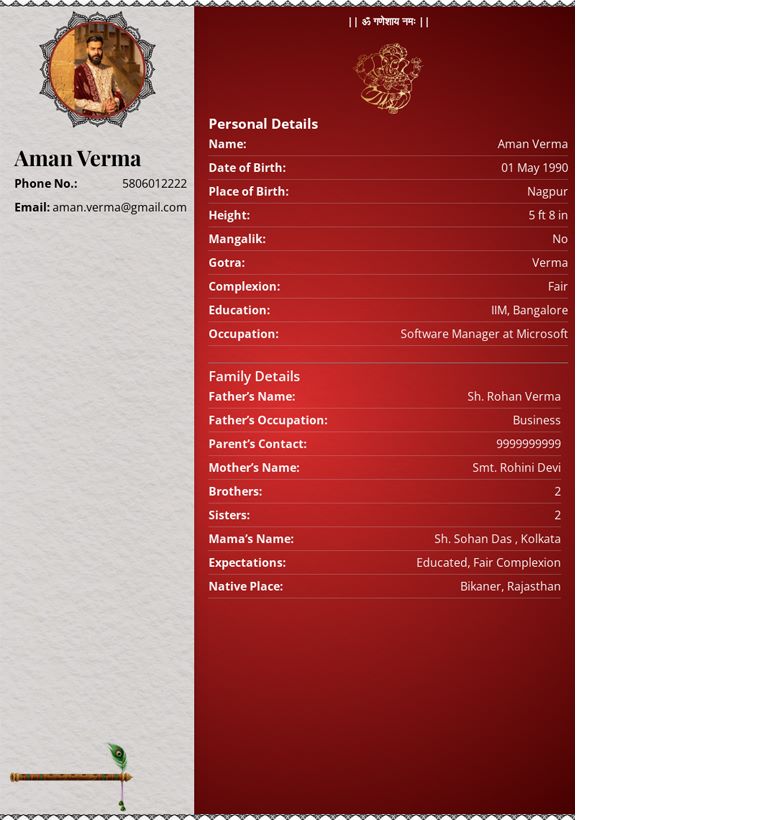
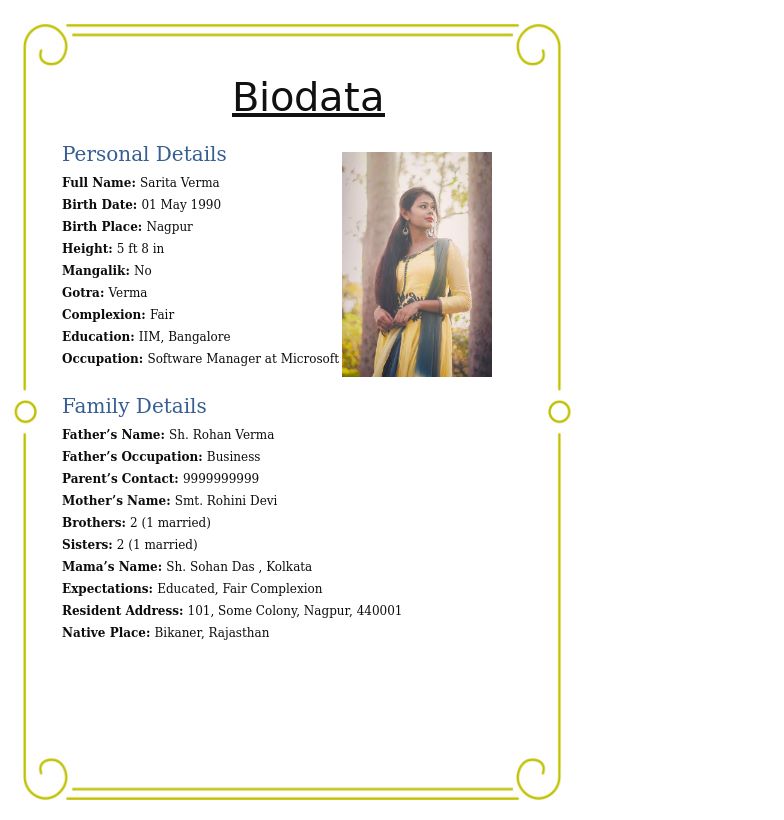
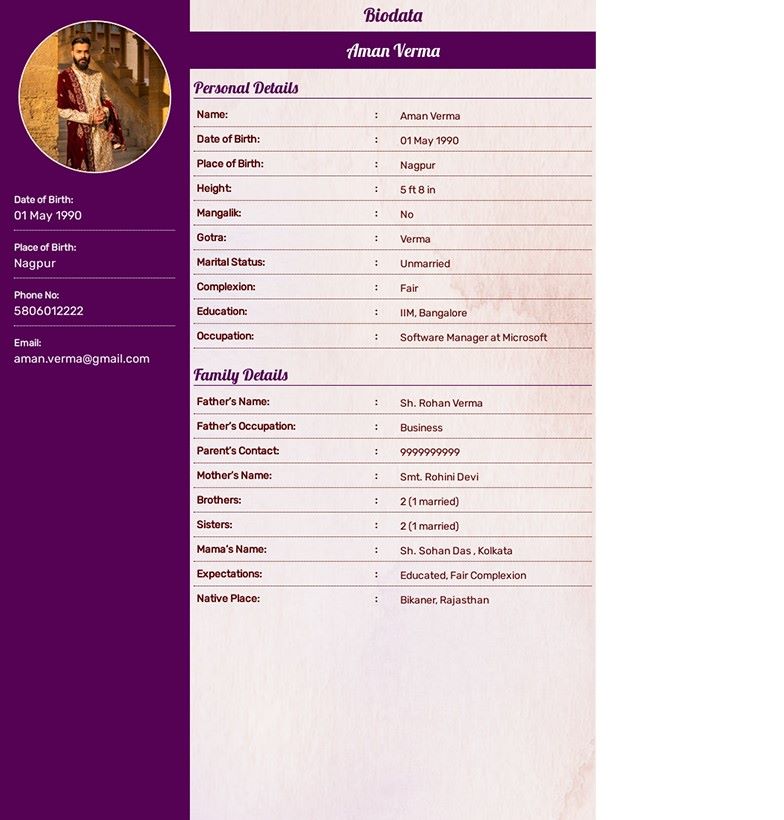
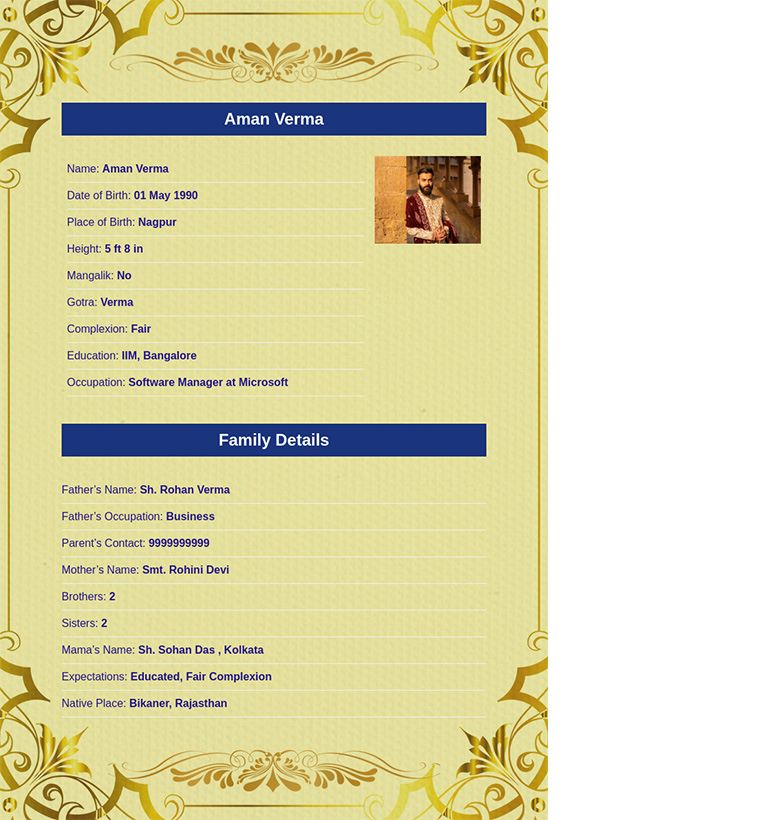
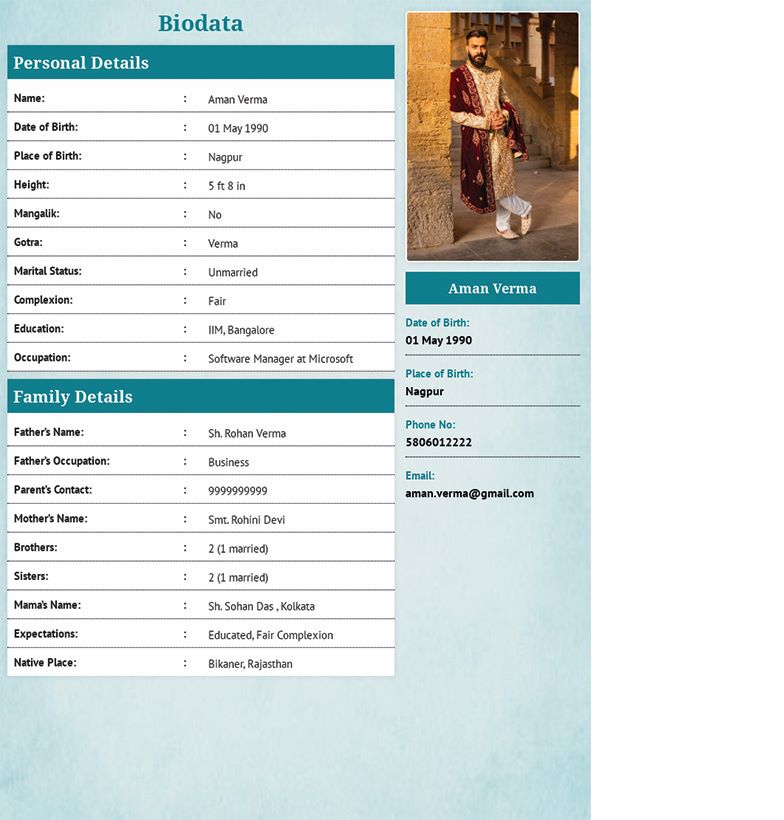
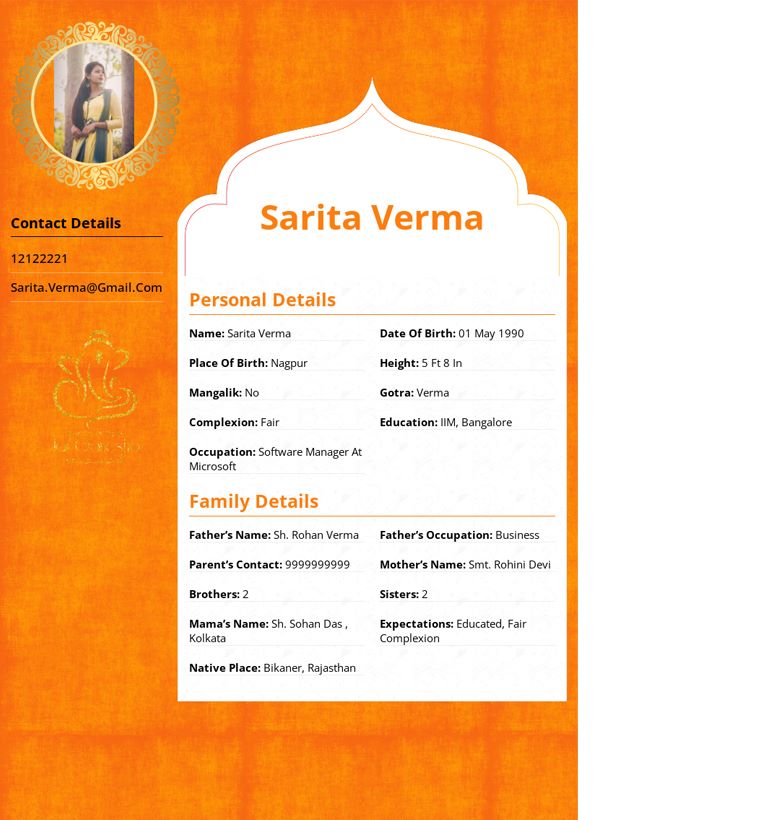
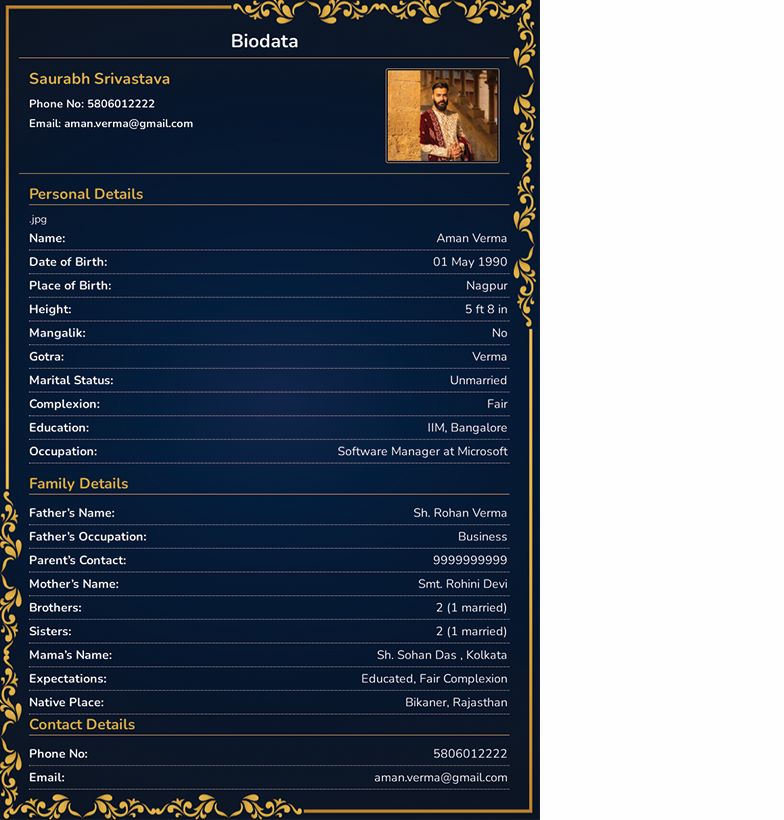
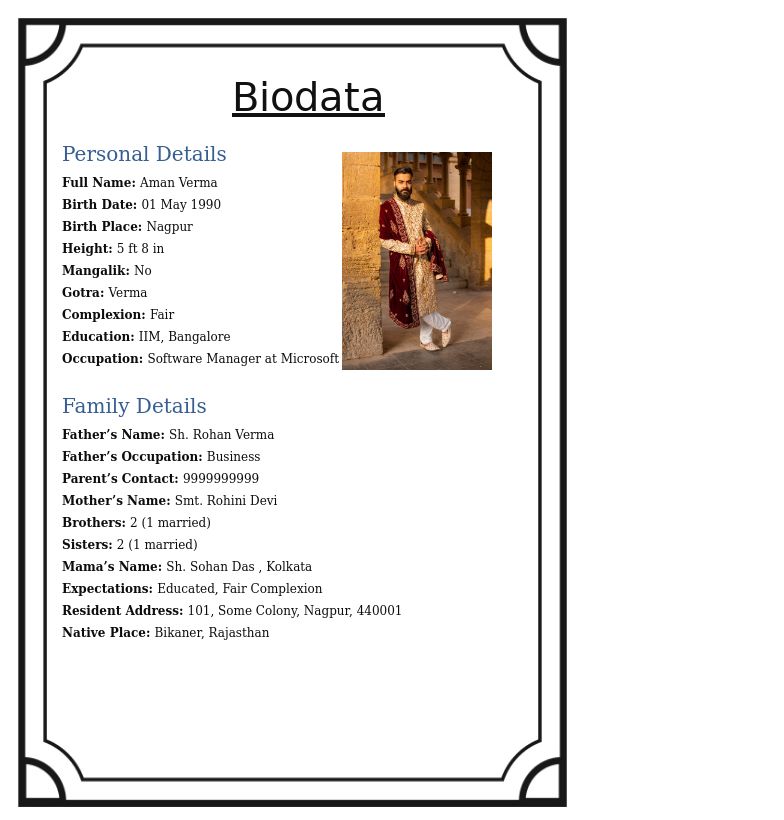
Sample Konkani Marriage Biodata Format
Name: [Full Name]
Date of Birth: [DD/MM/YYYY]
Age: [Age]
Height: [Feet/Inches]
Current Residence: [City]
Mother Tongue: Konkani
Native Place: [Goa/Karnataka/Maharashtra/Kerala/Other]

Education:
Degree: [Degree]
Institution: [University]
Achievements: [If any]

Profession:
Occupation: [Job Title]
Employer: [Company]
Location: [City]
Career Plans: [Brief summary]

Family Details:
Father: [Name, Occupation]
Mother: [Name, Occupation]
Siblings: [Details]
Family Values: [Traditional/Moderate/Modern]
Cultural Background: [Short note]

Personal Profile:
Nature: [Warm, calm, practical, family-oriented, etc.]
Interests: [Music, travel, literature, food, culture, etc.]
Lifestyle: [Routine and preferences]

Partner Preferences:
Education: [Preference]
Profession: [Preference]
Location: [Open/Specific]
Cultural Expectations: [Short note]
Conclusion
A Konkani marriage biodata format should help families understand both the person and the cultural environment they come from. When written clearly and originally, it becomes more than a formal profile. It becomes a useful bridge between family expectations, cultural identity, and modern matrimonial decision-making.