Kashyap Marriage Biodata Format: A Complete Guide
The Kashyap community appears across many regions of India and includes families with diverse occupational, cultural, and regional backgrounds. Because the name is used in multiple social contexts, marriage discussions often involve a careful look at family values, upbringing, profession, and lifestyle rather than assumptions based on label alone. A Kashyap marriage biodata format should therefore be especially clear and well-structured so that families can understand the person and their background without confusion.
Why Clarity Matters in a Kashyap Biodata
In many matrimonial settings, clarity about family background, education, profession, and expectations matters more than decorative language. This is especially true when the same community name may represent varied regional cultures and traditions. A biodata that clearly states native place, language, present location, family orientation, and personal outlook helps families evaluate compatibility much more effectively.
A good profile should feel respectful and complete. It should not read like a copied template or a job application. Instead, it should communicate who the person is, what kind of home they come from, what values they follow, and what type of marriage they hope to build.
Important Sections in a Kashyap Marriage Biodata
- Basic information: Full name, age, date of birth, height, and city.
- Community background: Kashyap identity, native place, language, and region.
- Academic profile: Education, degree, institution, achievements, and training.
- Career details: Occupation, employer, business, location, and plans ahead.
- Family profile: Parents, siblings, occupations, and value system.
- Personal profile: Nature, hobbies, habits, and life priorities.
- Partner expectations: Education, family values, profession, and compatibility preferences.
Family Values and Social Fit
Many Kashyap families prioritize sincerity, mutual respect, responsibility, and adaptability. Depending on the region, some families may be more traditional and community-focused, while others may be highly urban and professionally oriented. A biodata should help communicate this clearly. If the family values simplicity, close relationships, and practical living, say so directly. If the person is comfortable in both traditional and modern settings, that is also worth mentioning.
Marriage Culture and Community Expectations
Marriage ceremonies in Kashyap families generally follow regional customs, often with Hindu rituals, community blessings, and family participation. The specific form may vary by state and local tradition, but common elements include engagement, Haldi, sacred rituals, family feasts, and blessings from elders. Because customs vary, many families focus more on values and compatibility than strict ritual sameness.
A good biodata should therefore show respect for family traditions while also presenting the person as an individual with clear life goals. This balance helps attract serious interest.
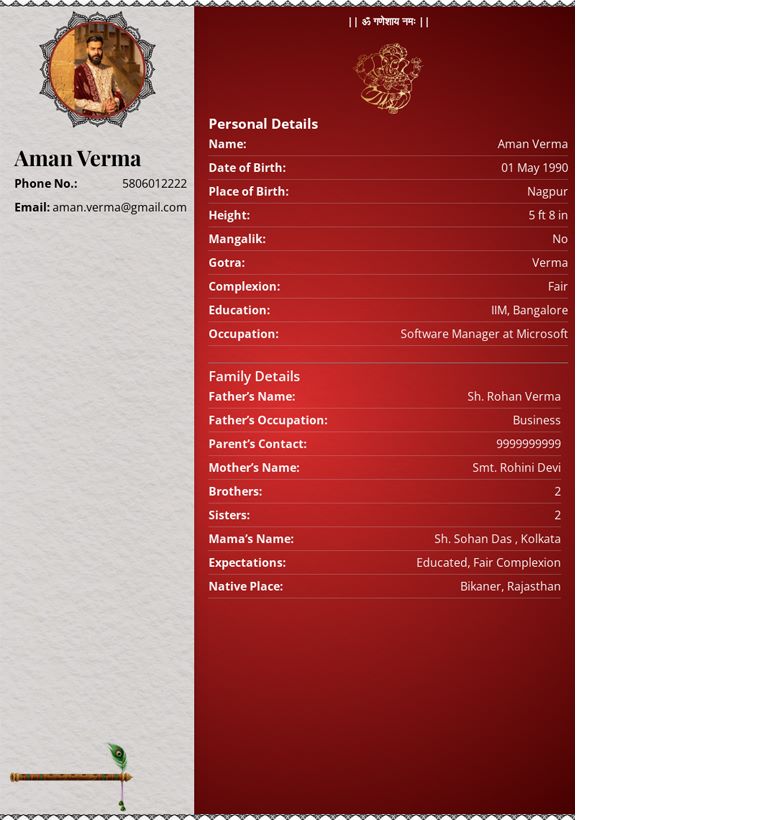
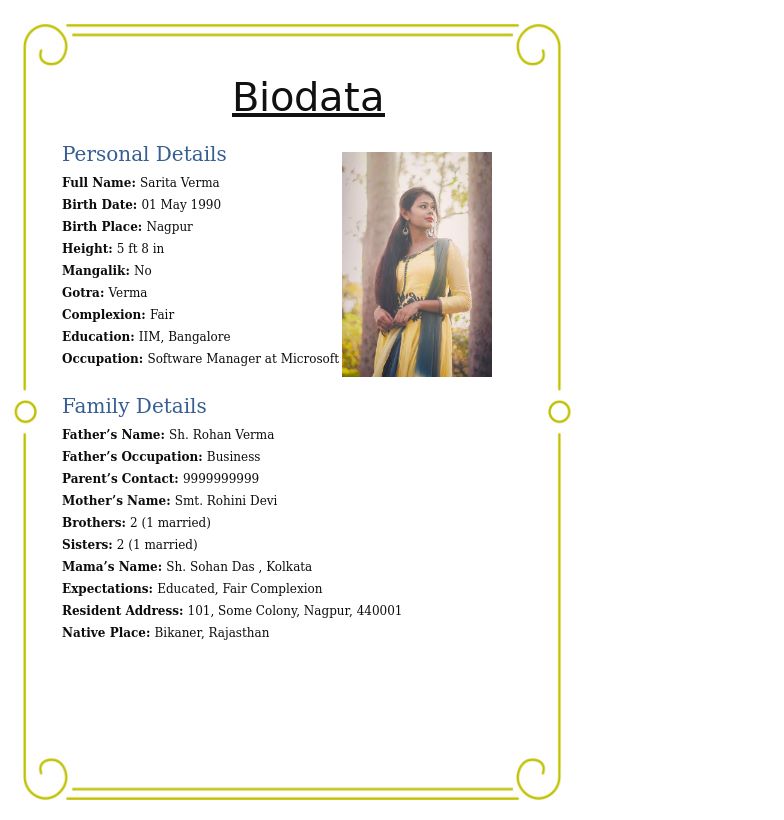
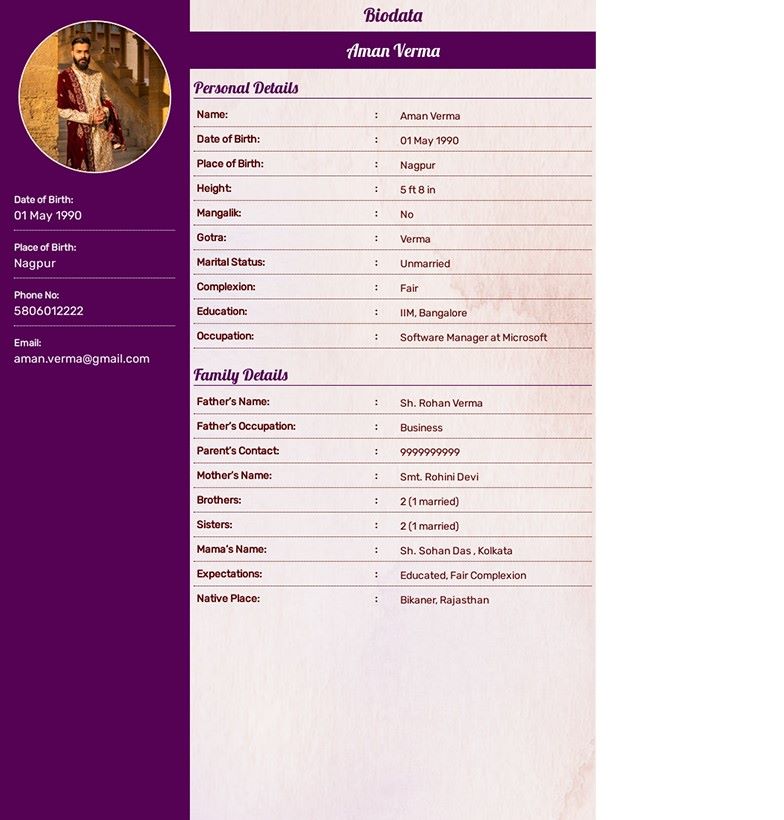
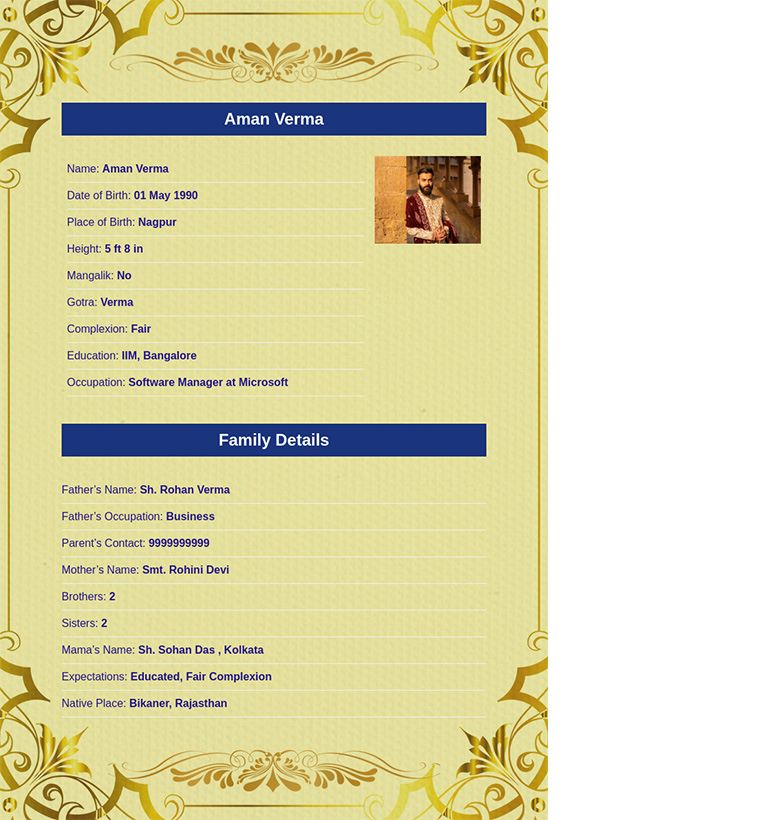
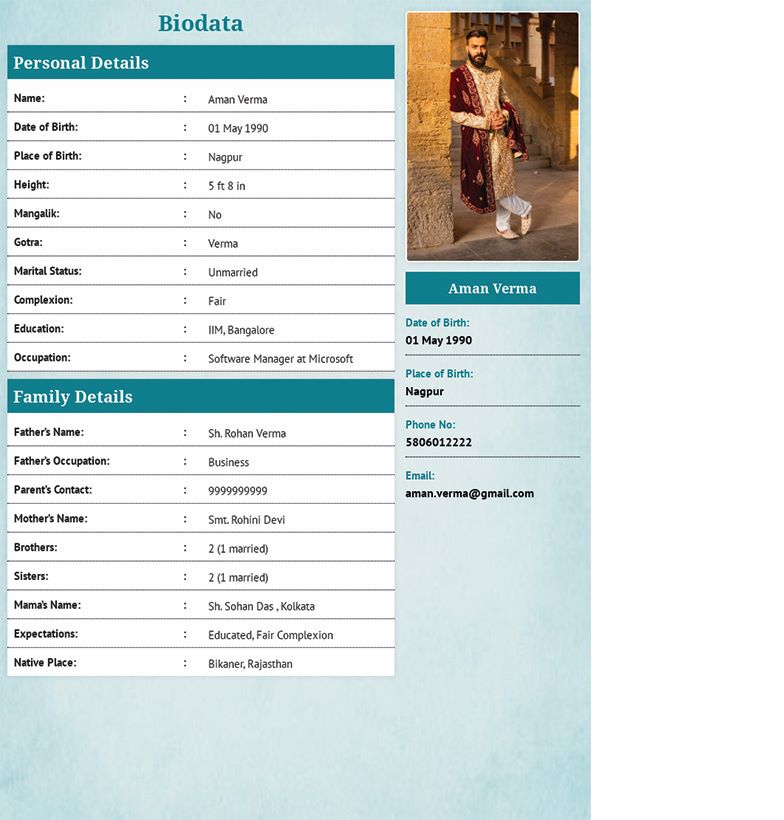
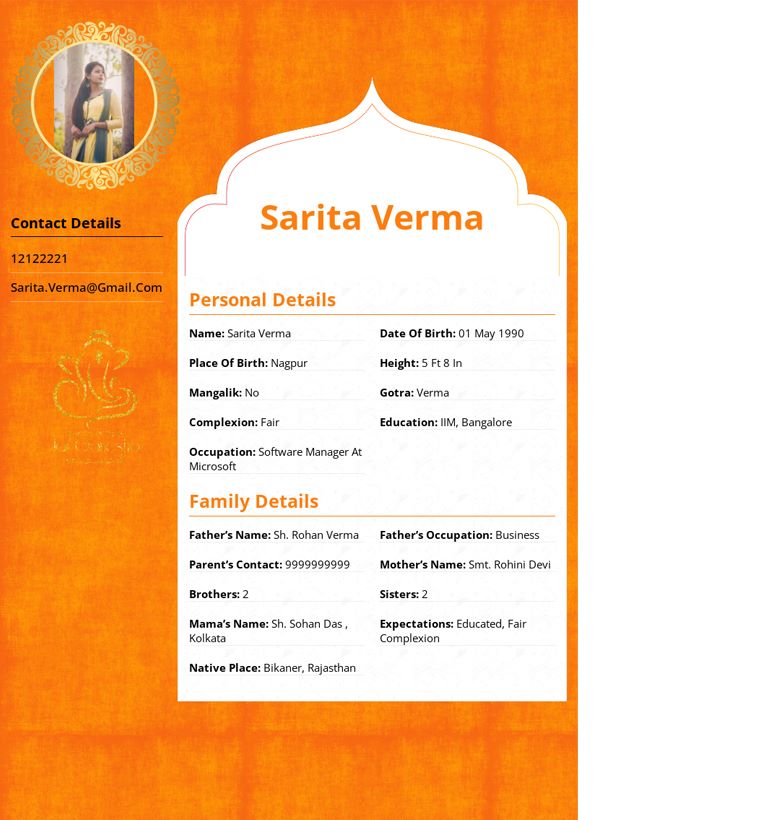
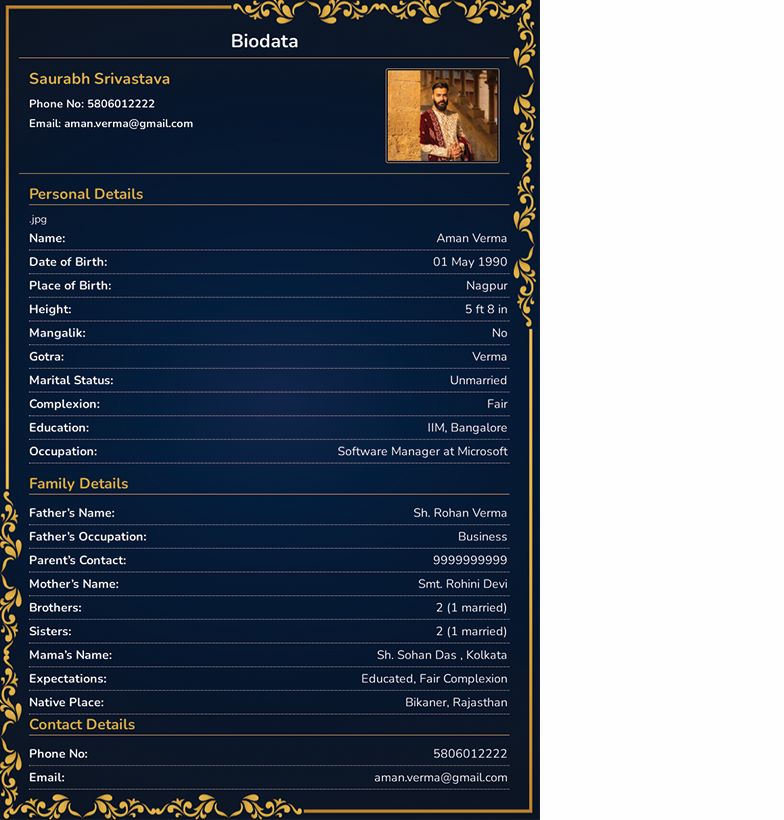
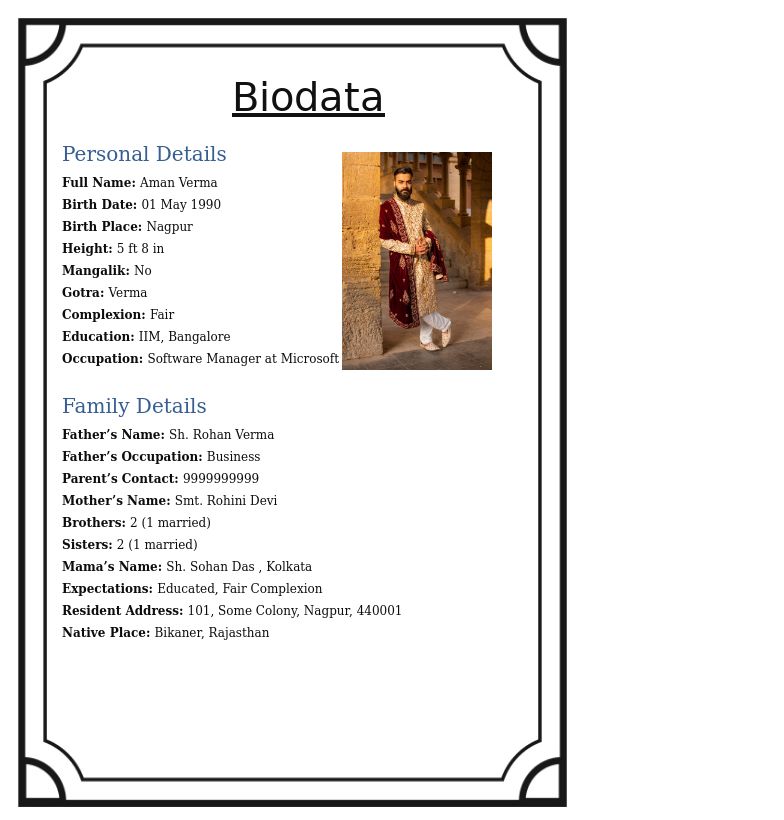
Sample Kashyap Marriage Biodata Format
Name: [Full Name]
Date of Birth: [DD/MM/YYYY]
Age: [Age]
Height: [Feet/Inches]
Current Residence: [City]
Community: Kashyap
Native Place: [Region]
Mother Tongue: [Language]

Education:
Degree: [Degree]
Institution: [College/University]
Achievements: [If any]

Profession:
Occupation: [Job/Business]
Organization: [Company/Business]
Location: [City]
Future Plans: [Brief summary]

Family Details:
Father: [Name, Occupation]
Mother: [Name, Occupation]
Siblings: [Details]
Family Type: [Joint/Nuclear]
Values: [Traditional/Moderate/Modern]

Personal Profile:
Nature: [Warm, practical, calm, responsible, etc.]
Interests: [Travel, music, reading, sports, etc.]
Lifestyle: [Food habits, routine]

Partner Preferences:
Education: [Preference]
Profession: [Preference]
Location: [Open/Specific]
Family Values: [Preference]
Additional Note: [Short note]
Writing the Personal Section Well
A useful personal section includes genuine traits rather than generic praise. It can mention whether the person is family-oriented, career-minded, spiritual, grounded, sociable, or reserved by nature. It may also describe interests and habits that shape daily life. These details make the profile more human and give families a better sense of compatibility.
What Makes a Good Kashyap Biodata
The strongest biodata profiles are clear, original, and balanced. They include enough detail for families to evaluate fit but avoid oversharing. They communicate values without sounding rehearsed. They are respectful without sounding stiff. Above all, they help the reader understand the person honestly.
Conclusion
A Kashyap marriage biodata format should serve as a clear and dignified introduction to the individual and the family. When it combines accurate facts, cultural context, personality, and realistic partner expectations, it becomes far more effective than a copied template. Original, community-aware writing helps both families and search users who are looking for meaningful matrimonial guidance.