Karana Marriage Biodata Format: A Complete Guide
The Karana community, especially associated with Odisha, carries a long legacy of literacy, administration, public service, and cultural refinement. Many Karana families value education, social reputation, disciplined living, and respectful family relationships. In marriage discussions, these values influence the way a biodata is written and evaluated. A Karana marriage biodata format should therefore present a complete picture of the individual, including education, profession, family background, personality, cultural orientation, and hopes for married life.
Community Identity and Cultural Context
Karanas have historically been connected with record-keeping, administration, scholarship, and state service in Odisha. Over time, the community has expanded into modern professions such as law, medicine, engineering, education, finance, government, and entrepreneurship. Alongside professional growth, many families retain strong attachment to Odia culture, language, family rituals, and social dignity. Because of this, matrimonial expectations usually combine modern practical concerns with cultural familiarity.
A good Karana biodata should show that balance. It should not be just a résumé with marriage details attached. It should reflect upbringing, temperament, family values, and outlook. Families often want to know whether the person is respectful, stable, career-minded, family-oriented, and comfortable with both tradition and modern life.
Why a Karana Marriage Biodata Format Matters
In arranged and semi-arranged matchmaking, the biodata creates the first structured impression. It helps both sides evaluate essential compatibility before investing time in deeper discussions. This is particularly useful when families are comparing factors such as education, location, cultural habits, family background, and long-term expectations.
An original and well-organized biodata can also reduce misunderstandings. If the person is open to relocation, values a nuclear setup, prefers staying close to parents, or expects a professionally supportive marriage, these points should be communicated clearly. Transparency early on leads to stronger and more respectful conversations.
Essential Components of a Karana Biodata
- Basic profile: Name, age, date of birth, height, and city of residence.
- Community and cultural details: Karana background, native place, mother tongue, and regional identity.
- Educational record: Degrees, institutions, specialization, achievements, and qualifications.
- Professional profile: Current work, employer or business, career progress, and future plans.
- Family details: Parents, siblings, occupations, family type, and value system.
- Personal details: Nature, hobbies, habits, and life priorities.
- Partner preferences: Education, profession, location, lifestyle, and family expectations.
Family Description and Social Compatibility
The family section of a Karana marriage biodata should be concise but meaningful. Rather than relying on generic phrases, it should describe the household honestly. Families may appreciate details such as whether the home environment is traditional, moderate, or modern, whether the family is settled in Odisha or outside, and whether professional education has been a strong part of the family culture.
For many families, tone matters. A biodata should sound dignified and clear, not boastful. Social compatibility is usually judged through both explicit facts and subtle cues. A well-written family section helps establish trust and seriousness.
Karana Wedding Culture
Karana weddings generally follow Odia Hindu traditions, with regional variations in ritual style and family customs. Ceremonies may include Nirbandha, Mangalasnan, Haldi, Kanyadaan, Homa, Saptapadi, Sindoor, and post-wedding blessings. Weddings are often rooted in ritual sincerity, but also in joyful family participation and hospitality. As in many Indian communities, marriage is seen as a union of two families and a shared social commitment.
Because tradition still matters, some families value profiles that show comfort with customs and respect for elders. This does not require rigid language. A simple, honest mention of family-oriented values and cultural participation is usually enough.
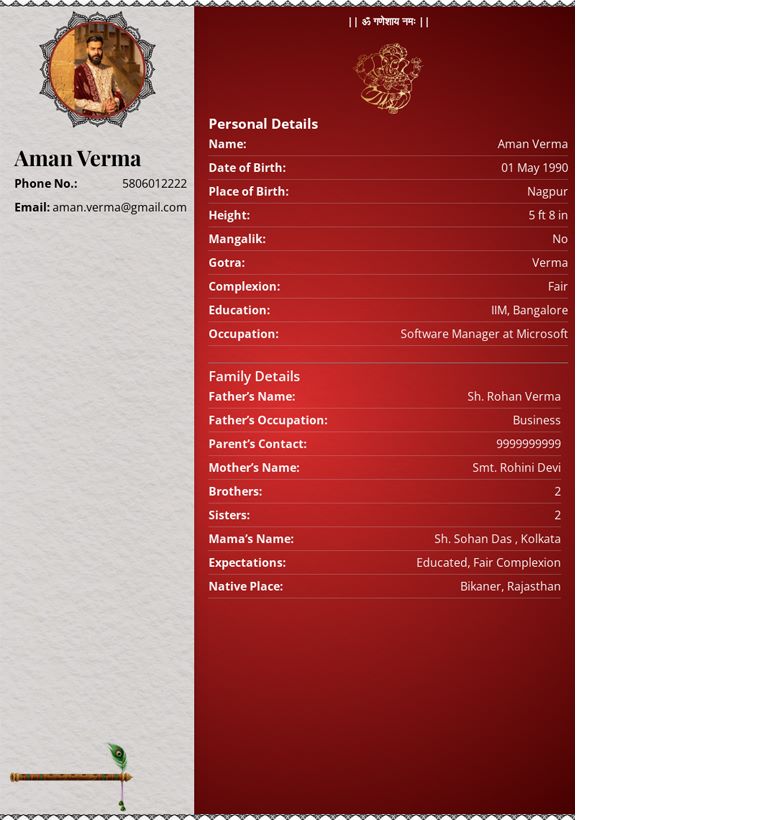
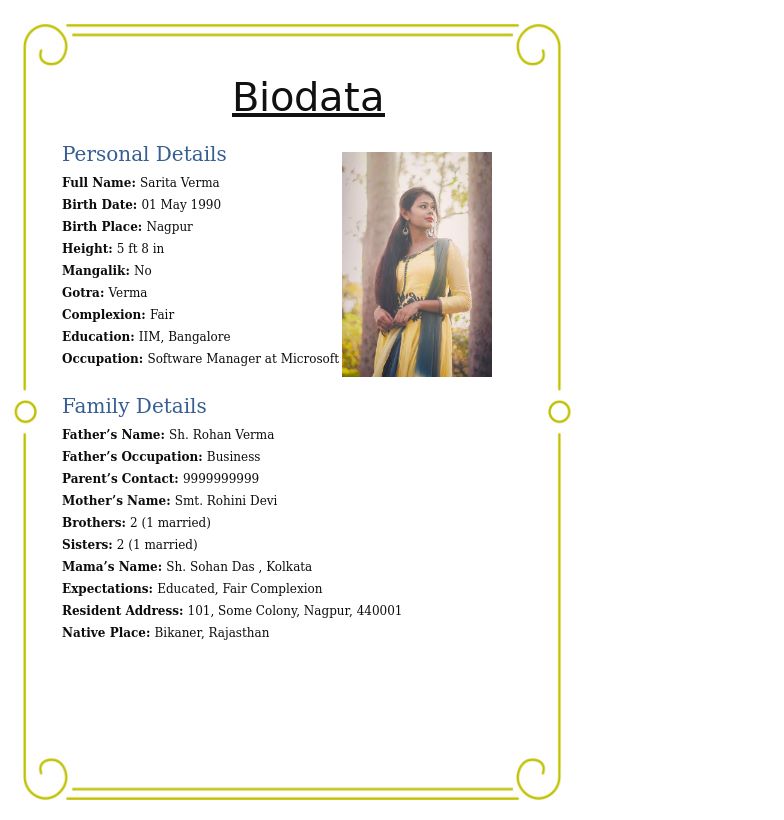
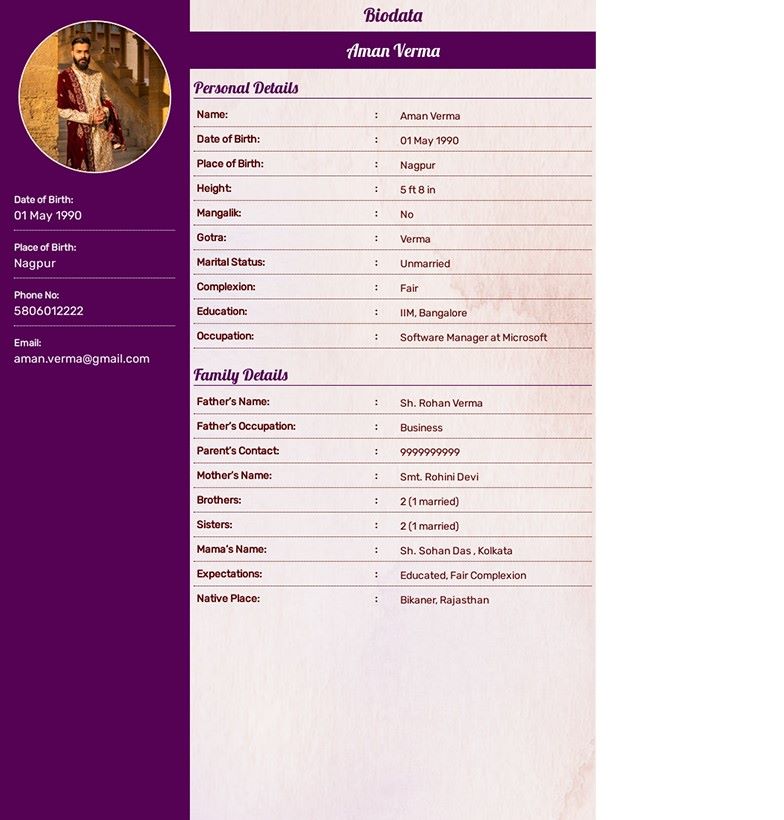
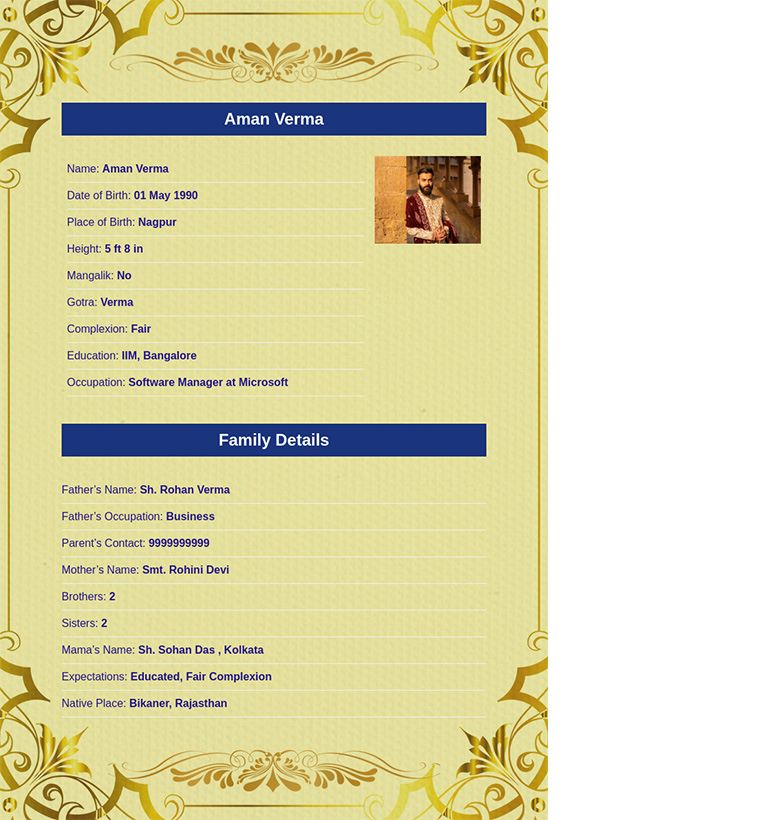
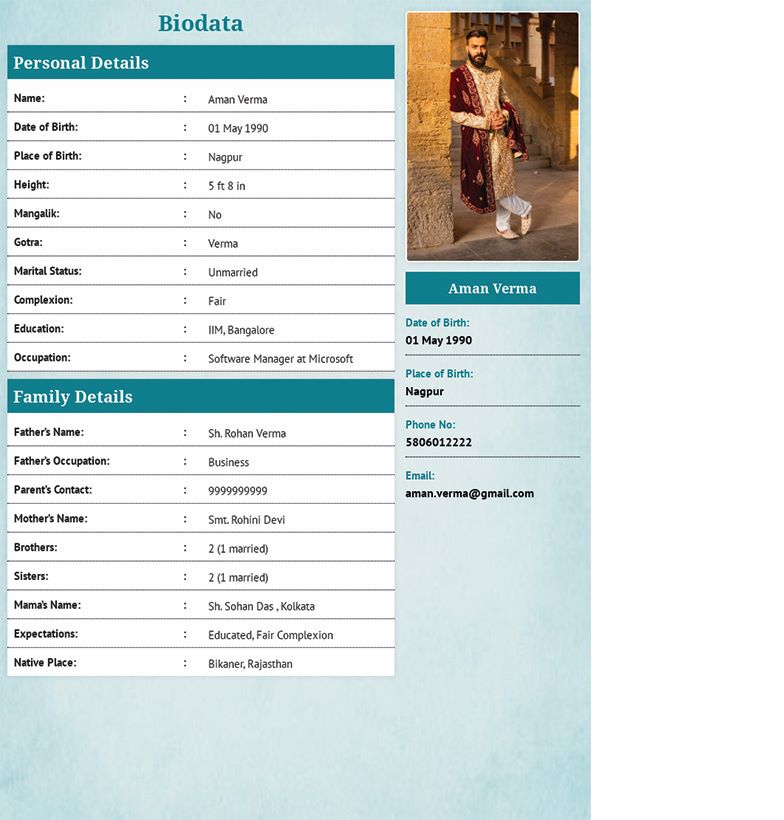
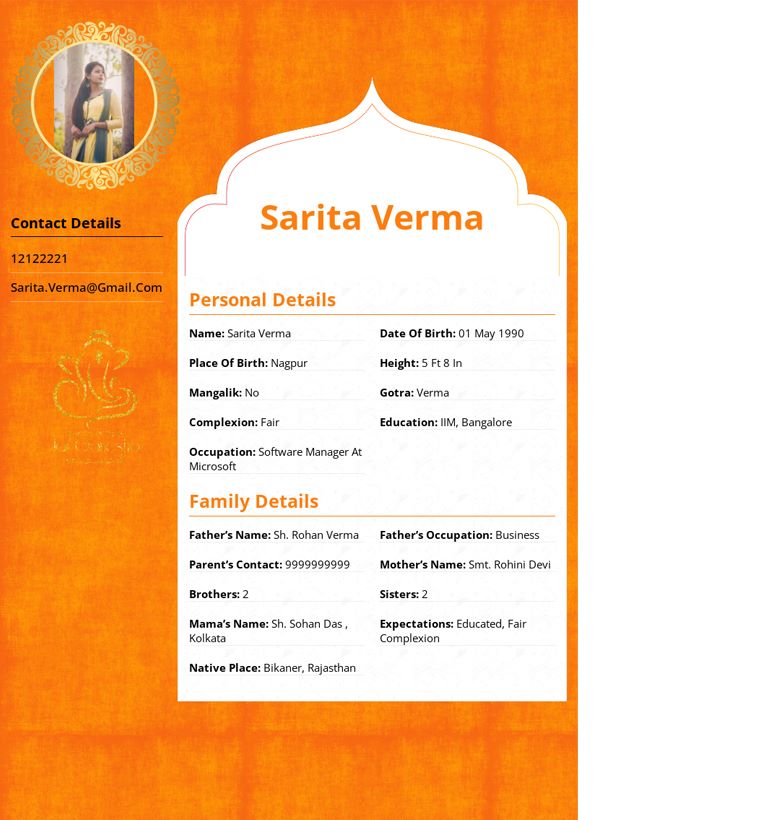
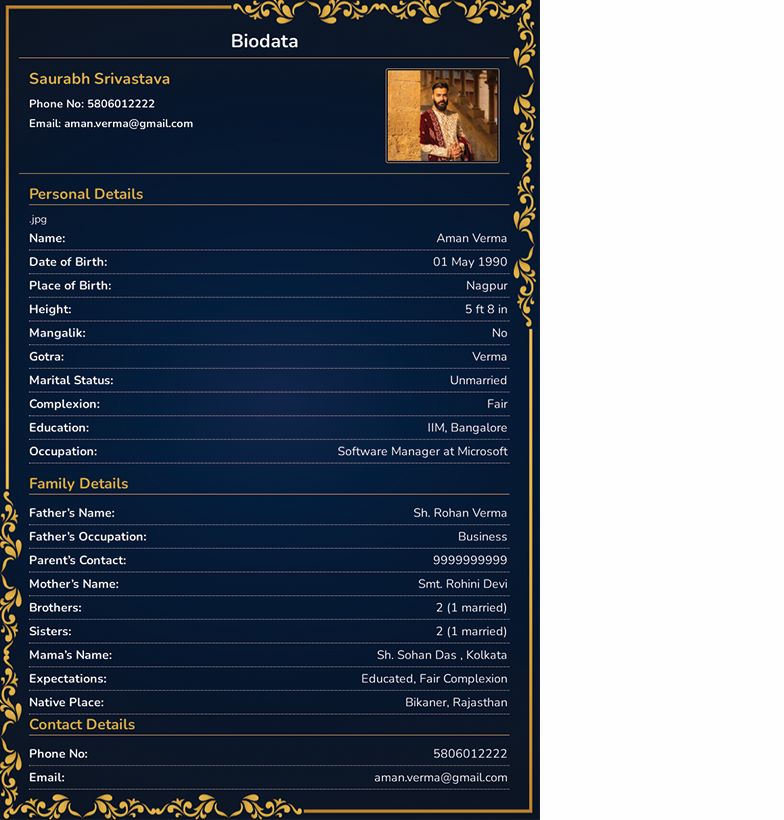
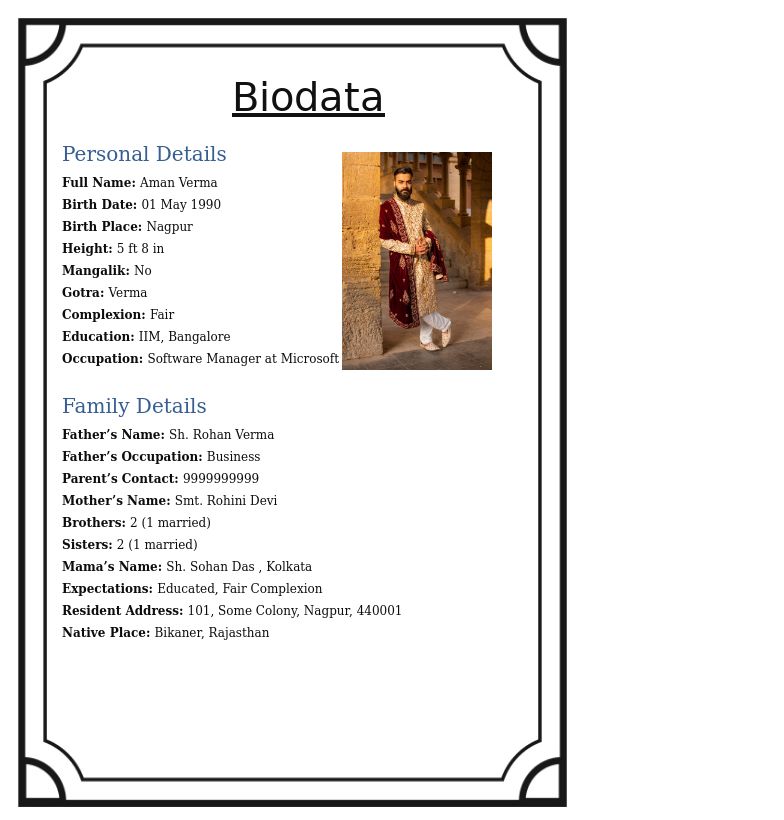
Sample Karana Marriage Biodata Format
Name: [Full Name]
Date of Birth: [DD/MM/YYYY]
Age: [Age]
Height: [Feet/Inches]
Current Residence: [City]
Mother Tongue: Odia
Community: Karana
Native Place: [Town/Region]

Education:
Degree: [Degree]
Institution: [College/University]
Achievements: [If any]

Profession:
Occupation: [Job Title]
Organization: [Company]
Location: [City]
Future Plans: [Short note]

Family Details:
Father: [Name, Occupation]
Mother: [Name, Occupation]
Siblings: [Details]
Family Values: [Traditional/Moderate/Modern]
Family Type: [Joint/Nuclear]

Personal Profile:
Nature: [Calm, practical, caring, ambitious, etc.]
Interests: [Reading, music, travel, culture, fitness, etc.]
Lifestyle: [Food habits and routine]

Partner Preferences:
Education: [Preference]
Profession: [Preference]
Location: [Open/Specific]
Values: [Expectation]
Additional Note: [Short note]
Writing a Strong Personal Section
The personal profile should sound natural. It should help the reader understand how the individual lives and thinks. Mention whether the person is academically inclined, creative, family-oriented, spiritually rooted, professionally ambitious, or socially warm. Hobbies and interests can make the profile more memorable, especially when they are real and specific.
What Families Often Look For
In Karana matrimonial searches, common themes include education, respectful behavior, emotional maturity, family compatibility, and stability in life plans. Some families may prefer Odia cultural familiarity, while others are more flexible if values align. Well-balanced partner preferences generally perform better than long lists of conditions.
Conclusion
A Karana marriage biodata format should present the individual with clarity, balance, and cultural awareness. It should help families understand not only qualifications, but also values, temperament, and readiness for marriage. When written thoughtfully, it becomes a meaningful introduction and a practical foundation for serious matrimonial discussion.