Jat Marriage Biodata Format: A Complete Guide
The Jat community is one of the most socially visible and regionally influential communities across North India, especially in Haryana, Rajasthan, Delhi, Punjab, Uttar Pradesh, and nearby regions. Known for agricultural strength, direct communication, community pride, and deep-rooted family structures, Jat families often approach marriage with seriousness and clarity. A Jat marriage biodata format should therefore reflect not just personal statistics but upbringing, family values, social background, and the individual’s approach to partnership and responsibility.
Social Background of the Jat Community
Jat identity has historically been associated with farming, land stewardship, resilience, and local leadership. Over time, the community has expanded strongly into the armed forces, sports, business, politics, education, and modern professional sectors. Even in urban settings, many families continue to value straightforwardness, self-respect, and family honor. These qualities influence matrimonial expectations as well.
Marriage in Jat families often remains a family-led process, though younger generations participate more actively in decision-making than before. A good biodata should help bridge that generational shift by including the details elders expect while also giving a genuine picture of the person behind the profile.
Why a Jat Marriage Biodata Needs Clarity
In many matrimonial settings, confusion starts when profiles are too vague. Families want to understand education, profession, land or business background where relevant, lifestyle, native place, and outlook toward family life. At the same time, the biodata should not feel rigid or overly formal. A clean, readable, respectful document works best.
A Jat marriage biodata format becomes more effective when it balances identity and individuality. It should explain the person’s achievements and aspirations, but also whether they are rooted in family life, open to relocation, career-oriented, culturally traditional, or modern in lifestyle. These are the details that move conversations forward.
Sections to Include in a Jat Biodata
- Personal details: Name, age, date of birth, height, and location.
- Background: Community, native village or city, language, and regional identity.
- Education: Schooling, degrees, special qualifications, and achievements.
- Profession: Occupation, employer or business, current city, and future direction.
- Family information: Parents, siblings, family occupation, values, and background.
- Personal profile: Nature, habits, interests, and life goals.
- Marriage preferences: Desired qualities, education, profession, and family outlook.
Family Details and Their Importance
For Jat families, family details often matter as much as individual qualifications. This does not simply mean social standing. It also means understanding whether the family is close-knit, practical, supportive, traditional, or progressive in outlook. If the family is agriculture-based, business-oriented, service-class, or professionally mixed, it can be helpful to mention this clearly.
A strong family section should remain factual and dignified. It may mention whether the family is based in a village, town, or metro city, whether they value joint family ties, and whether the household is simple, disciplined, and respectful. These cues are useful during early compatibility screening.
Jat Wedding Traditions and Cultural Relevance
Jat weddings are usually lively, social, and deeply family-centered. Ceremonies often include engagement, ban, Haldi, Mehendi, baraat, pheras, blessings, and community celebration. Regional differences exist, but weddings are generally marked by energy, hospitality, and strong participation from relatives and social circles. In many homes, marriage is not viewed only as a bond between two people but as a long-term relationship between families.
Because of this, matrimonial profiles often place importance on adjustment, confidence, respect, and practical thinking. A biodata that presents the person as emotionally steady, family-aware, and clear about future goals usually makes a stronger impression than one that focuses only on appearance or income.
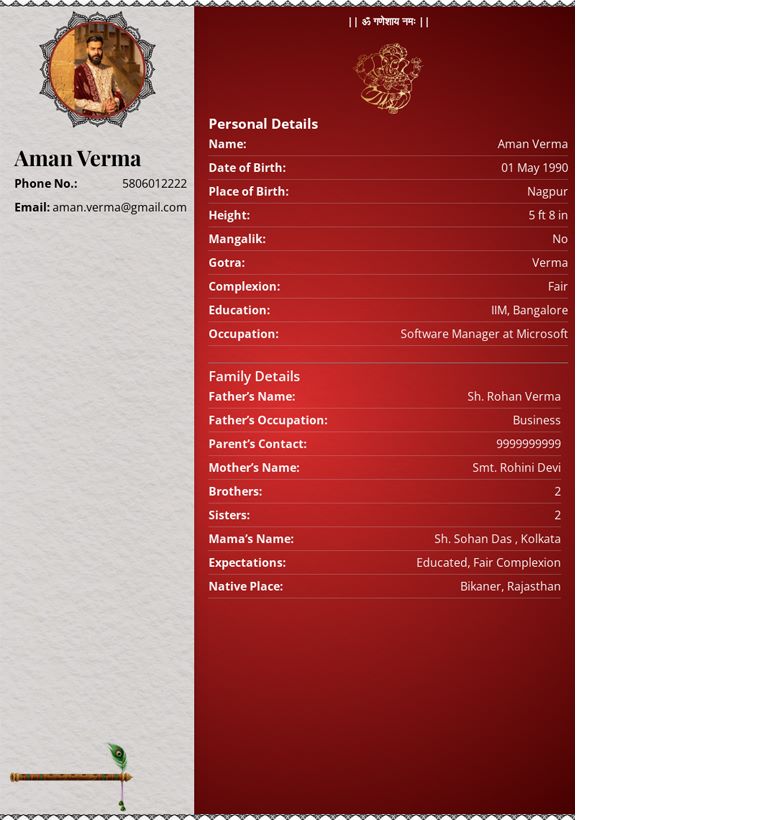
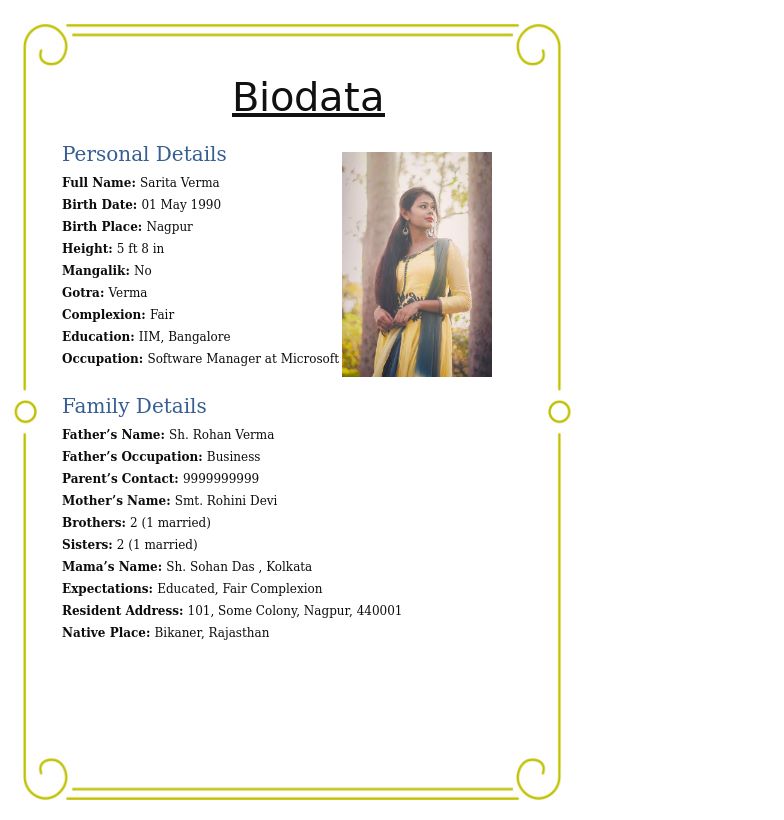
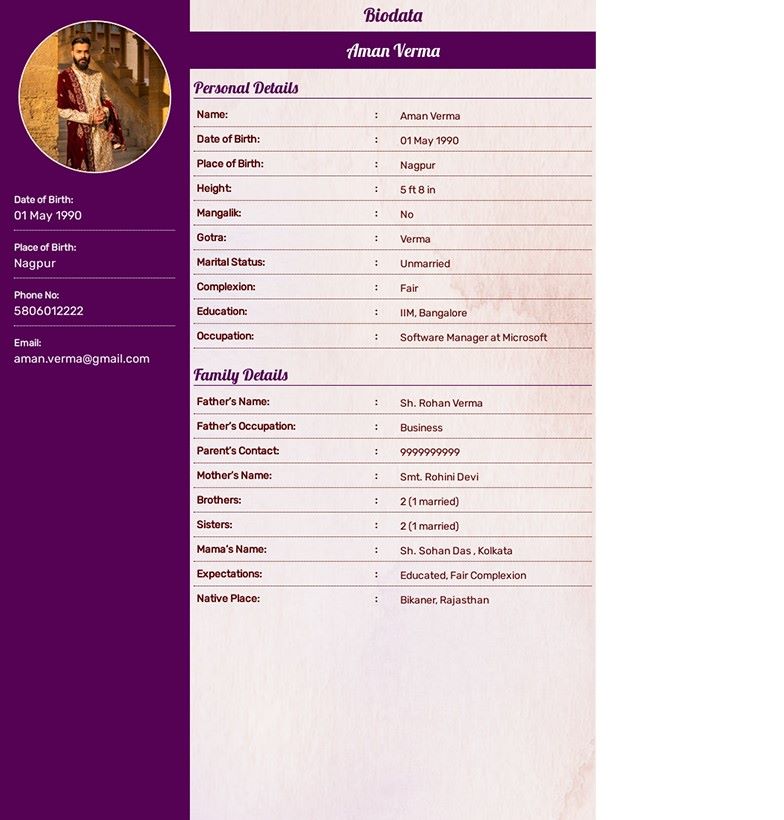
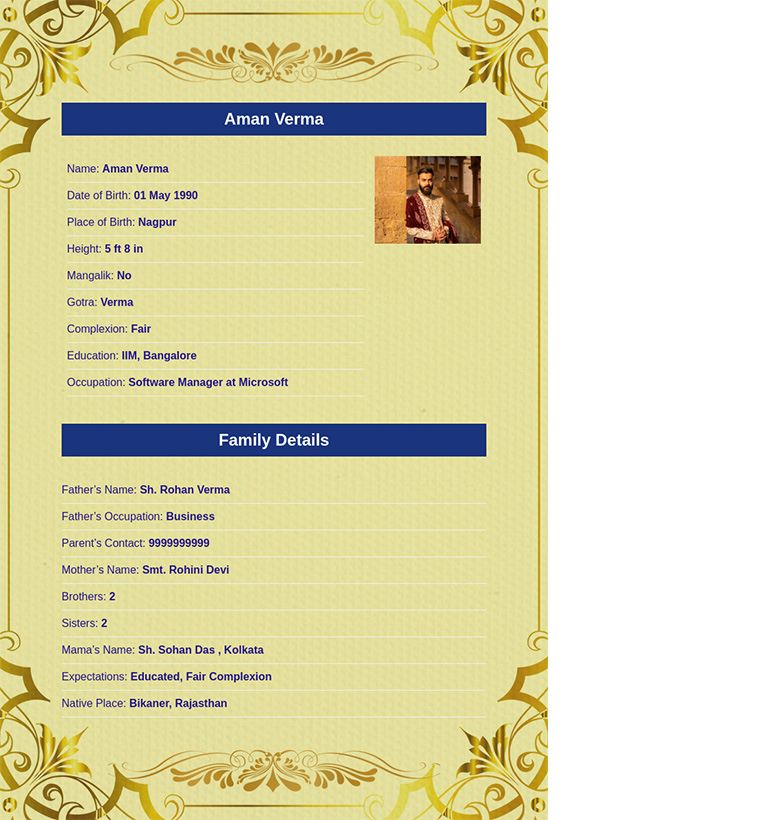
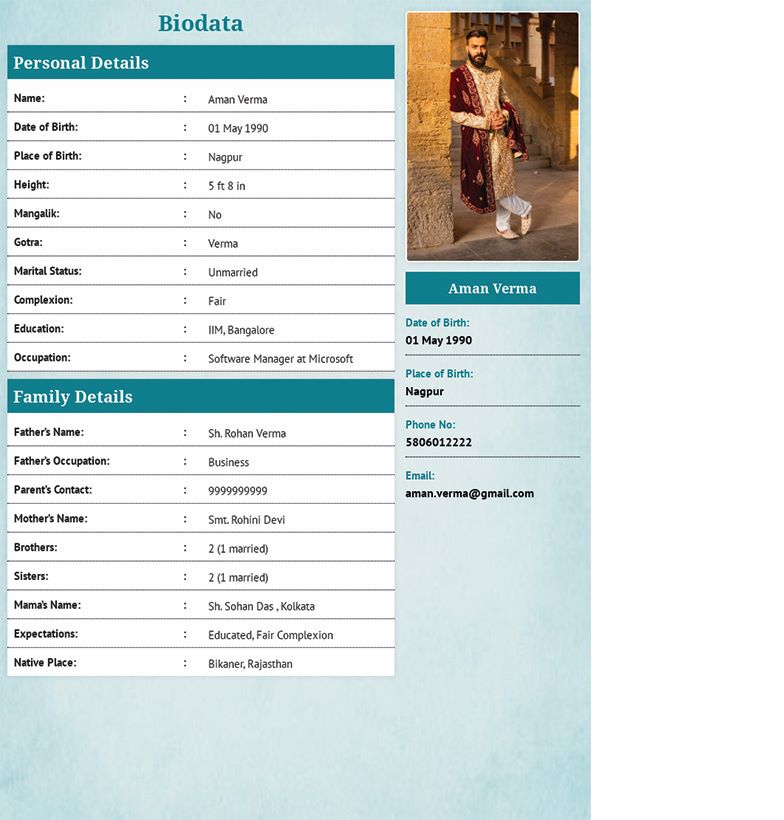
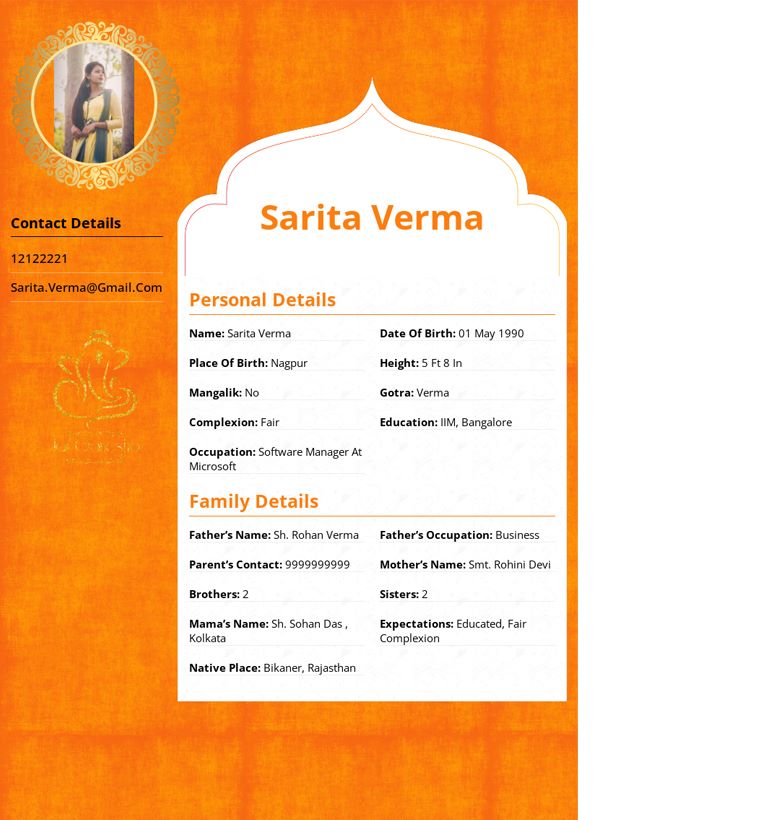
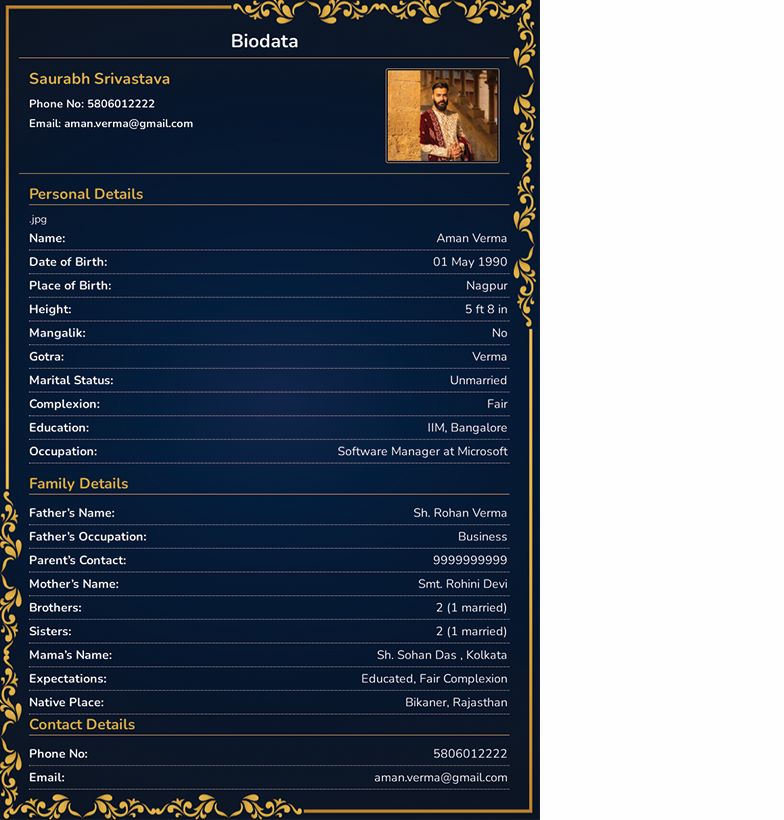
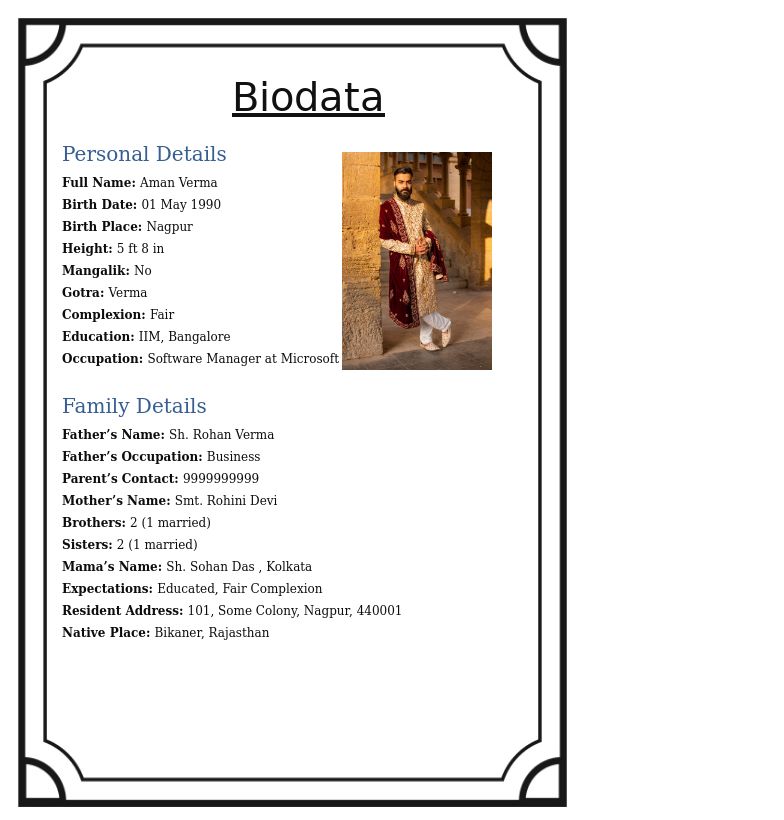
Sample Jat Marriage Biodata Format
Name: [Full Name]
Date of Birth: [DD/MM/YYYY]
Age: [Age]
Height: [Feet/Inches]
Current Residence: [City]
Native Place: [Village/Town/Region]
Community: Jat
Mother Tongue: [Language]

Education:
Degree: [Degree]
Institution: [College/University]
Additional Qualification: [If any]

Profession:
Occupation: [Job Title/Business]
Employer/Business: [Name]
Location: [City]
Future Plans: [Brief note]

Family Details:
Father: [Name, Occupation]
Mother: [Name, Occupation]
Siblings: [Details]
Family Type: [Joint/Nuclear]
Family Background: [Agricultural/Business/Service/Other]
Values: [Traditional/Moderate/Modern]

About Me:
Nature: [Straightforward, calm, responsible, ambitious, etc.]
Interests: [Fitness, travel, music, sports, reading, etc.]
Lifestyle: [Food habits and routine]

Partner Preferences:
Education: [Preference]
Profession: [Preference]
Location: [Open/Specific]
Family Values: [Preference]
Additional Expectations: [Short note]
How to Write Partner Preferences Properly
A thoughtful profile avoids sounding demanding. It is better to write about the type of partnership desired than to create a long list of restrictions. For example, saying that you value a partner who is respectful, grounded, educated, and willing to build a supportive family life is far stronger than an inflexible checklist. If location, profession, or family setup matters, those points can be stated clearly without sounding harsh.
Common Mistakes in Jat Matrimonial Profiles
- Overemphasizing status: This can make the biodata feel transactional.
- Keeping the profile too dry: Families want some sense of personality.
- Leaving out family context: That creates unnecessary uncertainty.
- Using generic copied phrases: It hurts both trust and SEO value.
- Writing vague preferences: Specific but respectful expectations work better.
SEO Advantage of Original Jat Biodata Content
Users frequently search for Jat marriage biodata format, Jat biodata sample, shadi biodata for Jat bride, and Jat matrimonial profile example. A detailed article tailored to the community can perform well in search when it is original, useful, and naturally written. High-quality caste-specific content should answer practical user questions, include relevant terminology, and provide a realistic picture of community expectations rather than generic filler.
Conclusion
A Jat marriage biodata format should present the individual with honesty, clarity, and cultural understanding. It should help families evaluate compatibility without guesswork and allow the person’s real character to come through. When it combines personal detail, family background, and realistic partner expectations, it becomes a meaningful introduction rather than just a formal document.