Iyengar Marriage Biodata Format: A Complete Guide
The Iyengar community is widely respected for its devotional heritage, disciplined family life, and strong emphasis on education, refinement, and values. Rooted in the Sri Vaishnava tradition of South India, Iyengar families often approach marriage as both a sacred bond and a thoughtful family decision. A well-crafted Iyengar marriage biodata format should therefore do more than present personal facts. It should reflect background, upbringing, values, religious and cultural orientation, professional standing, and expectations for married life in a clear and dignified way.
Understanding the Iyengar Community and Marriage Expectations
Iyengars are a prominent Tamil Brahmin group associated with the Sri Vaishnava sampradaya and devotion to Lord Vishnu. Historically, the community has been linked with scholarship, temple traditions, philosophy, literature, administration, and education. Over time, Iyengar families have spread across India and the world, yet many still retain a strong sense of community identity. Marriage conversations in Iyengar families often include interest in language, culture, temple traditions, family values, educational background, and sometimes sub-sect awareness such as Vadakalai or Thenkalai, depending on the household’s outlook.
That does not mean every family is rigid. Many modern Iyengar households are professionally global and socially flexible, but still value discipline, humility, spiritual grounding, and family compatibility. Because of this blend of tradition and modernity, the Iyengar marriage biodata format must be written carefully. It should be polished, precise, and human, not stiff or generic. Families want to understand not only what the person has achieved, but also how the person thinks, lives, and relates to others.
Why an Iyengar Marriage Biodata Format Matters
For many families, the biodata is the first meaningful introduction. Before phone calls, horoscope exchange, or meetings, the document creates the first impression. A strong profile makes it easier for families to assess core compatibility and decide whether further discussion makes sense. A weak profile, even for an otherwise strong candidate, can delay or limit serious interest.
In Iyengar matrimonial search contexts, a biodata usually helps answer practical questions quickly. Is the person professionally settled? Are they family-oriented? What is the cultural environment at home? Is the person religiously observant, culturally connected, moderate, or secular? Are they open to relocation? What kind of partner and family environment are they looking for? The document should answer these naturally without feeling like a form copied from somewhere else.
Core Elements to Include
- Basic details: Full name, age, date of birth, height, location, and mother tongue.
- Community background: Iyengar identity, native place, and relevant religious or family tradition details when appropriate.
- Education: Degrees, institutions, specializations, academic achievements, and noteworthy training.
- Profession: Job role, company or practice area, current location, career trajectory, and future plans.
- Family details: Parents, siblings, occupations, family background, cultural orientation, and values.
- Lifestyle: Food habits, languages, religious practices, interests, and daily living preferences.
- Personal profile: Temperament, hobbies, social outlook, strengths, and marriage expectations.
- Partner preferences: Preferred education, profession, location flexibility, and family or lifestyle expectations.
Family Background and Cultural Context
In many Iyengar matrimonial settings, family description carries special importance. Families are not looking only for status. They also want cultural familiarity and emotional compatibility. A short but thoughtful family section can communicate whether the household is deeply traditional, culturally rooted but modern, or broadly liberal. Mentioning native roots, upbringing style, festival traditions, or family values can be useful when done with restraint.
For example, an Iyengar profile may mention that the family values simplicity, education, mutual respect, and celebration of important Vaishnava festivals. Another family may describe itself as professionally modern yet culturally anchored in Tamil traditions. Such details help other families judge comfort levels and shared expectations. This is far more useful than vague phrases like respected family or cultured background without explanation.
Personal Profile Writing Tips
The best Iyengar marriage biodata profiles are sincere and composed. Avoid sounding self-congratulatory. Instead of writing ideal bride or highly accomplished groom, describe the person’s actual qualities. If someone is calm, intellectually curious, spiritually inclined, career-focused, warm with family, or open to balancing tradition with modern life, those are better expressed directly and simply.
A strong personal section may mention interests such as classical music, reading, temple architecture, travel, volunteering, cooking, yoga, mentoring, or professional learning. It may also explain whether the person prefers a settled city life, is open to moving abroad, or values living close to family. These concrete details help build a real impression.
Iyengar Wedding Culture and Its Relevance
Iyengar weddings are often rich in ritual symbolism. Ceremonies may include engagement traditions, Vratham, Kashi Yatra variations, Oonjal, Kanyadanam, Muhurtham, Saptapadi, and blessings from elders. While regional customs vary, the overall tone usually combines devotion, structure, and family participation. Marriage is treated not as a casual arrangement but as a deeply meaningful commitment.
Because of this, some families appreciate a biodata that signals comfort with rituals and cultural participation. This does not require heavy religious language. Even a simple indication that the person values family traditions and is comfortable taking part in major ceremonies can be enough. Modern Iyengar families often appreciate balance more than formality.
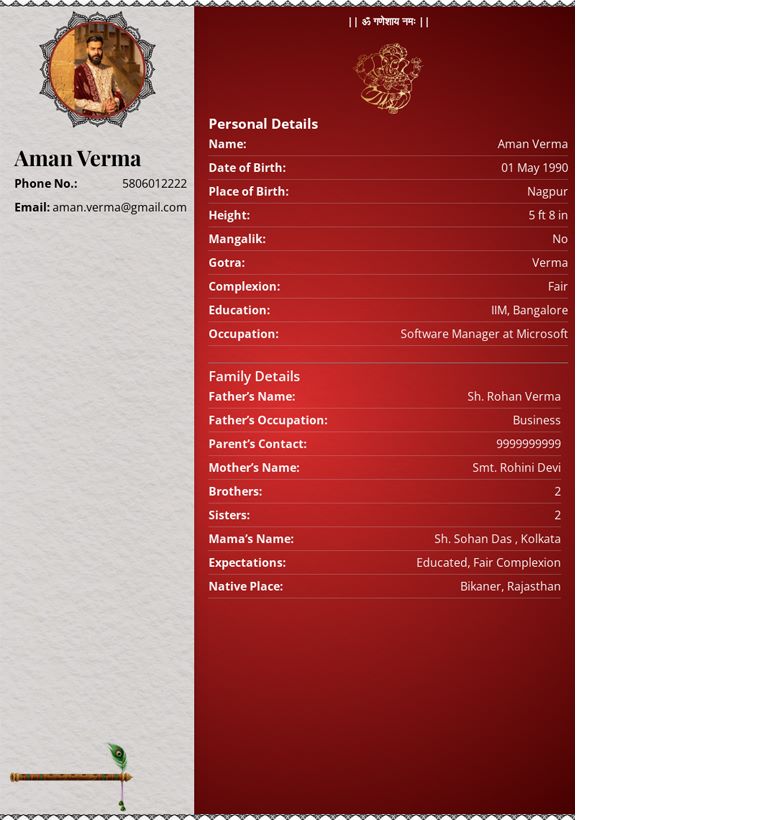
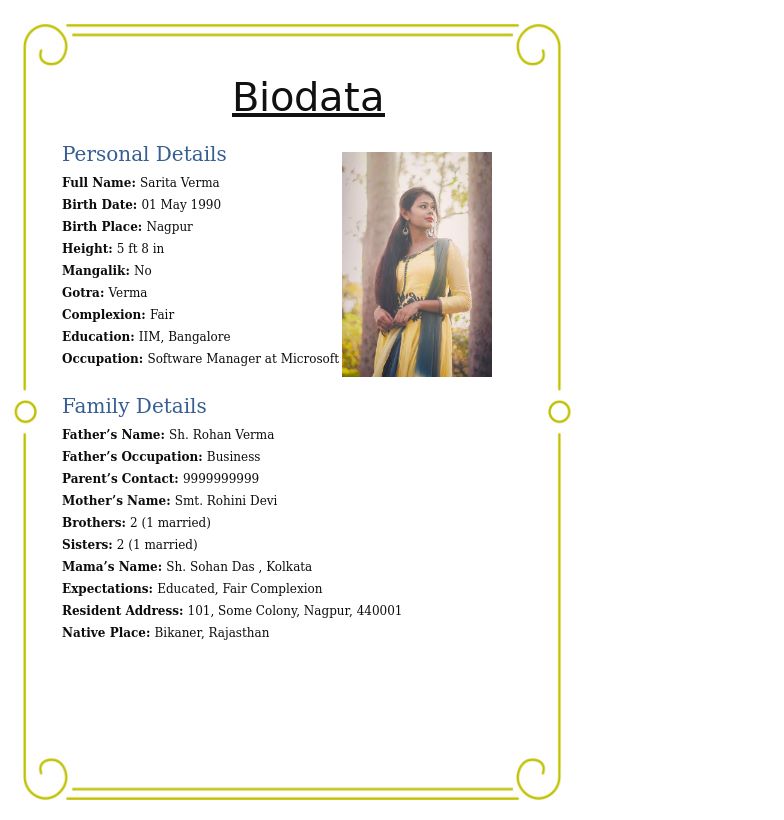
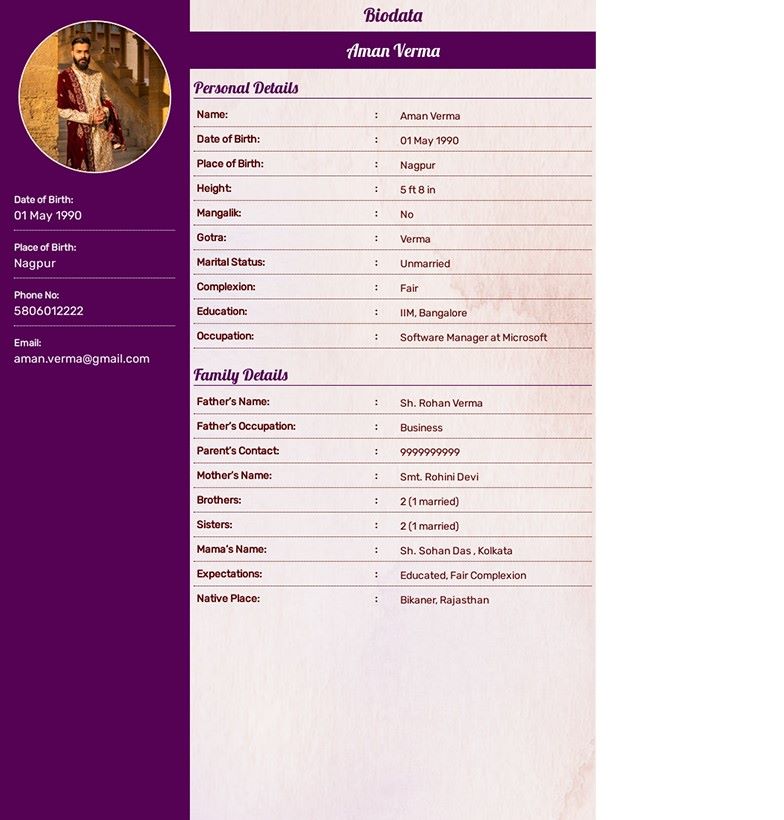
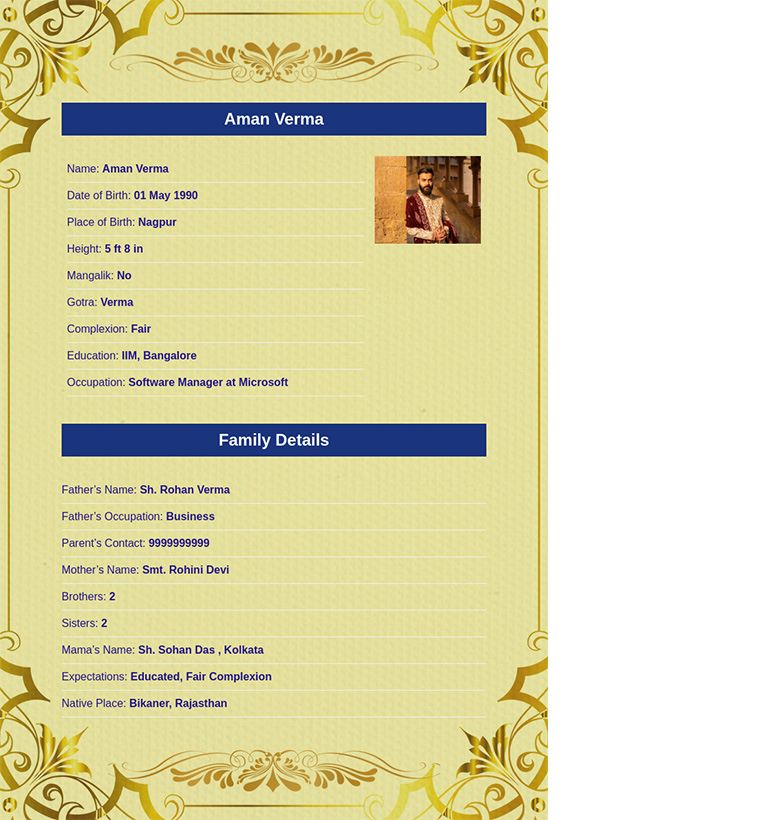
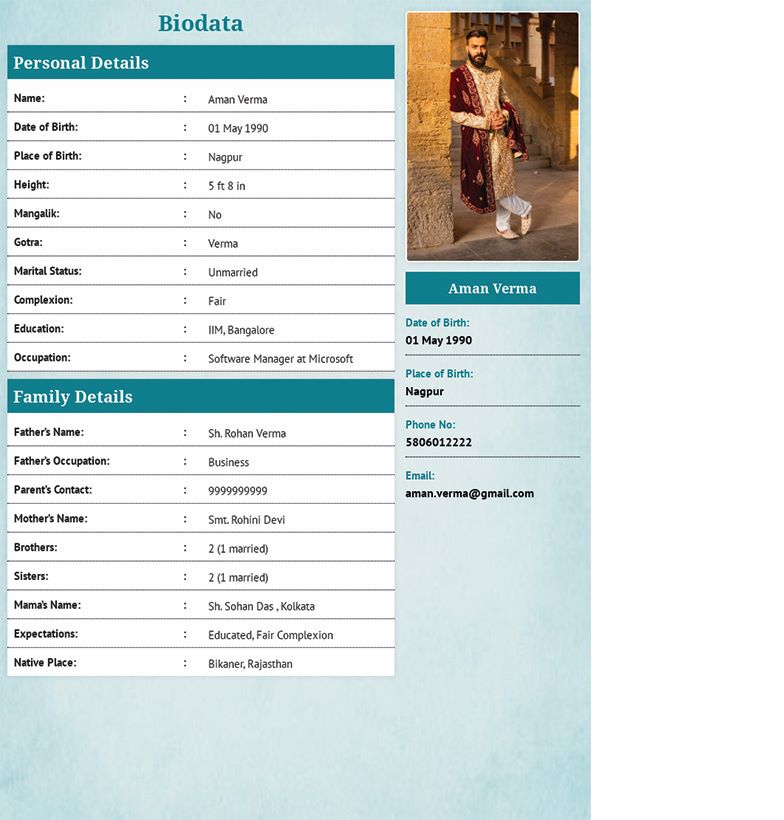
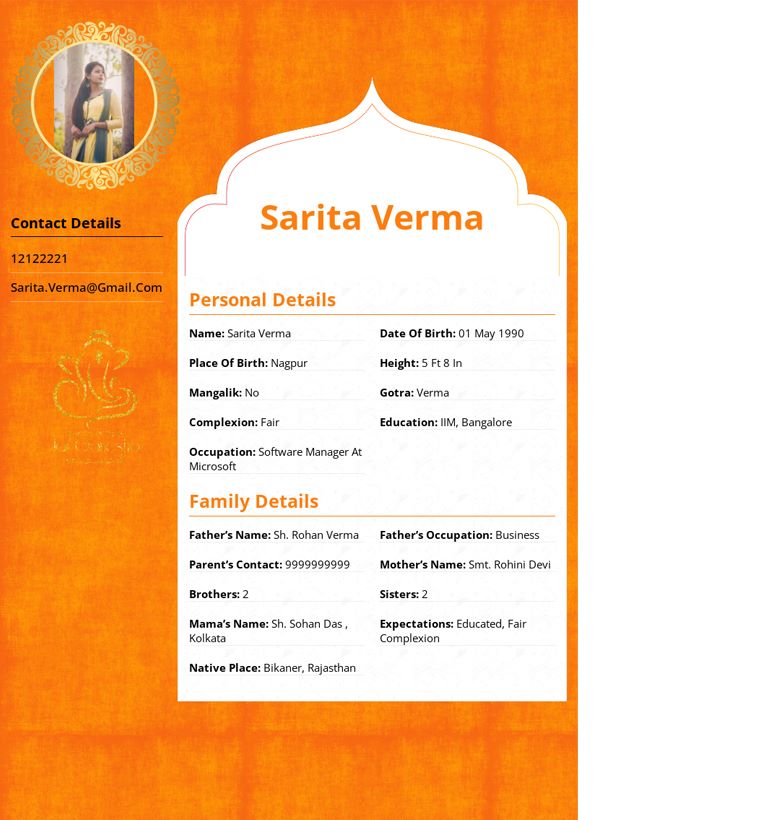
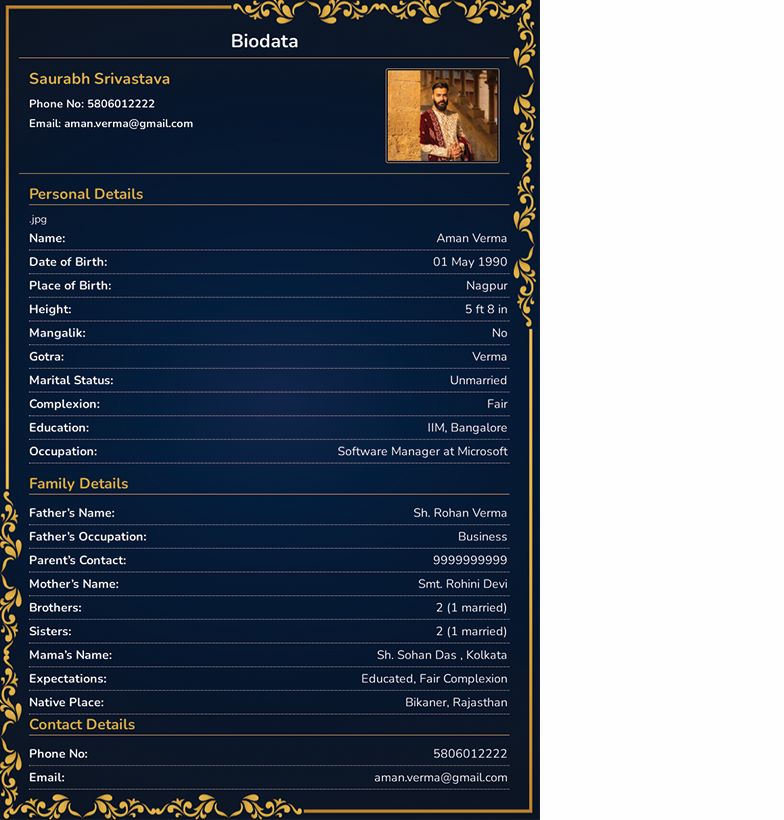
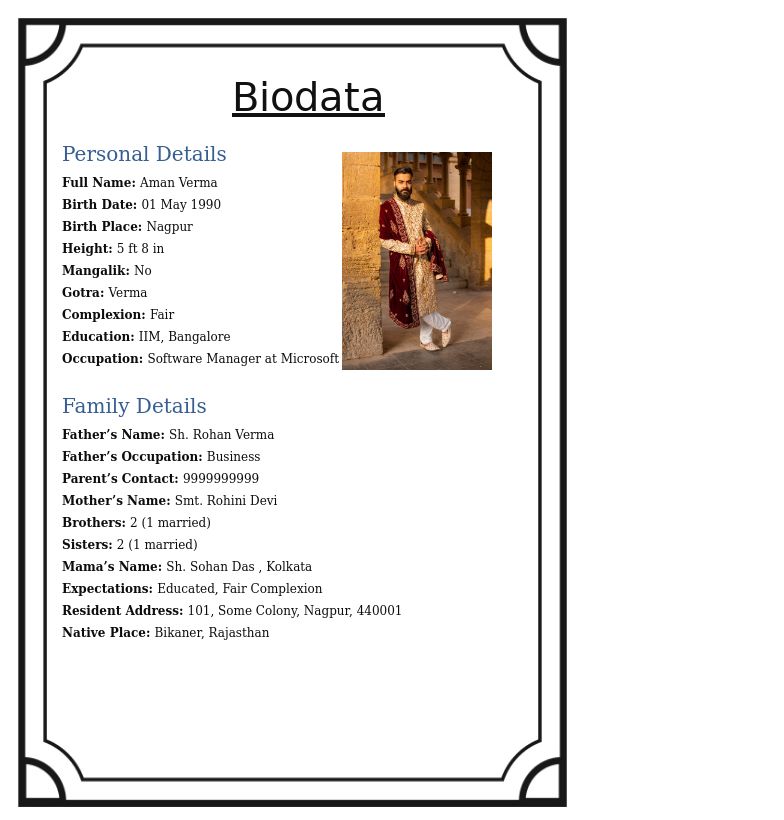
Sample Iyengar Marriage Biodata Format
Name: [Full Name]
Date of Birth: [DD/MM/YYYY]
Age: [Age]
Height: [Feet/Inches]
Current Residence: [City, Country]
Mother Tongue: Tamil
Community: Iyengar
Native Place: [Town/Region]

Education:
Degree: [Degree]
Institution: [University]
Additional Qualification: [If any]

Profession:
Occupation: [Job Title]
Employer: [Company]
Location: [City]
Career Plans: [Short Summary]

Family Details:
Father: [Name, Occupation]
Mother: [Name, Occupation]
Siblings: [Details]
Family Values: [Traditional/Moderate/Modern]
Religious-Cultural Orientation: [Short Description]

Personal Profile:
Interests: [Music, reading, travel, volunteering, etc.]
Lifestyle: [Food habits, routines, preferences]
About Me: [Temperament and values]

Partner Preferences:
Age Range: [Range]
Education: [Preference]
Profession: [Preference]
Location: [Open/Specific]
Family and Values: [Expectations]
Partner Preferences in Iyengar Matchmaking
Partner expectations differ widely, but certain themes recur. Many families look for someone educated, grounded, respectful, and emotionally mature. Cultural familiarity may matter, but it is often interpreted flexibly today. Some prefer an Iyengar match specifically, while others are open to broader Brahmin or even inter-community matches when values align well. Location, profession, and willingness to adapt to modern family structures also play a role.
The best partner preference sections are realistic and warm. Rather than listing rigid demands, explain the kind of partnership desired. For example, saying you hope to build a respectful, supportive marriage with shared values and mutual space for career growth creates a much stronger impression than a long checklist of fixed requirements.
Common Mistakes to Avoid
- Overusing generic language: Copied phrases reduce trust and weaken SEO value.
- Ignoring culture completely: In community-specific content, cultural context matters.
- Sharing too little: Families need enough detail to assess compatibility.
- Oversharing private matters: The biodata should be informative, not intrusive.
- Using an inconsistent tone: A polished, balanced voice works best.
SEO Value of Original Iyengar Biodata Content
People actively search for terms like Iyengar marriage biodata format, Iyengar matrimonial biodata sample, Iyengar biodata for marriage, and Tamil Iyengar marriage profile format. A detailed and original article that addresses these needs clearly can perform well in search. To support SEO, the content should include specific community context, practical advice, and natural keyword use without stuffing. Search engines increasingly reward pages that show expertise, originality, and useful depth, all of which are essential for community-focused matrimonial content.
Conclusion
An Iyengar marriage biodata format should combine clarity, culture, and character. It should present the individual truthfully while giving families enough information to assess compatibility with confidence. When written with care, it becomes more than a profile. It becomes the starting point for a respectful and meaningful matrimonial conversation. For that reason, originality, accuracy, and cultural understanding matter far more than ornamental language.