Dogri Marriage Biodata Format: A Complete Guide
Dogri language identity reflects the cultural warmth, social values, and historical depth of Jammu and adjoining regions. Dogri-speaking families often place importance on family honor, respect for elders, emotional balance, and regional familiarity alongside education and profession. A Dogri marriage biodata format should therefore serve as a meaningful introduction that combines family context, personal character, and practical details in a clear structure.
Why Dogri Families Benefit from a Good Biodata
A biodata offers a formal yet personal starting point for matrimonial conversation. In Dogri households, families often want to know not only about the candidate’s studies and job, but also about family upbringing, values, hometown, and lifestyle. A thoughtfully written biodata helps reduce uncertainty and encourages better quality matches, especially when families are spread across Jammu, Delhi, Chandigarh, or other cities.
Important Sections in a Dogri Marriage Biodata
- Basic profile: Name, date of birth, age, height, and current city.
- Language and regional background: Dogri identity, native place, and mother tongue.
- Education: Degree, institution, and academic or professional strengths.
- Profession: Current work, employer or business, and location.
- Family background: Parents, siblings, occupations, and family outlook.
- Personal profile: Nature, habits, interests, and goals.
- Partner preferences: Education, values, location, and family compatibility.
Family and Lifestyle Context
The family section should explain whether the household is traditional, moderate, or modern, and whether it values education, cultural continuity, spiritual life, or professional growth. This gives the biodata depth. The personal section should describe the candidate honestly. If the person is warm, practical, calm, disciplined, family-oriented, or career-minded, those qualities should appear naturally in the writing.
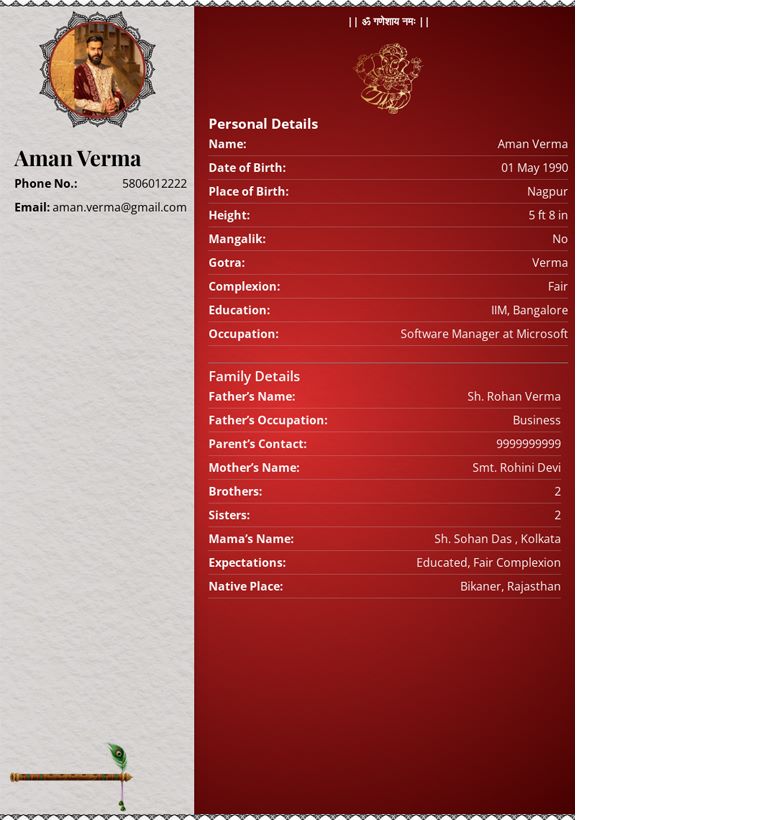
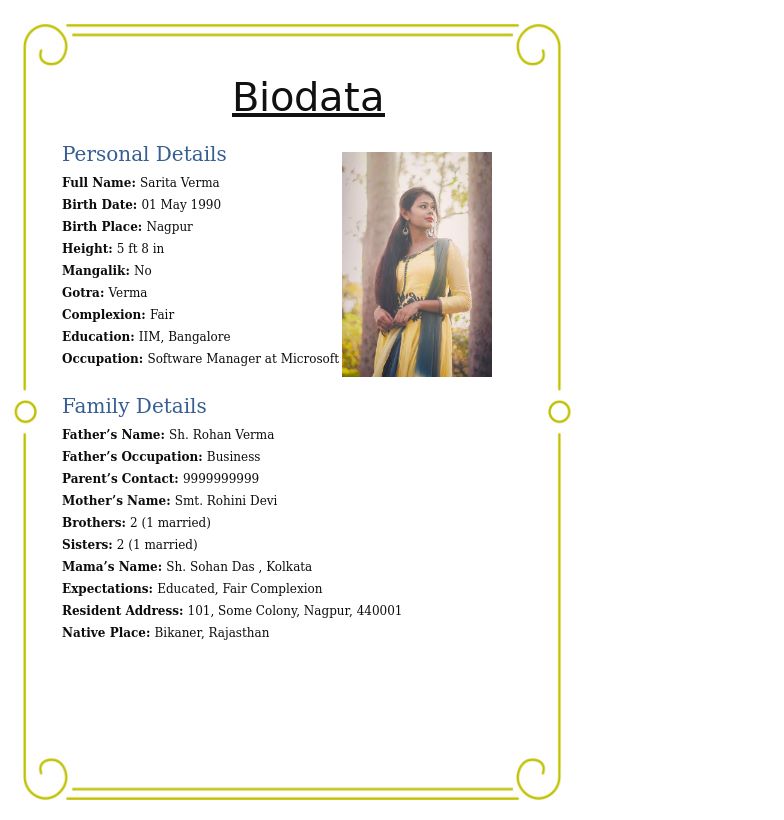
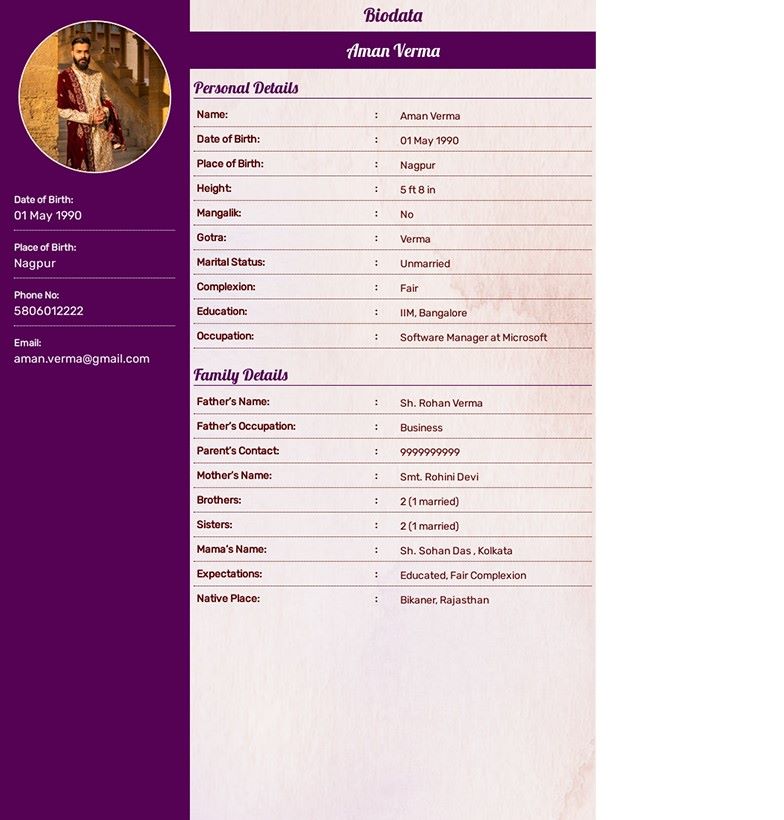
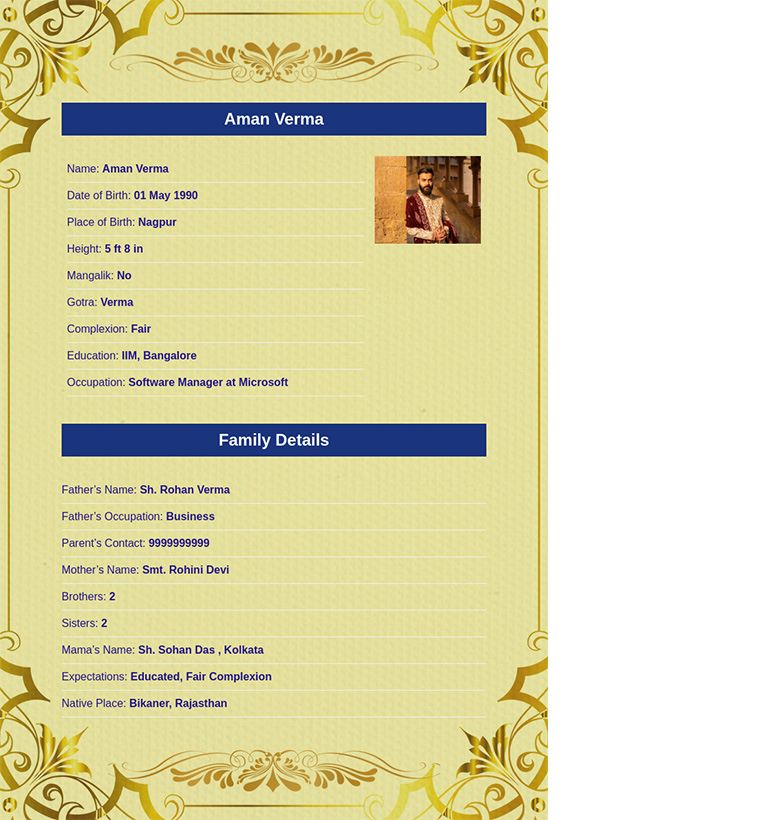
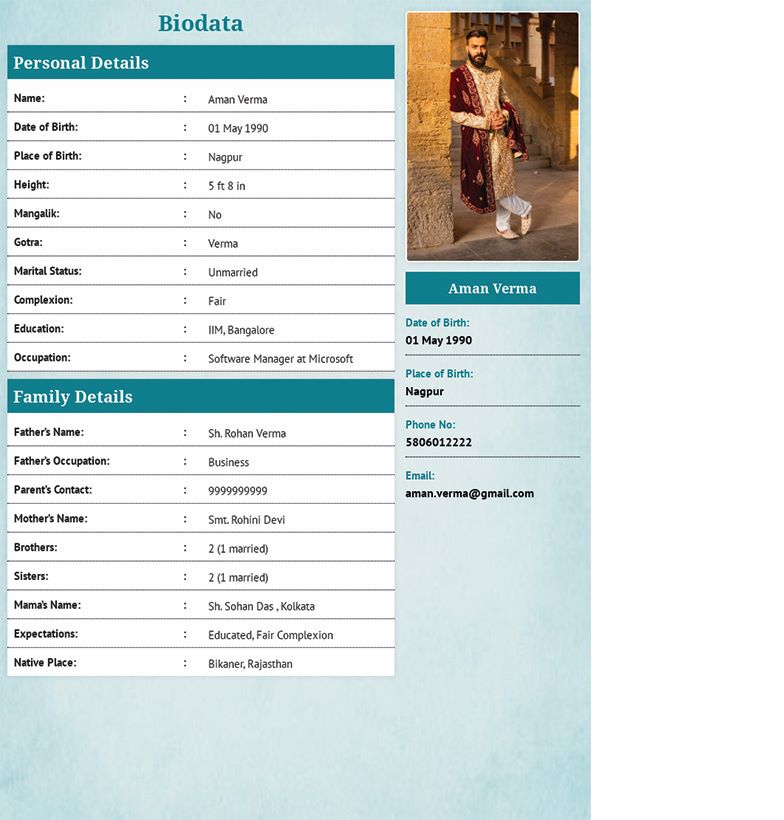
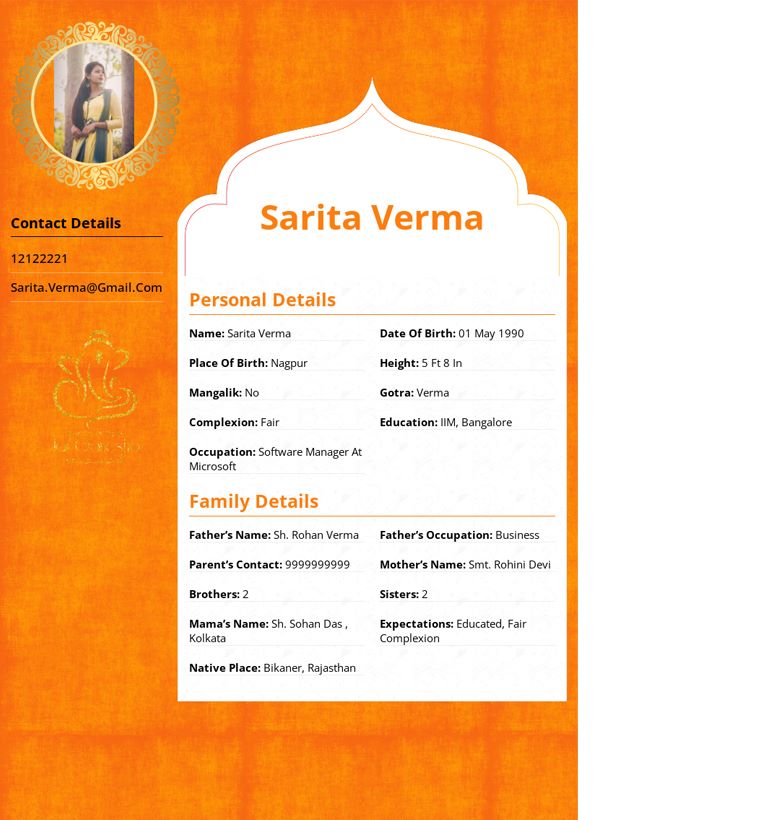
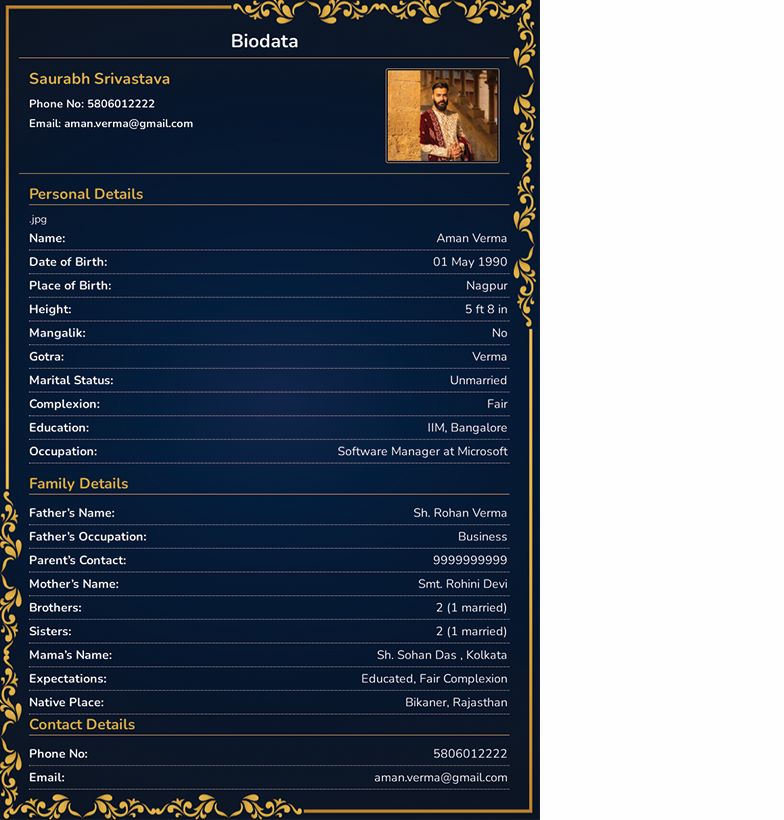
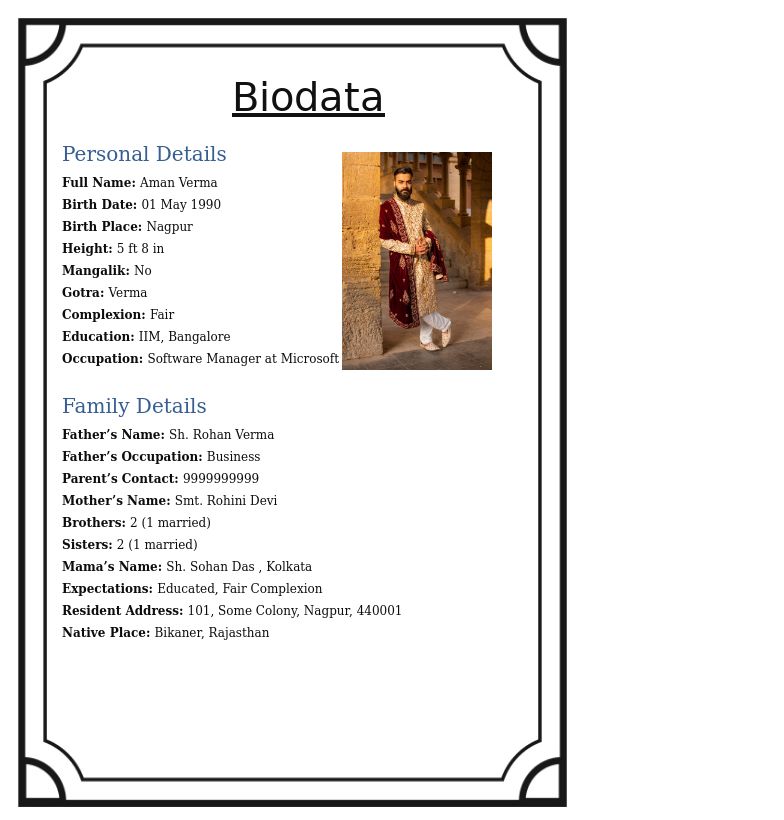
Sample Dogri Marriage Biodata Format
Name: [Full Name]
Age: [Age]
Date of Birth: [DD/MM/YYYY]
Height: [Feet/Inches]
Current Residence: [City]
Language/Background: Dogri
Native Place: [Town/Region]

Education:
Degree: [Degree]
Institution: [University/College]

Profession:
Occupation: [Job Title/Business]
Organization: [Name]
Location: [City]

Family Details:
Father: [Name, Occupation]
Mother: [Name, Occupation]
Siblings: [Details]
Family Values: [Traditional/Moderate/Modern]

Personal Profile:
Nature: [Calm, warm, respectful, responsible]
Interests: [Reading, travel, music, family time, fitness]

Partner Preferences:
Education: [Preference]
Profession: [Preference]
Values: [Preference]
Location: [Open/Specific]
Conclusion
A Dogri marriage biodata format should reflect both modern practicality and regional identity. Original writing with real family and personal context is far more useful than generic template content and gives the page stronger long-term value.