Brahmin Marriage Biodata Format: A Complete Guide
The Brahmin community, known for its deep-rooted traditions, intellectual pursuits, and spiritual heritage, is one of the most respected groups in India. Brahmins have historically played a pivotal role in religious, educational, and social spheres. Marriage in the Brahmin community is a sacred union, celebrated with elaborate rituals and a strong emphasis on compatibility, family values, and cultural continuity. This guide provides a comprehensive overview of the Brahmin marriage biodata format, including essential elements, unique customs, partner preferences, and practical advice for creating a meaningful profile.
Historical Background of Brahmin Matrimonial Traditions
The Brahmin community has long been associated with scholarship, ritual knowledge, philosophical thinking, and stewardship of sacred learning. Across India, Brahmin groups developed regional identities such as Tamil Iyers, Tamil Iyengars, Bengali Brahmins, Chitpavan Brahmins, Namboodiris, Saraswats, Maithil Brahmins, and many others. Even though their customs vary by region, there is a consistent emphasis on family reputation, education, ethical conduct, and spiritual discipline. These values naturally shaped the way marriage alliances were formed. Traditionally, families relied on personal networks, priests, relatives, and community elders to identify a suitable match. Today, the same priorities remain, but they are expressed through biodata documents, matrimonial websites, and structured family introductions.
In many Brahmin households, marriage is viewed not only as a personal partnership but also as a social and dharmic commitment. A bride or groom is expected to bring maturity, respect for elders, emotional steadiness, and willingness to contribute to family life. For this reason, a Brahmin marriage biodata format is expected to do more than list age, height, and job title. It should also communicate upbringing, values, educational journey, cultural orientation, and expectations from married life. A well-written profile helps families move beyond guesswork and begin conversations on a foundation of clarity.
Why a Brahmin Marriage Biodata Matters
In modern matchmaking, first impressions are often formed through a document before any direct conversation happens. For Brahmin families, the biodata acts as a concise introduction that balances tradition with practicality. It enables both sides to review key information such as birth details, professional background, family profile, native place, and lifestyle choices. In many cases, horoscope details may still be included or shared separately, but the biodata remains the core narrative that presents the individual as a whole person.
A strong Brahmin biodata is especially useful because matrimonial decisions in the community can involve several layers of compatibility. Families may look for alignment in language, food habits, educational background, city of residence, work-life expectations, and level of religious observance. Some households are strictly traditional, while others are culturally rooted but professionally cosmopolitan. A clear biodata reduces unnecessary back-and-forth by showing where a person stands on these matters. It makes the matchmaking process more respectful, efficient, and transparent.
Essential Sections in a Brahmin Marriage Biodata Format
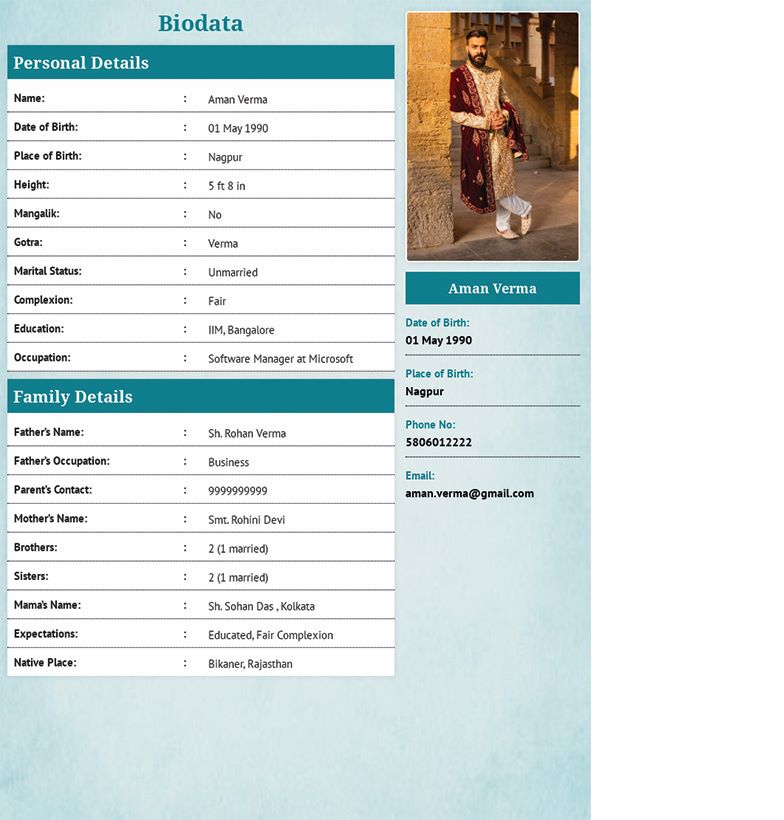
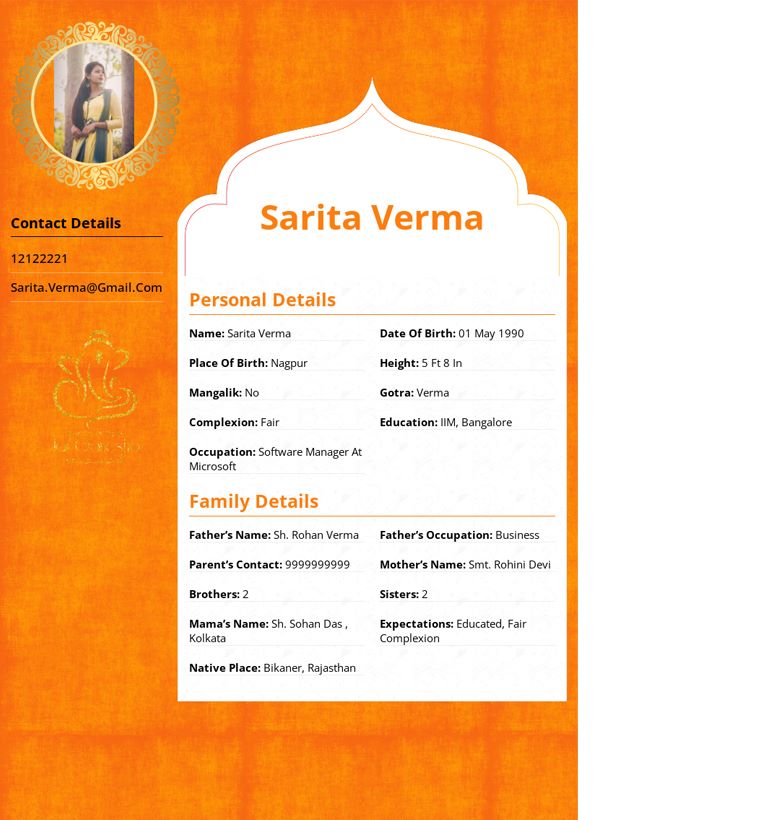
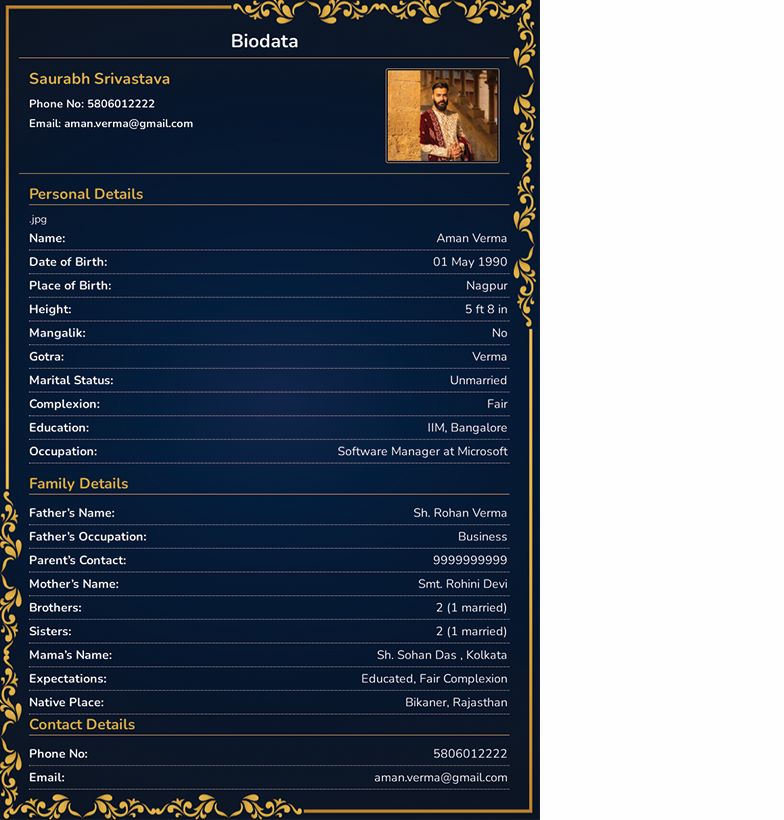
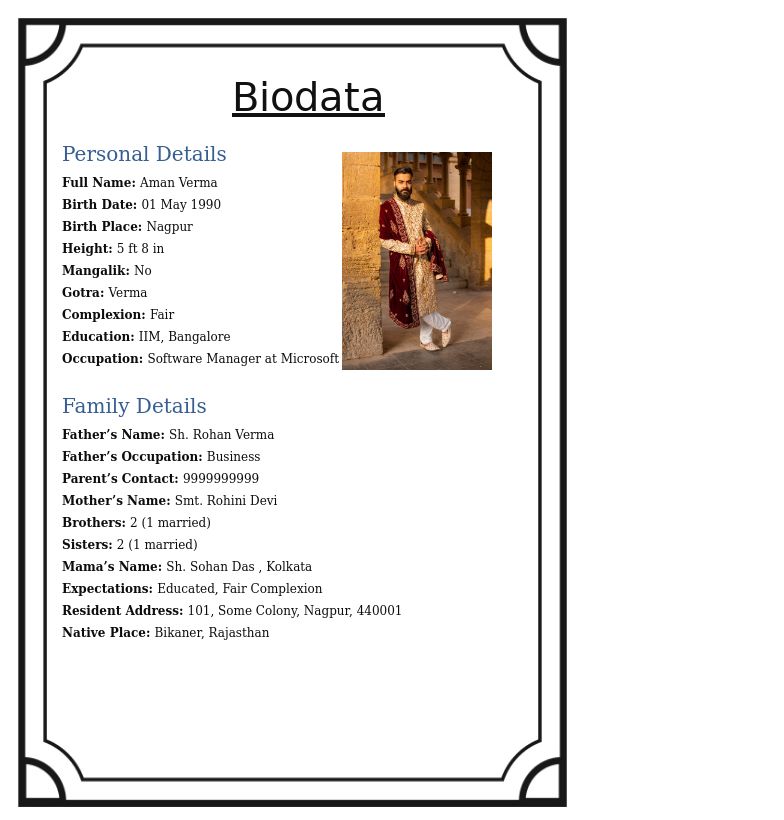
Although the exact structure may differ from one family to another, certain sections are almost always expected in a Brahmin marriage biodata. These sections should be written in a clean format with readable language and accurate details.
- Basic Profile: Full name, age, date of birth, place of birth, height, and present city.
- Religious and Cultural Details: Brahmin sub-group if relevant, native place, mother tongue, gothra where applicable, and cultural background.
- Education: Schooling, degrees, special certifications, academic achievements, and professional training.
- Career and Income: Current role, employer, sector, work location, long-term career direction, and broad financial stability.
- Family Background: Parents’ occupations, siblings, family values, social background, and whether the family is traditional, moderately traditional, or modern in outlook.
- Lifestyle Information: Food preferences, languages spoken, travel openness, health habits, and personal routine.
- About the Person: Temperament, hobbies, interests, values, and approach to marriage.
- Partner Preferences: Education, career orientation, family values, city preference, and level of cultural compatibility expected.
How Brahmin Families Evaluate Compatibility
Compatibility in Brahmin matchmaking is rarely based on a single factor. Education continues to carry weight because the community has historically valued intellectual discipline and academic commitment. However, contemporary families also give serious importance to emotional intelligence, adaptability, and respectfulness. A highly qualified profile may still be considered incomplete if it does not convey maturity, humility, and clarity about family life.
Family culture matters as much as individual success. Some households prioritize shared rituals, temple visits, observance of festivals, and vegetarian living. Others are more flexible and focus instead on ethics, decency, and mutual support. In urban settings, many Brahmin families are open to matches across states and professions, provided the core value system feels compatible. Therefore, a successful biodata should not exaggerate religiosity or modernity. It should describe the person honestly so the right families can identify a natural match.
Wedding Customs Commonly Seen in Brahmin Marriages
Brahmin wedding rituals differ across regions, yet they usually share a ceremonial seriousness rooted in Vedic tradition. The wedding is not merely celebratory; it is sacramental. Ritual purity, blessings from elders, sacred fire ceremonies, and recitation of mantras are central features. South Indian Brahmin weddings may include Kashi Yatra, Oonjal, Kanyadanam, Muhurtham, and Saptapadi. North Indian Brahmin weddings may feature Tilak, Haldi, Jaimala, Kanyadaan, Agni Pheras, and Vidaai. Bengali Brahmin weddings include customs like Saat Paak, Shubho Drishti, and Sindoor Daan. Even with regional diversity, the symbolism remains consistent: marriage is a solemn pledge of companionship, duty, and shared spiritual growth.
Because rituals still hold importance, families often appreciate biodata that reflects at least some awareness of tradition. This does not mean a candidate must be overtly ritualistic. It simply means that the profile should indicate whether the person is comfortable participating in family ceremonies, observing important festivals, and respecting inherited customs. For many Brahmin households, this reassurance helps build trust.
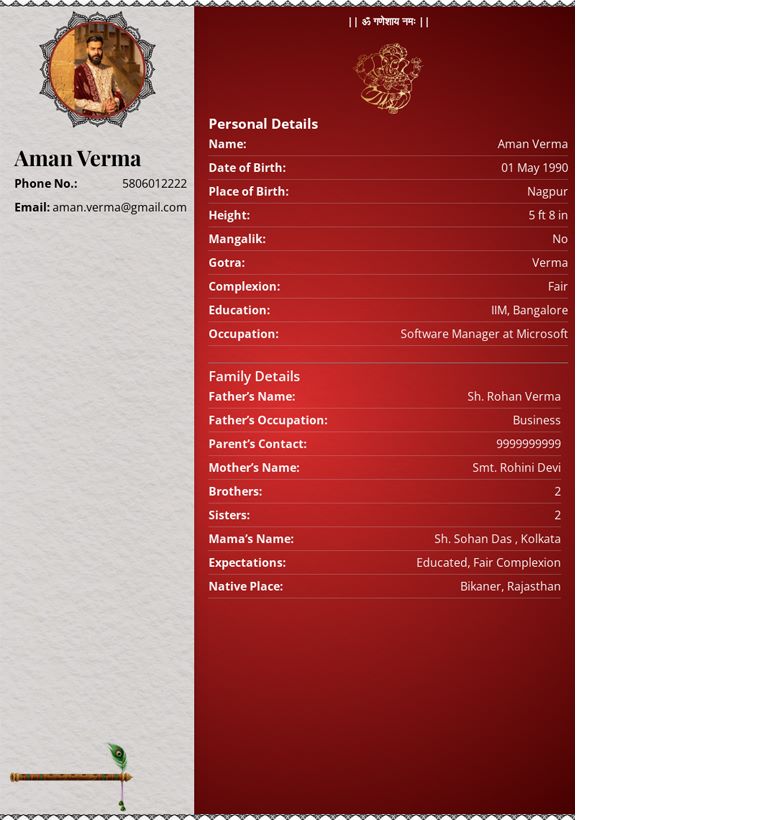
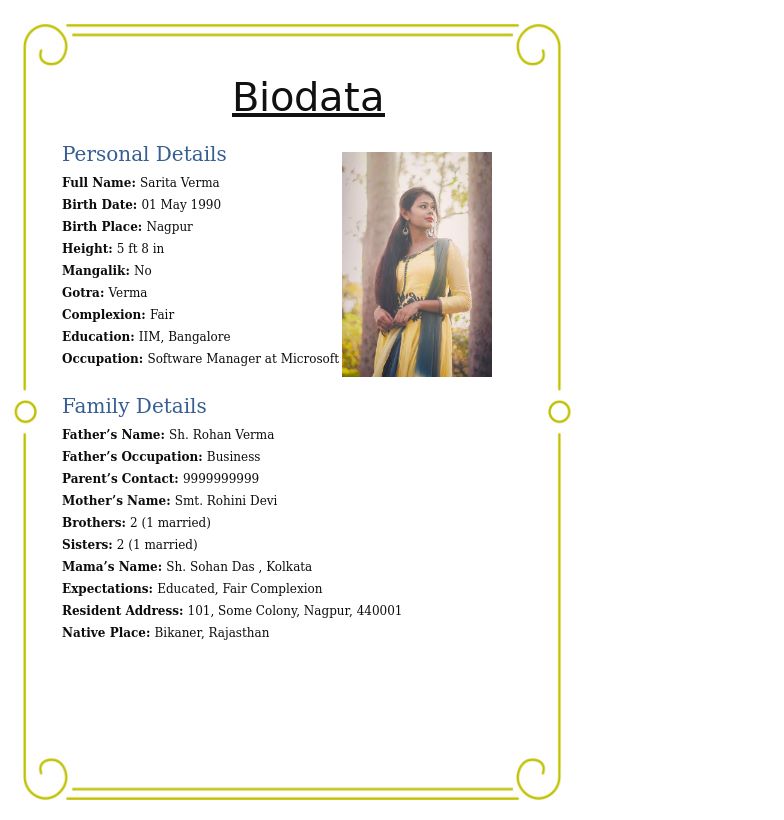
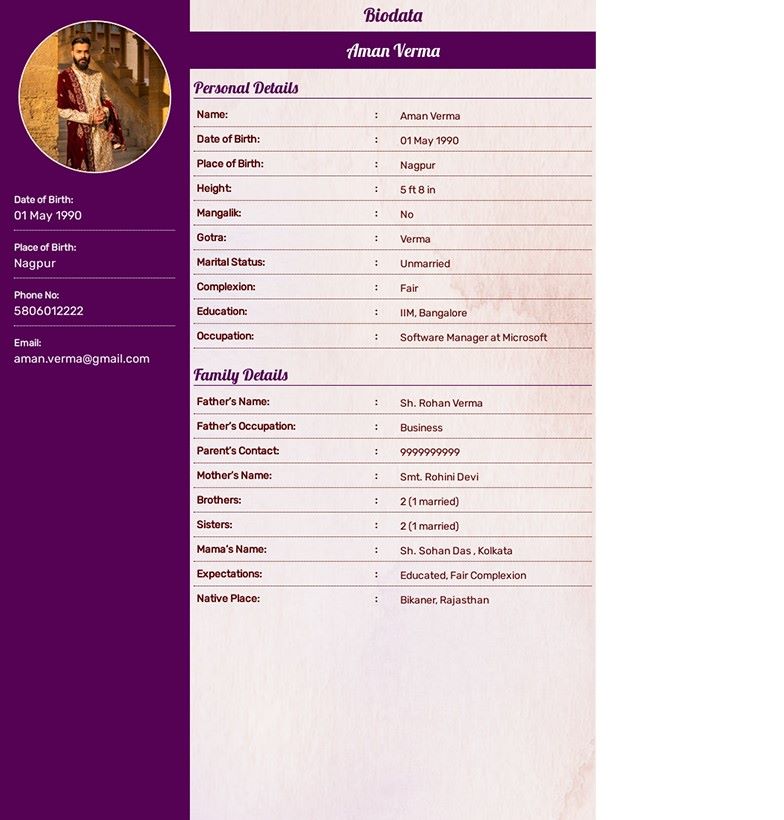
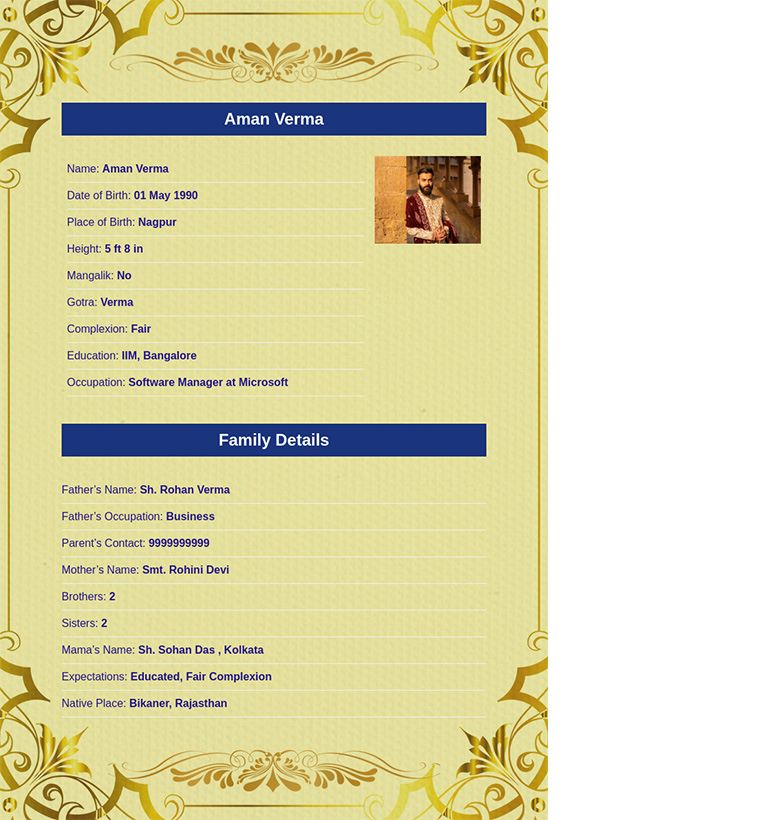
Sample Brahmin Marriage Biodata Format
Name: [Full Name]
Date of Birth: [DD/MM/YYYY]
Time of Birth: [Optional]
Place of Birth: [City, State]
Age: [Age]
Height: [Feet/Inches]
Current Residence: [City, Country]
Mother Tongue: [Language]
Community: [Brahmin subgroup if relevant]
Gothra: [If applicable]

Education:
Degree: [Degree Name]
Institution: [College/University]
Additional Qualifications: [Certifications/Achievements]

Profession:
Occupation: [Job Title]
Employer: [Company/Organization]
Location: [City]
Career Plans: [Brief Summary]

Family Details:
Father: [Name, Occupation]
Mother: [Name, Occupation]
Siblings: [Names/Occupations]
Family Background: [Traditional/Moderate/Modern]
Native Place: [Town/Village/Region]

Personal Profile:
Interests: [Reading, music, travel, volunteering, yoga, classical arts, etc.]
Lifestyle: [Vegetarian/other, fitness, routines]
Values: [Family-oriented, respectful, ambitious, spiritually inclined]

Partner Preferences:
Preferred Age Range: [Range]
Education: [Preference]
Profession: [Flexible/Specific]
Location: [Open/Preferred]
Family Values: [Traditional/Moderate/Modern]
Additional Expectations: [Short note]
Writing Style Tips for a Better Brahmin Biodata
The most effective biodata profiles are neither too stiff nor too casual. They are clear, warm, and purposeful. Avoid using overly promotional language such as calling yourself perfect, ideal, or exceptionally superior. That tone can feel forced and unconvincing. Instead, use measured language that shows self-awareness. For example, describing yourself as academically focused, family-oriented, calm by temperament, and committed to balanced growth creates a stronger impression than vague praise.
Accuracy is critical. Incorrect age, mismatched educational details, unclear job descriptions, or inconsistencies between family statements and personal profile can create doubt very early. If a family is traditional and horoscope matching is important, birth details should be double-checked. If the person is open to relocation, that should be stated clearly. If the family prefers a culturally rooted but professionally independent match, that nuance should be visible in the partner preference section.
What Makes a Brahmin Biodata Stand Out
In a crowded matrimonial landscape, the strongest profiles stand out through specificity and balance. A profile becomes memorable when it offers a real sense of the person behind the document. Instead of writing generic statements like "good values" or "well-settled family," explain what those ideas mean in context. Mention whether the person enjoys literature, Carnatic or Hindustani music, teaching, spiritual study, family travel, research, social work, or disciplined professional growth. Thoughtful specifics make the profile more credible and more human.
Another quality that helps is balance between individuality and family orientation. Brahmin families often look for people who are personally accomplished without being excessively individualistic. A profile that communicates independence along with consideration for family life tends to do well. The goal is not to appear traditional for appearance’s sake or modern for fashion’s sake. The goal is to present an integrated personality.
Partner Preferences in Brahmin Matchmaking
Partner expectations in Brahmin matchmaking vary by region and generation, but a few themes appear regularly. Educational compatibility remains highly valued because it often signals shared intellectual and professional outlook. Families may also look for similar cultural orientation, especially around food habits, respect for rituals, and comfort with extended family interaction. Professional ambition is generally appreciated, though expectations around work-life balance may differ. Some households prefer a match from a similar Brahmin subgroup, while others are open so long as cultural compatibility is strong.
Well-written partner preferences should be realistic and respectful. Rather than listing rigid demands, describe the kind of life partnership being sought. For example, saying that you value mutual respect, emotional maturity, family warmth, and clarity about long-term goals is more effective than an inflexible checklist. This improves response quality and presents the individual as thoughtful rather than transactional.
Common Mistakes to Avoid
- Being overly generic: Generic profiles do not help families understand personality or compatibility.
- Overloading the document: Too much unnecessary detail can make the biodata tiring to read.
- Writing in an overly formal tone: The profile should feel human, not bureaucratic.
- Hiding important information: Major facts about career location, marital status, or lifestyle should never be vague.
- Using copied language: Repetitive phrasing weakens authenticity and is poor for SEO if the content is published online.
Digital Use and SEO Value of Community-Specific Content
Community-focused marriage biodata articles have value not only for families but also for search visibility. People frequently search terms such as Brahmin marriage biodata format, Brahmin matrimonial profile example, Brahmin biodata sample for marriage, and Brahmin shadi biodata template. A detailed article that answers these searches in a practical, culturally aware way can perform well organically. To support that purpose, the content should be original, informative, and genuinely useful instead of spun or duplicated. Search engines increasingly reward pages that show topical depth, clarity, and user value. A long-form Brahmin biodata guide naturally supports those goals when written thoughtfully.
That is why originality matters. SEO content for caste-specific marriage formats cannot rely on mechanical repetition. Each community has its own expectations, symbolism, language variations, and marriage dynamics. Good content acknowledges those distinctions while still remaining respectful and broadly accessible.
Conclusion
The Brahmin marriage biodata format is much more than a summary sheet. It is a bridge between tradition and modern matchmaking. A well-prepared profile introduces a person with dignity, clarity, and depth while giving families enough information to assess compatibility sincerely. When it includes accurate background, cultural context, personal values, and realistic partner preferences, it becomes a meaningful starting point for serious matrimonial conversations. Whether the family is traditional, modern, or somewhere in between, the best Brahmin biodata is always honest, thoughtful, and grounded in real identity.