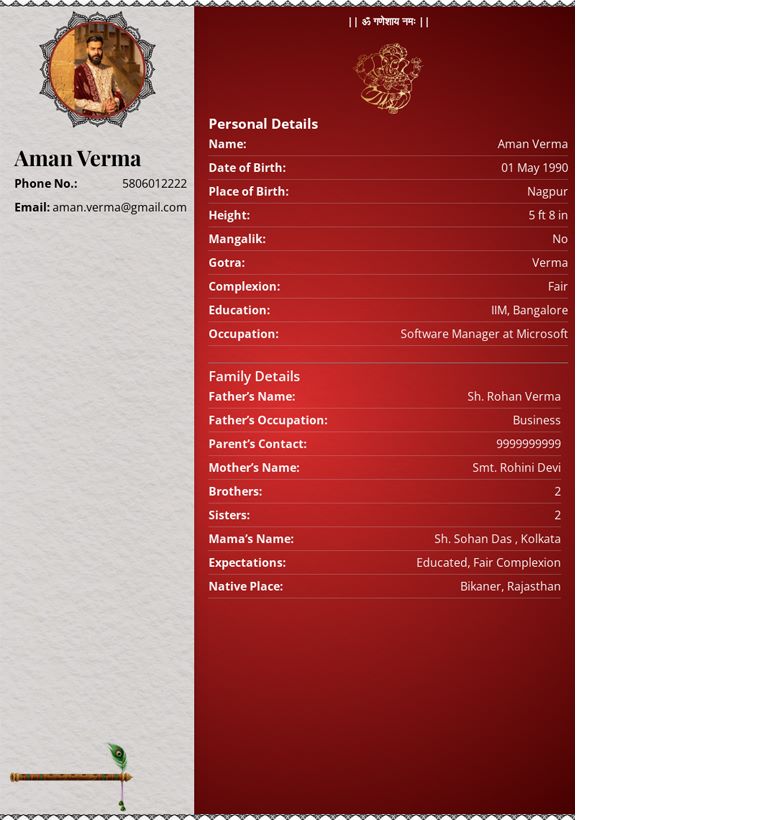
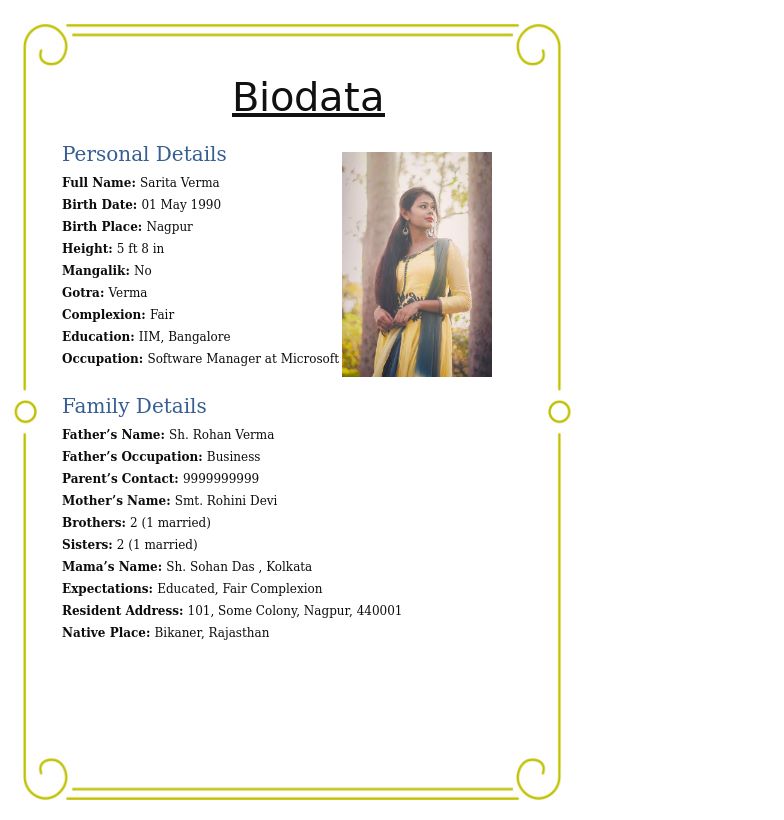
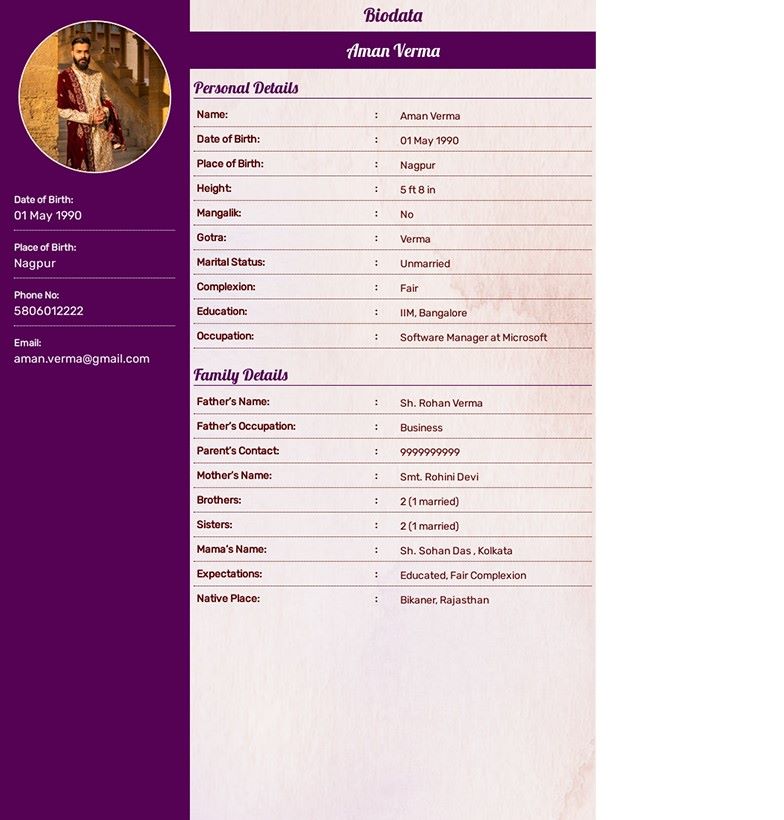
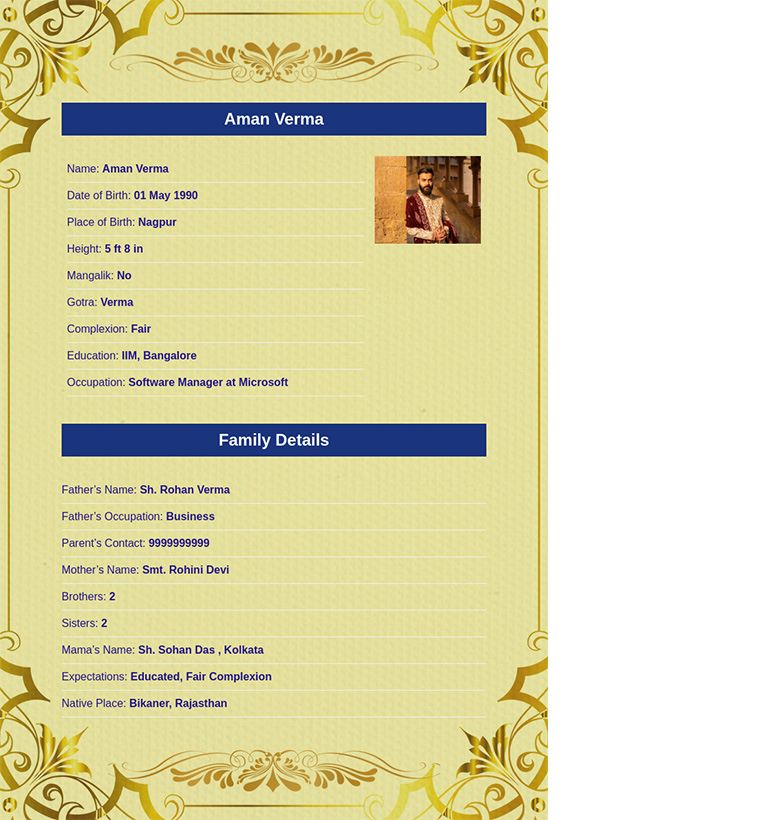
Bhili Marriage Biodata Format: A Complete Guide
The Bhili language and Bhil cultural identity represent one of India’s most important indigenous traditions, spread across Rajasthan, Gujarat, Madhya Pradesh, and Maharashtra. Families who identify with Bhili language or Bhil heritage often value kinship, dignity, social trust, hard work, and community belonging in marriage. A Bhili marriage biodata format should therefore introduce the candidate in a way that respects both personal achievement and cultural roots.
Why a Bhili Biodata Should Be Specific
A community-rooted biodata becomes more useful when it gives enough social and family context. In Bhili matrimonial conversations, families may want to know not only where the person works or studied, but also their native region, family background, lifestyle, and connection to community values. A thoughtful biodata can help build trust, especially when the match is being explored across towns or through extended networks.
Sections to Include
- Basic profile: Name, age, birth details, height, and current location.
- Language and cultural background: Bhili identity, native district, and mother tongue.
- Education: Academic qualifications, training, and institutions.
- Profession: Occupation, employer or business, and city.
- Family details: Parents, siblings, occupations, and family values.
- Personal profile: Nature, work ethic, interests, and social outlook.
- Partner preferences: Education, values, family orientation, and practical expectations.
How to Write the Profile Naturally
A good Bhili marriage biodata should sound real and respectful. It may describe the person as grounded, hardworking, family-oriented, cheerful, responsible, or community-minded. It can also mention interests such as farming, public service, teaching, travel, sports, local culture, music, or devotional participation. These details make the profile feel more human and more credible.
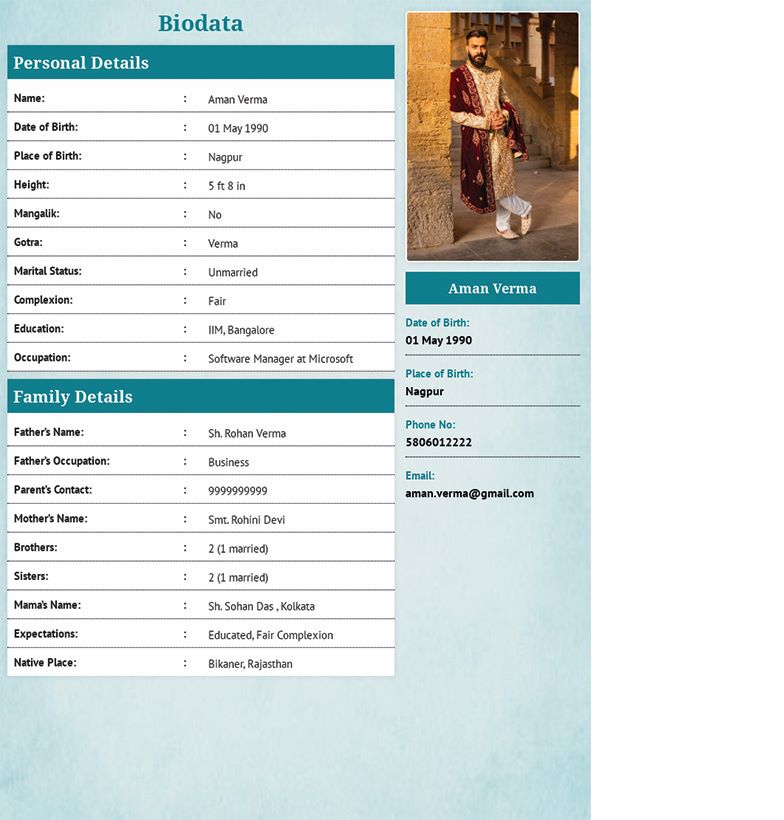
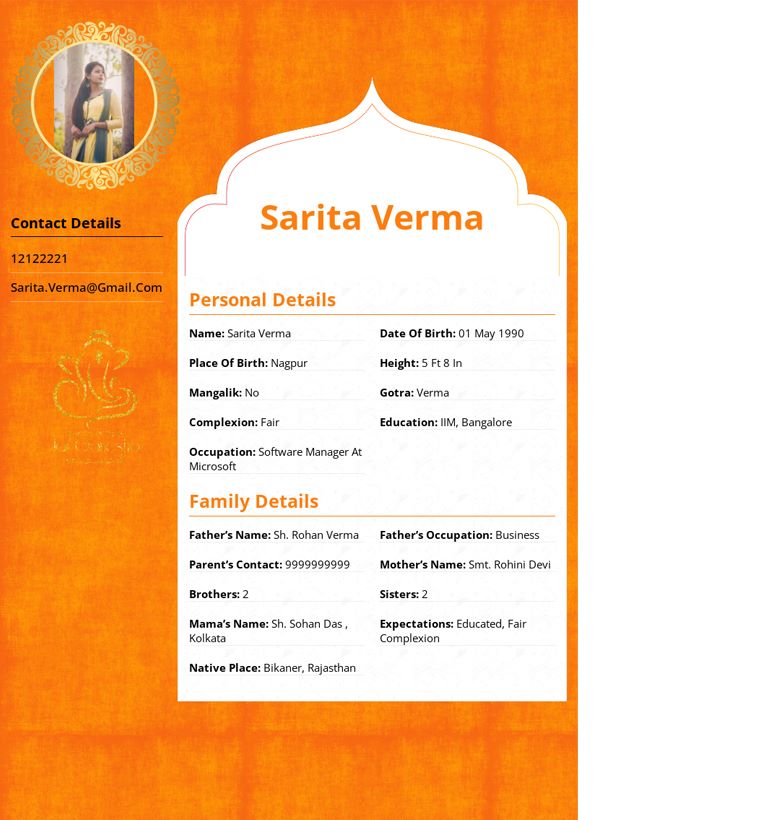
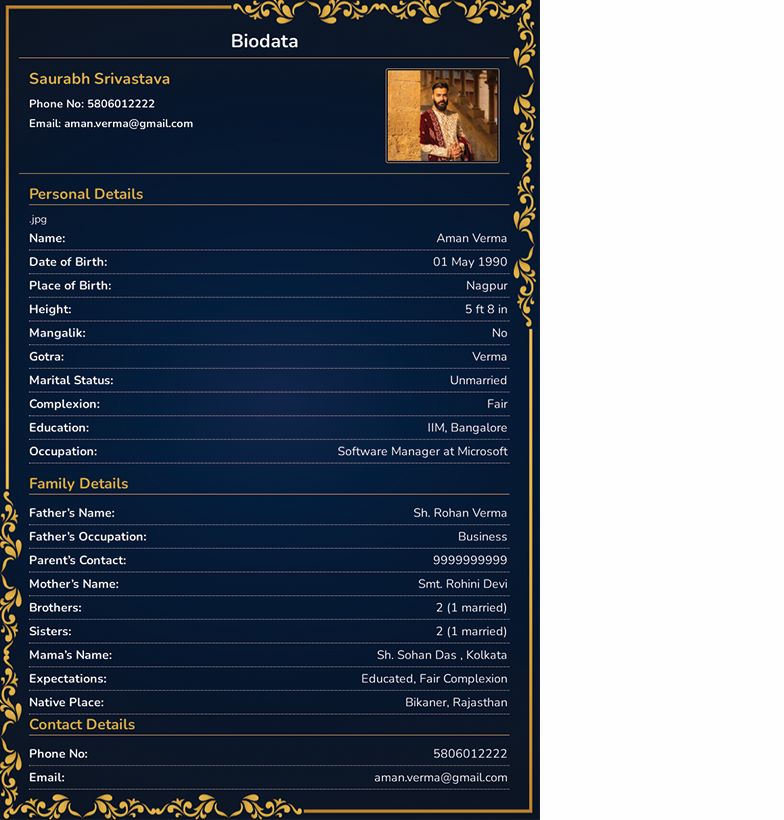
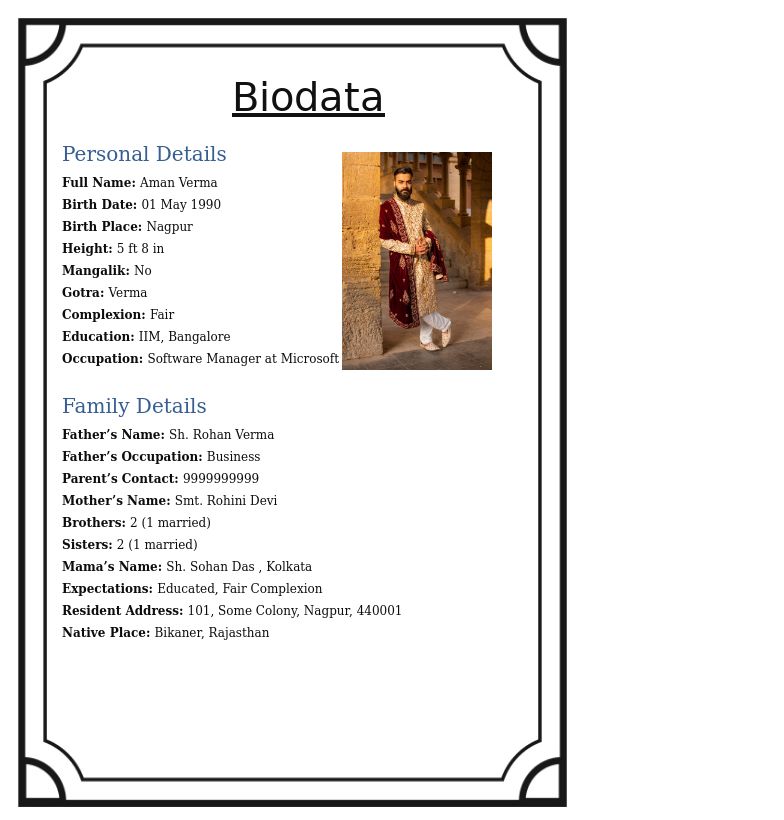
Sample Bhili Marriage Biodata Format
Name: [Full Name]
Age: [Age]
Date of Birth: [DD/MM/YYYY]
Height: [Feet/Inches]
Current Residence: [City/Town]
Language/Background: Bhili
Native Place: [District/Region]

Education:
Degree: [Degree/Qualification]
Institution: [School/College/Institute]

Profession:
Occupation: [Job/Business]
Location: [City]

Family Details:
Father: [Name, Occupation]
Mother: [Name, Occupation]
Siblings: [Details]
Family Values: [Traditional/Moderate/Modern]

Personal Profile:
Nature: [Grounded, hardworking, calm, family-oriented]
Interests: [Music, travel, agriculture, reading, sports]

Partner Preferences:
Education: [Preference]
Values: [Preference]
Location: [Open/Specific]
Family Expectations: [Short note]
Conclusion
A Bhili marriage biodata format should reflect both personal identity and cultural belonging. Original content written with social context is far more useful for matchmaking and much stronger for search visibility than generic repeated wording.