Bengali Marriage Biodata Format: A Complete Guide
Bengali matrimonial culture is shaped by education, literature, family warmth, intellectual conversation, and deep attachment to language and heritage. Bengali families may live in Kolkata, across West Bengal, in Bangladesh-origin diaspora settings, or in metropolitan cities worldwide, but many still value refinement, cultural comfort, and emotional compatibility in marriage. A Bengali marriage biodata format should therefore do more than list facts. It should present the person with personality, clarity, and cultural context.
Why Bengali Families Value a Thoughtful Biodata
In many Bengali households, the matrimonial process includes close attention to education, profession, family background, manners, and outlook toward life. A good biodata helps both sides understand the candidate before any direct conversation. It is especially useful when families are spread across cities and rely on written introductions first. The best profile is one that feels polished but not artificial. It should show who the person is, how they were raised, and what they are looking for in a partner.
Important Sections in a Bengali Marriage Biodata
- Basic information: Full name, date of birth, age, height, and place of residence.
- Cultural identity: Bengali background, native place, mother tongue, and family roots.
- Education: Degrees, academic strengths, and institutions attended.
- Profession: Job title, employer, current city, and future plans.
- Family background: Parents, siblings, occupations, and family environment.
- Personal profile: Interests, nature, food habits, creativity, and lifestyle.
- Partner preferences: Education, values, family orientation, and location openness.
What Makes a Bengali Biodata Strong
A Bengali marriage biodata usually makes a stronger impression when it includes a real sense of personality. Bengali families often appreciate candidates who are not only educated and professionally stable but also thoughtful, balanced, and capable of meaningful conversation. Mentioning interests such as reading, music, films, travel, writing, teaching, cooking, or cultural events can make the profile more believable and engaging.
The family section should also be written with care. It helps to mention whether the family is traditional, liberal, culturally engaged, academically inclined, or professionally established. These are often more useful details than generic statements about respectability.
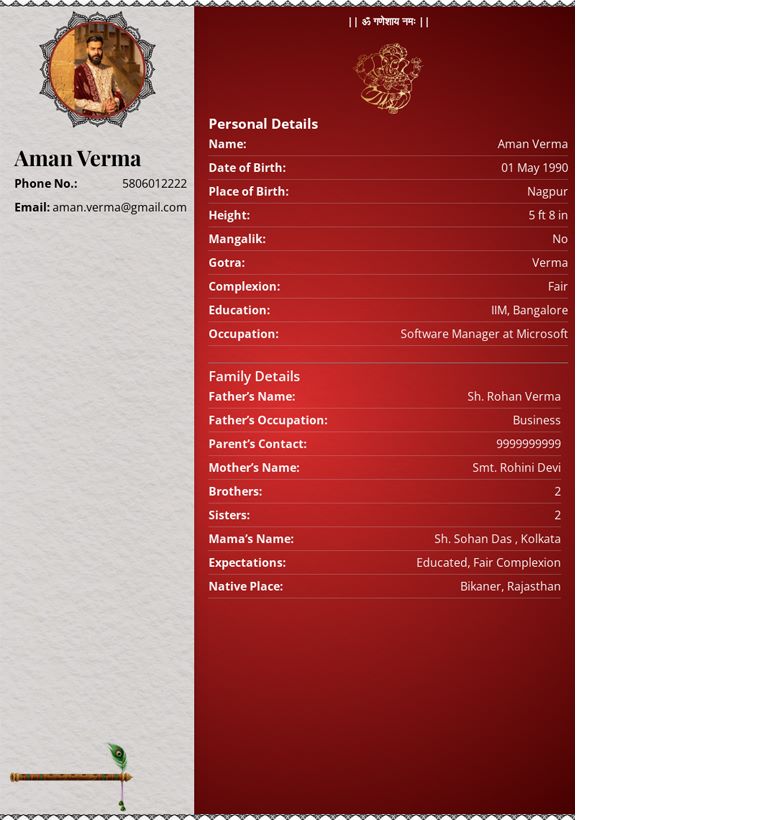
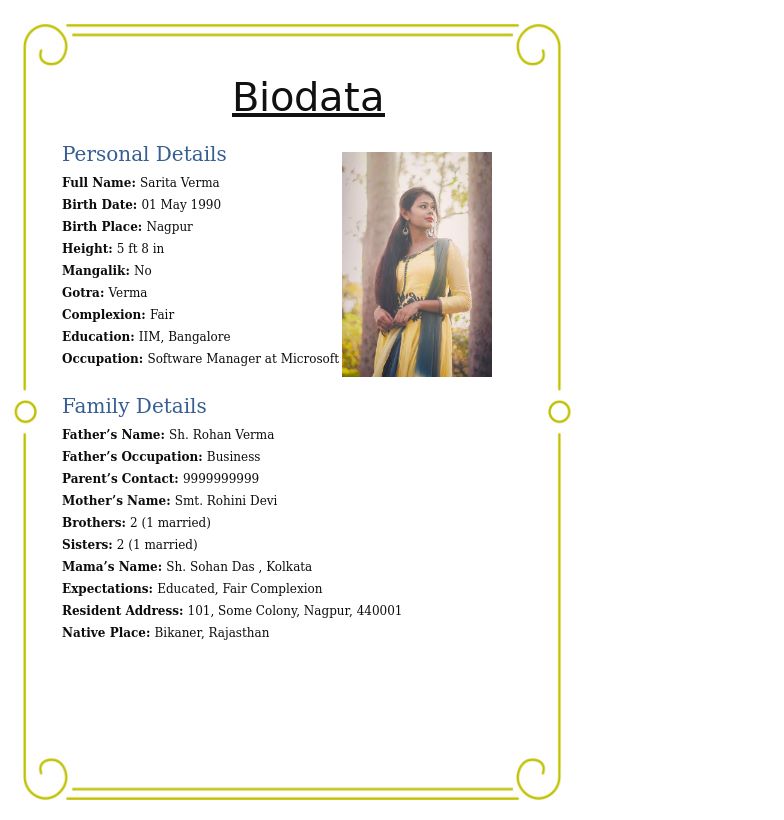
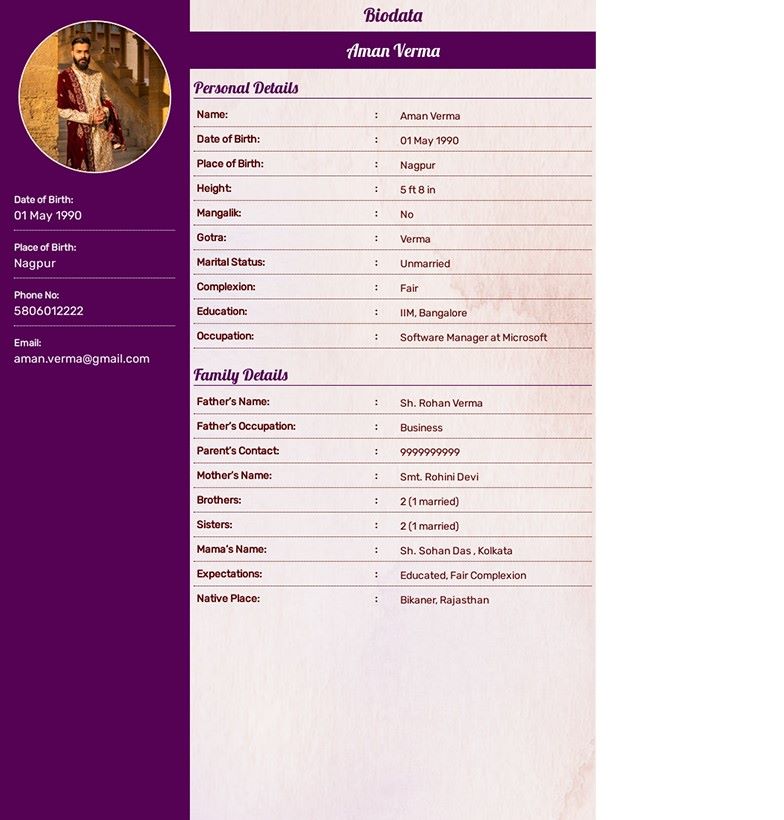
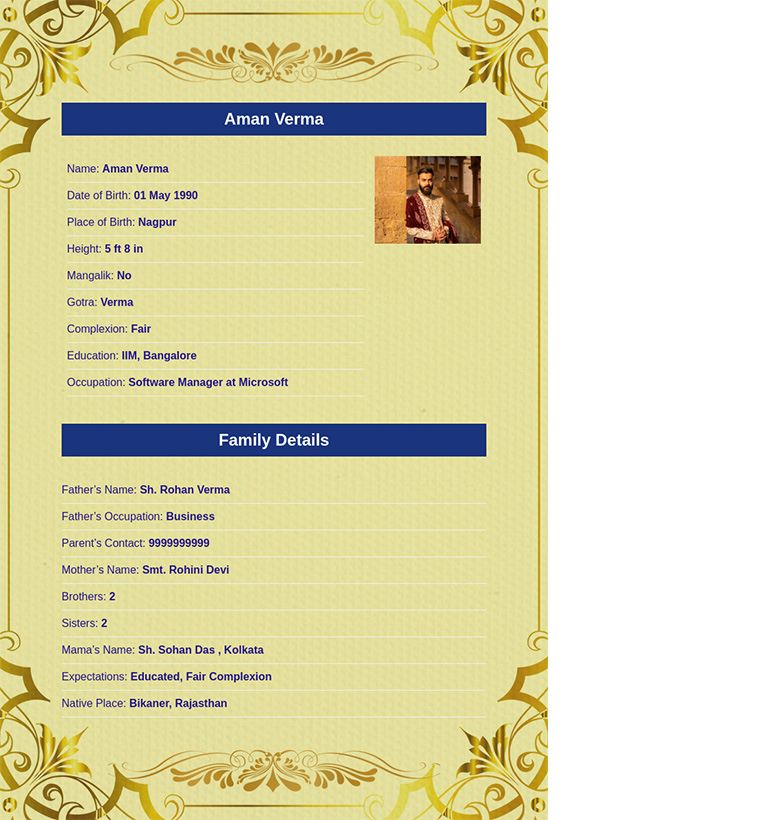
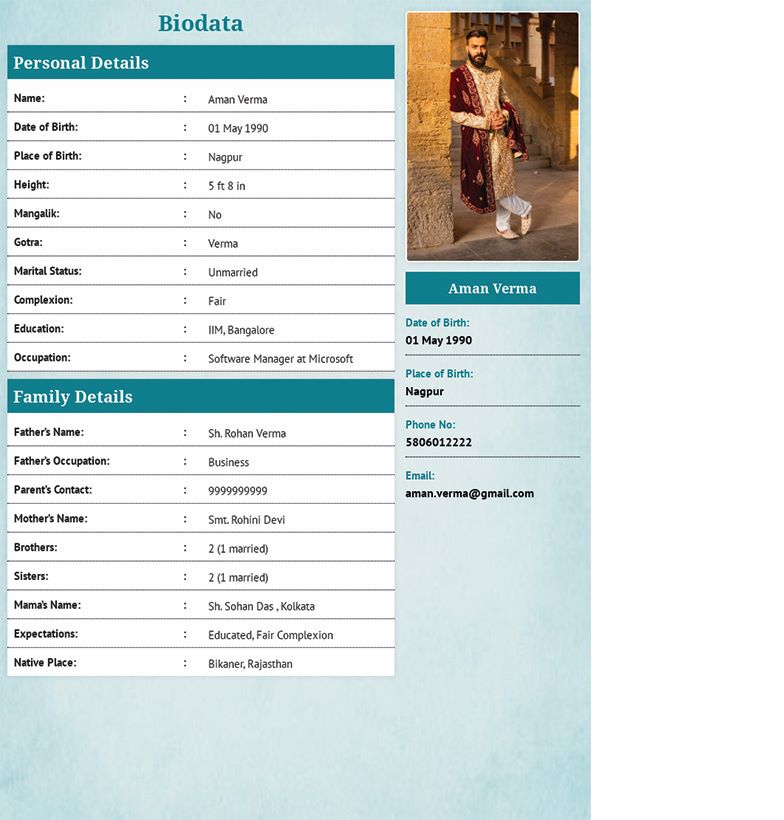
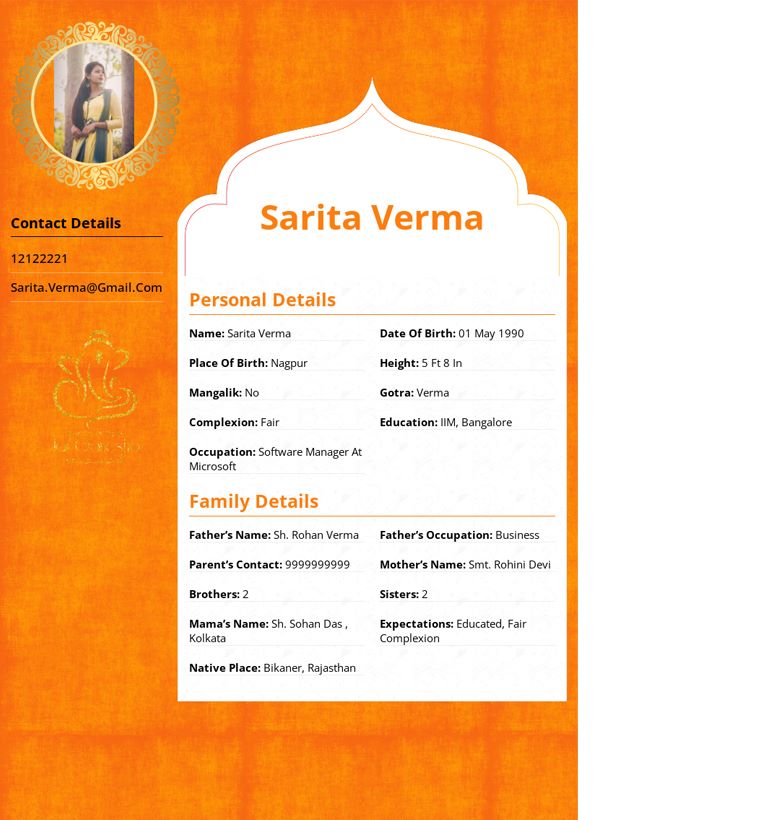
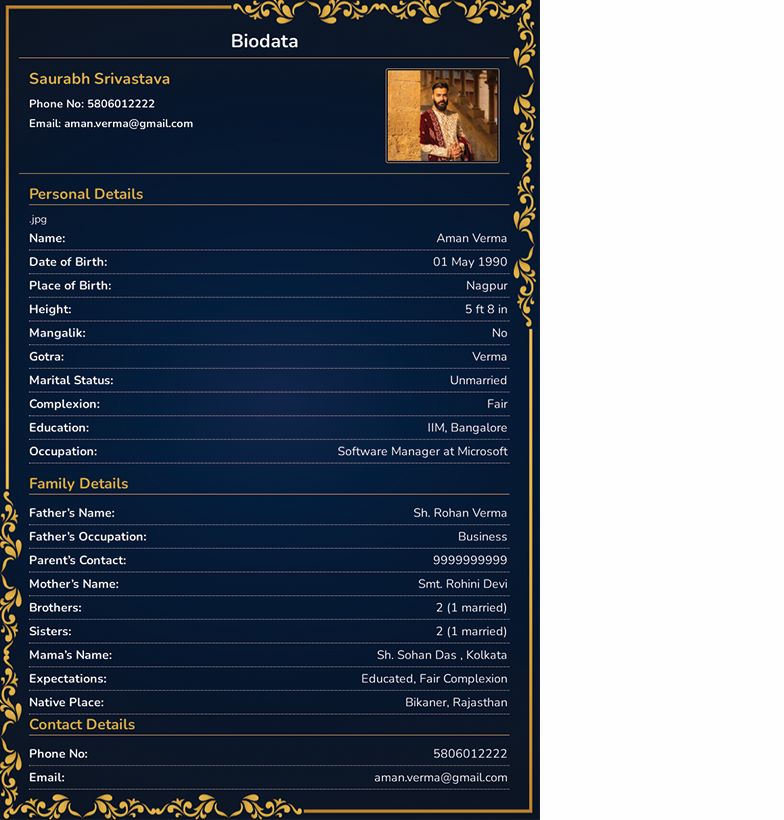
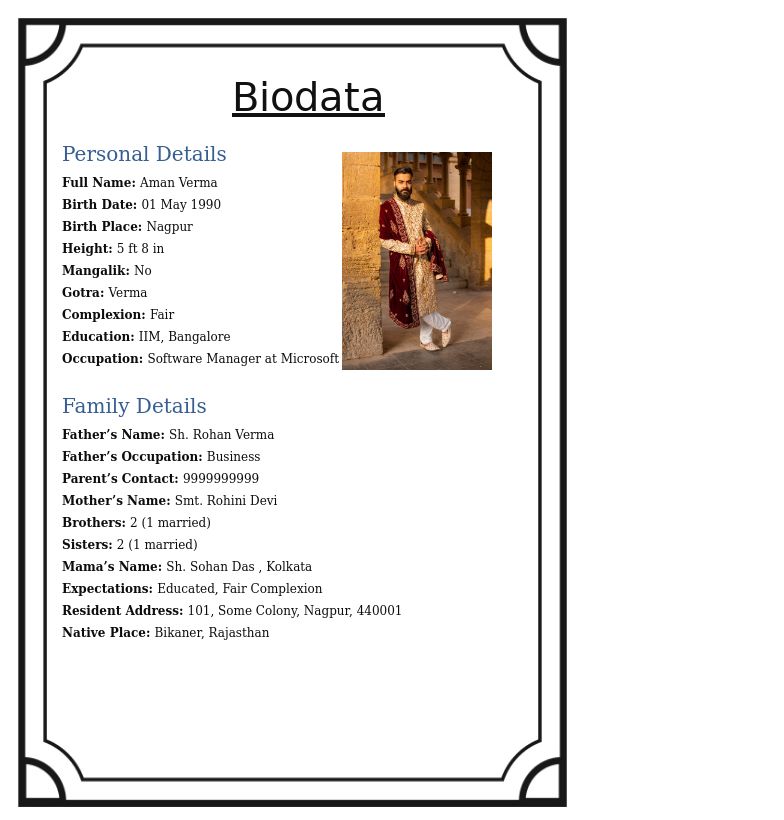
Sample Bengali Marriage Biodata Format
Name: [Full Name]
Date of Birth: [DD/MM/YYYY]
Age: [Age]
Height: [Feet/Inches]
Current Residence: [City]
Language/Background: Bengali
Native Place: [Town/Region]

Education:
Degree: [Degree]
Institution: [University]

Profession:
Occupation: [Job Title]
Organization: [Company/Institution]
Location: [City]

Family Details:
Father: [Name, Occupation]
Mother: [Name, Occupation]
Siblings: [Details]
Family Values: [Traditional/Moderate/Modern]

Personal Profile:
Nature: [Warm, thoughtful, practical, creative]
Interests: [Reading, music, travel, cooking, films, etc.]

Partner Preferences:
Education: [Preference]
Profession: [Preference]
Values: [Preference]
Location: [Open/Specific]
Conclusion
A Bengali marriage biodata format should present the candidate with elegance, authenticity, and cultural specificity. When written with originality, it becomes more useful for families and much more effective for SEO than any generic matrimonial template.