Awadhi Marriage Biodata Format: A Complete Guide
Awadhi is more than a spoken language. It carries a distinct literary tradition, cultural softness, and regional identity rooted in eastern Uttar Pradesh and nearby areas. Families who identify strongly with Awadhi language and culture often value courtesy, family harmony, social respect, and practical compatibility in marriage. An Awadhi marriage biodata format should reflect that background with a clear, respectful, and useful introduction rather than a generic matrimonial write-up.
Why an Awadhi Biodata Format Matters
A biodata helps families understand a person before direct conversation begins. In Awadhi-speaking households, language and regional familiarity may influence comfort just as much as education or profession. A strong profile should therefore mention not only age, degree, and occupation, but also native roots, family values, daily lifestyle, and expectations from marriage. This gives the profile emotional context instead of making it feel like a formal résumé.
What an Awadhi Marriage Biodata Should Include
- Personal details: Full name, age, date of birth, height, and current location.
- Language and regional background: Awadhi identity, native district or town, and mother tongue.
- Education: Degrees, institutions, and academic accomplishments.
- Profession: Current role, employer or business, and work location.
- Family details: Parents, siblings, occupations, and whether the family is traditional, moderate, or modern in outlook.
- Personal summary: Nature, habits, interests, and social outlook.
- Partner preferences: Education, values, location preference, and family compatibility.
Writing the Family Section Well
Family background plays a meaningful role in Awadhi matrimonial search. Families usually want to understand the kind of home environment in which the person was raised. Mentioning whether the family values education, simplicity, hospitality, respect for elders, or professional growth can be helpful. If the family is based in Lucknow, Ayodhya, Prayagraj, Sultanpur, Faizabad, or another Awadhi-speaking region, that can also be relevant because regional familiarity often matters during matchmaking.
Personal Profile and Lifestyle
The personal section should reveal character, not just qualifications. In an Awadhi marriage biodata, it helps to describe whether the person is calm, family-oriented, practical, cheerful, spiritually inclined, career-focused, or socially warm. Hobbies such as reading, music, travel, cooking, teaching, fitness, or cultural interest can make the profile more memorable and trustworthy.
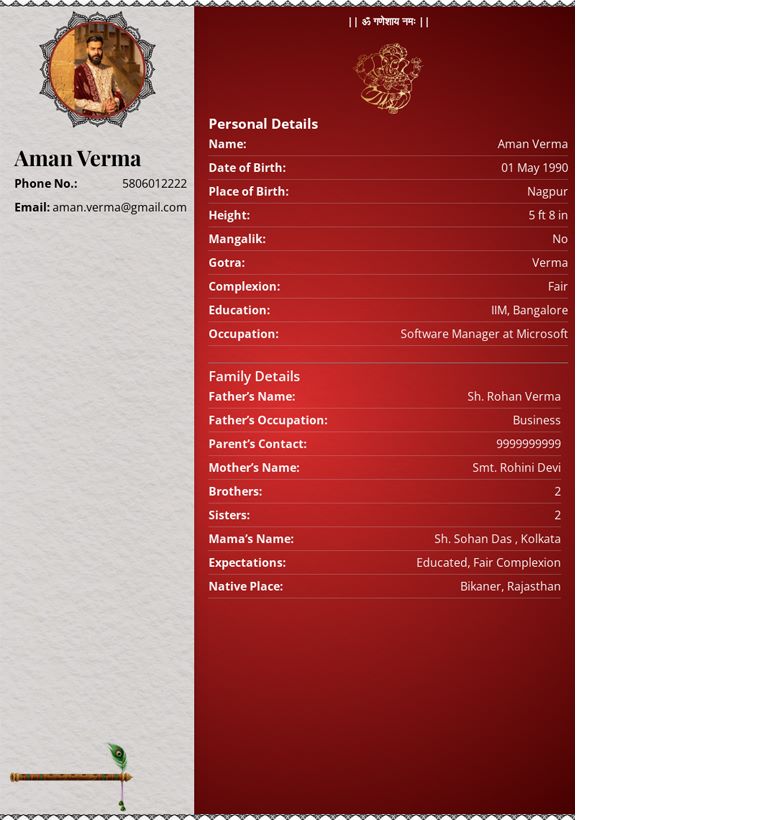
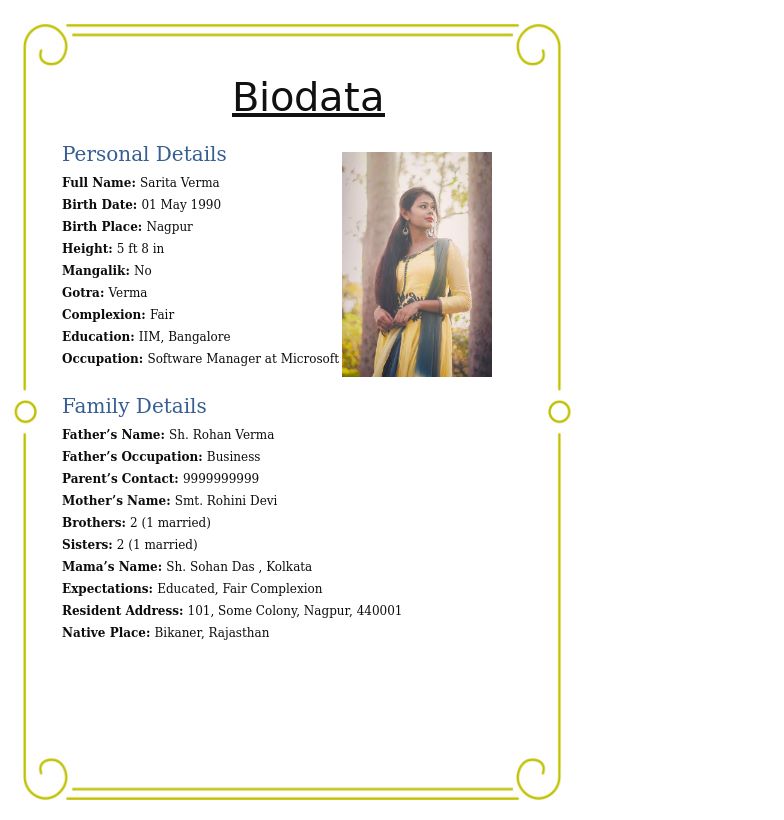
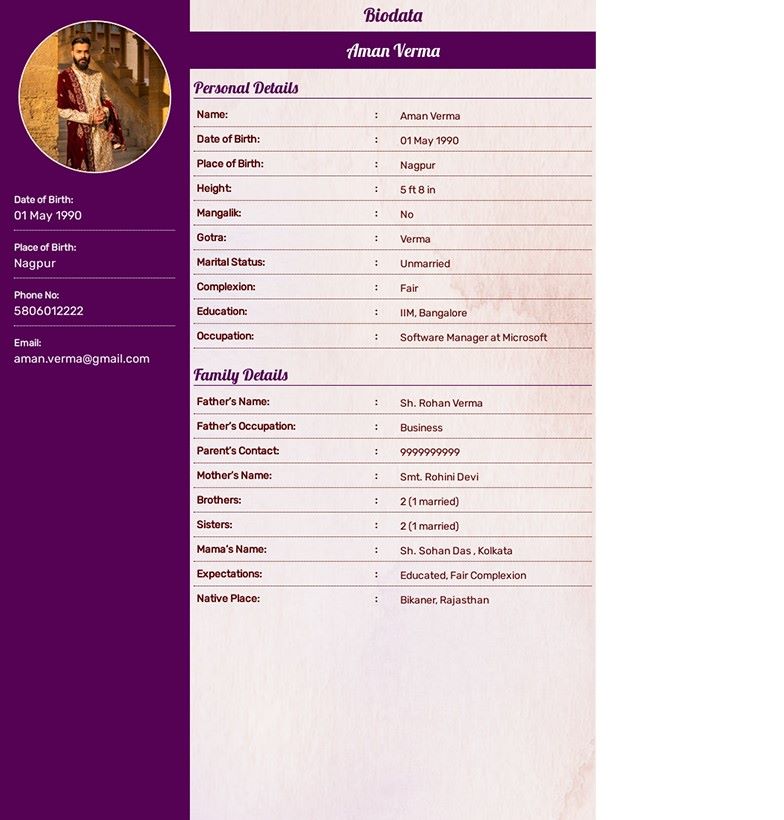
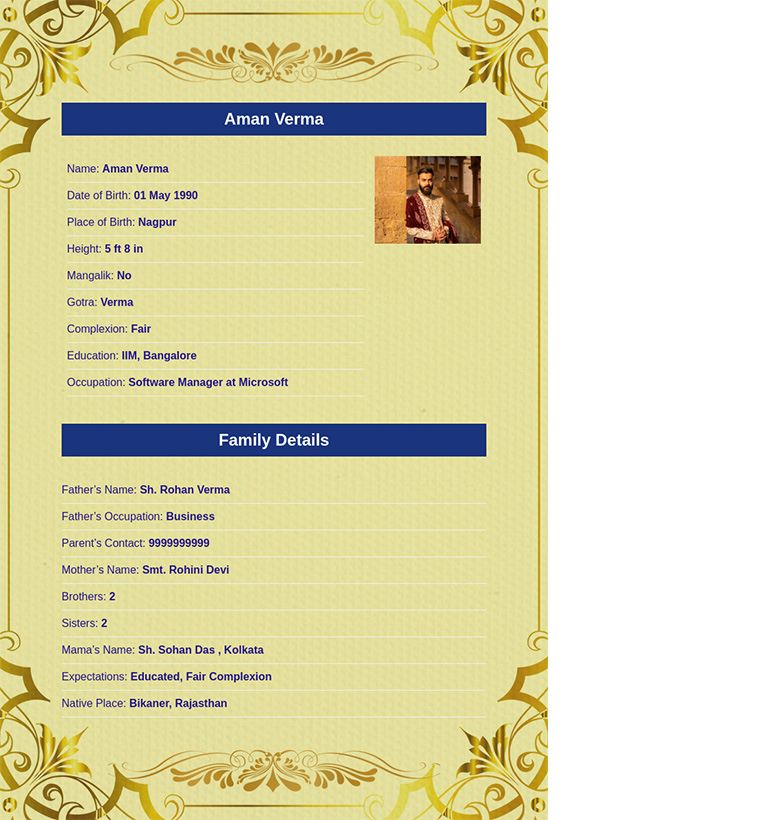
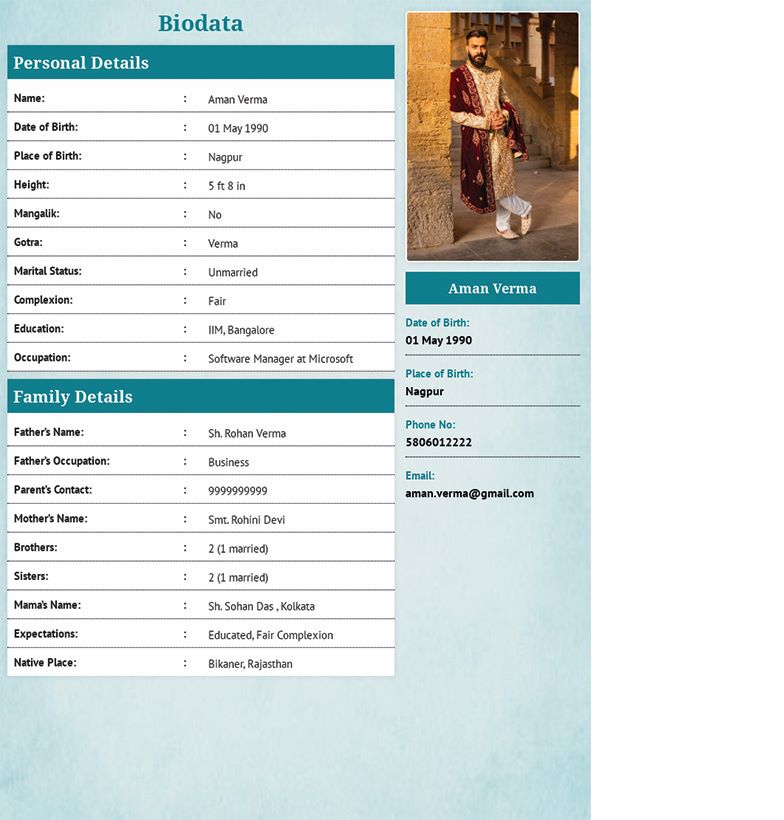
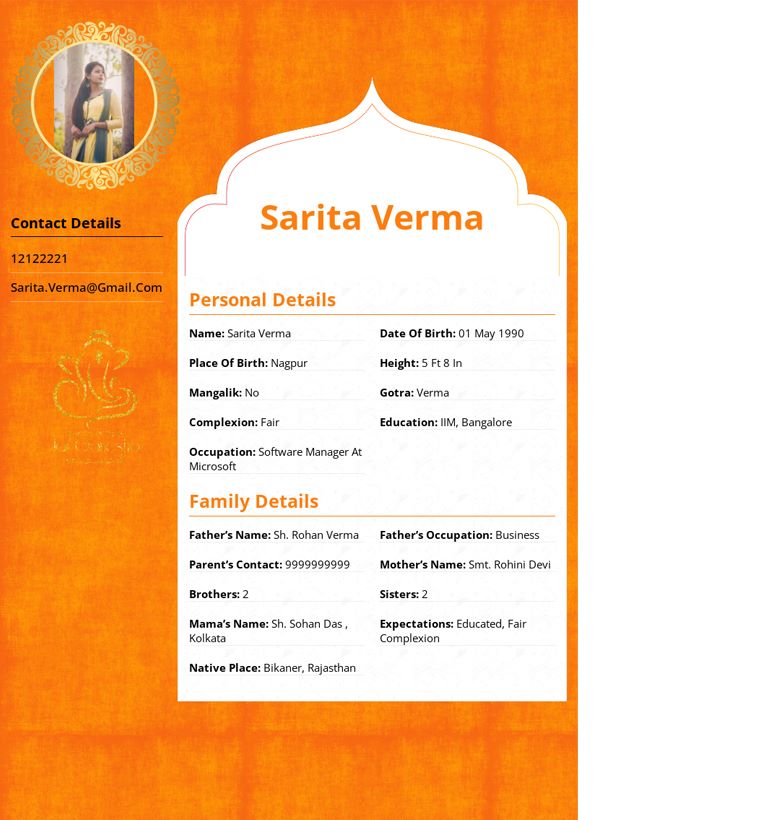
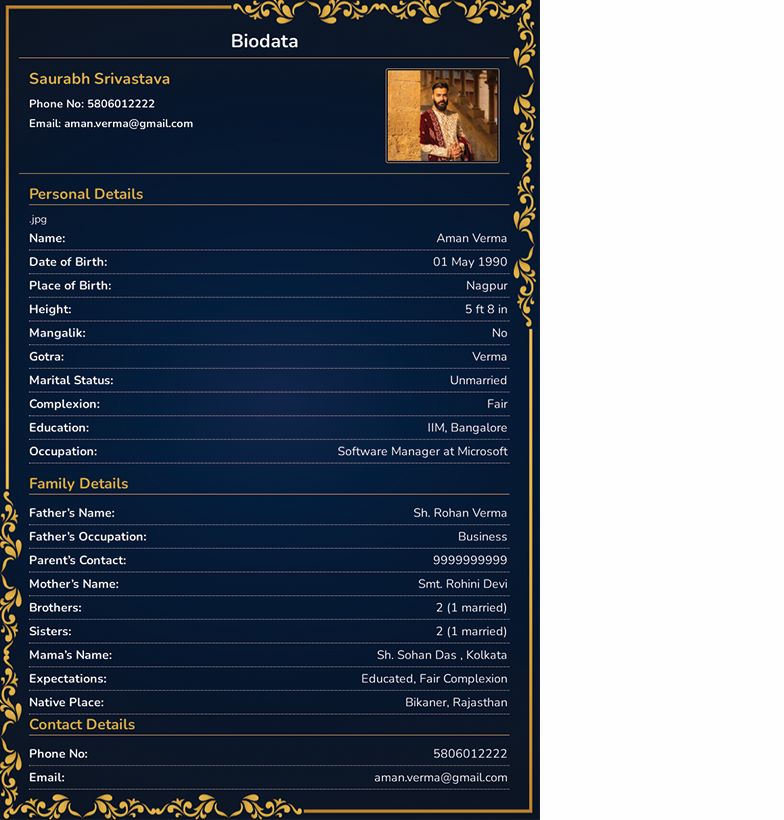
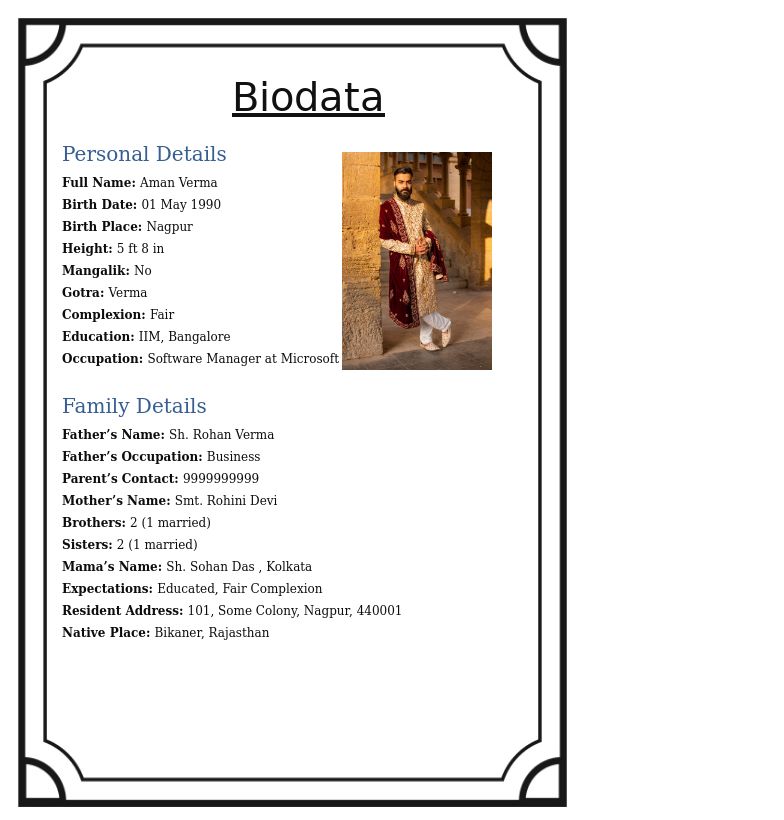
Sample Awadhi Marriage Biodata Format
Name: [Full Name]
Date of Birth: [DD/MM/YYYY]
Age: [Age]
Height: [Feet/Inches]
Current Residence: [City]
Language/Background: Awadhi
Native Place: [Town/District]

Education:
Degree: [Degree]
Institution: [University/College]

Profession:
Occupation: [Job Title]
Organization: [Company/Institution]
Location: [City]

Family Details:
Father: [Name, Occupation]
Mother: [Name, Occupation]
Siblings: [Details]
Family Values: [Traditional/Moderate/Modern]

Personal Profile:
Nature: [Calm, practical, caring, etc.]
Interests: [Reading, travel, music, family time]

Partner Preferences:
Education: [Preference]
Profession: [Preference]
Values: [Preference]
Location: [Open/Specific]
Conclusion
An Awadhi marriage biodata format should combine clarity with regional and family context. When written originally and thoughtfully, it helps families understand compatibility more naturally and gives search users a community-sensitive guide instead of repetitive generic content.