Assamese Marriage Biodata Format: A Complete Guide
The Assamese community is shaped by a rich linguistic heritage, literary tradition, family-centered social life, and deep pride in regional identity. Assamese families today include people from cities, towns, tea regions, academic institutions, public service, business, and global professional spaces, yet many still value courtesy, education, rootedness, and compatibility in marriage. An Assamese marriage biodata format should therefore be more than a standard matrimonial form. It should help families understand the person’s background, character, and future expectations in a culturally aware and clearly written way.
Marriage and Social Expectations in Assamese Families
In Assamese society, marriage is often seen as both a personal and family milestone. Modern Assamese families may be progressive in education, career, and urban lifestyle, but they still tend to care deeply about values such as mutual respect, family responsibility, emotional balance, and social compatibility. The biodata plays a useful role here because it helps present all of these aspects in one place.
Whether the match comes through relatives, community contacts, matrimonial search, or social introductions, the biodata often becomes the first serious document exchanged. It should therefore represent the candidate with accuracy, warmth, and good judgment. The aim is not to impress through inflated claims, but to create clarity and trust.
Why an Assamese Marriage Biodata Format Matters
A strong biodata helps both families and the individuals involved make informed decisions early. It communicates personal details, educational background, professional path, family profile, and lifestyle choices in an organized format. For Assamese families, this may also include practical matters such as city of residence, willingness to relocate, food habits, language comfort, and cultural orientation.
Without a clear biodata, early matchmaking conversations can become vague or inefficient. With a well-written profile, the process becomes more thoughtful. A biodata also helps balance tradition and modernity. It allows families to preserve the seriousness of matrimonial introduction while adapting to a world where people often meet across cities, regions, or countries.
Key Elements of an Assamese Marriage Biodata
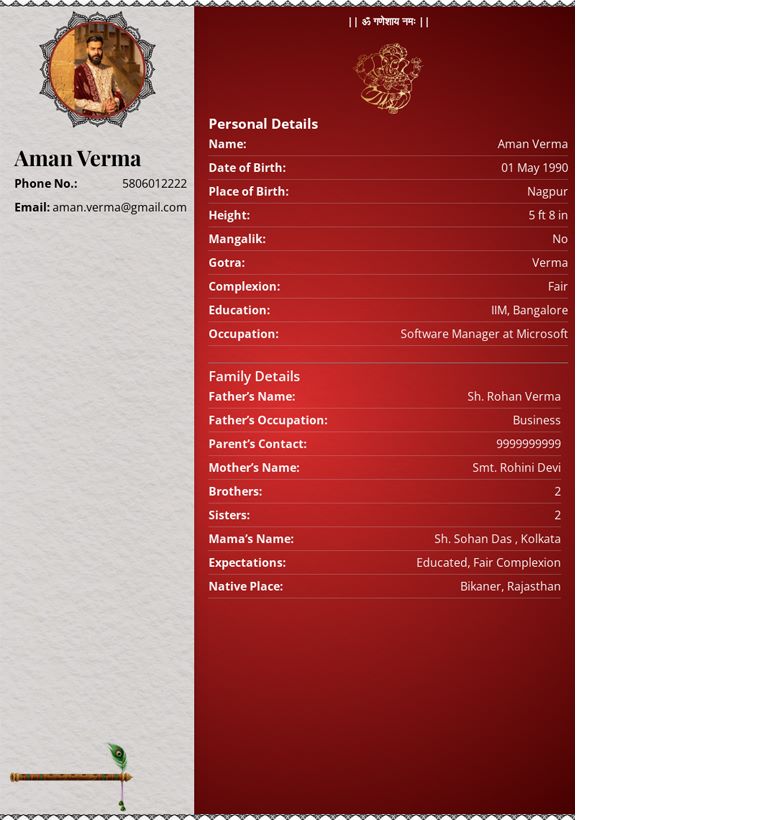
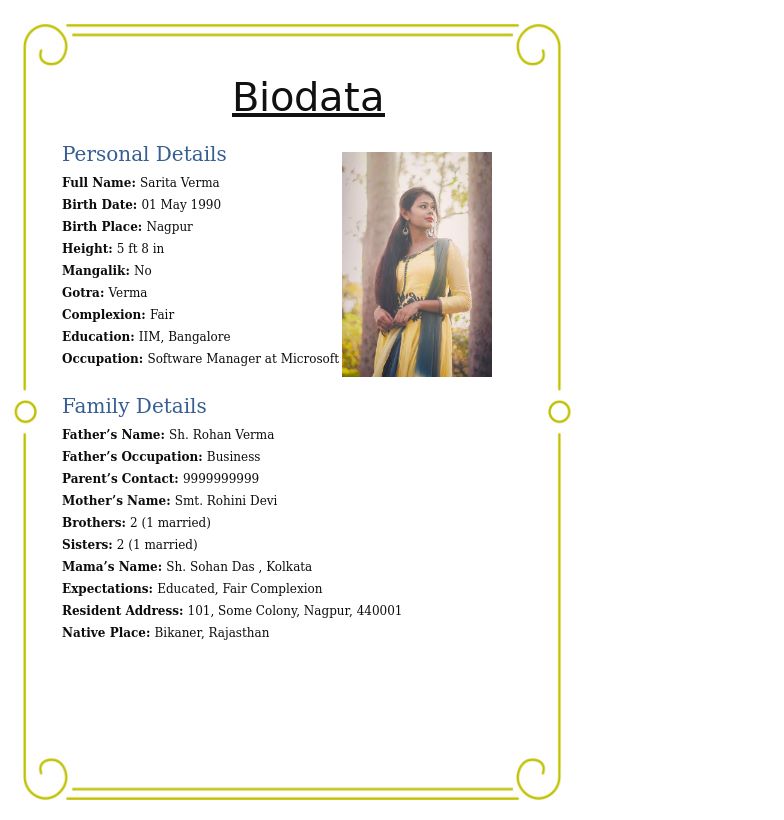
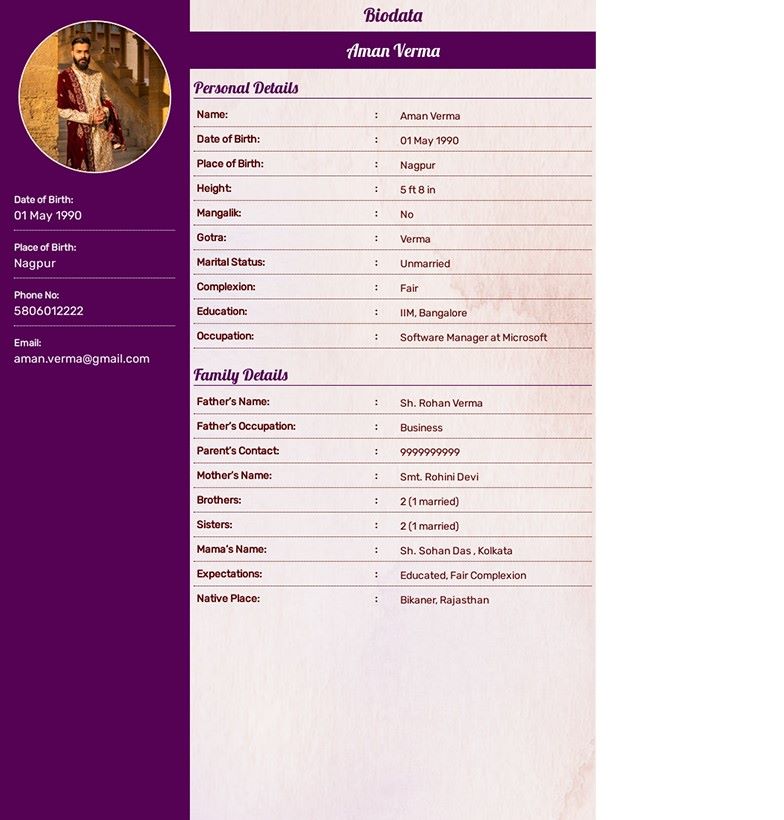
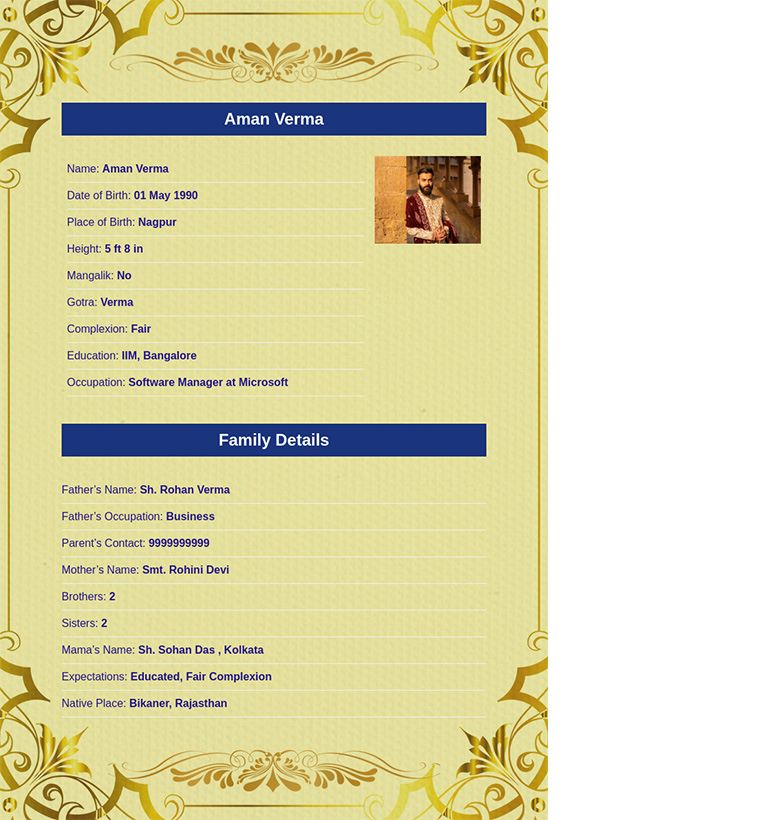
An effective Assamese marriage biodata format should cover the details most often considered relevant in matrimonial decision-making. It should have enough information to be useful, but not so much that it becomes heavy or difficult to read.
- Basic profile: Full name, date of birth, age, height, and current place of residence.
- Cultural background: Assamese identity, native place, family roots, and mother tongue.
- Education: Degrees, fields of study, academic achievements, and institutions attended.
- Profession: Current role, employer, location, and long-term plans.
- Family details: Parents, siblings, occupations, and family environment.
- Lifestyle and values: Habits, interests, social outlook, and priorities.
- Personal summary: Nature, goals, and overall personality.
- Partner preferences: Desired values, education, location, and family compatibility.
Family Background and Assamese Social Context
Family background is often an important part of matrimonial consideration in Assamese households. This does not necessarily mean status in a narrow sense. Rather, it means understanding the environment in which the person was raised. A biodata should mention whether the family is settled in Assam or outside, whether the parents are involved in education, government service, business, agriculture, professional work, or other occupations, and whether the household is traditional, moderate, or modern in daily life.
It may also help to mention if the family values education, literature, simplicity, hospitality, cultural participation, or religious practice. These qualities give the profile depth and help the reader imagine the family dynamic. A thoughtful family section makes a much stronger impression than generic praise.
Education, Career, and Personal Direction
Education has always had strong value in many Assamese households, and that continues to influence marriage search today. Families usually appreciate candidates who are not only qualified but also thoughtful, stable, and sincere in how they approach their work. A biodata should therefore present career information in a way that reflects both achievement and practical life direction.
For example, it helps to state whether the candidate is working in Assam, in another state, or abroad; whether they are likely to relocate; whether they plan further studies; and how they view balancing career with marriage and family life. Such details are practical and useful. They help both sides assess future compatibility more realistically.
Writing the Personal Profile Well
The personal profile section should be one of the most carefully written parts of the Assamese marriage biodata format. It is the place where the candidate’s character becomes visible. This section should describe qualities such as calmness, creativity, emotional maturity, humor, discipline, warmth, or family-centered thinking in a natural way.
It is also a good place to mention interests that genuinely reflect the person’s lifestyle. These may include reading, music, classical or folk culture, travel, cooking, films, writing, fitness, gardening, teaching, volunteering, or nature-related activities. Such details help transform a profile from a list into a believable human introduction.
Partner Preferences in Assamese Matrimonial Search
A well-written partner preference section should be honest but respectful. Many Assamese families value education, emotional steadiness, family orientation, and cultural sensitivity. Some may prefer an Assamese-speaking match or someone with familiarity with Assamese culture, while others may be more flexible if the values align strongly. The key is to communicate the kind of partnership desired rather than reducing the section to rigid demands.
For example, instead of writing a long list of restrictions, it is more effective to say that the person is looking for a kind, mature, family-oriented partner who values mutual respect and is open to building a supportive marriage. If location, language, or family culture matters, those points can be stated gently and clearly.
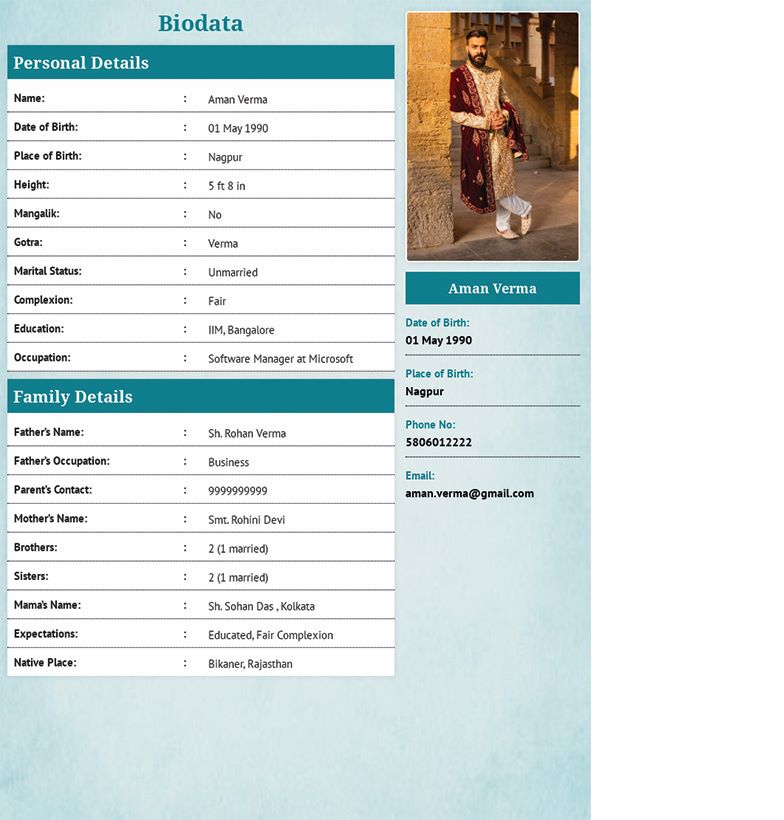
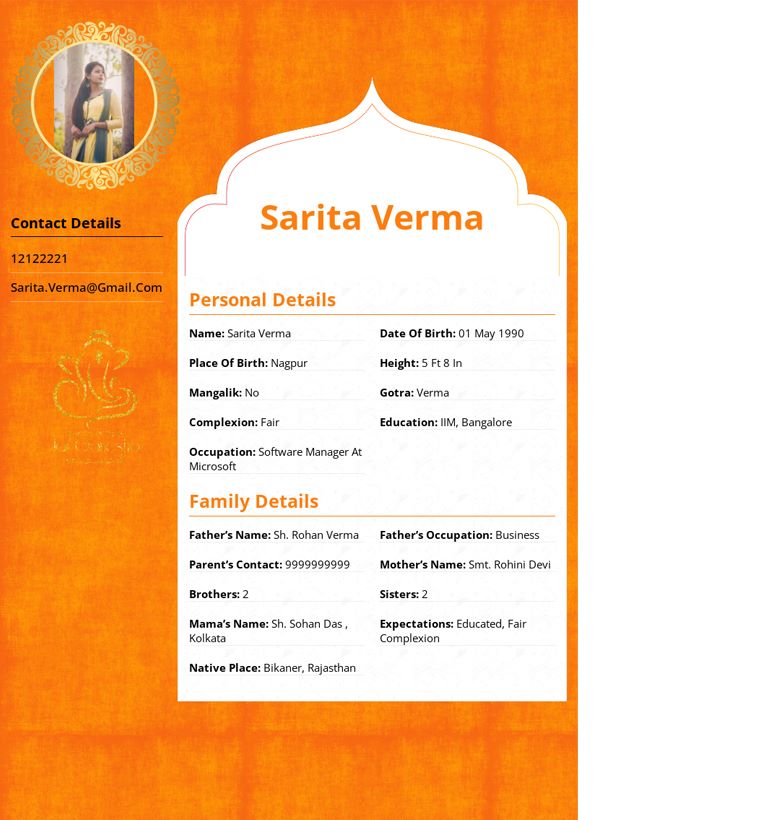
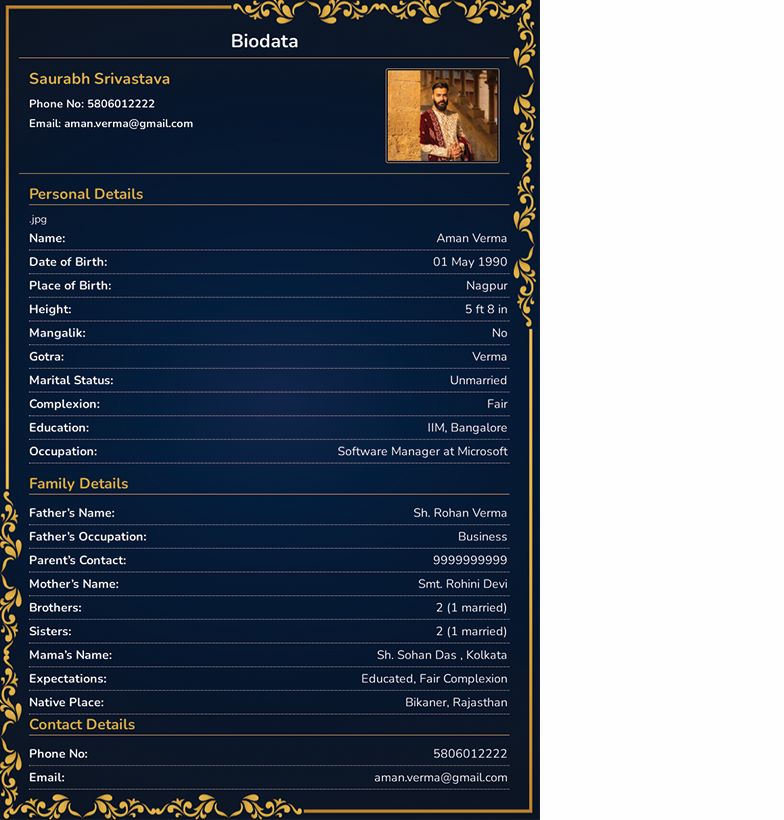
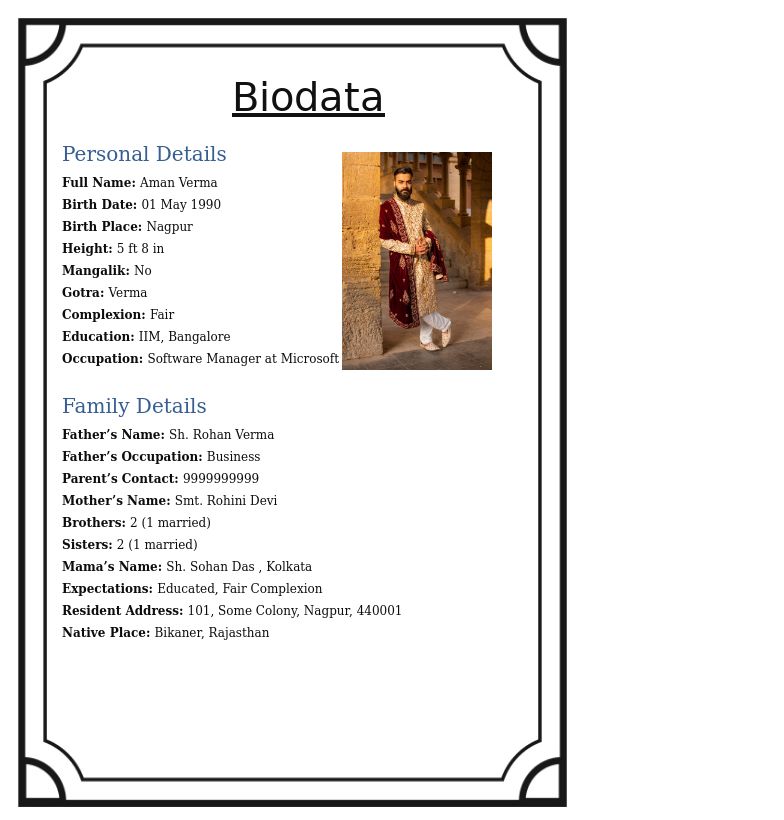
Sample Assamese Marriage Biodata Format
Name: [Full Name]
Date of Birth: [DD/MM/YYYY]
Age: [Age]
Height: [Feet/Inches]
Current Residence: [City]
Community/Background: Assamese
Native Place: [Town/District, Assam]
Mother Tongue: Assamese

Education:
Degree: [Degree]
Institution: [University/College]
Achievements: [If any]

Profession:
Occupation: [Job Title]
Organization: [Company/Institution]
Location: [City]
Career Plans: [Brief note]

Family Details:
Father: [Name, Occupation]
Mother: [Name, Occupation]
Siblings: [Details]
Family Background: [Short description]
Values: [Traditional/Moderate/Modern]

Lifestyle and Personal Profile:
Nature: [Warm, balanced, calm, practical, etc.]
Interests: [Reading, music, travel, cooking, etc.]
About Me: [Short summary]

Partner Preferences:
Education: [Preference]
Profession: [Preference]
Values: [Preference]
Location: [Open/Specific]
Additional Expectations: [Short note]
Common Mistakes to Avoid
One of the biggest mistakes in marriage biodata writing is using generic or copied phrases. That weakens trust and makes the profile less memorable. Another mistake is failing to mention practical matters such as location, work plans, or openness to relocation. Some profiles also become too formal and reveal almost nothing about the person’s real nature.
An Assamese marriage biodata should avoid all of these problems. It should be specific, readable, and honest. It should also avoid unnecessary exaggeration. A grounded profile usually makes a stronger impression than a highly polished but empty one.
SEO Value of an Original Assamese Biodata Guide
Search users regularly look for terms such as Assamese marriage biodata format, Assamese matrimonial biodata sample, Assamese bride profile format, and Assamese groom marriage biodata example. A detailed, community-specific guide can perform well in search because it addresses a focused need. Search engines now reward content that is specific, useful, and original.
That means Assamese matrimonial content should not feel copied from a generic Indian marriage template. It should reflect Assamese culture, family expectations, and practical realities. Doing so improves reader trust, increases relevance, and builds long-term organic value.
Conclusion
An Assamese marriage biodata format should present the individual with clarity, dignity, and cultural context. It should help families understand education, profession, values, family background, personality, and partner expectations in a single balanced document. When written thoughtfully, it supports real matrimonial conversation and serves as a useful, search-worthy resource. The best Assamese biodata is not one that sounds perfect on paper, but one that feels genuine, respectful, and ready for a meaningful marriage journey.