Angami Marriage Biodata Format: A Complete Guide
The Angami community, one of the most prominent Naga tribes of Nagaland, is known for its strong sense of identity, social cohesion, dignity in conduct, and rich cultural heritage. Angami families often value honesty, family reputation, education, and respect for community traditions when considering marriage. In the modern matchmaking process, a well-written Angami marriage biodata format can help families and individuals present themselves with clarity, warmth, and cultural authenticity. This guide explains how to create an Angami marriage biodata that is meaningful, original, and useful for contemporary matrimonial search.
Understanding Marriage in the Angami Cultural Context
Marriage in the Angami community has traditionally been seen as more than a private decision between two individuals. It has also been understood as a bond between families, clans, and wider social circles. Even though urbanization, education, and mobility have changed the way matchmaking happens today, many families still look for compatibility in terms of values, family reputation, personal maturity, and cultural alignment. In this context, a biodata is not just a document listing age, qualification, and profession. It is an introduction that should reflect personal character and social background in a balanced way.
A strong Angami marriage biodata format should explain who the person is, what kind of family they come from, what they value in life, and what they hope for in a life partner. Since many Angami families are now spread across Kohima, Dimapur, other northeastern cities, and major metropolitan centers in India, the biodata also plays an important role in bridging distance. It helps families who may not know each other personally start a conversation with confidence.
Why an Angami Marriage Biodata Format Matters Today
Modern matrimonial search often begins online or through extended family networks, church circles, educational communities, and professional contacts. In all of these settings, the first impression is crucial. A biodata provides structure to that first impression. It gives key facts about the person while also allowing room for individuality. For Angami families, clarity matters because they often want to know not only whether the person is educated and employed, but also whether they are respectful, grounded, family-oriented, and aligned with the community’s values.
A poorly written biodata can make even a strong candidate appear vague or unprepared. On the other hand, a thoughtfully prepared Angami marriage biodata can create trust. It shows seriousness about marriage and respect for the process. It also helps avoid confusion in cases where people come from different towns, church traditions, or professional backgrounds but still want to explore a compatible relationship.
Core Sections in an Angami Marriage Biodata
A well-developed Angami marriage biodata format should include all the essential details that families usually want to know at the start of matrimonial discussion. The structure should be clean and readable. Each section should be informative without becoming overly formal or overly personal.
- Basic profile: Full name, age, date of birth, height, and current place of residence.
- Cultural background: Angami identity, native village or town, language, and family roots.
- Education: Schooling, degrees, fields of study, and noteworthy academic achievements.
- Profession: Current job, organization, work location, and career direction.
- Family details: Parents’ names, occupations, siblings, and overall family environment.
- Faith and values: Church involvement, spiritual outlook, and moral priorities if relevant.
- Personal profile: Nature, interests, lifestyle, goals, and approach to relationships.
- Partner preferences: Education, values, cultural understanding, and location openness.
How to Describe Family Background Properly
In an Angami matrimonial profile, family background should be written with care. This section should not be boastful, but it should be specific enough to build trust. It helps to mention whether the family is based in a village, town, or city, whether they are engaged in public service, business, education, farming, ministry, or other professions, and whether the household is traditional, moderate, or modern in lifestyle. Many families also appreciate knowing whether the candidate comes from a close-knit Christian home, values community participation, or balances modern life with cultural identity.
The purpose of this section is not to impress with status. The purpose is to provide social and emotional context. A biodata becomes stronger when it explains the tone of the household rather than relying on empty phrases like good family or respected family. Details such as emphasis on education, humility, service, or close family ties are more useful and more credible.
Faith, Church, and Personal Values
For many Angami families, faith continues to be an important part of identity and family life. Since Christianity has shaped much of the social and moral life of the Angami community, a biodata may naturally include a short note on church affiliation, spiritual priorities, or general faith orientation. This should be done simply and honestly. If the individual is actively involved in church activities, youth work, music ministry, Bible study, volunteering, or social outreach, such details can help families understand character and community engagement.
At the same time, the biodata should not sound like a formal religious statement. It is better to communicate values such as sincerity, respect, compassion, discipline, and commitment to family life in a natural way. That gives a clearer picture of personality and helps attract serious, value-aligned matches.
Education and Career in Modern Angami Matchmaking
Education plays a significant role in present-day Angami matrimonial decisions. Families often appreciate candidates who have worked hard academically and built stable professional lives. However, qualifications alone are not enough. The way a person uses their education, relates to others, and thinks about future family life also matters. This is why the education and profession sections should be factual yet connected to a broader life story.
For example, instead of merely listing a degree and a job title, it can help to mention the field of work, the values guiding one’s career, and whether the person plans to continue in the same city, relocate, pursue higher studies, or balance career with family priorities. These are practical issues that influence compatibility and should not be hidden behind vague wording.
Writing the Personal Profile Section
The personal profile is one of the most important parts of any Angami marriage biodata format. It is where the person becomes more than a list of facts. This section should describe nature, habits, interests, and approach to life in a way that feels genuine. If the candidate is calm and reflective, socially warm, academically focused, creative, adventurous, community-minded, or family-oriented, that should be expressed directly.
It also helps to mention hobbies and interests that shape daily life. These may include reading, music, hiking, community service, sports, church participation, cooking, teaching, travel, traditional arts, or professional development. Specific details make the biodata more memorable and more human. They also help another family imagine everyday compatibility, not just ceremonial compatibility.
Partner Preferences in an Angami Biodata
A thoughtful partner preference section should communicate values without becoming rigid. Many Angami families value education, family respect, sincerity, faith, emotional maturity, and cultural understanding. Some may prefer a partner from the same tribe or closely related cultural background, while others may be open if shared values are strong. The key is to express preferences honestly and respectfully.
For example, rather than listing harsh conditions, it is more effective to say that the candidate hopes for a partner who is grounded, kind, responsible, family-oriented, and committed to building a respectful marriage. If location, church background, or cultural familiarity matters, that can also be stated clearly. Realistic expectations improve response quality and give the profile a mature tone.
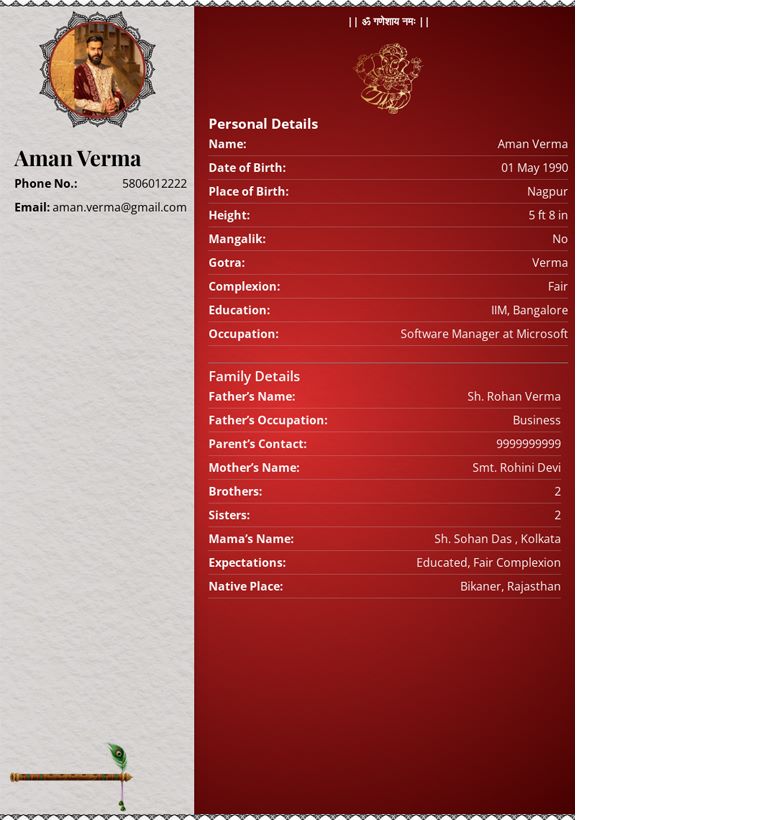
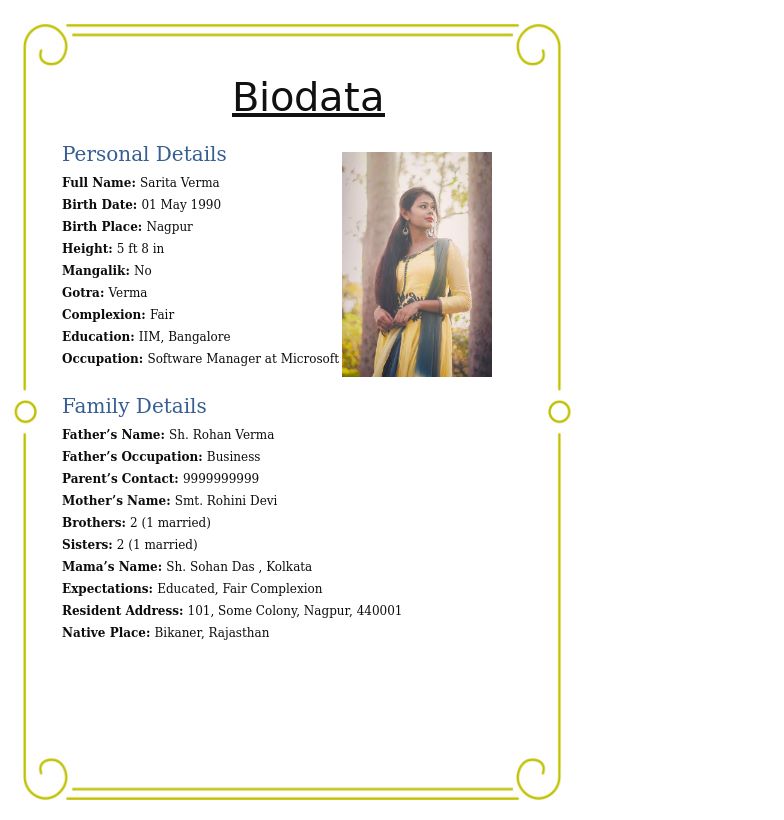
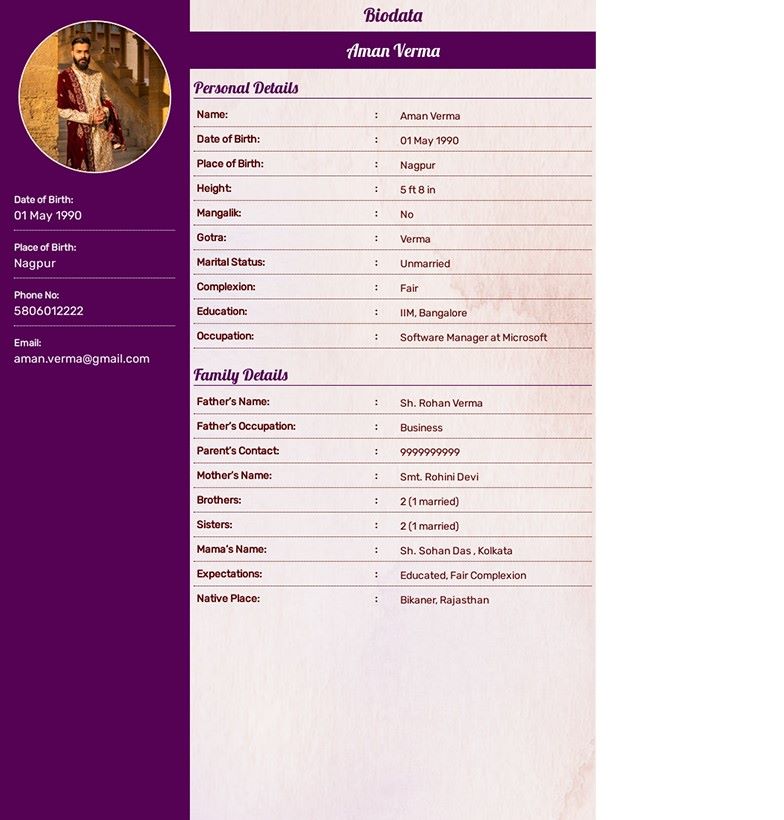
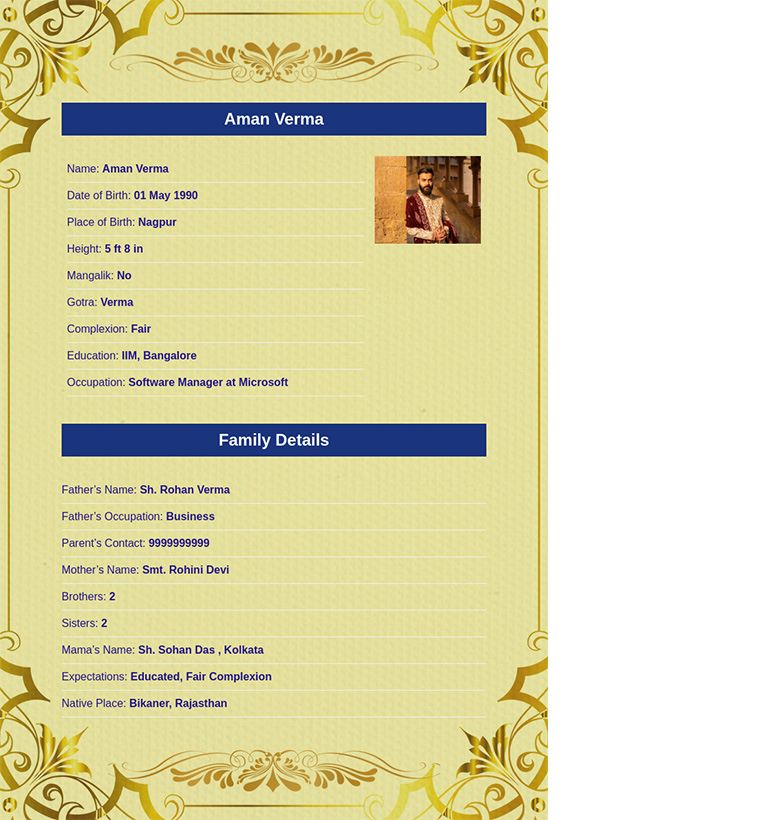
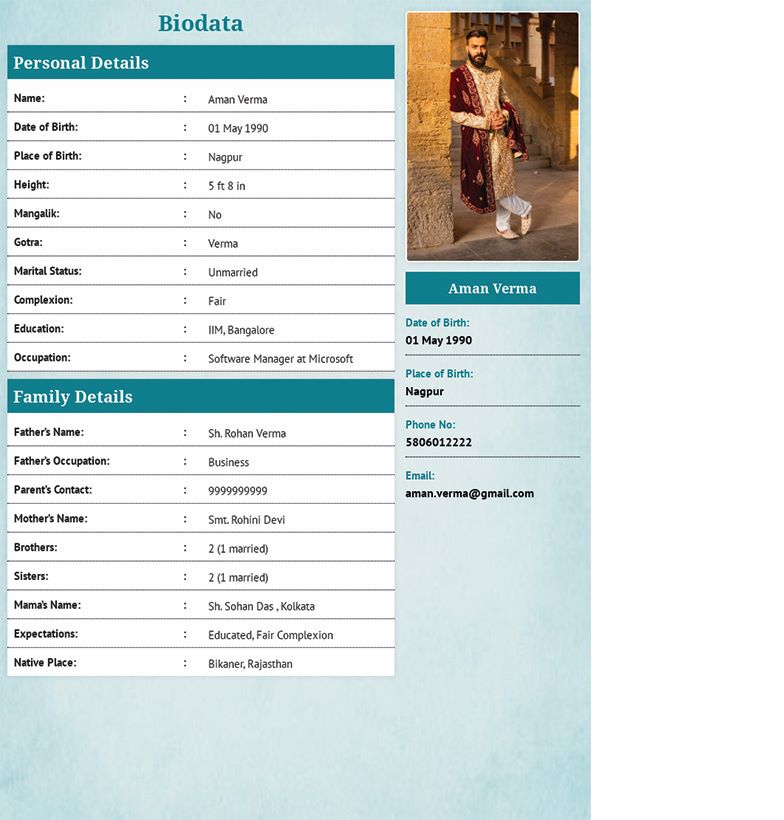
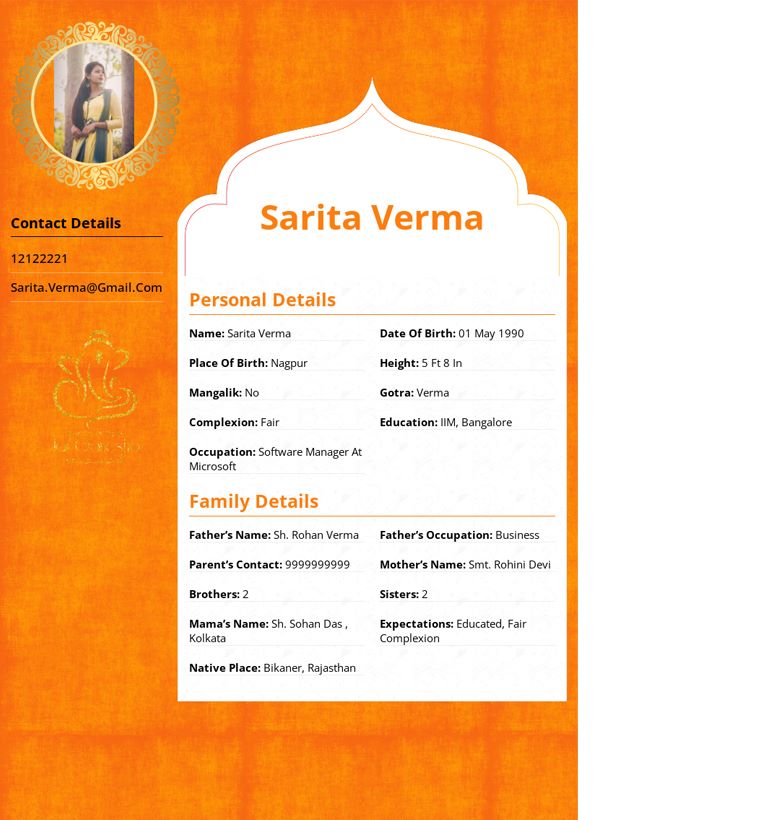
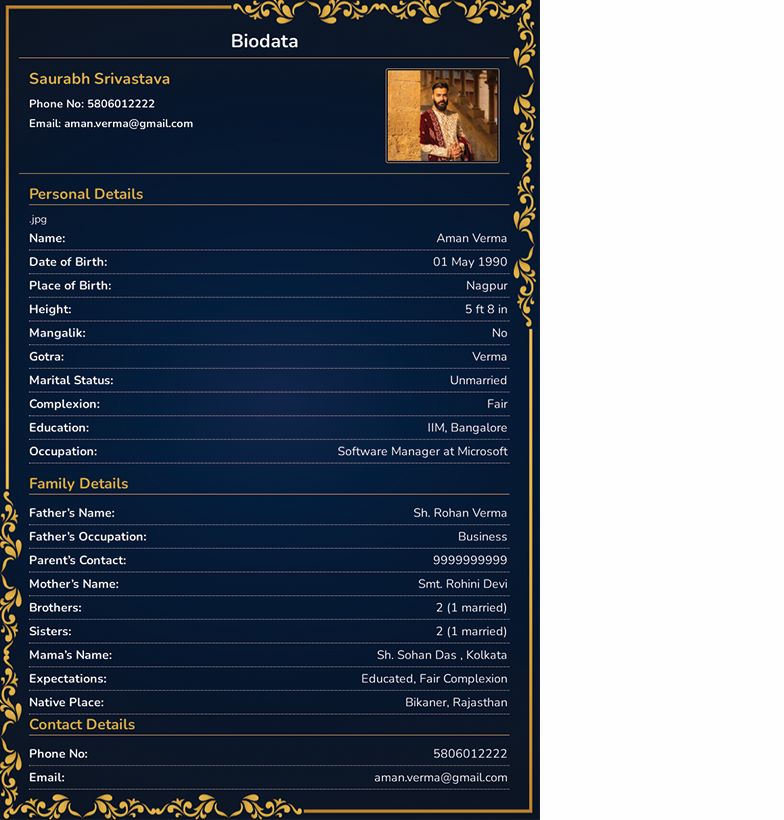
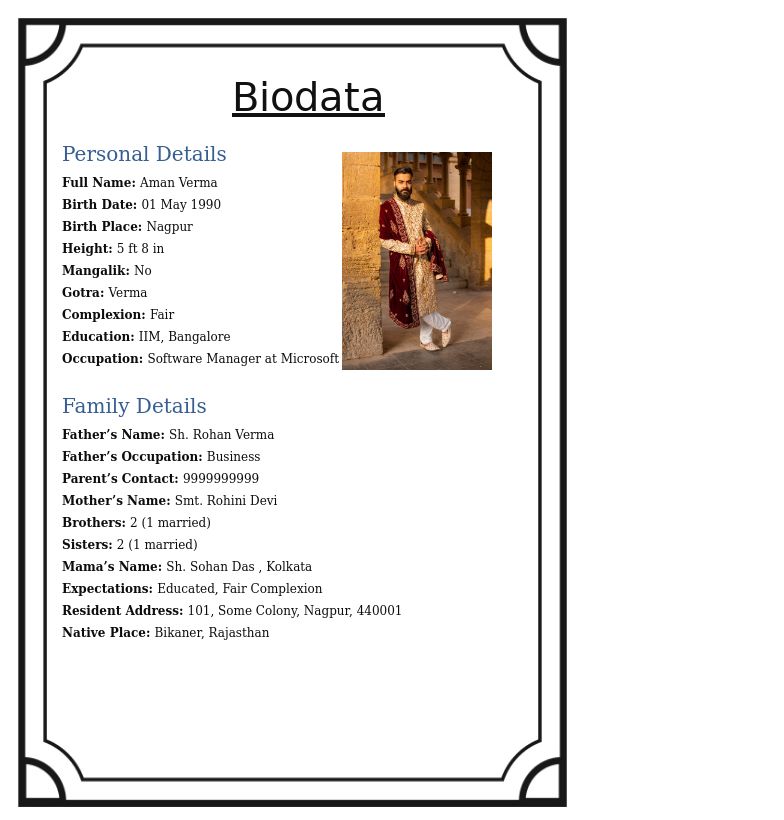
Sample Angami Marriage Biodata Format
Name: [Full Name]
Date of Birth: [DD/MM/YYYY]
Age: [Age]
Height: [Feet/Inches]
Current Residence: [City]
Community: Angami
Native Place: [Village/Town, Nagaland]
Mother Tongue: [Language]

Education:
Degree: [Degree]
Institution: [University/College]
Achievements: [If any]

Profession:
Occupation: [Job Title]
Organization: [Company/Institution]
Location: [City]
Career Plans: [Brief note]

Family Details:
Father: [Name, Occupation]
Mother: [Name, Occupation]
Siblings: [Details]
Family Background: [Short description]
Values: [Traditional/Moderate/Modern]

Faith and Lifestyle:
Church/Spiritual Background: [Optional]
Lifestyle: [Simple/Modern/Balanced]
Food Habits: [Optional]

Personal Profile:
Nature: [Calm, warm, responsible, etc.]
Interests: [Reading, music, hiking, volunteering, etc.]
About Me: [Short personal summary]

Partner Preferences:
Education: [Preference]
Profession: [Preference]
Values: [Preference]
Location: [Open/Specific]
Additional Expectations: [Short note]
Common Mistakes to Avoid
Many biodata profiles lose impact because they are too generic. Repetitive phrases such as homely, caring, or well-settled family are not enough on their own. Another mistake is being too formal and leaving out any sense of real personality. Some profiles also fail because they hide important details about location, career plans, or expectations from marriage.
An Angami marriage biodata should avoid both extremes: it should not be emotionally empty, and it should not overshare personal matters too early. It should remain respectful, clear, and thoughtfully written. Honesty matters more than performance.
SEO Value of Community-Specific Marriage Biodata Content
Search users often look for terms like Angami marriage biodata format, Angami matrimonial profile sample, marriage biodata for Angami bride, or Angami groom biodata example. A detailed and original guide tailored to the community can perform well in search because it answers a real need. Search engines increasingly reward useful, specific, and authentic content. A page that explains the actual expectations, structure, and social meaning of an Angami marriage biodata is therefore far more valuable than a generic marriage template page.
This is why originality matters so much. Community-specific matrimonial content should not be spun from a single pattern. It should reflect the values, social realities, and cultural texture of the community it is addressing. That improves reader trust and strengthens long-term SEO performance.
Conclusion
An Angami marriage biodata format should be thoughtful, clear, and culturally grounded. It should introduce the person with honesty while giving families enough context to evaluate compatibility meaningfully. When it includes education, profession, family background, faith or values, personal nature, and realistic partner expectations in a balanced way, it becomes a strong foundation for matrimonial conversation. In the end, the best Angami biodata is not the one with the most polished phrases, but the one that reflects real character, real family values, and real readiness for marriage.